If you’ve watched YouTube lately, you’ve probably seen claims that switching to thicker oil is the cure for the 3.0L Duramax’s recent problems. It’s an appealing idea because there is a grain of truth behind it. But “thicker is always better” is wrong, and the actual answer is much more nuanced.
The “problem” refers to the LZ0 Duramax recall involving connecting rod and crankshaft bearing failures caused by manufacturing defects, neither of which are caused by oil quality or viscosity.
In this article, we’ll showcase a real-world scenario where a professional driving a 2024 Silverado 1500 ZR2 with the LZ0 Duramax did multiple oil changes at 4,900-mile intervals with multiple brands and weights. We’ll also discuss some of the reasons oil weight and viscosity matters and why some engines cannot tolerate heavier oil or oil that is too light.
The Duramax Oil Analysis And What It Shows
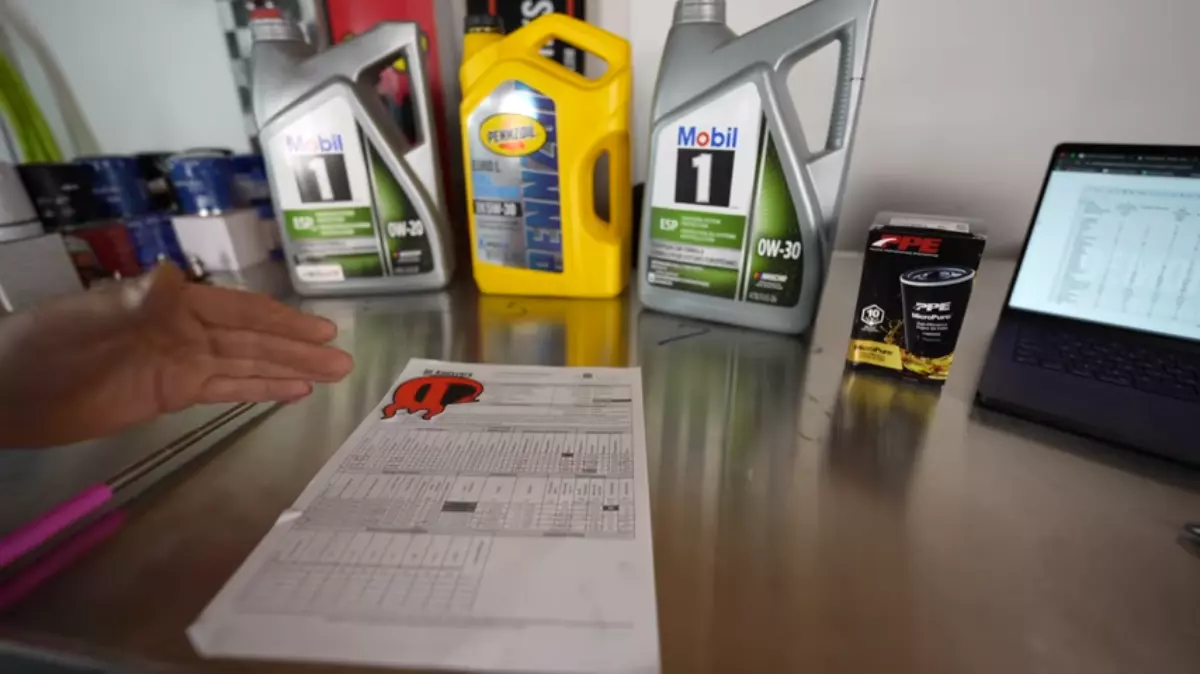
DemonWorks on YouTube puts a lot of miles on his 2024 Silverado. During much of that, he’s gone through a lot of oil changes and has had the oil tested every time. He compared three oils, all within the usage range of the Duramax 3.0L:
- Mobil 1 Dexos D 0W-20
- Pennzoil Euro L 5W-30
- Mobil 1 ESP 0W-30
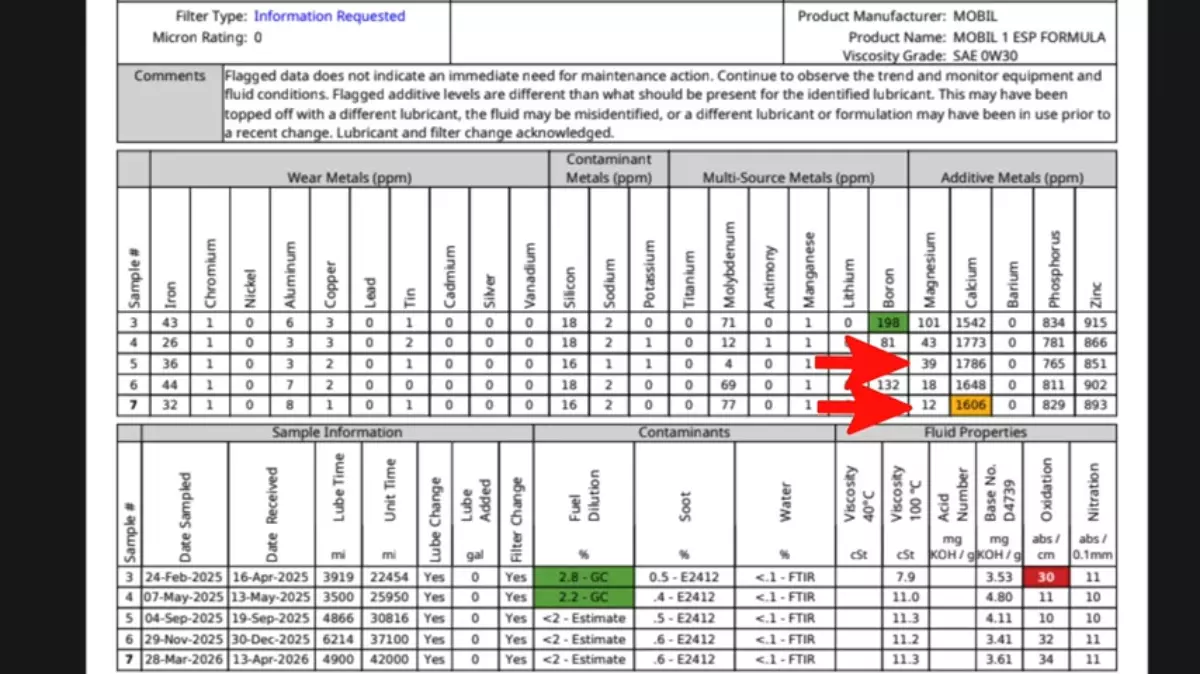
Each sample covered roughly 4,900 miles, making the comparisons reasonably consistent. Intervals included both winter and summer driving conditions.
The biggest takeaway for this truck’s engine and use case was iron wear. Both 30W oils showed lower iron wear than the factory-recommended 0W-20. Among the two, Mobil 1 ESP 0W-30 produced the best result, dropping iron from 36 ppm (Pennzoil 5W-30) to 32 ppm despite winter driving and frequent remote starts.
Interestingly, aluminum increased with Mobil 1 0W-30, but the level remained low enough that it wasn’t considered concerning.
The oils handled soot exceptionally well, measuring just 0.5–0.6%, suggesting excellent combustion and filtration. The 30W oils maintained a significantly higher operating viscosity (around 11.3 cSt versus 7.9 cSt for the 0W-20), which may provide additional protection during high-temperature towing or heavy workloads.
Mobil 1 0W-30 did finish with a slightly lower Total Base Number (TBN), indicating it used more of its additive reserve during the interval. However, the remaining reserve was still considered healthy, especially given the increased winter idling.
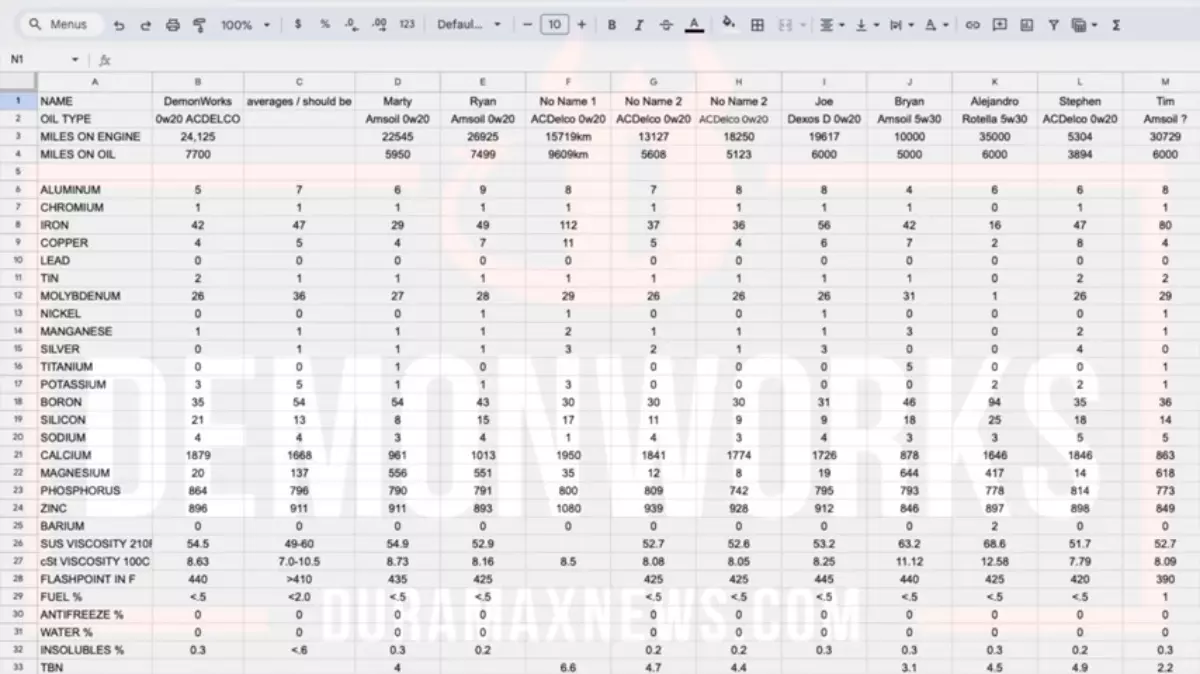
The testing also highlights that viscosity isn’t the only variable. Different oils use different additive packages, including varying levels of molybdenum, boron, calcium, and detergents. Those additives affect wear protection, deposit control, and friction reduction, making it impossible to judge an oil solely by its viscosity grade.
It’s worth emphasizing that one sample by itself will not tell you much about your truck. Multiple samples over time so they can be averaged will give a better look at trends affecting your Duramax.
What Oil Thickness and Formulations Mean To Your Engine
The recall General Motors has undertaken for the Duramax 3.0 has little to do with oil and a lot to do with manufacturing defects. The short of it is, higher oil weight and/or viscosity is not always a good thing. Today’s engines are made with very precise tolerances, with some oil passages and clearances being thinner than a piece of paper, measured in thousands of an inch..
YouTube channel Engineering Explained did an excellent breakdown of how oils.. break down and what makes viscosity good and bad. It comes down to how this affects friction, which is the whole point of motor oil lubrication in the first place.
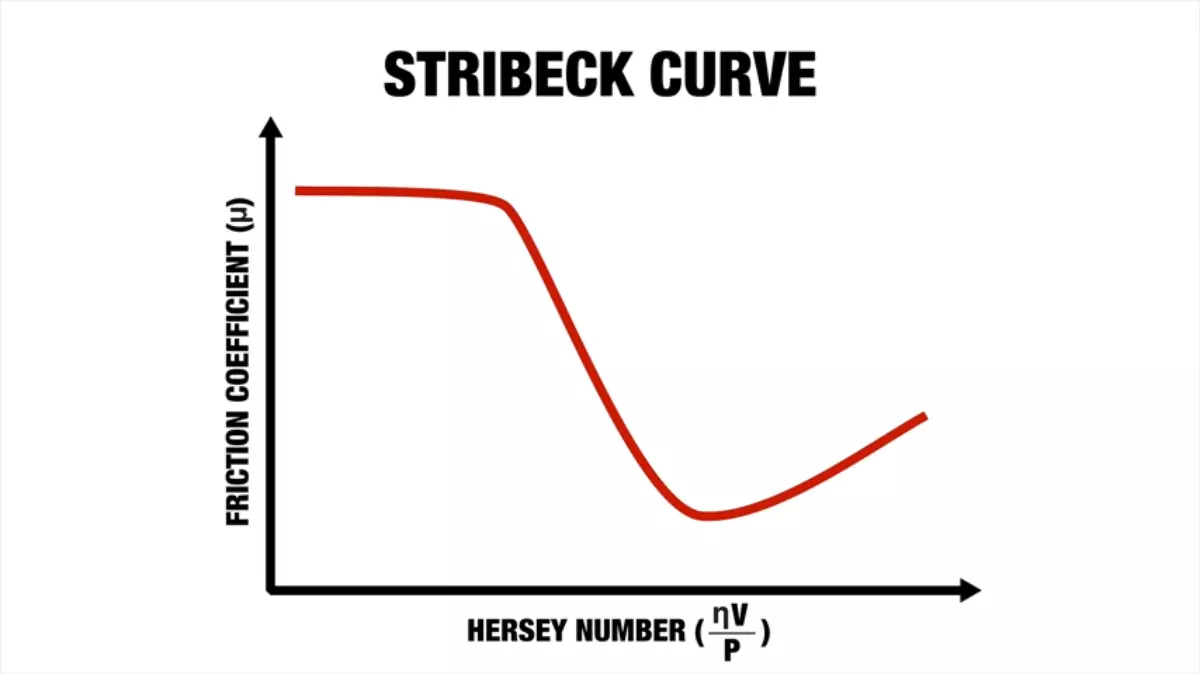
Friction versus viscosity can be charted along a linear path called the Stribek Curve. On one side, you have no lubrication, metal-on-metal. Near the other side, you have a perfect balance of lubrication and viscosity (“stickiness”). Past that, as either of these properties are changed, things actually revert, creating more friction, but this time friction between the parts and the lubricant, creating excess heat.
The goal for any engine oil choice is to find the sweet spot where lubrication is ideal, allowing efficient operation. That means longer engine life, higher fuel efficiency, and smoother running.
Measuring Your Oil: What the Grades Mean
Today’s oils are multi-grade, which means they’re measured (graded) in more than one condition. The first number in an oil’s grade is its cold viscosity, measured as a “W” (winter) number. The lower this number is, the easier it is to circulate the oil in cold temperatures. The second number is viscosity when the oil is hot (generally around 150-200 degrees Fahrenheit). The higher this number is, the thicker the oil remains at operating temperature. So a 0W-30 oil rating means it has a zero viscosity rating (easily circulates) at cold temps and 30 (stays relatively thick) when hot.
Changing these numbers, as DemonWorks did, can change how the oil flows in the engine. In general terms, however, the range between the numbers is as important as the numbers themselves. That range is the tolerance of the oil, or how little or how much it will vary during use. There is a range of 30 between 0W-30, 25 in 5W-30, and 20 in 0W-20. Changing that tolerance range slides the lubricity on the Stribek Curve a bit as the engine operates, especially when in between cold and at temp.
Why GM Recommends Thicker Oil for Troubled Engines

That change is what GM was going for with the recommendation to raise the oil thickness for engines within recalls that haven’t failed yet. This pushes the lubricity to the right on that scale, adding a buffer zone to help keep potentially failing parts in service longer. It’s insurance, not a fix.
In other words, GM’s temporary recommendation for certain recalled engines isn’t an admission that 0W-20 was a mistake. It’s a mitigation strategy intended to provide additional film strength in engines that may already contain defective components while owners await repairs.
This is also why GM does not recommend the heavier oil in the replacement engines it’s issuing. They do not need that buffer because the underlying mechanical problem has been dealt with.
So Which Oil Wins?
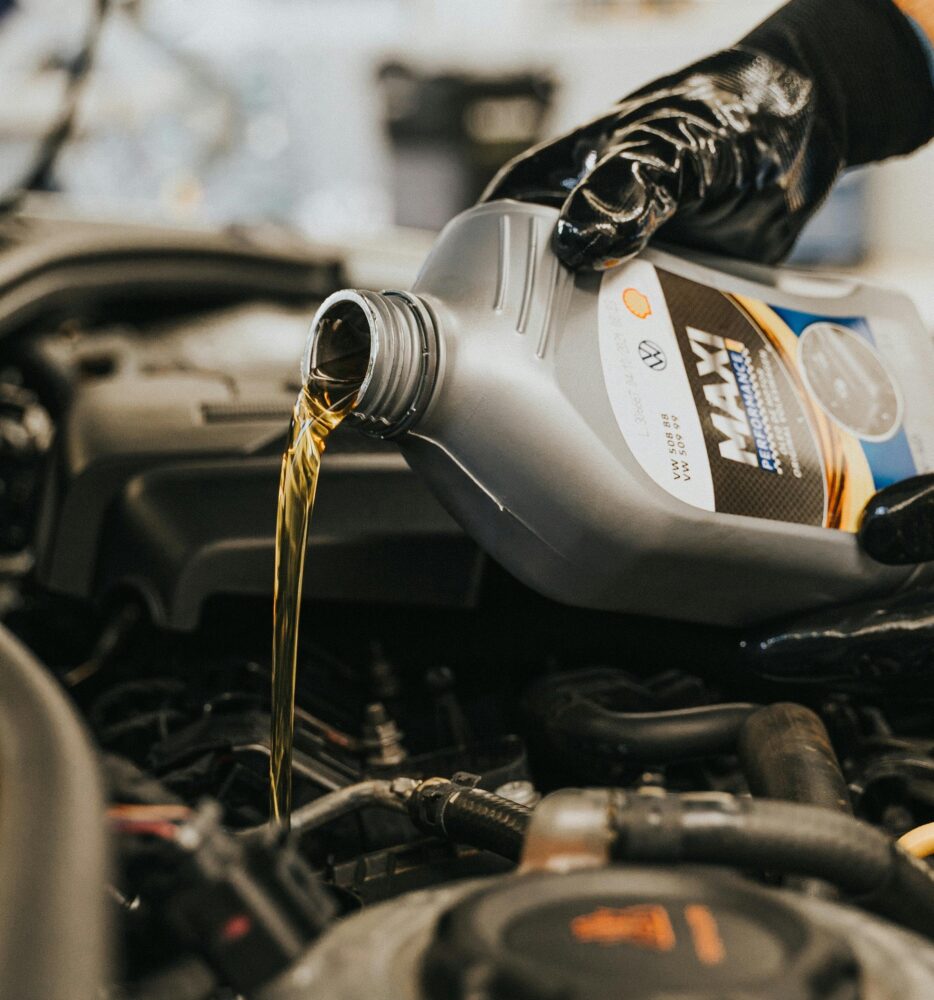
Rather than declaring a single winner, the testing suggests that all three oils performed well. DemonWorks personally preferred the lower iron wear observed with the 30-weight oils but stresses that this reflects one truck’s results and is not a universal recommendation.
For owners considering switching from the factory-specified 0W-20, the key lesson is simple: monitor your own engine through repeated oil analysis instead of relying solely on anecdotal experiences. Trends over multiple oil changes provide far more meaningful insight than any single report.
The takeaway isn’t that thicker oil is automatically better. It’s that:
- Oil analysis suggests some 30-weight oils may reduce wear in certain LZ0 engines.
- GM’s temporary thicker-oil recommendation applies only to engines affected by the recall.
- The best way to evaluate your own engine is through repeated oil analysis rather than internet opinions based on no data from your own truck.