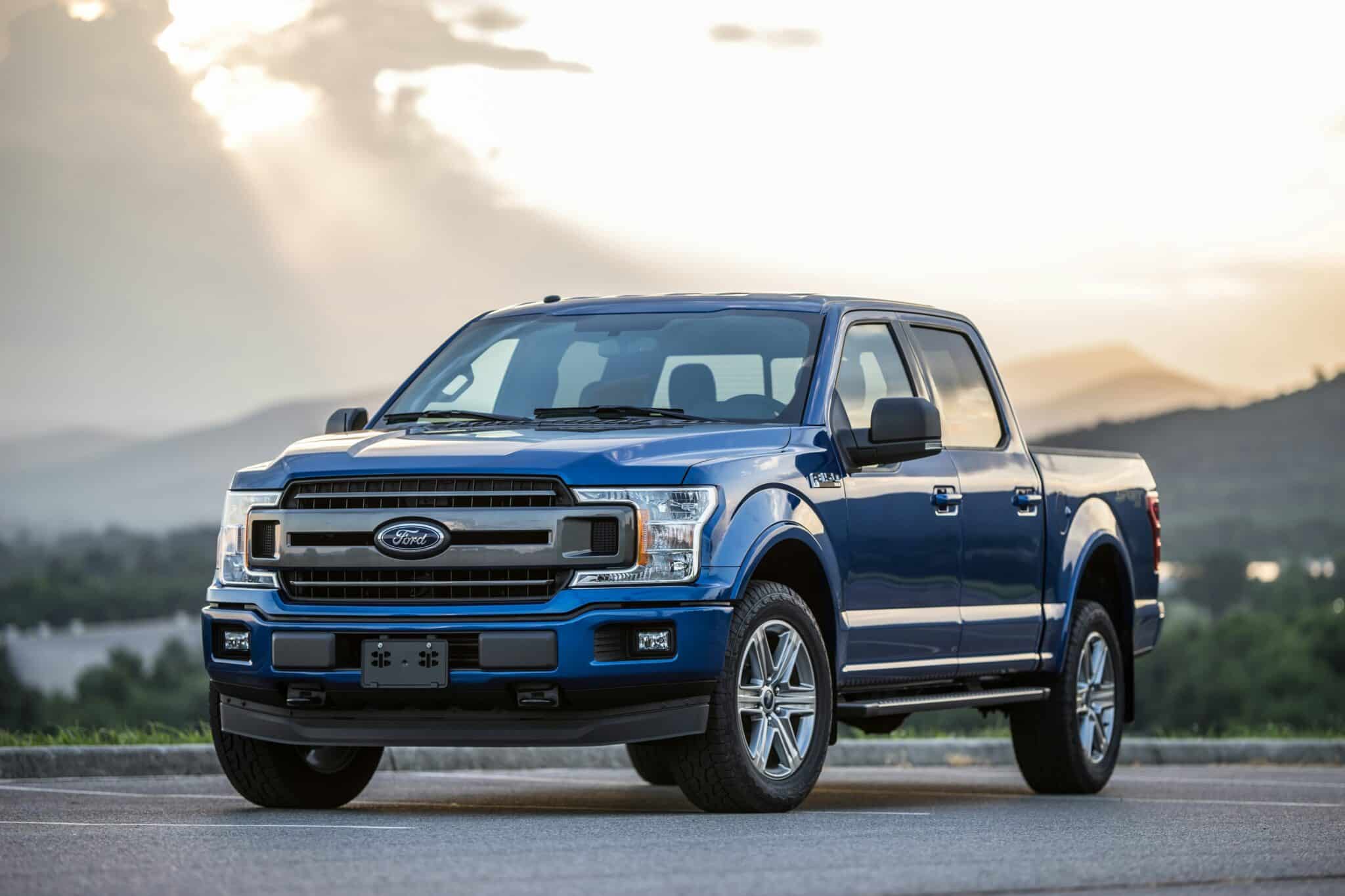
Shipping a pickup truck isn’t quite the same job as shipping a sedan, and not every car hauler is set up to handle it the same way. The right transport method depends on what you’re driving — a stock half-ton, a lifted diesel, a dually with a 12-inch suspension — and what you’re willing to spend to move it.
Here’s how to think through the options.
Most pickup trucks ship just fine on standard open carriers
The majority of pickup trucks — factory-height half-tons, quarter-tons, and even most three-quarter-tons — fit on a standard open car carrier without any issue. These are the same trailers you see on the highway hauling 8 to 10 vehicles stacked on two levels.
For a stock F-150, Silverado, Ram, or Tacoma, standard open carrier is the practical first choice. It’s widely available, competitively priced, and handles the vast majority of truck shipments without a hitch. Expect to pay $100 to $200 more than a sedan on the same route — trucks are heavier and take up more carrier space.
When a lifted truck complicates things
This is where it gets specific. Standard open carriers have a height clearance of roughly 7 feet on upper deck positions. A truck with a 4-inch lift and larger tires might clear it; one with a 6- or 8-inch lift very often won’t.
If you’re shipping a lifted truck, give the carrier exact specifications before booking: lift height, tire diameter, and overall vehicle height. A carrier that doesn’t ask these questions before accepting the job isn’t doing adequate prep work.
Options when your truck exceeds standard clearance:
- Single-car trailers: More flexibility on height and length; the truck loads on a single-vehicle flatbed-style transport. More expensive, but it solves the clearance problem.
- Open flatbed: Used for vehicles that are too tall or too wide for a standard multi-car hauler. Available through specialized carriers.
- Lowboy: Reserved for heavy equipment and very tall vehicles; uncommon in standard auto transport but available through the right carrier.
Budget an additional $200 to $500 for non-standard transport depending on route and specs.
Duallies and extended-bed trucks
Dually trucks are wider than standard vehicles. Most can ship on standard carriers, but the driver needs to plan loading position to account for the width. Disclose “dually” at booking every time — don’t assume the carrier has accounted for it.
Extended-cab, long-bed configurations push into the upper end of standard carrier length limits. Full-size work trucks and extended-bed aftermarket setups may need positioning confirmation. Again, disclose the specifics at booking.
Enclosed transport for your truck
Enclosed makes sense in two scenarios: the truck has significant value (a restored classic, a low-production specialty vehicle, a well-maintained collector-grade truck), or it has custom work that would be expensive to repair if anything happened in transit.
For most working trucks — even nice ones — open carrier is adequate. The calculus changes when you’re talking about something like a first-gen Bronco, a 1970s Chevy C/K restoration, or a built competition truck with significant invested value.
What it actually costs to ship a truck
Some ballpark ranges for standard open carrier:
- Under 500 miles: $500 to $800
- 500 to 1,000 miles: $700 to $1,000
- Cross-country (2,000+ miles): $1,000 to $1,500
Add $200 to $500 for a lifted or oversized vehicle requiring specialty transport. Add $300 to $700 for enclosed on a long-haul route.
Choosing a company that handles trucks competently
For a side-by-side comparison of the top car shipping companies across pricing, carrier vetting, and customer communication, TopCarShippers.com publishes independent rankings updated quarterly.
Some car shipping companies do a higher volume of truck and SUV shipments and have more experience coordinating lifted and oversized loads. The best companies ask for vehicle specs before quoting, can confirm trailer capacity for your specific height and length, and have in-house dispatch teams that actively match your vehicle with the right carrier — rather than posting it to a shared marketplace and waiting.
RoadRunner Auto Transport handles trucks, SUVs, duallies, and oversized vehicles across all 50 states. Their in-house dispatch team works with a network of more than 14,000 vetted carriers to match your vehicle with a carrier equipped for the job. No deposit is required until a carrier is confirmed, and quotes are available in under 60 seconds at roadrunnerautotransport.com.