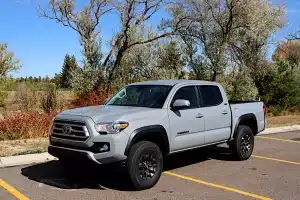
A forecourt full of Ford Rangers and Toyota Hiluxes isn’t the same as one packed with Fiestas and Corsas, and the gap between them goes well beyond price: pickups attract a very particular kind of thief.
They’ve also become harder to sell quickly since a 2025 tax change hit the fleet market. Most standard trade policies are built around hatchbacks and superminis, so they don’t always cover the specific problems that come with holding pickup stock. What actually makes pickups riskier, and what should traders do about it?
Theft That Targets the Truck, Not the Forecourt
Opportunistic break-ins aren’t really the issue anymore when it comes to pickups. QuestGates ran an analysis of DVLA data and found that thefts of Toyota Hilux models under three years old shot up by 548.9% year-on-year in 2024, which made it the most stolen newer vehicle in the country. Organised gangs go after pickups on purpose, often bypassing keyless entry systems and getting the trucks out of the country within hours.
Compare that to a stolen Corsa, which might turn up burnt out a few miles down the road. A stolen Hilux or Ranger will probably be halfway to West Africa before the loss adjuster has even made a phone call. Right-hand-drive pickups are in huge demand across parts of Africa and the Middle East, and that export market turns every truck on a forecourt into something worth stealing for profit, not just joyriding.
Slower Stock Turn After the 2025 Tax Change
Double cab pickups used to fly off trade forecourts, especially the ones bought through company fleets. In April 2025, HMRC reclassified double cab pickups as cars for Benefit-in-Kind and capital allowance purposes, so the old flat-rate BIK of around £4,000 became a CO2-based calculation. For a higher-rate taxpayer driving something like a Ford Ranger, that means an annual tax bill closer to £9,000, up from around £1,600 under the old rules.
Fewer businesses are now ordering new double cabs as company vehicles because the tax benefit has essentially disappeared. Vehicles bought or ordered before April 2025 are covered by transitional rules and will keep the old treatment until they’re sold, leased out, or April 2029, whichever comes first. But new stock doesn’t get that protection, and more used pickups are sitting unsold for longer as a result. For a motor trader, that means more money tied up in stock that’s simultaneously harder to move and more tempting to thieves, which is about as bad a combination as you can get.
What This Means for Traders Holding Pickup Stock
Trade insurance pricing depends on the vehicles a business handles, the address it trades from, its claims history, and how those things interact. When pickups make up most of the stock, every one of those factors looks different to an underwriter. A trader with £300,000 in pickup inventory will have a very different conversation at renewal than someone holding the same value in superminis. Higher unit values on their own would be enough to bump premiums, but combine them with the theft numbers above and traders need to budget for noticeably bigger insurance costs.
Most trade policies aren’t priced for that kind of stock, because the rates are often set around hatchbacks and superminis. That’s exactly why pickup traders go for a motor trade policy through a specialist like Patons motor trade insurance, which factors in the actual vehicles on the forecourt, so pickup-heavy stock is reflected in the cover from day one. That matters when a single stolen truck can cost more than a dozen hatchbacks combined.
Security counts for a lot here too. Insurers will want to see CCTV, a secure compound, perimeter alarms, and ideally some kind of signal-blocking storage for keyless vehicles. Traders who can prove those measures are in place will be in a much better position when it comes time to negotiate their cover.
A Risk That Won’t Shrink on Its Own
Organised criminals aren’t going to lose interest in pickups any time soon, and the BIK reclassification isn’t getting reversed either. The gap between insuring a forecourt of pickups and insuring a forecourt of regular cars will only keep growing as both of those pressures compound over time.
Waiting until renewal to deal with it is a mistake, because by then a trader could already be sitting on stock that’s underinsured or completely unprotected against the specific threats pickups attract. Getting proper security in place now, talking to a specialist broker about how pickup-heavy stock affects cover, and building those costs into the business plan before they become surprises at renewal will all make a real difference.
Traders who treat pickups as their own separate category, from the security on site to the insurance policy they hold, will be far better off than those who lump them in with everything else and hope for the best.