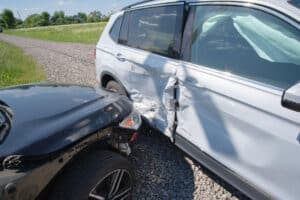
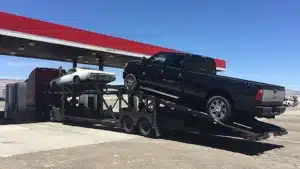
A damaged pickup can still be a good towing project, but the auction listing cannot prove that it will retain the capability behind its factory tow rating after repair. The useful question is not simply how much this model could tow when new. It is whether the exact truck had that rating, which parts of its towing configuration were damaged, and whether those parts can be restored correctly. A factory tow rating belongs to a specific configuration, not just to a model badge. Before bidding, the goal is to establish that original configuration and compare it with the damage shown in the lot. That is the first step toward judging whether the truck is worth rebuilding for towing.
Step 1: Start with what this exact truck was built to tow
Before damage enters the picture, establish the factory limits for the exact pickup in the lot. A model-wide “max towing” number is not enough. Ford’s 2026 F-150 tables change trailer ratings by engine, axle ratio, cab, wheelbase, and 4×2 or 4×4 configuration. Ram tables likewise vary by powertrain, axle ratio, cab and bed setup, drivetrain, and GCWR. Two trucks with the same badge and even the same engine can therefore have different factory limits.
Chevrolet gives another useful reference. On Silverado 1500 and HD models, the Trailering Information Label on the driver-side door jamb can show vehicle-specific GVWR, GCWR, rear GAWR, maximum payload, maximum tongue weight, and curb weight. A clear photo of that label can be more useful than a generic towing chart.
Auction-access platforms can make this first comparison easier by bringing lot-specific information from major auctions into one place. For example, when a salvage title truck for sale is being considered as a future tow vehicle, CARS4.BID provides access to Copart and IAAI listings with VIN, damage, condition, and odometer data that can be checked against OEM towing information.
Build the original towing profile from five pieces of evidence:
- Engine and transmission application.
- Cab, bed, and 2WD/4WD configuration.
- Rear-axle ratio and applicable GCWR.
- GVWR, GAWR, and vehicle-specific payload information.
- Factory towing package and hitch configuration.
Once that baseline is clear, the next question is whether the auction damage reaches anything the original towing capability depended on.
Step 2: Find out whether the damage reaches towing-critical hardware
Current auction photos are only part of the structural story. Check the truck’s history for earlier salvage or total-loss records and, when available, older auction photos. NMVTIS can show title and total-loss history, but not a complete repair history. A rear hit deserves closer scrutiny if the same frame, hitch, or suspension area appears to have been damaged before.
Map the current damage against the towing-critical parts identified in Step 1. Rear axle and suspension mounts, frame rails and crossmembers, receiver mounts, and missing tow-package hardware deserve closer attention than a damaged bedside or tailgate. If these areas are poorly shown, a targeted pre-bid inspection can add photos or video.
A truck that looks straight after repair has not proven that its load-bearing structure was restored correctly. OEM procedures determine whether a structural part may be straightened, sectioned, or must be replaced. Ford repair information for specific F-150 structural components prohibits sectioning and instead requires replacement at approved factory seams. FCA US collision guidance also states that if heat is used to straighten high-strength structural steel, the affected component must be replaced, while cold straightening may be used where the vehicle-specific procedure allows it.
What has to be verified before the factory towing baseline is used again
| Finding | What must be established |
| Frame rail, crossmember, or hitch-mount damage | OEM-approved repair method and measured geometry |
| Rear axle replacement | Correct application and axle ratio |
| Receiver replacement | Correct rating and mounting specification |
| Wheel or tire replacement | Load specification suitable for intended axle loads |
| Missing tow-package hardware | Configuration-specific equipment restored and functional |
Before bidding, separate what the lot answers from what becomes a rebuild requirement. After structural work, geometry, mounting points, and capacity-critical components must be verified against the applicable OEM repair and application information before the factory rating is used as a meaningful baseline again. The final step is to check the rebuilt truck as it sits today against its actual towing limits.
Step 3: Check the rebuilt truck against the trailer it will actually tow
Once the rebuild is complete, the factory rating is useful only if the truck’s current weight and equipment remain within every applicable limit. Permanent additions such as steel bumpers, winches, toolboxes, or a fifth-wheel hitch add weight before passengers or cargo are loaded. Trailer tongue weight or fifth-wheel pin weight also becomes part of the load carried by the truck.
Payload can become the tighter limit before the advertised trailer maximum. Ford’s 2026 towing guide treats tongue or king-pin load as cargo weight and requires the loaded truck to remain within GVWR and rear GAWR. Chevrolet’s 2026 guidance makes the same point: the only way to be sure the applicable weight ratings are not exceeded is to verify the loaded combination on a scale.
Four checks before towing with the rebuilt truck:
- Confirm the original ratings from OEM towing data and vehicle-specific labels.
- Confirm the rebuilt configuration, including capacity-critical parts replaced during repair.
- Weigh the truck and trailer as they will actually travel, with passengers, cargo, hitch hardware, and permanent accessories aboard.
- Check GVWR, front and rear GAWR, GCWR, trailer rating, hitch limits, and tire capability against those actual weights.
A rebuilt pickup can still be a capable tow vehicle, but the factory maximum becomes meaningful only after the original configuration has been restored and current loading is accounted for. A factory tow rating describes how the truck was configured when built. It is not a post-repair inspection certificate.