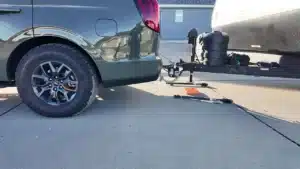
Pennsylvania is a pass-through state for freight. I-81, I-78, I-80 and the Turnpike carry tractor-trailers past Harrisburg, Wilkes-Barre and the Lehigh Valley warehouses all day, and pickup drivers share every mile of it. A half-ton feels substantial until it is next to a loaded 18-wheeler. If the two meet, a few rules that are specific to Pennsylvania, and a couple that are specific to pickups, decide how the claim goes.
The numbers behind the mismatch
Federal crash data show who absorbs the damage. In 2023, 5,472 people died in crashes involving large trucks, and 70 percent of them were in the other vehicle. Pennsylvania accounted for 180 of those deaths, 140 of them occupants of other vehicles, according to the same NHTSA report.
The Federal Motor Carrier Safety Administration puts the physics in plain terms: a loaded tractor-trailer can weigh up to 80,000 pounds, often 20 to 30 times more than a passenger vehicle, and needs up to the length of two football fields to stop. A crew cab at 5,500 pounds does not change that math much.
Evidence in the tractor does not wait
A commercial truck carries far more data than a pickup does. Typical sources include:
- Electronic logging device: the driver’s hours behind the wheel.
- Engine control module: speed, braking and throttle before impact.
- Cab cameras: forward and sometimes driver-facing video.
- Carrier files: dispatch messages, inspection and maintenance logs.
The carrier controls all of it. “Trucking companies often start working on their defense within hours of a serious wreck,” said Joseph Leeson, managing attorney at Leeson & Leeson, a Pennsylvania injury firm with offices in Bethlehem, Wilkes-Barre and Camp Hill. The firm says this kind of evidence often disappears within days, which is why lawyers send written preservation demands early.
Your own truck has an event data recorder too. If the pickup is totaled, do not release it to the insurer’s salvage yard until you know whether that data, and the truck itself, will be needed.
The 51 percent rule and your build
Pennsylvania reduces an award by the injured driver’s share of fault and bars it completely when that share is greater than the other side’s. Expect the carrier’s insurer to go looking for that share, and a modified pickup gives them places to look:
- Lift and tires: changes to braking distance, headlight aim and bumper height.
- Lighting: aftermarket bars or tinted lamps that are not road legal.
- Load: payload or trailer weight over the door-jamb rating.
- Hitch setup: no brake controller, no safety chains, worn trailer tires.
None of these makes a crash your fault. Each can be argued as a percentage, and percentages are money. Keep receipts, alignment sheets and scale tickets if you tow heavy, and photograph the truck as it sat after the wreck before anything is removed.
Is your truck a “private passenger vehicle”?
Pennsylvania drivers choose between full tort and limited tort insurance. Limited tort costs less and restricts claims for pain and suffering unless the injury is legally “serious.” Many truck owners carry it without remembering they picked it.
Two exceptions in the statute matter on the interstate. Limited tort does not apply when the at-fault vehicle is registered in another state, which describes a large share of the semis on I-81. It also does not apply to someone injured while riding in a vehicle that is not a private passenger motor vehicle. The Vehicle Code’s definition of that term covers four-wheel vehicles insured by an individual that are passenger cars, or that have a gross weight of 9,000 pounds or less and are not used mainly for commercial purposes. Where a three-quarter-ton, a dually or a truck titled to an LLC lands under that wording depends on the facts, so it is a question to raise with an attorney, not to assume.
What to do at the scene and in the first week
- Get checked: adrenaline hides injuries, and the medical record starts the clock on proof.
- Record the rig: USDOT number on the door, trailer number, carrier name, plate states for tractor and trailer.
- Save your footage: pull the dash cam card before it overwrites.
- Skip the recorded statement: the carrier’s adjuster is not gathering facts for your benefit.
- Watch the calendar: Pennsylvania generally allows two years to file an injury lawsuit, with limited exceptions.
Sharing the lane before any of this matters
The better outcome is no claim at all. If you cannot see the truck driver’s face in the mirror, the driver cannot see you. Pass on the left and do not linger beside the trailer. When you pull back in, wait until the whole cab shows in your rearview mirror, and leave more room than that if you are towing, because your own stopping distance has grown too. On long downgrades, let the semi run and pass it somewhere flatter.