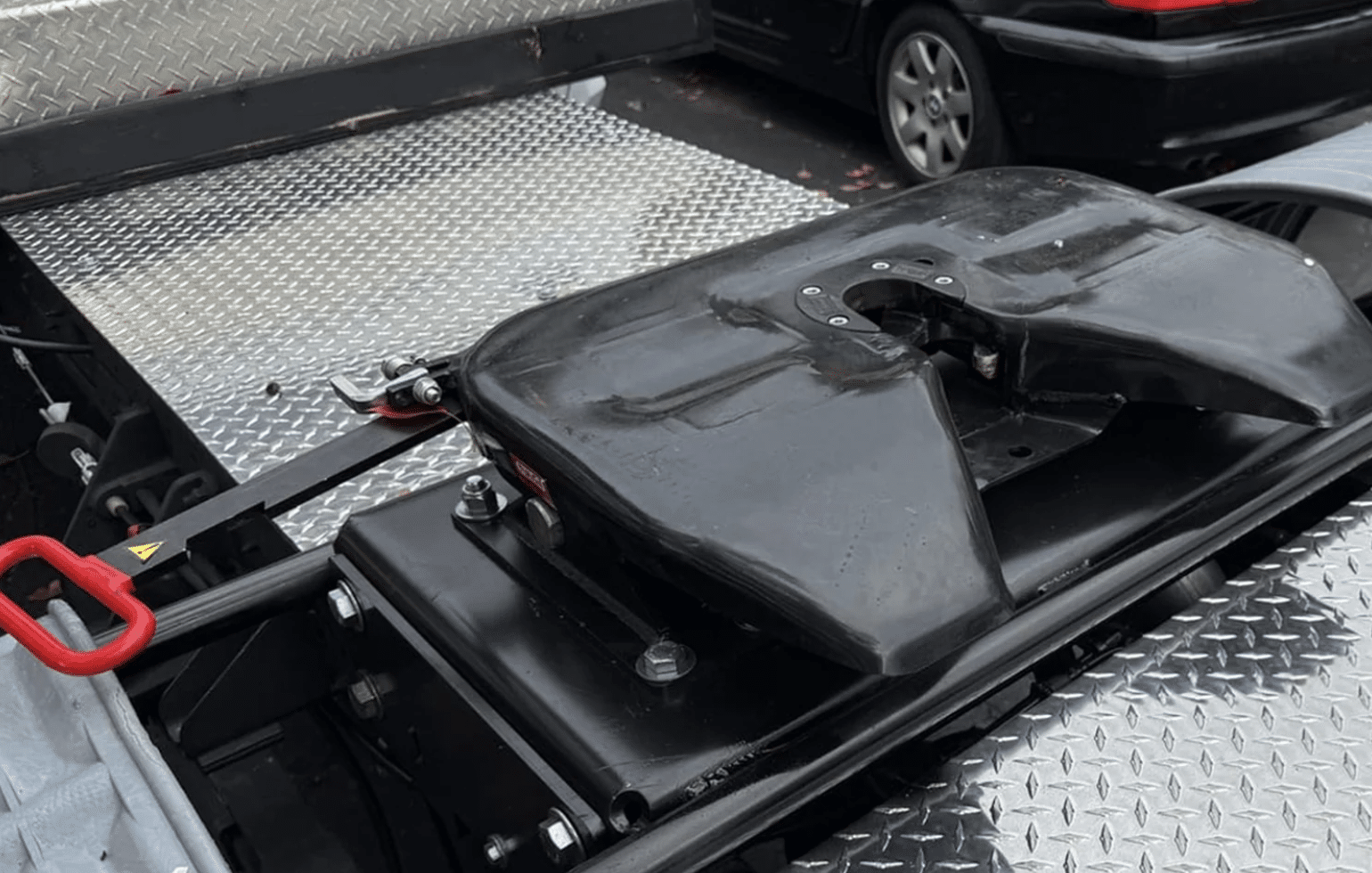
Unlike light commercial vehicles, the Ram 5500 is a heavy-duty commercial vehicle built to meet high gross vehicle weight rating (GVWR) requirements and for sustained cargo transport over long distances. With a successfully installed fifth wheel hitch, it can become a revenue-generating machine for high-speed freight operations. The 5th wheel hitch distributes the weight directly onto the rear axle, ensuring stability even under heavy trailers. In this guide, we will discuss how to install a fifth wheel hitch on the Ram 5500 and what you should pay attention to.
Understanding the Ram 5500 Chassis for High-Speed Load Transportation Demands
In the demanding world of commercial logistics, speed, durability, and the ability to haul heavy freight over immense distances require vehicles that go far beyond standard consumer trucks. This is precisely where the Ram 5500 chassis carves its niche, stepping away from traditional pickup truck architecture to serve as a massive, industrial-grade business partner. Unlike conventional trucks that arrive from the factory with a pre-mounted cargo bed, the Ram 5500 is engineered as a commercially viable, dedicated chassis cab platform truck. This unique minimalist setup provides commercial fleets, independent hotshot haulers, and logistics companies with an uncompromised structural canvas. It allows operators to install specialized flatbeds, service bodies, or custom freight gear tailored strictly to their unique operational profiles.
For transportation enterprises racing against strict delivery deadlines on cross-country highways, the primary advantage of the Ram 5500 is its staggering towing capacity, which reaches up to 36,000 lbs. This colossal pulling power is fundamentally supported by its signature box-shaped chassis design. Fabricated from high-tensile, hydroformed steel, this heavy-duty frame exhibits extreme resistance to torsional twisting, bending, and long-term metal fatigue under load. Additionally, the dual rear wheel (dually) configuration on the rear axle plays a critical role in high-speed operations. When navigating tight highway curves or executing sudden lane changes at freeway speeds, the dual rear wheels provide an expansive contact patch that plants the truck firmly onto the asphalt. This setup minimizes body roll, combats aerodynamic disturbances caused by passing semi-trucks, and establishes the unwavering stability required for fast, high-speed load transportation.
This heavily reinforced structural backbone provides the exact mechanical foundation necessary to mount a fifth wheel hitch, which serves as the primary link between the truck and its heavy trailer. On the vast majority of Ram 5500 builds, this heavy-duty coupling system is strategically positioned either directly above the rear axle or slightly forward of the axle centerline. This specific geometric placement ensures an optimum weight distribution across both the front and rear axles of the cab. When this robust chassis is paired with a high-torque diesel drivetrain, such as the legendary Cummins turbo-diesel engine, the vehicle effortlessly manages the immense vertical downforce known as trailer pin weight. Even when loaded to its absolute maximum capacity, the immense low-end torque guarantees that the truck can maintain highway speeds up steep mountain passes without straining, maximizing transit efficiency.
Choosing the Right Fifth Wheel Hitch for Commercial Use
In the fast-paced ecosystem of commercial freight transport, every single mechanical link is pushed to its absolute physical limits. Within this high-stress environment, a heavy-duty coupling mechanism cannot be viewed as a mere recreational accessory or a standard consumer tow package; rather, it is a fundamental, primary engineering component that dictates the safety, efficiency, and legality of the entire logistics operation. Commercial hauling demands are vastly different from weekend RV trailering. Commercial hotshot drivers keep their rigs running almost continuously, subjecting the vehicle to severe pin weights over hundreds of thousands of miles while demanding absolute tracking stability through unpredictable weather and rough terrain. Therefore, a commercial platform capable of handling high tonnage like the Ram 5500 must be paired with an industrial-grade coupling system engineered to withstand long distances, high thermal stress, and continuous dynamic forces.
For the Ram 5500 chassis cab units engaged in rigorous commercial transport, fixed fifth wheel hitches are universally preferred over complex sliding alternatives. The primary catalyst behind this preference is the truck’s inherently long wheelbase. The extended distance between the rear of the cab and the rear axle provides an exceptionally large clearance zone for the trailer nose. This generous clearance eliminates the need for heavy, expensive sliding mechanisms, which are traditionally used in short-bed consumer pickups to prevent the trailer from striking the truck cab during tight turns. By eliminating these moving parts, a fixed system offers significantly greater structural simplicity, an increased weight capacity, and far fewer wear points. This reduction in mechanical complexity drastically lowers the risk of component failure during transit, making a fixed 5th wheel hitch setup the most reliable, cost-effective, and safe choice for high-mileage commercial freight operations.
Mounting Options: Flatbed Mounting vs. Traditional Bed Rails
The specific method chosen to secure the hitch to the underlying truck frame is just as critical as the quality of the hitch itself. A large percentage of modern commercial Ram 5500 configurations utilize a factory-mounted setup or a dedicated flatbed integration package. When a hitch assembly is configured according to the truck manufacturer’s precise engineering blueprints, the resulting connection benefits from a much higher degree of dimensional accuracy. Factory-vetted mounting points align perfectly with the pre-established load-bearing sections of the high-strength steel frame, maximizing overall structural integrity while eliminating the human errors often associated with aftermarket modifications.
Conversely, traditional bed rail systems are far more suited for light-duty applications, casual towing, or non-commercial recreational trailers. While these rail systems offer a degree of modular flexibility for consumer trucks, they lack the sheer mass and rigid fastening surface required to endure the non-stop, punishing stresses of commercial transport. On the other hand, commercial flatbed mounting places the hitch mechanism directly on top of, or slightly ahead of, the rear axle centerline. This layout leverages the truck’s suspension geometry to distribute the massive trailer pin weight evenly across the entire vehicle footprint. Proper weight distribution prevents the front steering axle from becoming light, ensuring the driver maintains maximum steering authority, optimal front tire traction, and predictable braking performance when stopping heavy loads at high speeds.
Safety and Compliance in Commercial Fast Freight Transport Operations
Installing a heavy-duty coupling system onto a Ram 5500 chassis cab is a highly disciplined task that demands absolute mathematical precision and strict adherence to mechanical protocols. The entire installation process begins with taking meticulous, double-checked measurements. The technician must locate the exact sweet spot on the frame-either directly over the rear axle or slightly biased toward the front—to guarantee flawless weight transfer during acceleration and braking. Once this optimal point is established, the technician marks the mounting locations on the frame rails, verifying with absolute certainty that these marks align perfectly with the truck’s heavy-duty reinforced crossmembers. Next, the specialized frame brackets or heavy-duty mounting plates are positioned against the chassis, and all grade-8 fasteners are threaded through. These bolts must be tightened with a calibrated torque wrench strictly to the manufacturer’s torque specifications. Avoiding bolts that are too loose or too tight is critical, as undertorqued bolts can vibrate loose, while overtorqued bolts can suffer from immediate thread stripping or hidden structural fractures.
Once the foundational base plates are locked to the chassis, the main hitch head assembly is mounted onto the base, and a precision level is used to verify that the entire system sits completely flat. At this stage, the technician carefully measures the clearance between the underside of the trailer overhang and the top surface of the flatbed to ensure there is adequate room for pivot motion on uneven terrain. After the hardware installation is verified, the trailer is backed up to engage the kingpin into the hitch jaws. Once the kingpin connection is visually confirmed and locked with the safety pins, a controlled pull test is performed by engaging the truck’s trailer brakes and gently tugging forward to ensure a positive mechanical lock. Finally, the electrical wiring harness and the electronic brake controller are plugged in and tested using diagnostic tools to guarantee that the trailer’s brake magnets and lighting systems communicate perfectly with the Ram 5500’s onboard computers. If any difficulties, structural questions, or alignment uncertainties arise at any point during this complex procedure, professional assistance should be sought immediately.