
What is the most reliable midsize truck? For this 2026 ranking, we compared the current Toyota Tacoma, Nissan Frontier, Honda Ridgeline, Chevrolet Colorado, GMC Canyon, Ford Ranger and Jeep Gladiator using our reliability reporting, recalls and owner complaints.
The answer is not simply the truck with the fewest online complaints. Sales volume, model age and problem severity all matter. A frozen touchscreen is frustrating. An engine that loses power or needs replacement matters much more.
Our conclusion: The Toyota Tacoma is the most reliable current midsize truck, with the Nissan Frontier close behind. The Honda Ridgeline finishes third. The Ford Ranger and Jeep Gladiator land at the bottom because their documented problems include more serious powertrain or safety concerns.
How we ranked the most reliable midsize trucks
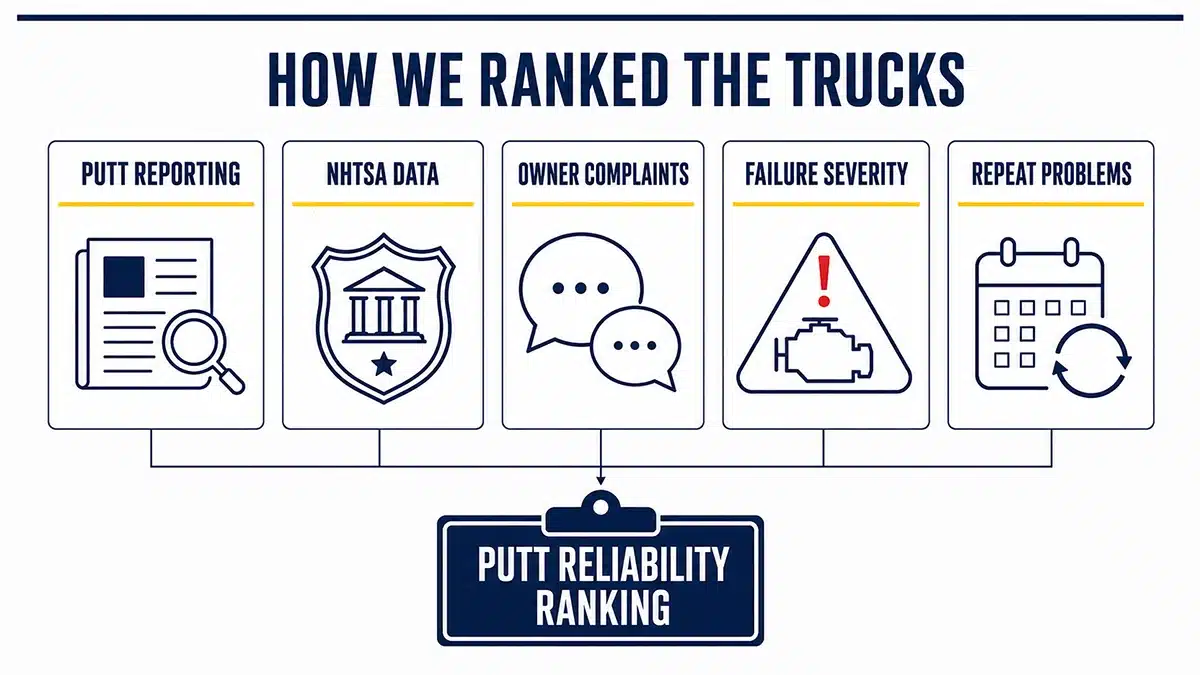
Reliability rankings are difficult because no single source captures every failure. NHTSA.gov complaints help identify repeated failures and safety concerns, but they are not failure rates. A high-volume truck can collect more complaints simply because more examples are on the road.
Recalls are also imperfect. A recall can expose poor quality control, but it also means an automaker identified a defect and offered a repair. Technical service bulletins are useful because they show what manufacturers and dealers are seeing even when an issue does not rise to the level of a safety recall.
We gave the most weight to our reporting on recurring failures, official recalls and investigations, owner experiences, repair severity and whether a problem continued across several model years. This ranking focuses on the current generation of each truck, although the Ridgeline and Gladiator have longer histories than the recently redesigned Tacoma, Ranger and GM twins.
1. Toyota Tacoma

The redesigned Toyota Tacoma wins, although it does not have the long-term record of the previous generation. Our 2024-2026 Toyota Tacoma known-problems investigation found early automatic-transmission complaints involving trucks jumping into neutral, becoming stuck in a high gear or responding sluggishly.
Those reports deserved attention, but they have not developed into the broad failure pattern some early social-media coverage suggested. Toyota sold more than 270,000 Tacomas in 2025, and we found that the loudest transmission discussions continued to point back to early 2024 trucks. A technical service bulletin identifies certain affected units, while newer owner updates are more encouraging.
The Tacoma has had recalls involving the instrument display, rear brake hoses, a driveshaft and an incorrect weight label. Owners also report infotainment disconnects, rattles and a small fuel tank. None of those issues is trivial, but we found no widespread engine-hardware failures in the turbocharged 2.4-liter engine or hybrid powertrain.
Why it ranks first: Early transmission concerns appear limited, the engine has avoided the catastrophic story surrounding the larger Tundra, and most current complaints involve recalls or ownership irritations with defined remedies. The biggest caution is simply time. This generation still needs to prove itself at high mileage.
2. Nissan Frontier
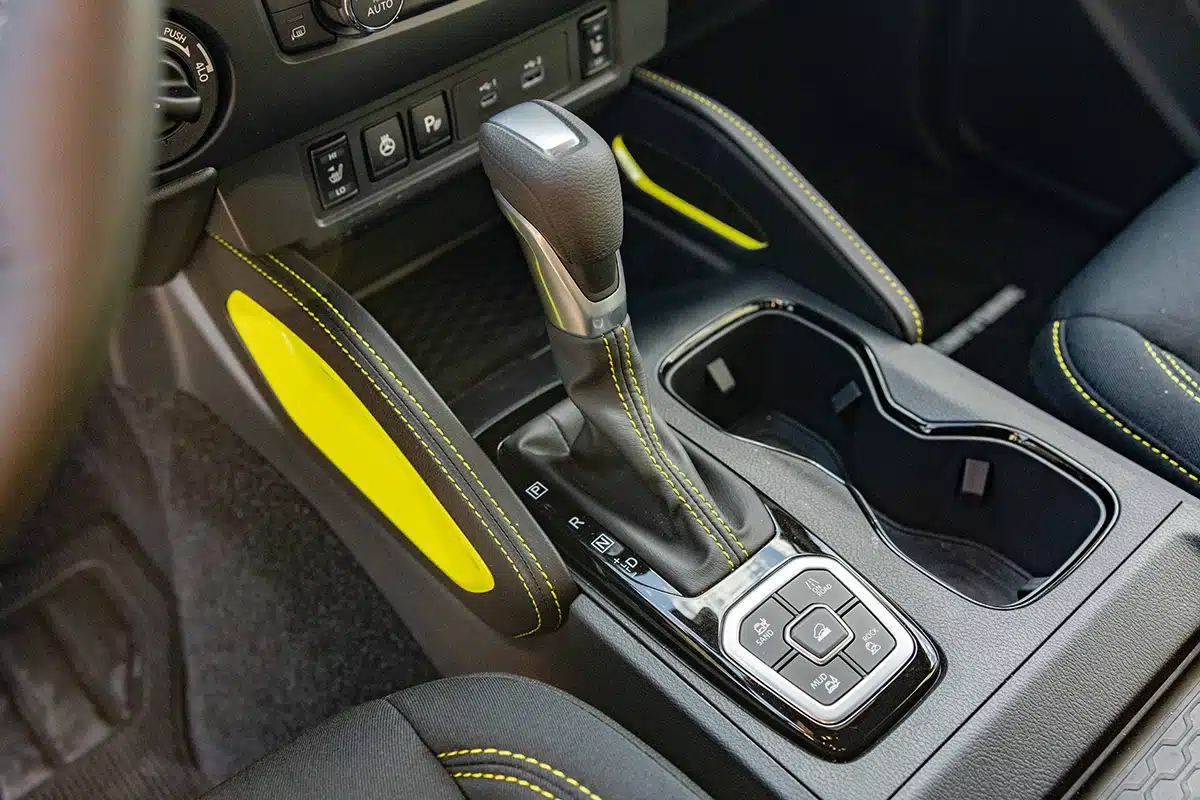
The Nissan Frontier makes a strong reliability case because its naturally aspirated 3.8-liter V6 and nine-speed automatic are less mechanically complicated than the turbocharged and hybrid systems used elsewhere in the segment.
Our 2023-2026 Nissan Frontier known-problems report found transmission complaints, electrical issues and recalls. Owners have reported rough or delayed shifts, unexpected warning messages, infotainment trouble and batteries that discharge. Nissan has also addressed problems through software updates and service information.
The Frontier is not free from safety concerns. Recall history includes issues that can affect vehicle operation, and buyers should check the VIN before purchase. Still, our reporting did not uncover a dominant current-generation engine-failure pattern or the volume of severe powertrain defects found in the Ranger and Gladiator.
Why it ranks second: The Frontier combines a proven, conventional engine with manageable known problems. Its age and straightforward powertrain give buyers more real-world evidence than the Tacoma, but its transmission and electrical complaints keep it just behind the Toyota.
3. Honda Ridgeline
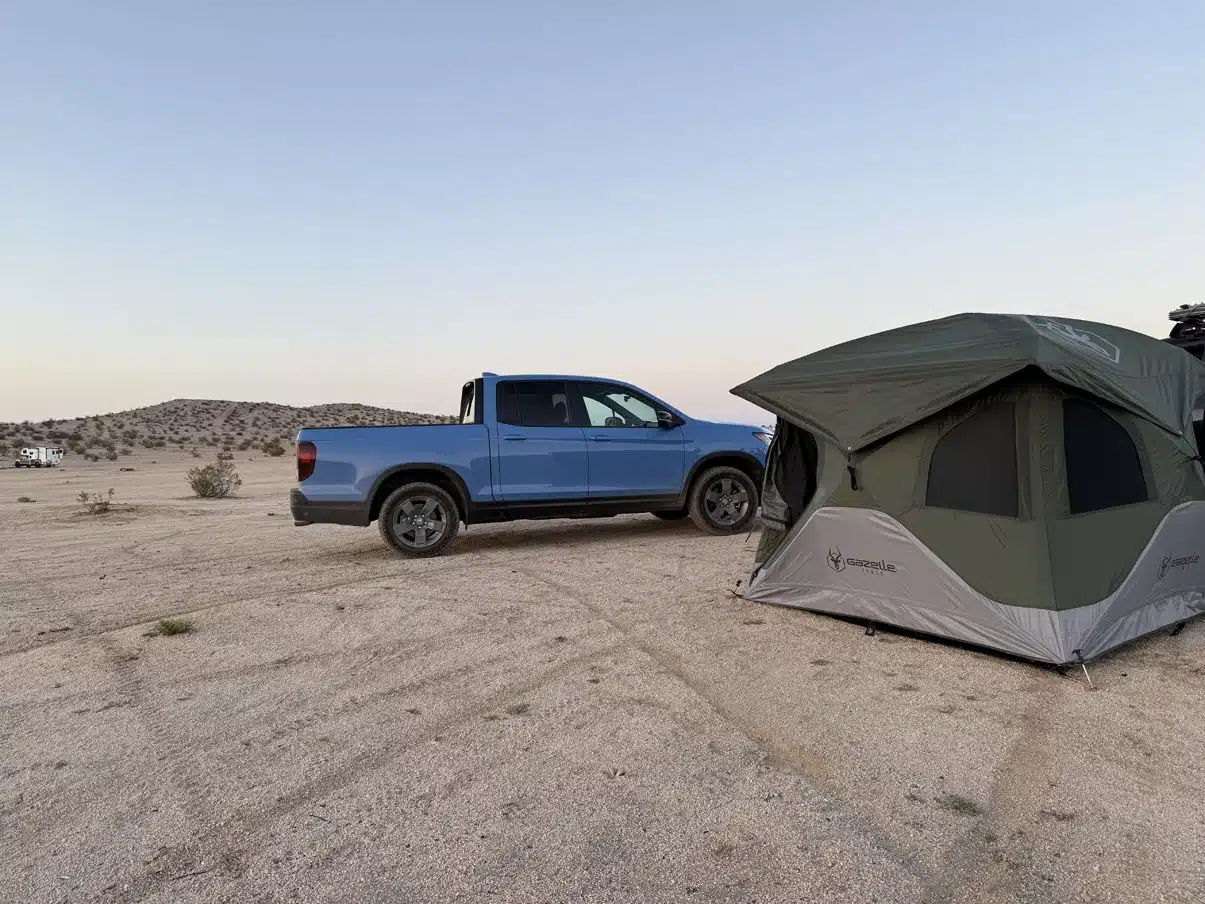
The Honda Ridgeline is the hardest truck to place because its current generation dates to 2017. That long production run supplies more evidence, but it also creates a longer list of recalls than a truck redesigned two years ago.
Our 2017-2026 Honda Ridgeline known-problems report identifies fuel-pump failures, fuel-injector trouble, water leaks, battery drain and sluggish infotainment. Earlier trucks also face a serious rear-subframe corrosion recall in salt-belt states. Other recalls involve the backup camera harness, seat sensors, steering and brake hardware.
The naturally aspirated V6 is generally well understood, and the latest nine-speed automatic avoids some of the criticism aimed at the earlier six-speed. Most current-model complaints do not point to a new, widespread engine or transmission crisis.
Why it ranks third: The Ridgeline has a lengthy record and a durable basic powertrain, but fuel-system recalls, corrosion exposure on older trucks and the sheer breadth of generation-wide issues prevent a higher finish.
4. Chevrolet Colorado and GMC Canyon

We rank the Chevrolet Colorado and GMC Canyon together because they share the same basic platform, turbocharged 2.7-liter four-cylinder engine and eight-speed automatic transmission. Their major reliability risks are substantially the same.
The 2023-2026 Chevrolet Colorado known-problems investigation found false emergency-braking activation, seat-belt concerns, coolant leaks, electrical glitches and transmission complaints. Owners have also reported cameras and screens failing, batteries draining after software updates and rough shifting.
The single-engine strategy simplifies shopping, but it also means buyers cannot choose a different powertrain to avoid a known weak point. On the positive side, we have not documented a widespread run of complete 2.7-liter engine failures in the midsize twins.
Why they rank fourth: The Colorado and Canyon have several software, safety-system and cooling complaints, but current evidence does not show a segment-defining engine crisis. They sit below the Ridgeline because their redesign is younger and their long-term durability remains less established.
5. Ford Ranger
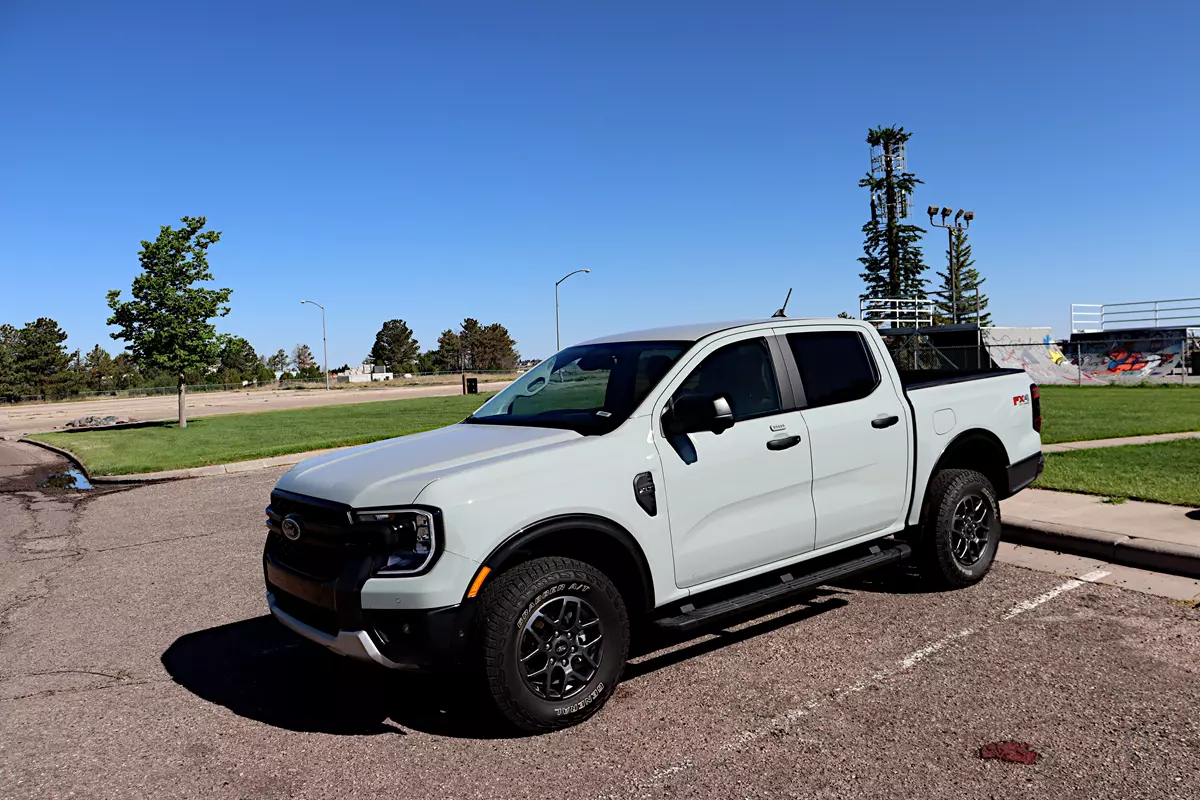
The current Ford Ranger offers strong capability, but its most serious problems carry too much weight for a higher ranking. Our 2024-2026 Ford Ranger known-problems investigation documents limited 2025-2026 recalls for 2.3-liter engines that can fail and cause a sudden loss of drive power. The remedy can require replacement of the engine long block.
Separate recalls cover EGR-valve failures that can also cause a loss of drive power. Technical service bulletins address harsh or delayed 10-speed automatic shifts, sometimes through control-module programming and sometimes through internal transmission repair. Additional recalls involve seats, airbags and other safety hardware.
Not every Ranger engine is affected, and the available 2.7-liter EcoBoost and Ranger Raptor’s 3.0-liter EcoBoost have different risk profiles. Still, buyers must research the exact engine, build date and recall status.
Why it ranks fifth: The affected populations may be limited, but sudden power loss and engine-long-block replacement are exactly the severe outcomes our methodology penalizes most heavily.
6. Jeep Gladiator
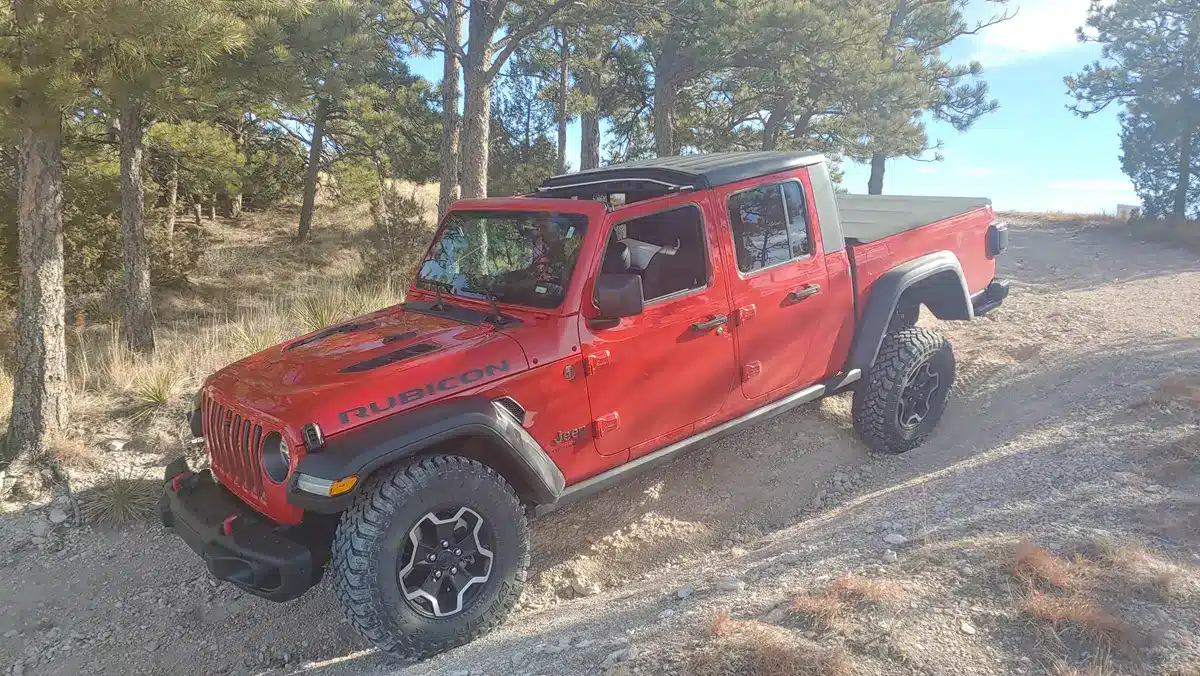
The Jeep Gladiator finishes last. Its solid axles, removable roof and body panels create capability no other midsize truck matches, but they also contribute to a distinctive reliability profile.
The 2020-2026 Jeep Gladiator known-problems report covers steering wander and death wobble, Pentastar V6 valvetrain ticks, coolant leaks, roof and window leaks, paint bubbling and infotainment problems.
The current concerns are the Pentastar V6 valvetrain tick, coolant leaks, steering wander and death wobble, electrical problems, infotainment glitches and roof or window leaks. The electric-hydraulic power-steering connection also remains relevant to newer trucks.
Why it ranks sixth: Even after removing the discontinued diesel and manual transmission from consideration, the 2026 Gladiator has the broadest mix of current mechanical, steering, cooling, electrical and water-intrusion concerns in this group. Its enthusiast appeal is real, but buyers prioritizing reliability have safer choices.
The bottom line: Which midsize truck should you buy for reliability?

The Toyota Tacoma is our most reliable midsize truck based on the evidence available today. Early transmission fears have not turned into a widespread failure trend, and the turbocharged engine has avoided a documented hardware crisis. Its first-place finish is not based on Toyota’s reputation or the durability of the previous Tacoma. It is based on what we can document about the current truck.
The Nissan Frontier is the conservative alternative for buyers who prefer a naturally aspirated V6 and a more established powertrain. It has transmission and electrical complaints, but we did not find one dominant failure that defines the current generation. Buyers who want a simpler truck and do not need the Tacoma’s hybrid option should put the Frontier near the top of the test-drive list.
The Honda Ridgeline remains a strong choice for buyers who prioritize comfort, cabin space and on-road driving. Its longer production history gives us more data than the recently redesigned trucks, but that history also includes fuel-system recalls, water leaks and corrosion concerns on older salt-belt examples. A new 2026 Ridgeline and a used 2017 model should not be treated as the same reliability proposition.
The middle and lower portions of the ranking require more homework. Colorado and Canyon buyers should confirm that recalls and software updates are complete and watch for cooling, electrical and transmission symptoms. Ranger buyers need to verify the engine, build date and recall status because the most serious engine and EGR actions affect specific trucks. Gladiator buyers should understand that its current reliability concerns come with a specialized solid-axle, removable-body design that prioritizes off-road character over everyday refinement.
This ranking is also a snapshot. The Tacoma, Ranger, Colorado and Canyon are relatively young designs, so their positions can change as more trucks accumulate mileage. A small number of early failures can look alarming, while a defect that appears after 80,000 miles may not be visible yet. We will move a truck up or down when recalls, investigations, technical evidence or owner patterns justify it.
This does not mean every Tacoma will outlast every Frontier or that every Gladiator will have problems. It means our reporting currently gives the Tacoma the best overall case after balancing frequency, severity, repair cost, model age and the amount of evidence behind each concern.
Before buying any truck, use the NHTSA recall lookup, research the exact engine and transmission, review maintenance records and arrange a pre-purchase inspection. For a new truck, ask the dealer to document that every open recall and software update has been completed. For a used truck, a clean inspection and complete service history matter more than the badge on the grille.








1 reply
Loading new replies...
Administrator
Moderator
Join the full discussion at the Forum Pickuptrucktalk →