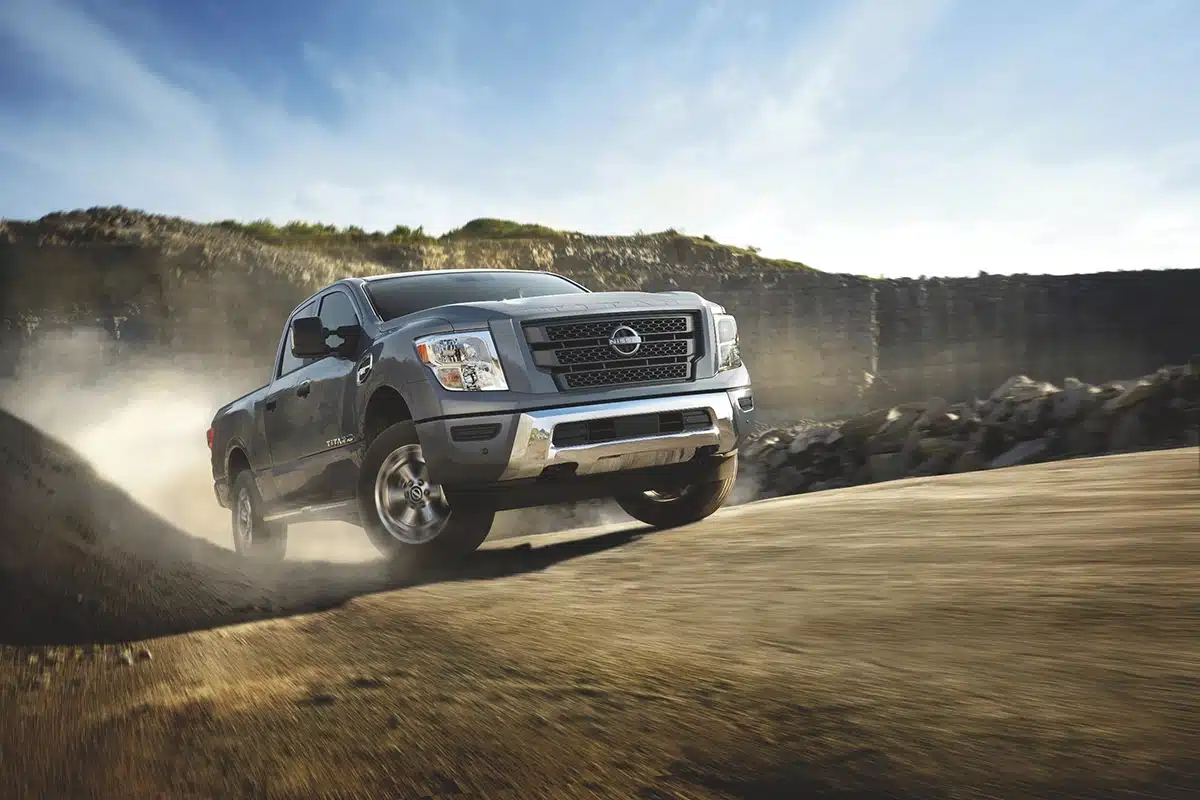
Nissan has laid out a new product-family plan built around body-on-frame vehicles made in Canton, Mississippi. The company has confirmed a revived XTerra, a redesigned Frontier, a Nissan three-row SUV and Infiniti variants. But there is one detail that should make Titan fans look twice: the presentation reportedly showed four Nissan vehicles, while the written description identifies only three.
That does not mean Nissan has confirmed a new Titan. It has not. But the gap is real enough to ask the question: What is the fourth Nissan vehicle, and could the answer be a full-size pickup return?
A New Nissan Truck Family Starts in Mississippi

Nissan says it is reorganizing most of its global lineup into three product families to accelerate development, lower costs and increase parts commonality. The first family is especially important for U.S. truck and SUV shoppers: five body-on-frame vehicles that will be built in Canton.
The revived XTerra is expected to lead the program at around 2028, followed by four related vehicles by the end of the decade. Nissan has also said the family will use V6 engines and a new V6 parallel-hybrid system. The company is pitching the approach as a way to get the first vehicle to market in 37 months and follow-up products in roughly 30 months.
That is a meaningful shift from developing one nameplate at a time. Nissan is planning the platform, powertrains, software and many core components for the whole family at the start. For a company trying to recover momentum and control development costs, that could be a smart way to place several higher-margin trucks and SUVs on the same foundation.
Four Nissan Vehicles, but Only Three Names

Here is where the Titan conversation gets interesting. The AutoNews.com report describes the body-on-frame family as the XTerra, a Nissan three-row SUV, the next-generation Frontier and two Infiniti SUVs. That is five vehicles. Yet the presentation graphics reportedly showed four Nissan vehicles and one Infiniti.
In other words, the written list points to three Nissan nameplates, while the slide appears to point to four. That is not proof of a Titan. It could be a reporting detail, a different Infiniti mix or another unannounced Nissan SUV. Still, it is a factual opening worth watching as Nissan fills in the rest of its truck-family plan.
For Titan fans, this is the moment to pay attention. Nissan is not merely refreshing a single truck. It is creating a shared body-on-frame family in the same Mississippi plant that previously built the Titan. If a fourth Nissan vehicle is waiting in the wings, a full-size pickup would fit the industrial logic.
Why a New Titan Fits the Plan
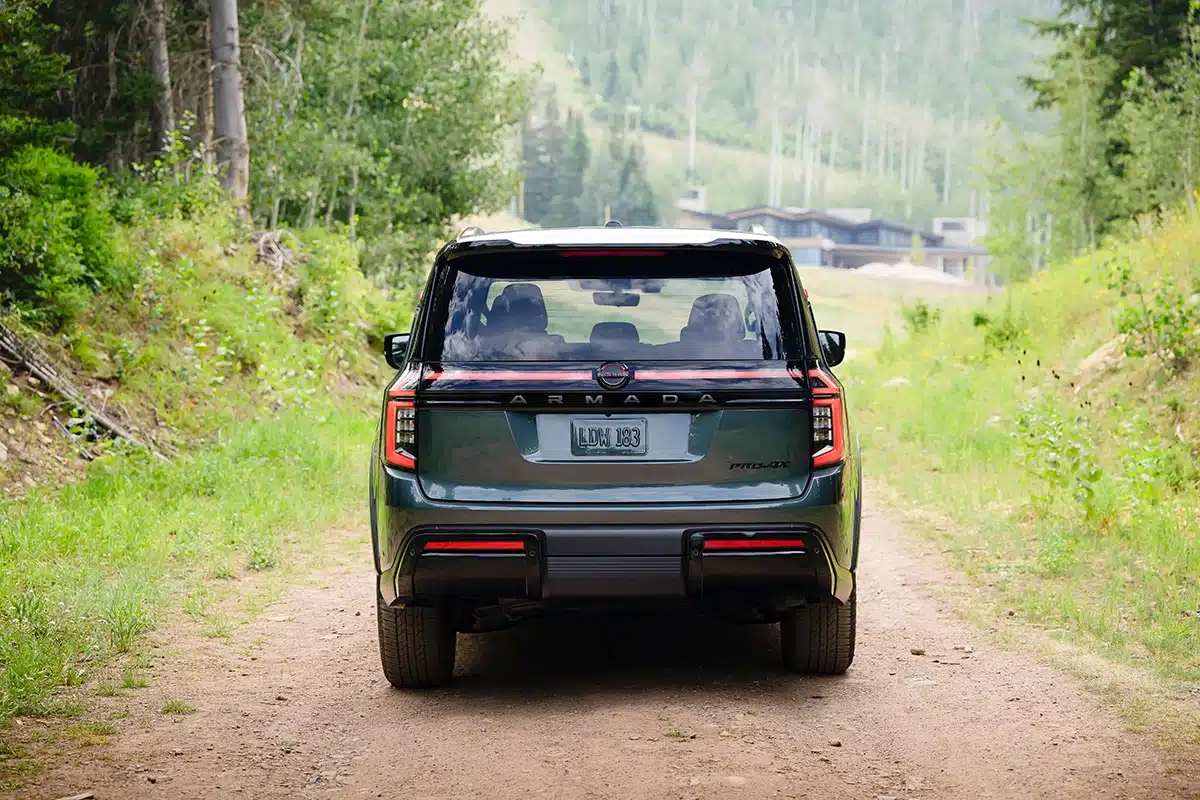
Nissan has used this playbook before. The original Titan and Armada shared the F-Alpha body-on-frame architecture, even though the pickup and SUV had different bodies and wheelbases. That is the relevant precedent. Shared architecture does not require identical dimensions. It allows an automaker to spread the cost of its engineering, components and manufacturing across several products.
The confirmed Nissan three-row SUV could be a future Armada. If so, the family would already have the kind of large, body-on-frame SUV architecture that could support a full-size crew-cab pickup derivative. That does not make a Titan inevitable. It does make a Titan easier to imagine than it would be if Nissan were starting from scratch.
There is also a business case. Full-size pickups and large body-on-frame SUVs are valuable products when manufacturers can build them efficiently. Nissan is openly targeting lower program costs and more common components. Adding a Titan-like pickup to a family that already includes SUVs and Frontier variants could increase the scale of the project without forcing the company to engineer an all-new standalone truck.
What Nissan Must Fix From the Last Titan
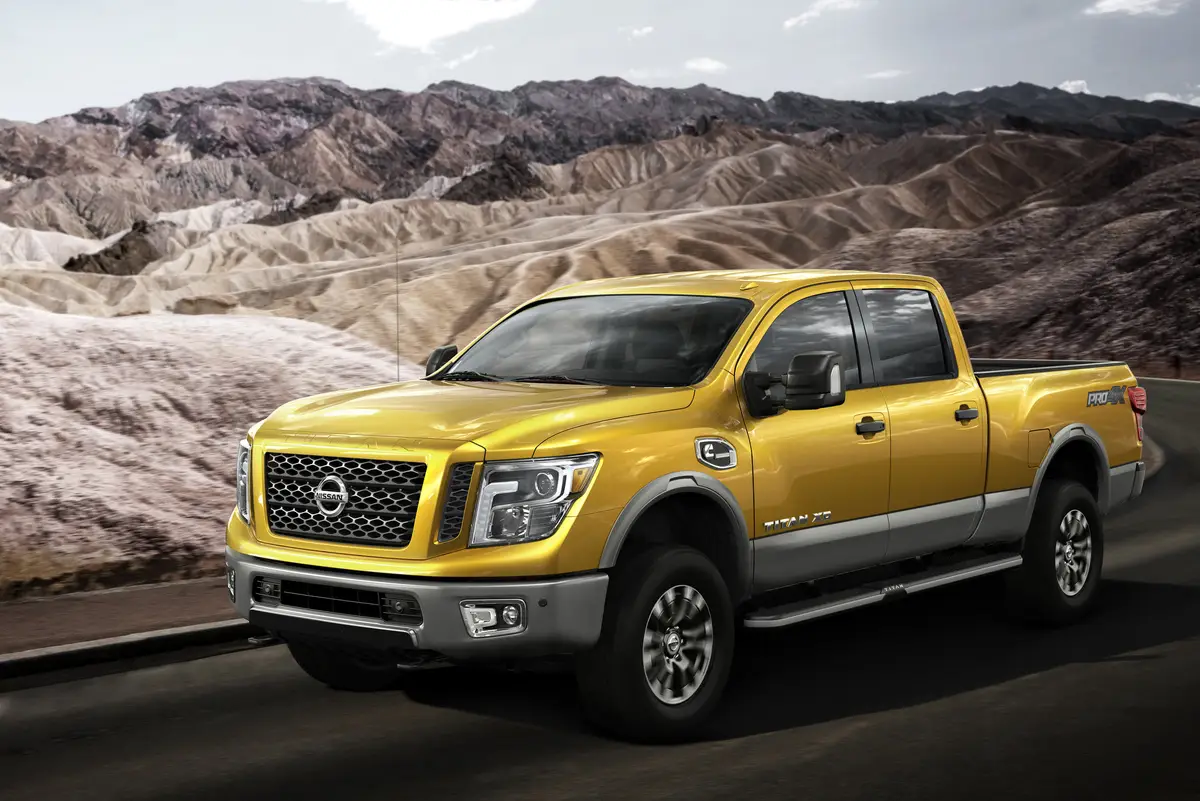
The second-generation Titan was not a bad truck. Its naturally aspirated 5.6-liter V8 had a loyal following, and the core truck was widely viewed as straightforward and durable. But the lineup did not always have a clear identity. The Titan XD and its 5.0-liter Cummins diesel landed awkwardly between a conventional 1/2-ton and a 1/2-ton HD truck, while some interior controls, trim execution and design details did not feel as polished as the competition.
A future Titan could bring this “honest truck” angle in a market now focused on screen size. That means a simple interior, durable materials, useful towing and hauling technology, clear trim differences and no need to chase every screen or feature rival brands add. The current Armada shows Nissan can deliver a far more polished cabin and a more premium-feeling large SUV than the old Titan era suggested. The Frontier also gives Nissan a useful template for rugged styling and a reputation built around a proven V6.
Powertrain choice will matter. Nissan has only confirmed V6 and V6-hybrid power for the new family, so a V8 remains a recommendation, not a reported plan. But there is a market argument for one. Stellantis CEO Antonio Filosa recently said 40 percent of pickup buyers would not consider a brand that did not offer a V8, even if they ultimately bought another engine. Ram’s decision to bring back the Hemi is a reminder that availability can matter as much as take rate for traditional truck shoppers.
The strongest Titan lineup would offer buyers a choice: a modern twin-turbo V6 and hybrid path for customers who want new technology, plus a proven-feeling V8 for shoppers who still want one. Nissan does not need to make the V8 the only answer. It needs to recognize that a V8 option can bring buyers into the showroom.
The Honest-Truck Opportunity, and the Timing Problem
The timing could be unusually favorable. Toyota’s recent Tundra engine recalls have raised questions among buyers who once treated Toyota as the easy reliability choice. GM truck shoppers are following the expanding 6.2-liter V8 investigation, 5.3-liter lifter concerns and transmission complaints. Ford and Ram have their own reliability debates. That creates an opening for a manufacturer willing to emphasize durability, straightforward ownership and a well-tested powertrain lineup.
Nissan has a chance to position a future Titan as the dependable alternative, not the most complicated truck in the room. That message would resonate if the vehicle delivers an honest cabin, strong towing capability, sensible pricing and engines buyers trust.
There is one major concern. Nissan is talking about speed, but the first body-on-frame product is still not expected until around 2028, with the full family arriving by 2030. If the market opportunity is open now, Nissan cannot afford to spend too long watching from the sidelines. The company’s new family strategy could be the right foundation for a Titan return. The question is whether the fourth Nissan vehicle on that slide turns out to be the one truck fans have been waiting for.