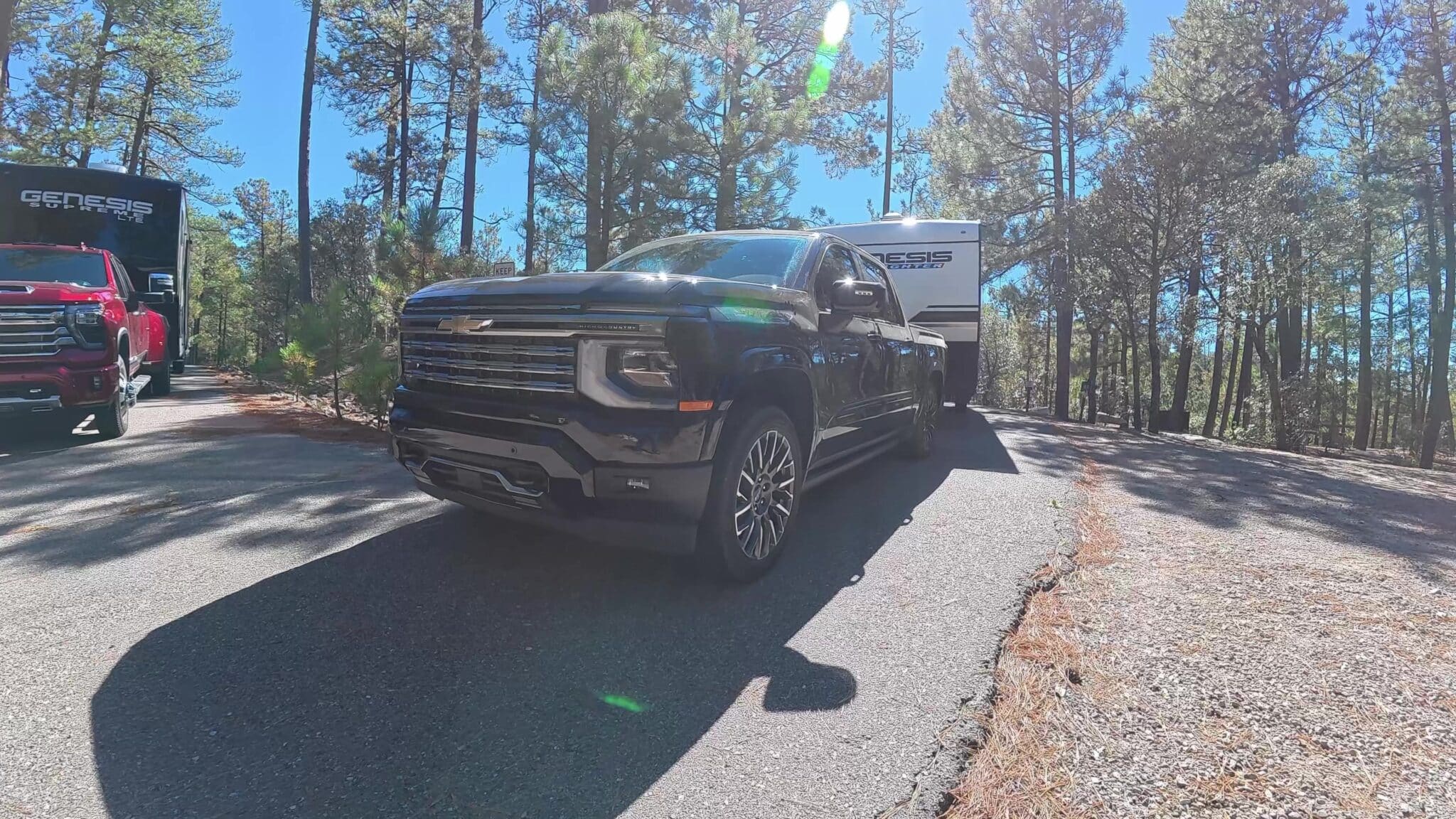
My 2027 Chevrolet Silverado 1500 first tow started with the camper and the truck’s rating label, but the details that stayed with me were the new trailer brake setup, the cameras and how the truck handled the mountain road.
I drove a High Country with the new 5.7-liter V8 and a camper behind it. This was a short first drive, not a maximum-towing challenge or a long-distance fuel-economy test. It was enough to get an initial feel for the engine, transmission and technology I would use while towing.
Start with the camper and the truck’s actual ratings
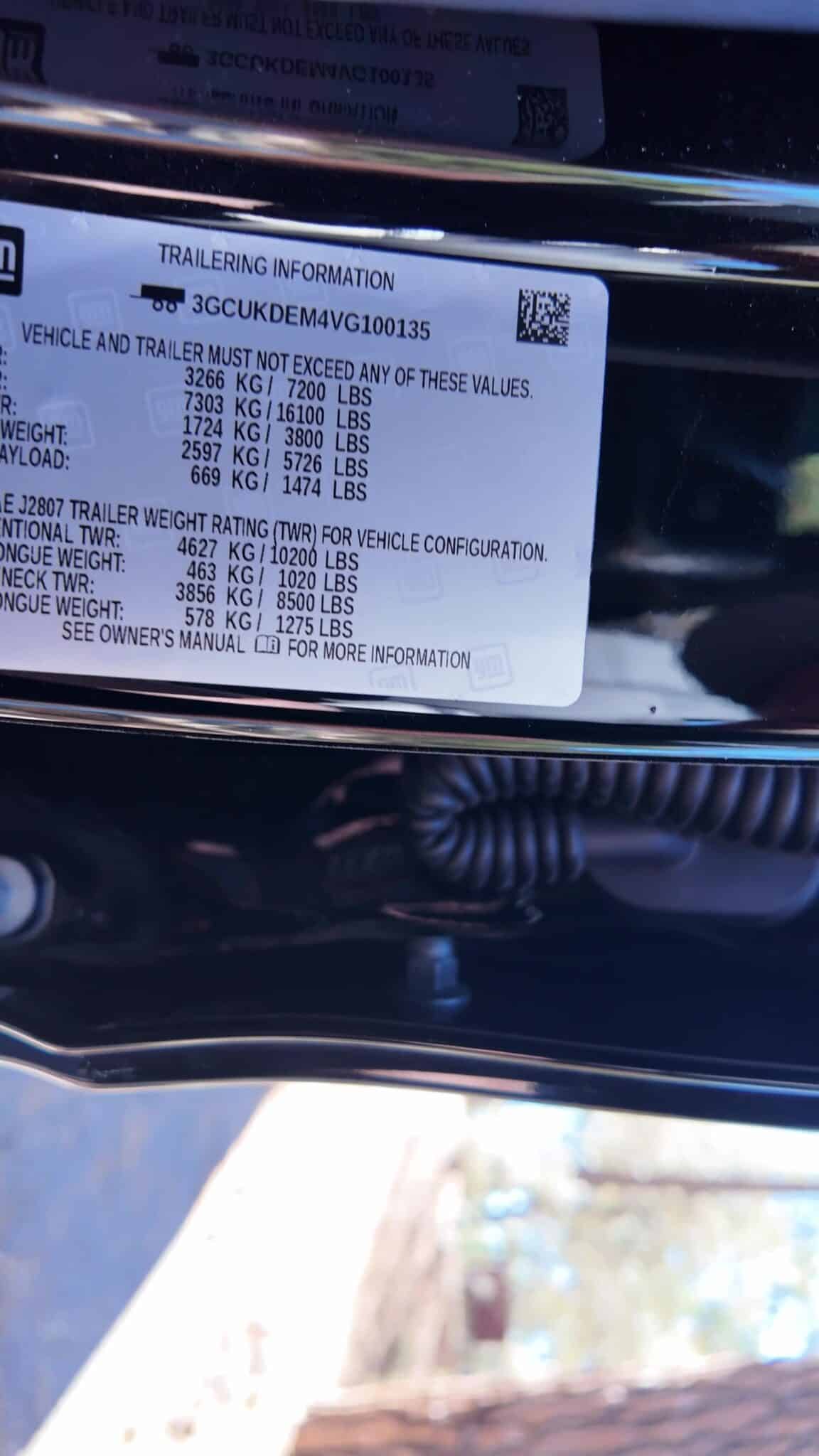
Before driving, I walked around the camper, checked the hitch setup and looked at the Silverado’s door-jamb trailering label. That is the place to start rather than assuming the highest advertised towing number applies to every truck.
The High Country I drove had a maximum payload rating of 1,474 pounds and a conventional trailer weight rating of 10,200 pounds. The label also listed a 7,200-pound gross vehicle weight rating, a 16,100-pound gross combined weight rating and a 1,020-pound conventional tongue weight rating. Those are the ratings for this particular truck, not the whole Silverado lineup.
I estimated the camper at roughly 5,000 pounds during the walkaround, but I did not put this combination on a scale. Treat that as an estimate, not a verified loaded weight or a maximum-capacity test. Passengers, cargo, hitch equipment and the trailer’s tongue weight all need to be accounted for when checking a truck’s payload.
This is also different from the long-distance towing I did with my 2023 Silverado Duramax. That trip let me assess the truck over thousands of miles. This drive provides an early look at how the redesigned gas-powered truck behaves with a camper behind it.
The new trailer brake gain setup gets its own demonstration
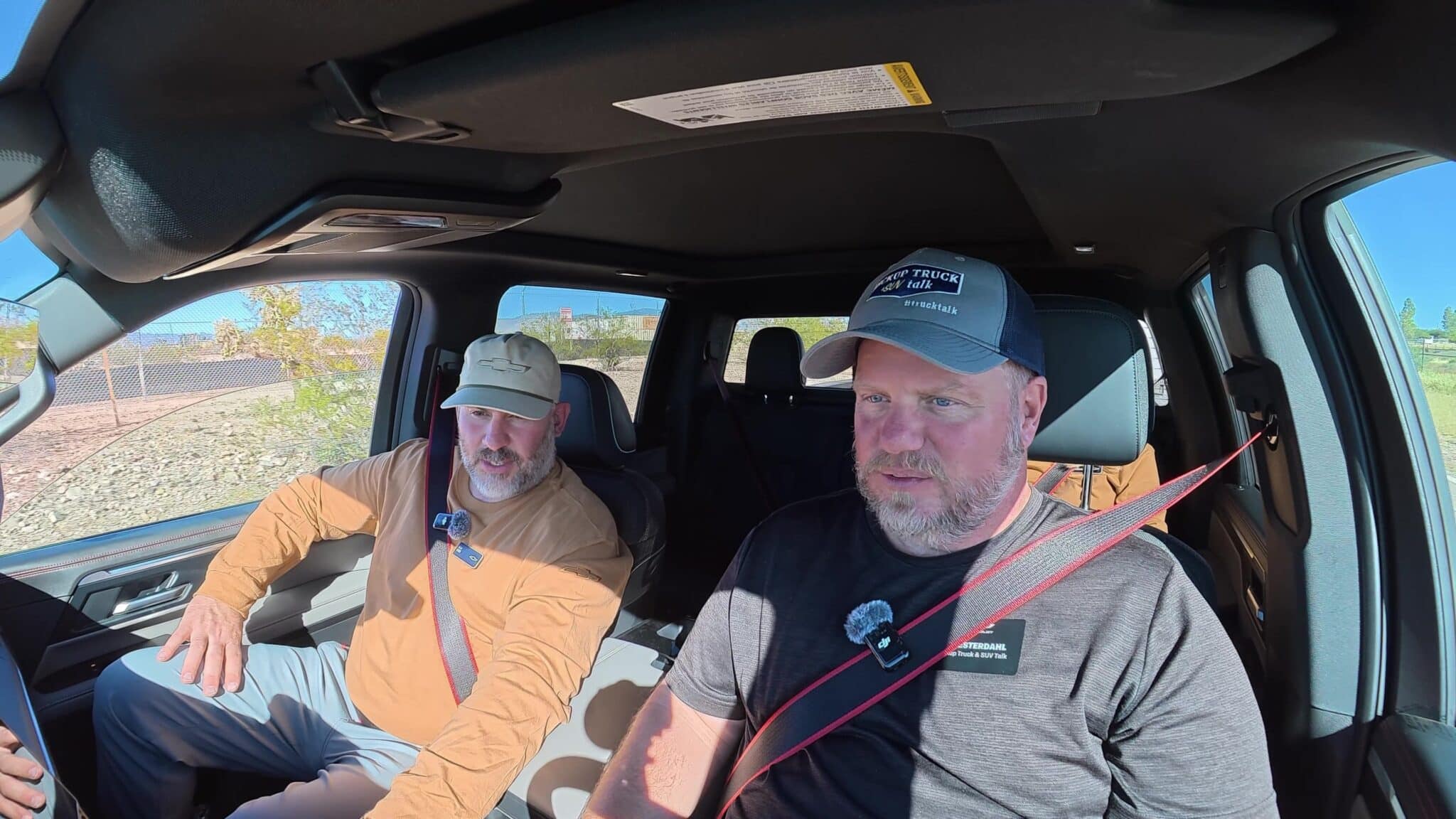
One of the features I wanted to show was the new trailer brake gain setup. The video cuts away from the camper walkaround to a separate demonstration with an engineer, then returns to the actual combination I drove.
That distinction matters. The demonstration compares different gain settings for its own truck and trailer. The camper combination used for my drive had already been set up with a gain of 4.0. Neither that number nor the settings shown in the demonstration should be copied as a universal recommendation for another trailer.
The useful part is seeing the setup process explained before heading out. Trailer brake gain needs to suit the actual combination and conditions. Follow the truck and trailer instructions rather than assuming a number that works in one demonstration will work for yours.
The new V8 and 10-speed made a good first impression
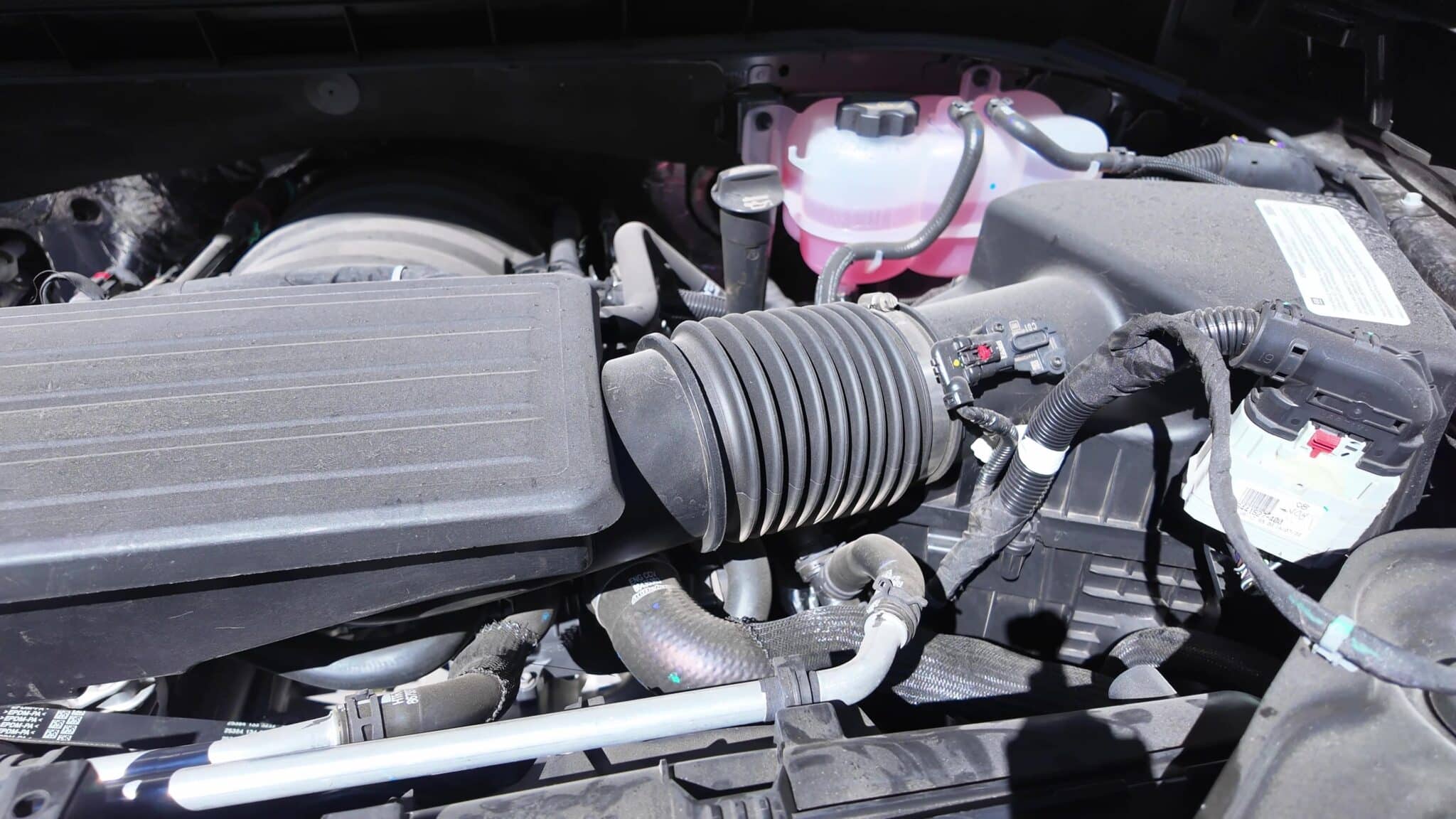
My test truck was a 2027 Chevrolet Silverado 1500 High Country with the new 5.7-liter V8. Chevrolet lists the 5.7-liter V8 for the High Country and pairs the Silverado’s engines with a 10-speed automatic transmission.
With tow-haul mode engaged, I wanted to pay attention to the transmission as well as the engine. There was plenty of power for this drive, the 10-speed was shifting well and the truck made the route feel manageable. Seat comfort also stood out during my time behind the wheel.
On a downhill section, I slowed for a corner and the transmission downshifted as I wanted it to. That response helped make the towing experience feel confident rather than stressful.
The important limit is the route. Much of this was a relatively low-speed mountain drive, including downhill travel at roughly 30 mph. I still want to spend time towing at highway speeds and on a longer trip before making a broader judgment. This was not a fuel-economy test, an instrumented braking test or a durability assessment.
The trailer cameras were more than a talking point
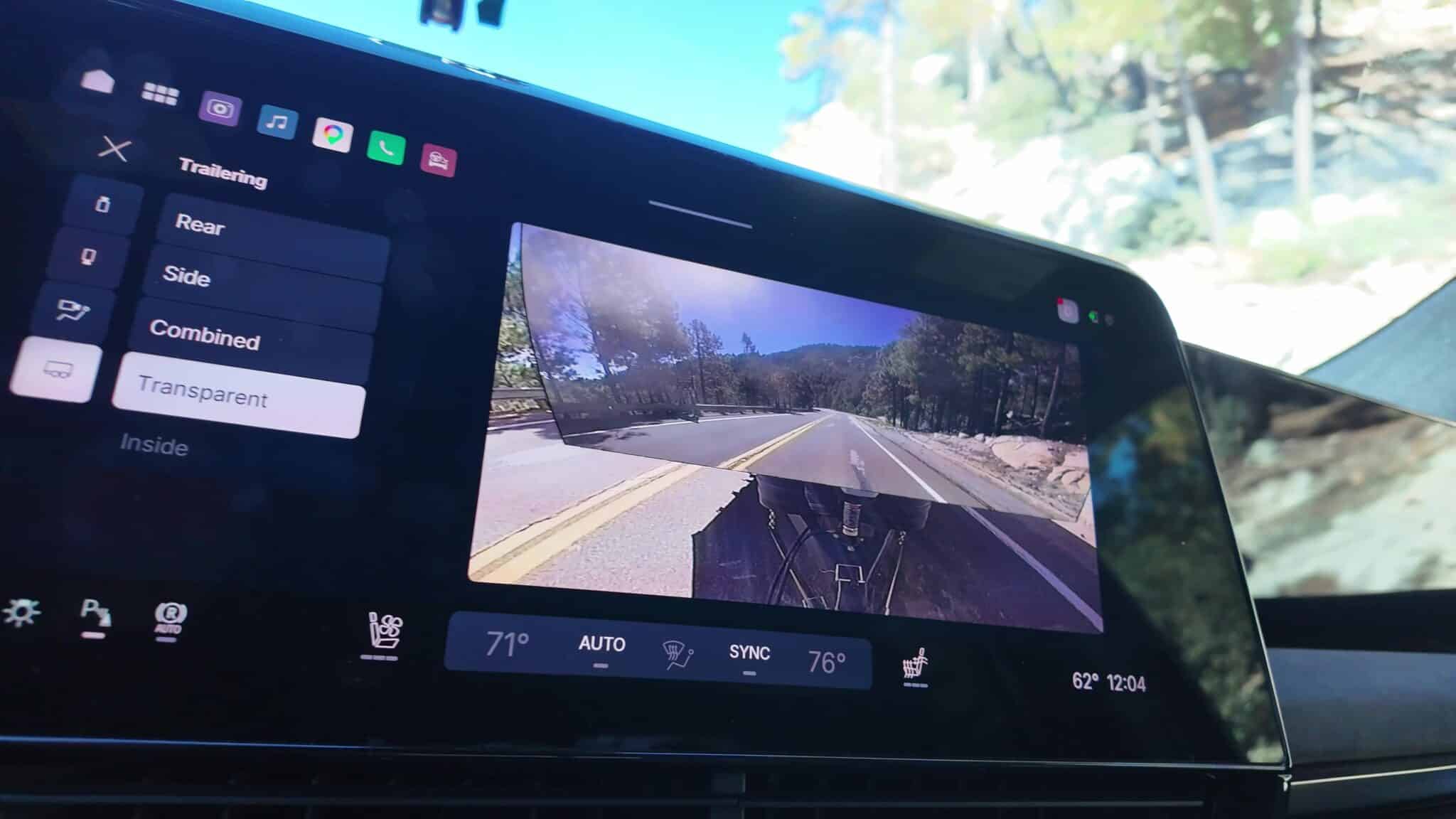
The cameras were among the features I appreciated most. The views stayed available without my having to keep pressing a button, and the side view was useful on the tighter roads through the forest.
The transparent-trailer view helped me see traffic behind the camper. I also liked having that information integrated into the truck’s displays rather than relying on an additional screen mounted to the windshield.
Later in the drive, I looked at the trailer side-blind-zone display and the way the side-camera view moved during a turn. Seeing more of the trailer’s side helped me judge its position and clearance. These views support the driver’s awareness; they do not replace watching the road and checking the surroundings.
For someone who tows regularly, details like that can matter just as much as a larger screen or another headline specification. In this short drive, the camera presentation was something I could actually use.
What I still want to test
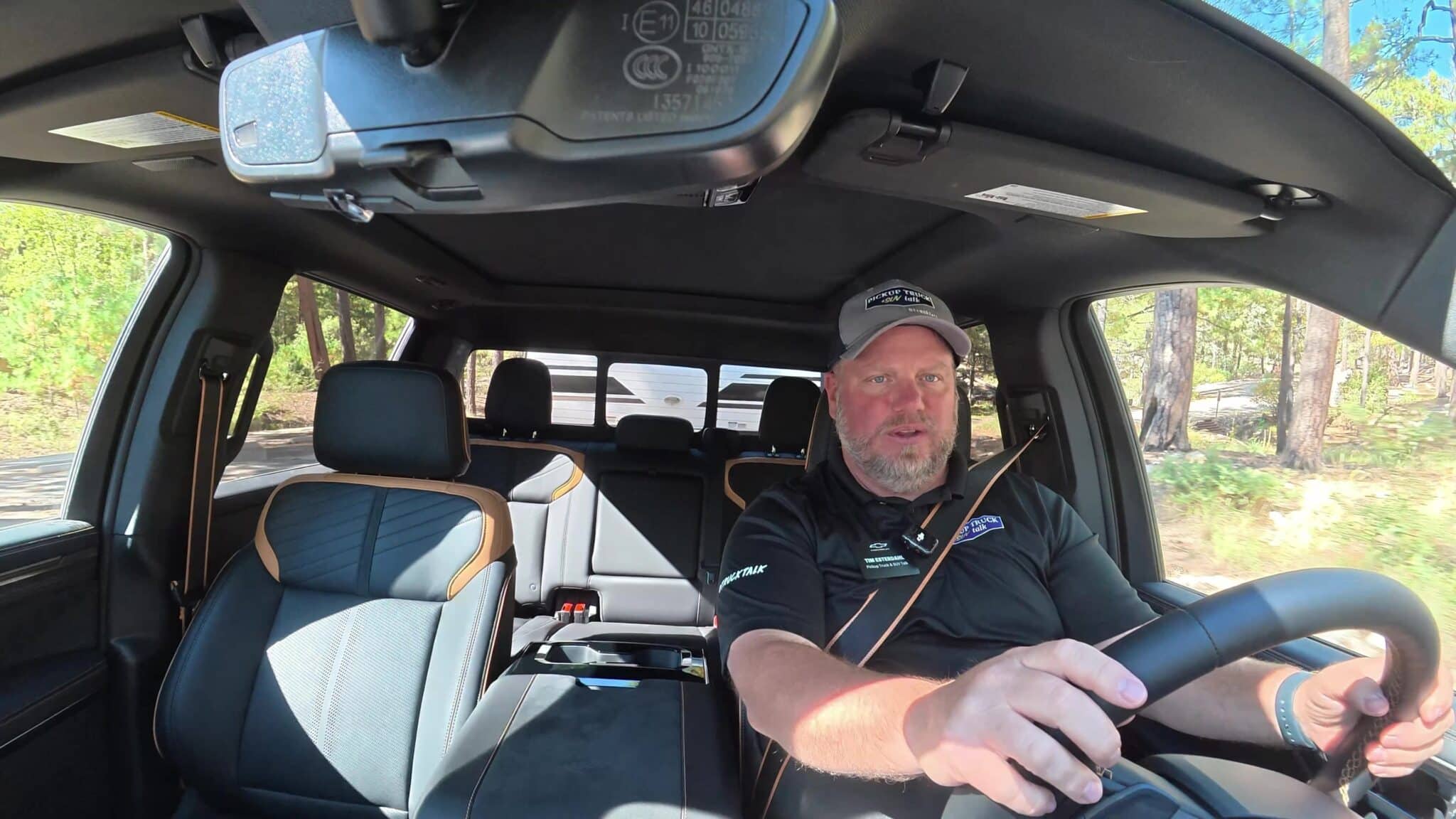
I also discussed Super Cruise with trailering and the potential benefit on a long drive, but I did not demonstrate hands-free towing on this route. That needs its own test on an appropriate compatible road.
My first impression of the Silverado’s towing behavior was positive. The engine had the power I wanted for this camper, the transmission responded well and the camera views helped me keep track of the trailer. Those are useful early results, with the limits of a short drive kept in mind.
The next questions are the ones that take more time: highway towing, a longer road trip and fuel consumption under repeatable conditions. For now, this drive shows how the new Silverado’s powertrain and towing technology work together, not just what its brochure promises.