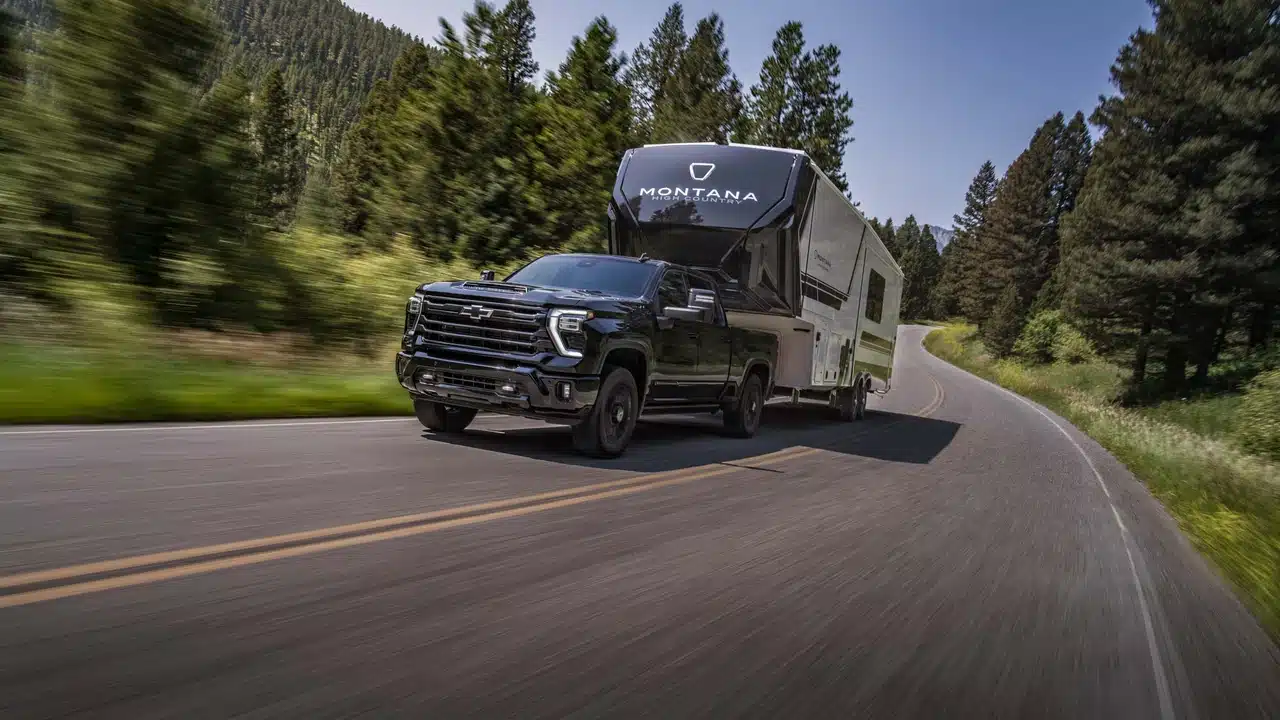
Towing a camper through the desert around Tucson, Arizona, I kept coming back to the same thought: this does not feel like the heavy-duty truck I expected. The 2027 Chevrolet Silverado HD has a new 8.3L Duramax diesel, but the lighter steering and easier brake-pedal effort were just as noticeable as the power. After driving both 2500 and 3500 trucks, there was a lot more to talk about than the biggest number on the tow chart.
The exterior and interior have not changed. This is not a styling overhaul or a new dashboard to learn. The familiar truck hides changes to the engine, chassis controls and off-road technology, and Chevrolet gave us a chance to try them with a camper on winding roads, a heavy gooseneck on a closed course and a ZR2 in the rocks.
Camper towing: Lighter steering and easier braking
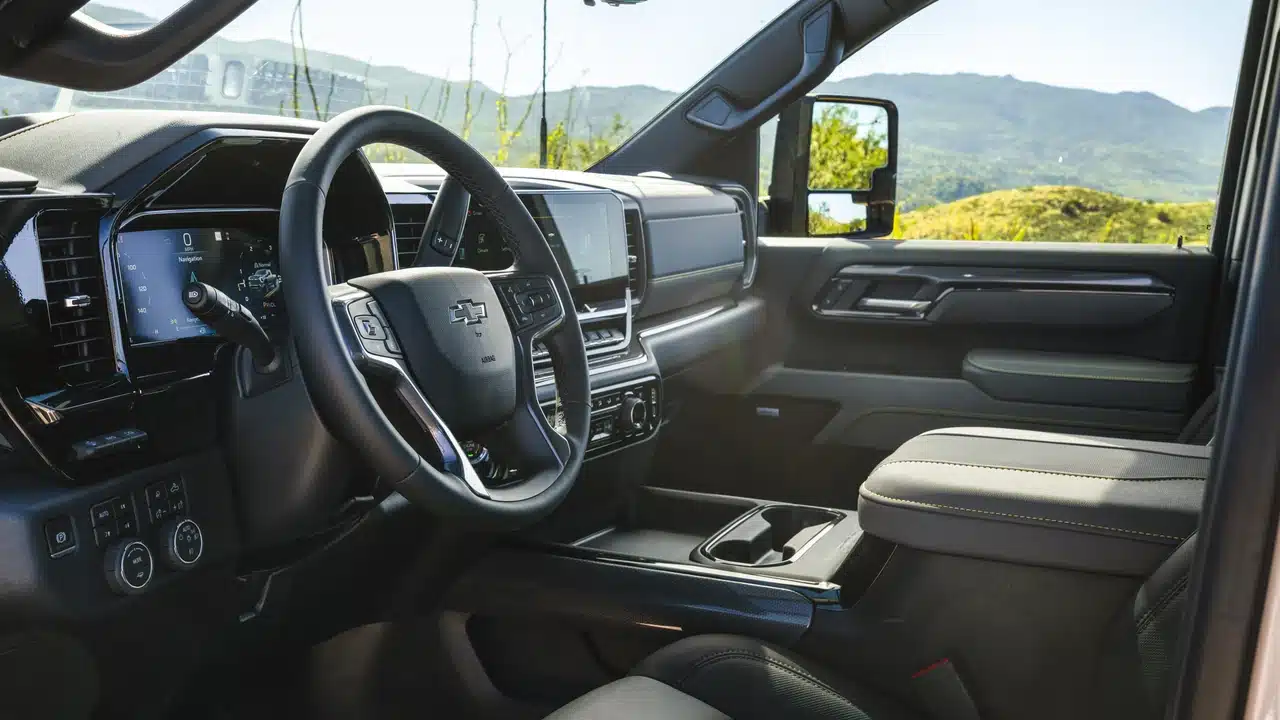
On the winding desert road with the camper, the steering was the first thing I kept talking about. It required so little effort that it took some adjustment. I could guide the truck through the curves without the heavier feel I normally associate with an HD pickup. With Tow/Haul mode and the exhaust brake enabled, the drive felt calm and relaxed.
There was no shortage of torque to get the camper moving or pull it uphill. Coming back down brought the brake changes into focus. The eBoost system took less pedal effort than I expected from the older setup, and the response felt immediate. I thought the steering and brakes felt more like a light-duty truck, while the diesel still had plenty of pulling power.
There is hardware behind that impression. Chevrolet has moved to electrically assisted rack-and-pinion steering and electronic brake boost. In the earlier chassis presentation, GM explained that the systems are intended to provide more consistent steering assist and braking response across engine speeds, along with less steering kickback. Out on the road, those changes made a big truck feel easier to manage.
The cameras also earned their place during a tight turnaround. I used the trailer-mounted rear view and side views to watch clearance near the edge of the road. In a separate closed-course exercise with a different HD truck and horse trailer, I explored the camera views and backing maneuvers further. The large screen made it easier to see what was happening around the combination.
The cabin was quiet enough that exhaust-brake activity was not always easy to hear in the High Country. Between the reduced control effort and the available views around the trailer, the benefit was not simply pulling more weight. It was making the work behind the wheel feel easier.
Maximum towing: Moving a 45,000-pound combination
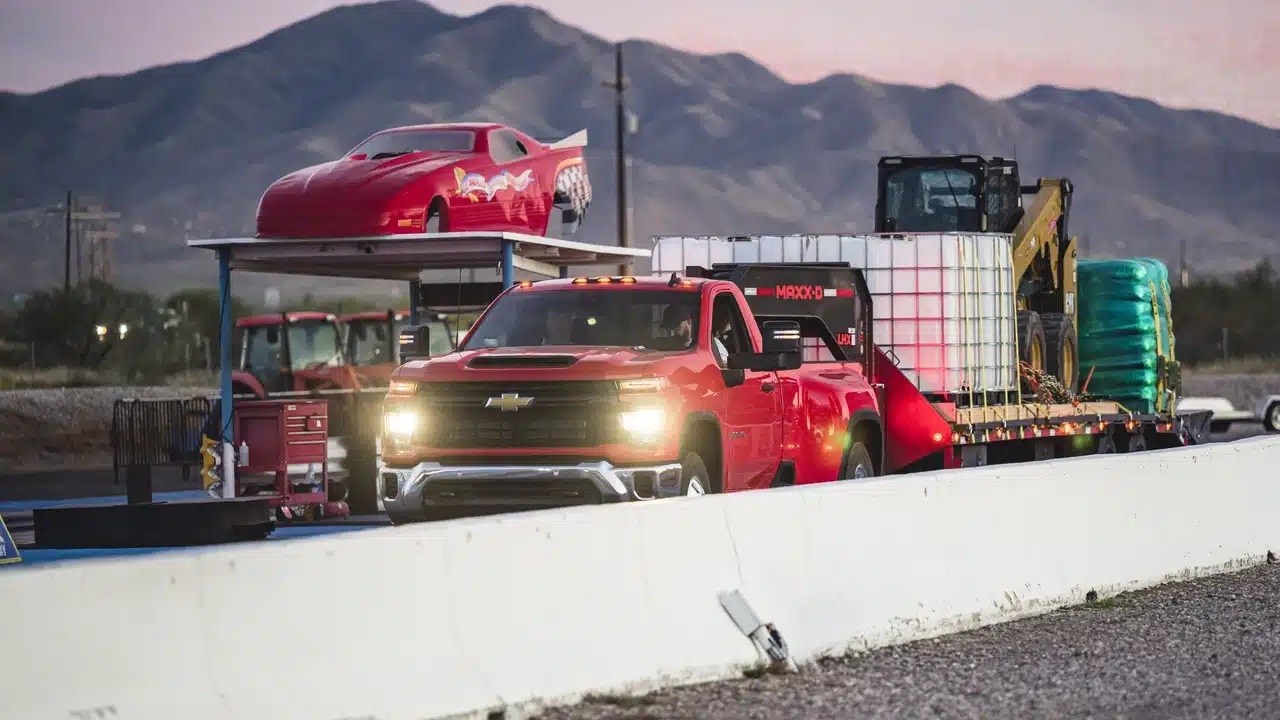
The red 3500 HD dually on the closed course was a very different test from our camper drive. Before we moved, the Chevrolet representative described this as the highest-towing 3500 configuration, with a 46,500-pound gross combined weight rating, or GCWR, and a 38,000-pound gooseneck trailer rating. He estimated our truck and trailer together at roughly 45,000 pounds, with the trailer at about 36,500 pounds.
Once underway, I was impressed by how easily the heavy combination picked up speed. The steering was lighter than I expected, the brake pedal responded immediately when I reached the braking area Chevrolet staff identified, and the cabin was surprisingly quiet. Those impressions echoed what stood out on the road, even with a much different load behind the truck.
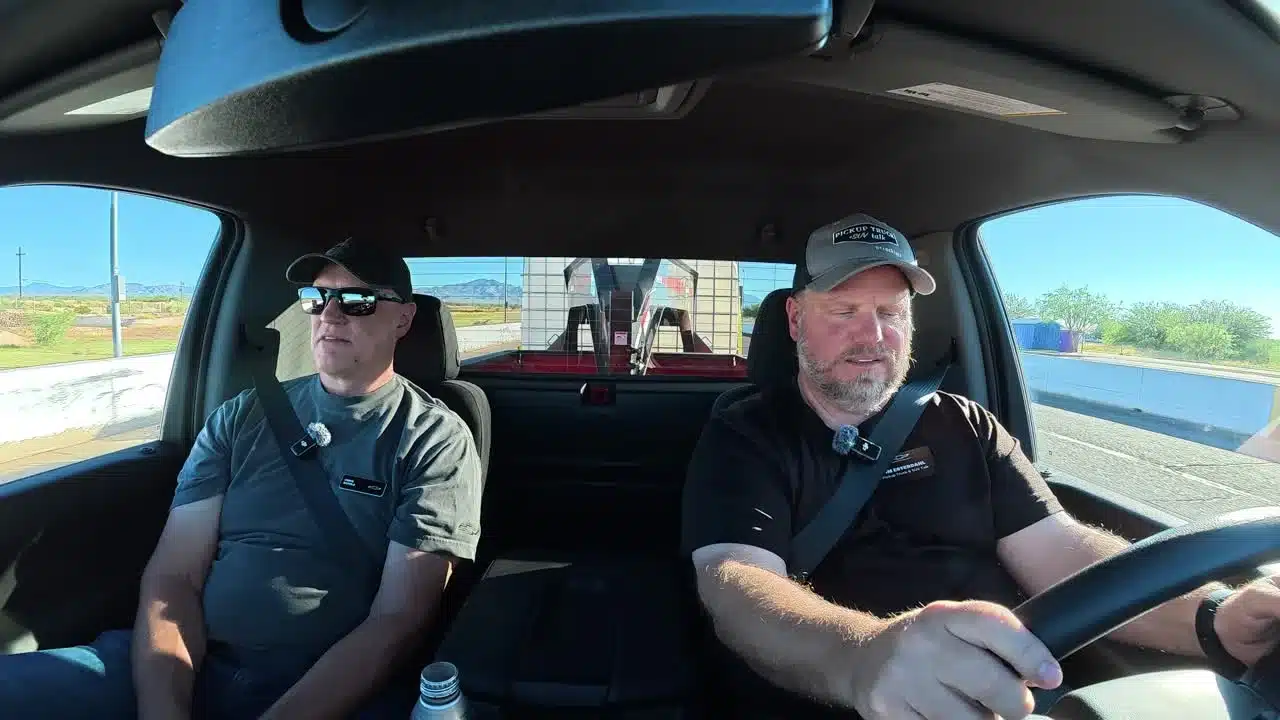
At one point, I remarked that I hardly felt the trailer behind me. That was impressive, but it also made me think about how easy it could be to overlook what is back there. Light steering does not change the combination’s weight, length or turning room. This was a short closed-course demonstration, and I did not independently weigh the rig or measure its stopping distance.
The numbers need some context, too. Chevrolet’s published 38,000-pound maximum requires a Silverado 3500 HD WT with a regular cab, long bed, two-wheel drive, dual rear wheels, the 8.3L Duramax Turbo-Diesel V8, Max Trailering Package and a gooseneck hitch. That is a gooseneck rating, not a conventional or fifth-wheel trailer rating.
The roughly 45,000 pounds in this demonstration was the estimated combined weight, not a 45,000-pound trailer. The highest advertised tow rating also does not apply to every Silverado HD. Buyers still need to check the ratings for their exact truck and account for passengers, cargo and hitch weight.
Off-road: Mongoose torque and Terrain Mode
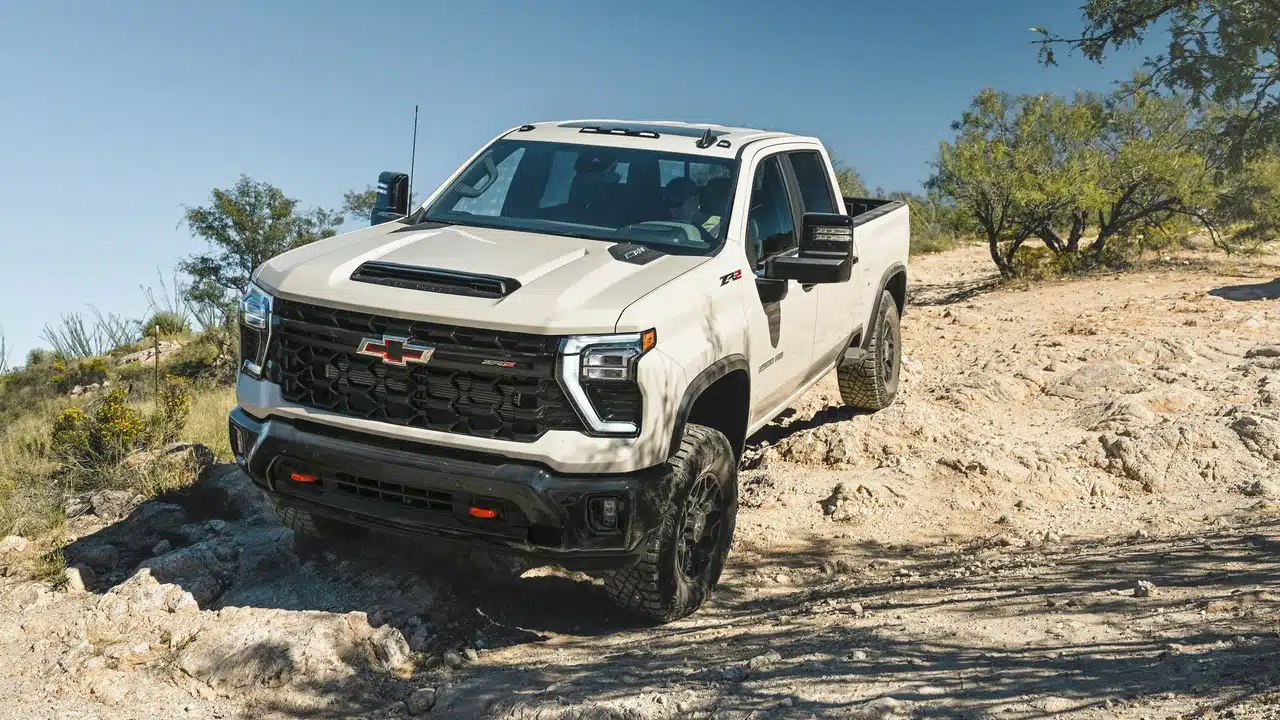
For the mighty Mongoose, our off-road rock-crawling course was no match for its low-end torque. Pair that with the ZR2’s rear electronic locking differential, massive 35-inch mud-terrain tires and skid plates, which we loudly experienced doing their job, and this HD was ready for some serious terrain. Our truck’s rock rails helped keep the body panels out of harm’s way, too. A big diesel pickup might not be the first thing you picture picking its way through the desert rocks, but this one was up for it.
We also tested GM’s new Terrain Mode, available in 4WD High or 4WD Low. As the engineer explained in our Terrain Mode video, it lets you manage low-speed progress primarily with the accelerator. Press down to move forward, then ease off and the truck applies the brakes. The system also manages traction to limit wheel slip, helping you concentrate on tire placement rather than constantly moving your foot between pedals.
The lift-off braking is more aggressive in 4WD Low. Selecting a lower gear range can strengthen that braking response, with L1 providing the most aggressive setting. That makes Terrain Mode different from the regular Off-Road mode, which does not provide this one-pedal-style control. You still have the brake pedal when you need it.
On the rocks, that control made a difference. It allowed every journalist, no matter their skill level, to crawl around the course with more confidence. Rather than getting a big burst of movement and then stabbing at the brake, I could concentrate on easing the truck over the obstacle. Combined with the diesel’s low-end torque, it was one of the more useful parts of this first drive.
The 8.3L Duramax diesel and Allison-branded transmission
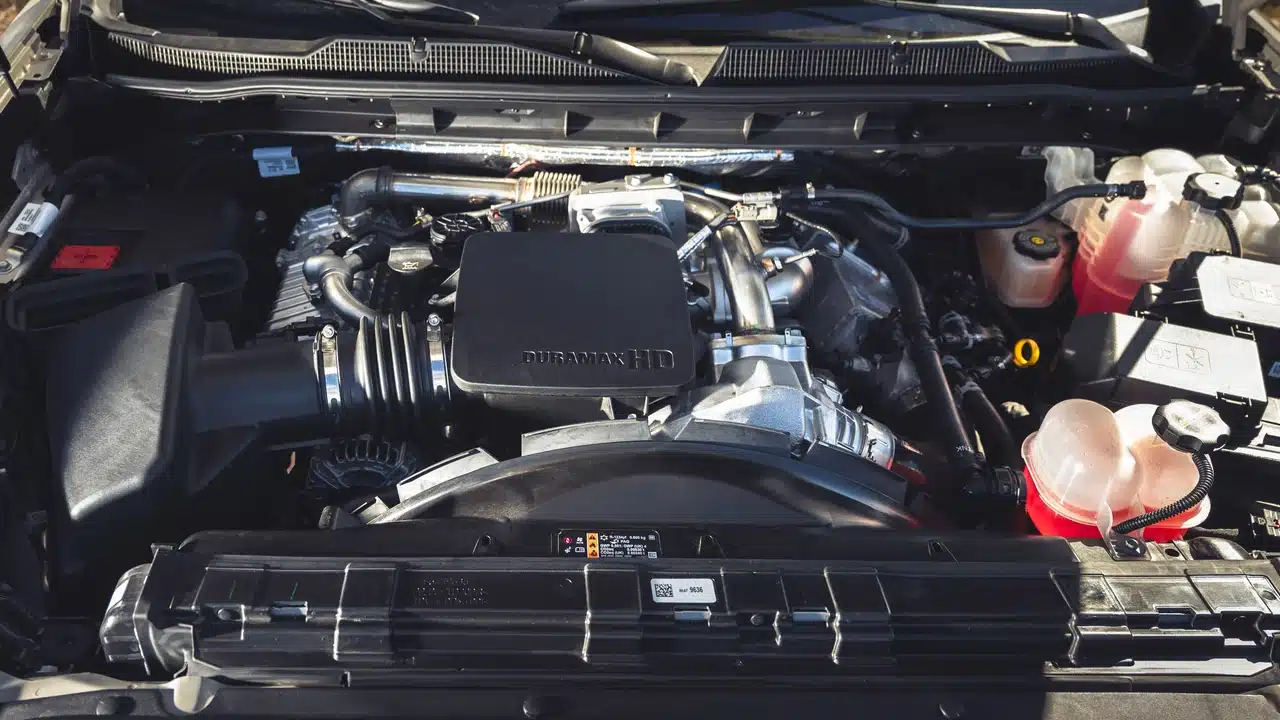
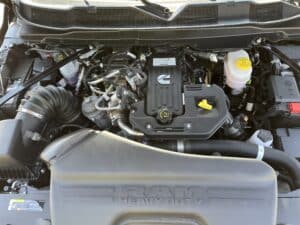
GM calls the new engine Mongoose. Buyers will know it as the available 8.3L Duramax Turbo-Diesel V8, rated at 555 horsepower and 1,230 pound-feet of torque. During our earlier 8.3L Duramax walk-around, the engineer explained its water-to-air intercooling and shorter path for pressurized air to reach the engine. He said full torque arrives at 1,400 rpm, down from 1,600 rpm for the outgoing diesel. The Tucson drive gave me a chance to put that low-rpm pull to work.
The diesel is paired with an Allison-branded 10-speed automatic transmission. That wording is intentional. As we reported when GM and Allison renewed their brand partnership, the HD pickups use an Allison-branded transmission. That is a different arrangement from the Allison-built transmissions in Chevrolet’s medium-duty trucks.
There are practical changes under the hood as well. The engine interview covered gear-driven pumps, an oil-level sensor alongside a physical dipstick, a spin-on oil filter, an aluminum oil pan and a conventional drain plug. Those are details worth knowing if you do your own maintenance, and they are easy to miss when all the attention goes to horsepower and torque.
The revised aftertreatment system has two DEF injectors, which we explored in our previous Duramax emissions-system coverage. GM also described lower-temperature regeneration, more dashboard information and the ability to manually initiate regeneration. DEF usage will vary, and I did not measure consumption during this drive.
So, is the 2027 Chevrolet Silverado HD any better? From this first drive, the steering, brakes and low-end power made towing feel easier, while Terrain Mode added confidence in the rocks. I would still want more time with a familiar trailer to get a better sense of fuel economy and DEF consumption. But the improvements I could feel in Tucson went well beyond a bigger number on the tow chart.
What matters most to you in a new HD truck: towing manners, off-road capability or the new diesel? Let me know in the comments.