Two DEF injectors. A redesigned exhaust system. Regeneration you can initiate while parked or driving. There is a lot more to GM’s new 8.3L Duramax than its horsepower and torque numbers.
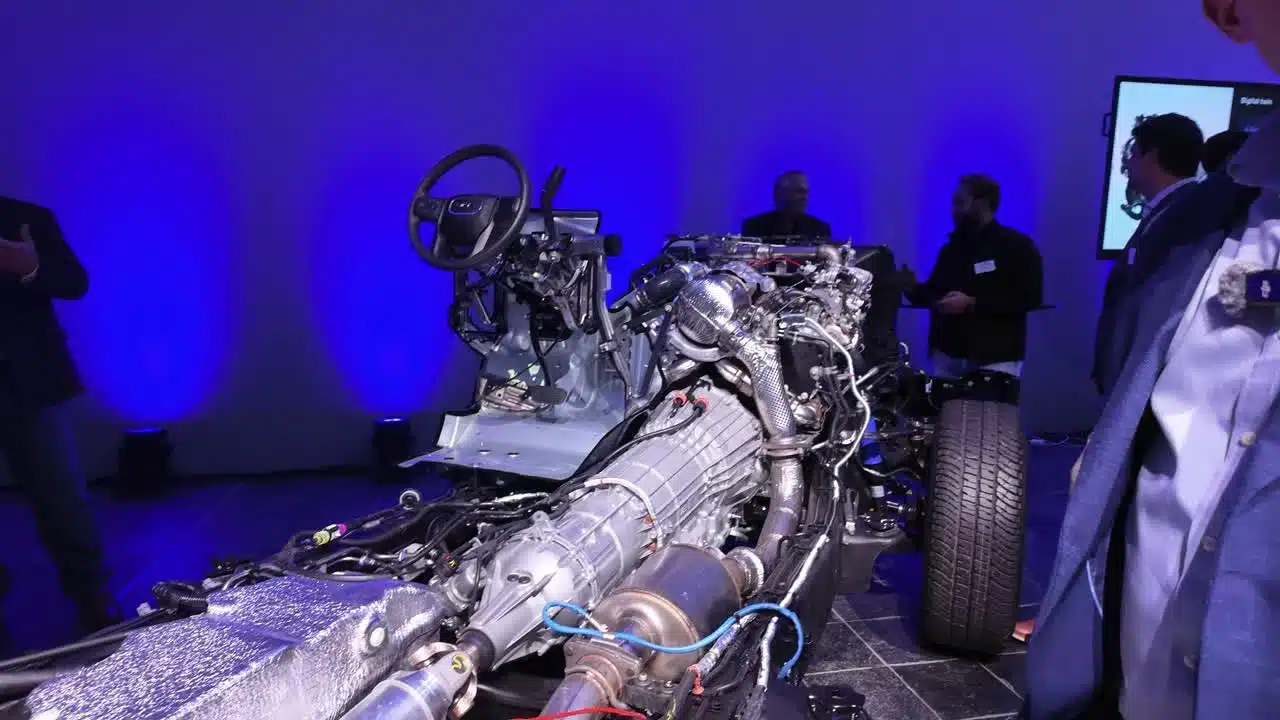
During GM’s powertrain event, I walked around the engine and chassis with an engineer to understand what changed. For diesel truck owners concerned about plugged filters, DEF consumption and downtime, the equipment underneath the truck deserves just as much attention as the engine under the hood. We already covered the new 8.3L Duramax’s engine hardware. This time, let’s follow the exhaust and explain what this new emissions system does.
A new Duramax arrives as emissions requirements change
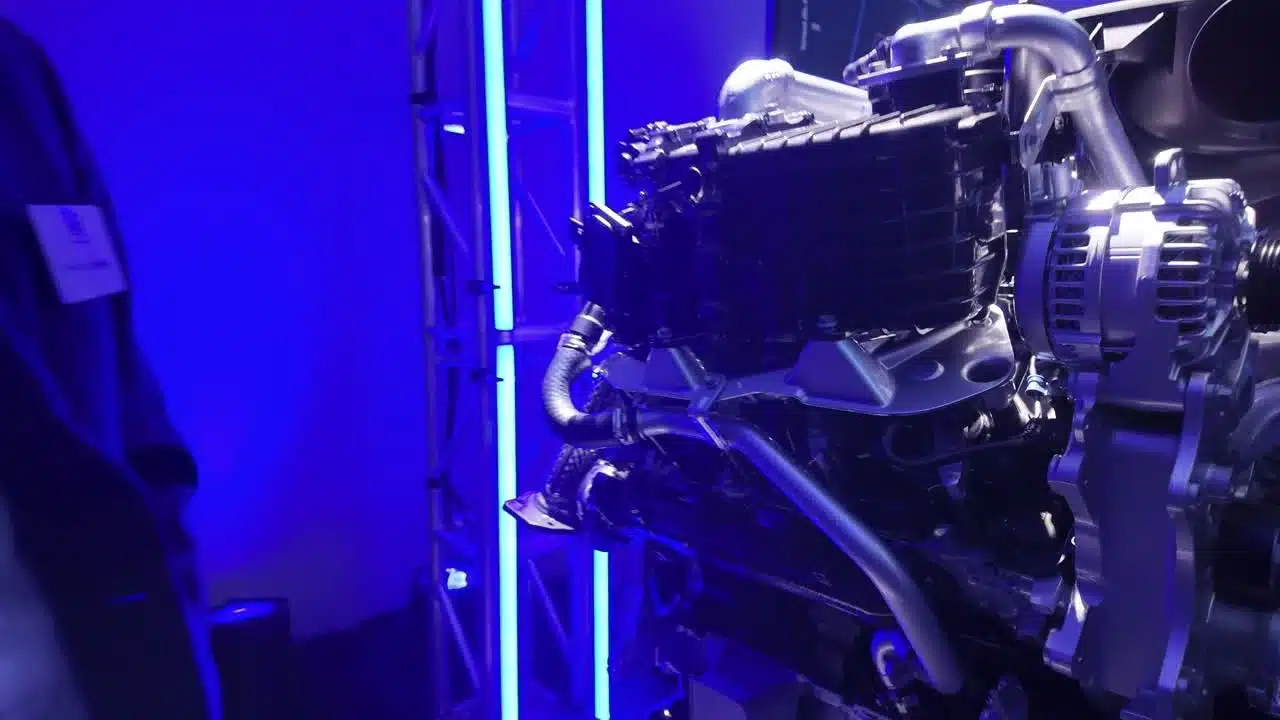
The original 6.6L Duramax debuted for the 2001 model year, with production beginning in July 2000. It received numerous updates over the following quarter-century, but its roots were in GM’s partnership with Isuzu, which developed the original engine for their DMAX joint venture. Isuzu’s original announcement documents that beginning.
The new 8.3L marks a fresh start. GM describes it as its first clean-sheet HD diesel V8 designed, developed and manufactured in-house. GM took full ownership of DMAX in 2022, and the new engine will be built at its expanded Brookville, Ohio, facility. This engine’s development belongs to GM rather than the earlier Isuzu collaboration, as outlined in GM’s engine announcement.
The change also arrives alongside tighter federal emissions requirements for the 2027 model year. The heavy-duty NOx standards originated under the Biden administration, but President Donald J. Trump’s EPA, led by his appointee Lee Zeldin, has not eliminated diesel emissions requirements. Its July 2026 proposal would revise warranty, useful-life and DEF-related provisions within the 2027 program. GM’s engine replacement and the regulatory transition overlap, although that timing alone does not establish why GM retired the 6.6L.
For anyone who thinks Trump did away with emissions standards, his own EPA says otherwise. Its February 2026 greenhouse-gas rollback specifically left regulations addressing other air pollutants intact.
What the emissions equipment actually does
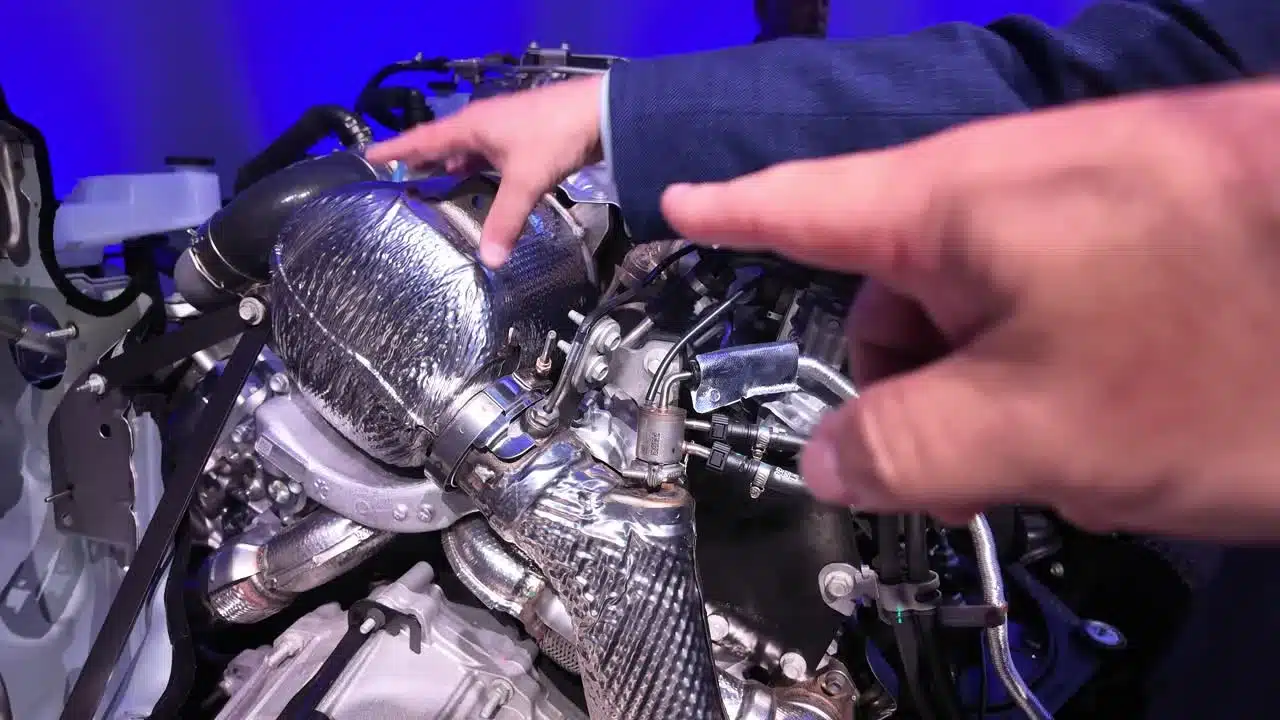
Before getting into the changes, it helps to separate the components. DEF, DPF and SCR often get lumped together in conversations about diesel problems, but they have different jobs.
Our previous explanation of diesel emissions equipment includes an Engine Technology Forum graphic showing how the components work together. That is a useful overview, although it does not depict the new 8.3L’s specific layout.
| Component | What it does |
|---|---|
| Diesel oxidation catalyst, or DOC | Uses a catalyst to reduce carbon monoxide and unburned hydrocarbons in the exhaust. |
| Diesel particulate filter, or DPF | Captures soot. Regeneration burns off accumulated soot so the filter can continue doing its job. |
| Diesel exhaust fluid, or DEF | Supplies the urea solution used by the SCR system to reduce nitrogen oxides. |
| Selective catalytic reduction, or SCR | Uses ammonia derived from DEF to convert nitrogen oxides into nitrogen and water. |
| Exhaust gas recirculation, or EGR | Routes some exhaust back into the engine to help lower combustion temperatures and reduce NOx formation. |
The distinction matters: regeneration addresses soot in the particulate filter, while DEF and SCR address nitrogen oxides. Adding DEF does not replace the need for regeneration. For more background, see our EGR explainer and this overview of aftertreatment fundamentals.
Why the new system has two DEF injectors
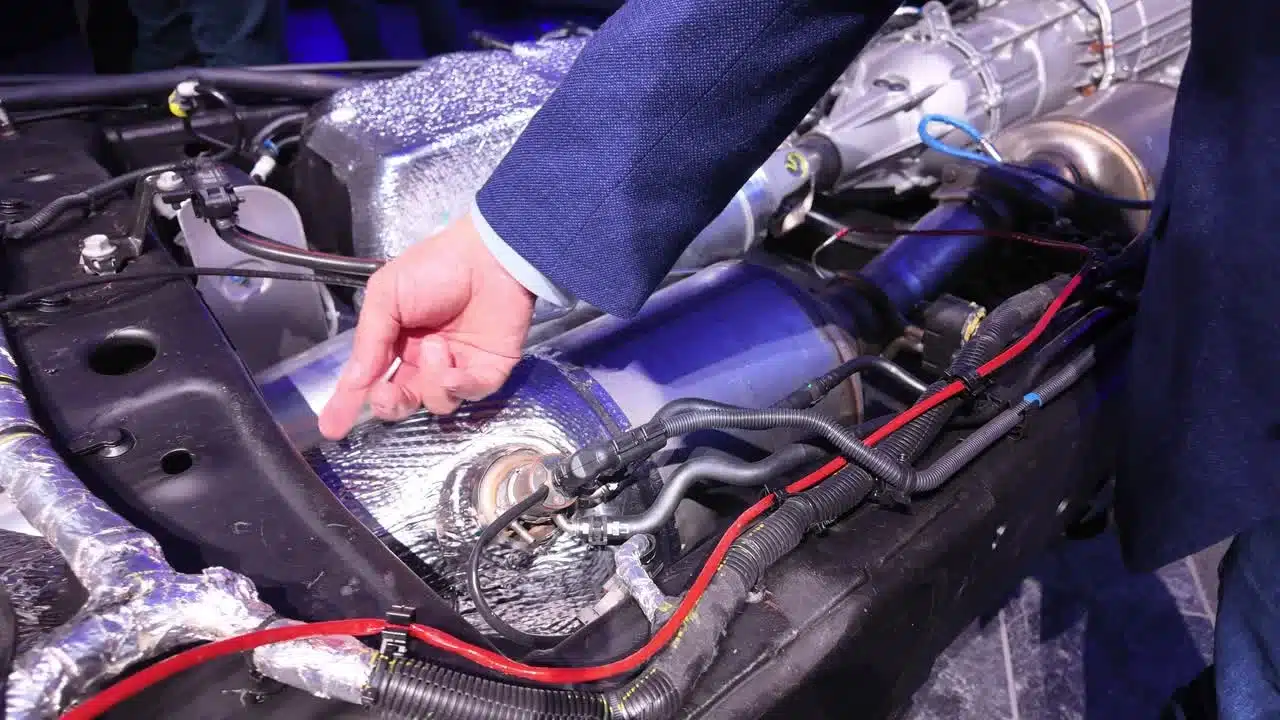
During the walk-around, the engineer explained that the outgoing setup uses one DEF injector and a separate hydrocarbon injector. The new system has two DEF injectors and does not have that separate hydrocarbon injector.
Those are different types of dosing. A hydrocarbon injector supplies fuel for exhaust-temperature management. DEF is used for the SCR system’s chemical treatment of NOx. The change should not be understood as simply replacing one injector with another that performs the same job.
As we followed the display, the engineer pointed out the oxidation catalyst and first DEF injector, followed by the first SCR section and the particulate filter. He also identified the pressure-sensor lines at the DPF. Farther along were the second DEF injector, a mixer and additional SCR hardware.
That second injection point introduces DEF at another location in the exhaust-treatment system. The mixer helps distribute it before the exhaust reaches the downstream catalyst.
Naturally, I asked the question many owners will ask: Does injecting DEF twice mean the truck will use more of it? The engineer did not give me a confirmed consumption figure. Two injection points alone do not tell us how much fluid the truck will consume, so I’m not going to promise that usage will increase, decrease or stay the same.
GM’s presentation also described a larger DEF tank. We still need confirmed consumption and capacity figures to turn that into a meaningful refill-range comparison.
The fluid itself remains important. Our interview with DEF expert Jeff Harmening explains why proper storage and avoiding contamination matter to the equipment handling it.
More control over regeneration
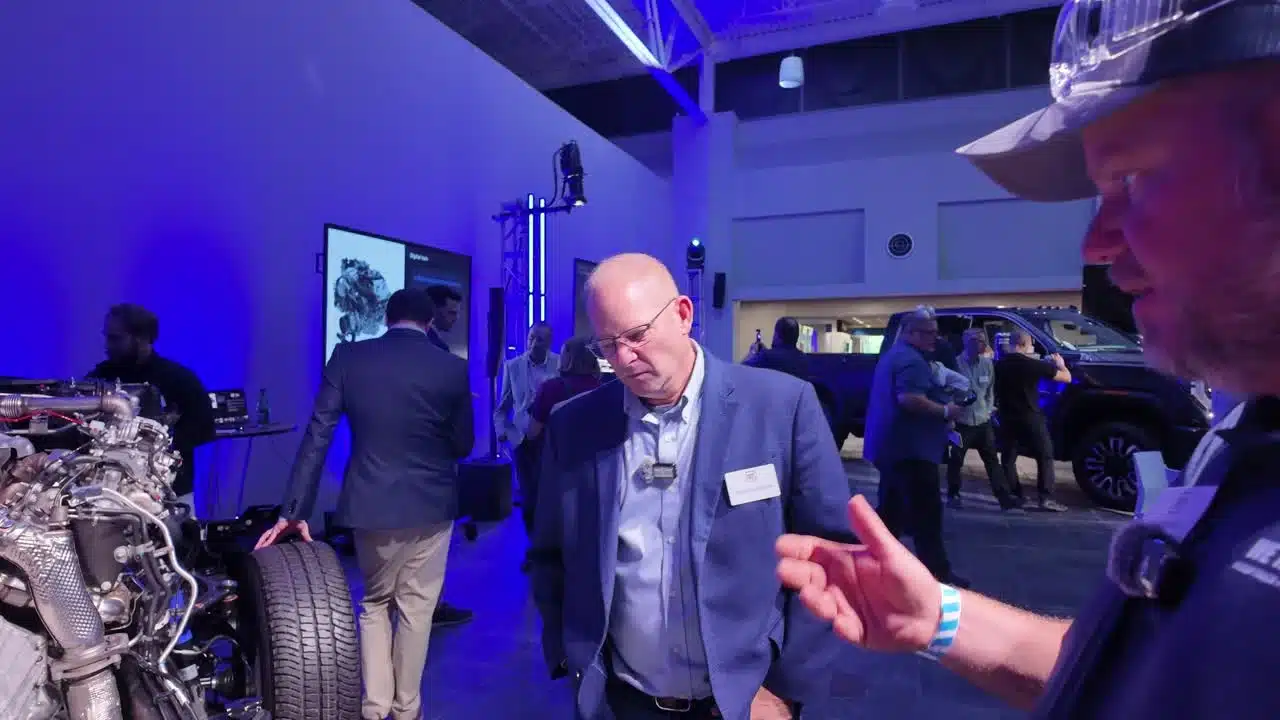
For me, the most interesting part of this discussion was what happens when the particulate filter needs to clean itself. The engineer highlighted lower-temperature regeneration and more information coming through the dashboard. GM’s presentation also described the ability to manually initiate regeneration while driving or idling.
That could matter to owners whose trucks spend time parked at job sites or making repeated short trips. As we explored in our reporting with diesel engineers and mechanics, operating conditions are an important part of the regeneration discussion.
However, a commanded regeneration at idle is a specific operating process. It should not be confused with assuming that leaving the truck idling normally will clean the filter.
The interview did not establish the exact temperature reduction, how long a parked regeneration takes or every condition required to initiate one. Those details will matter when owners start using the trucks.
My interest here comes back to reliability. More control over regeneration sounds useful, particularly if it helps owners finish the process at a convenient time. Better dashboard information could also help explain what the truck is doing instead of leaving owners guessing.
But a new layout and additional capability do not prove that repair bills or downtime will fall. That will take miles, towing and actual ownership experience. GM has explained what changed. Now I want to see whether those changes make living with a diesel easier.
We’ll have more on this system once we get a chance to drive the new Duramax, which is coming soon. I’ll be looking for how the regeneration controls work and what information owners can actually see from behind the wheel.