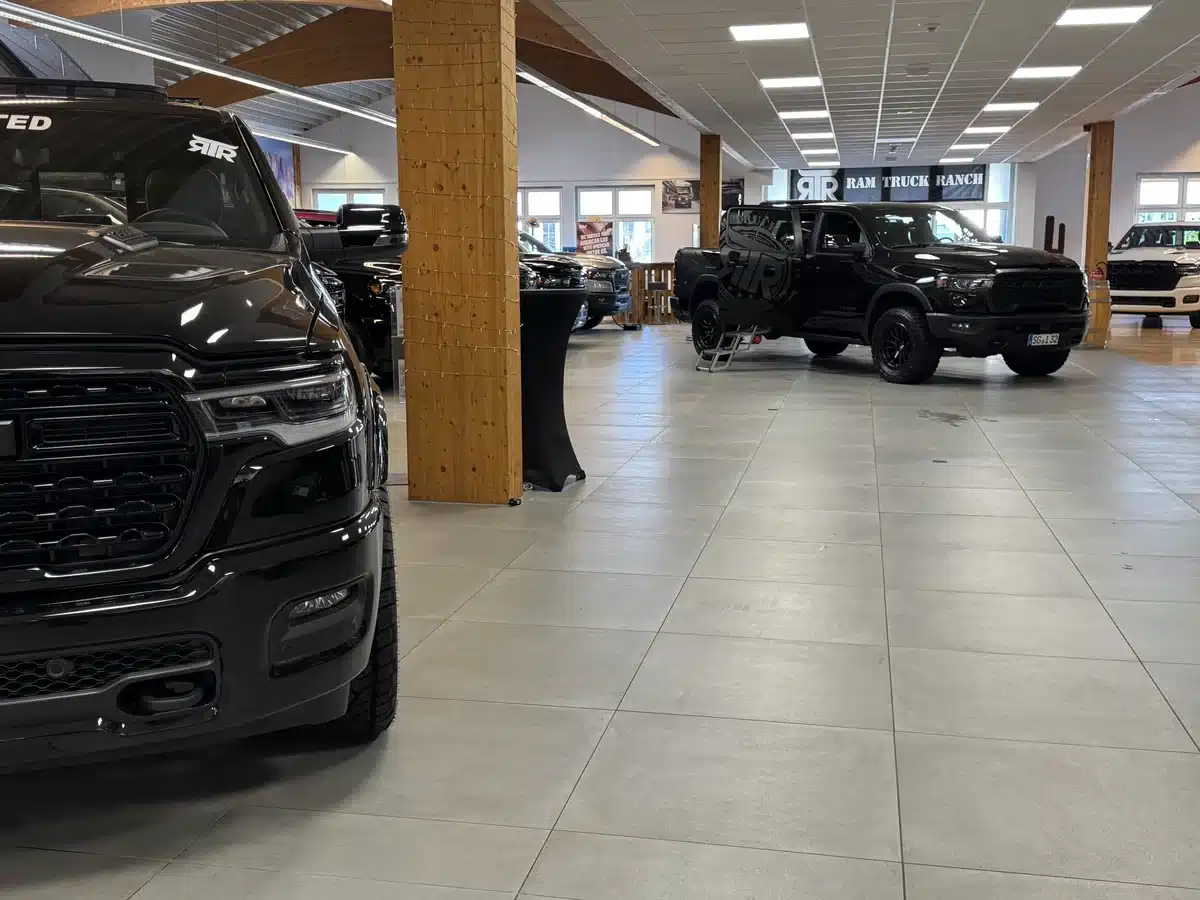
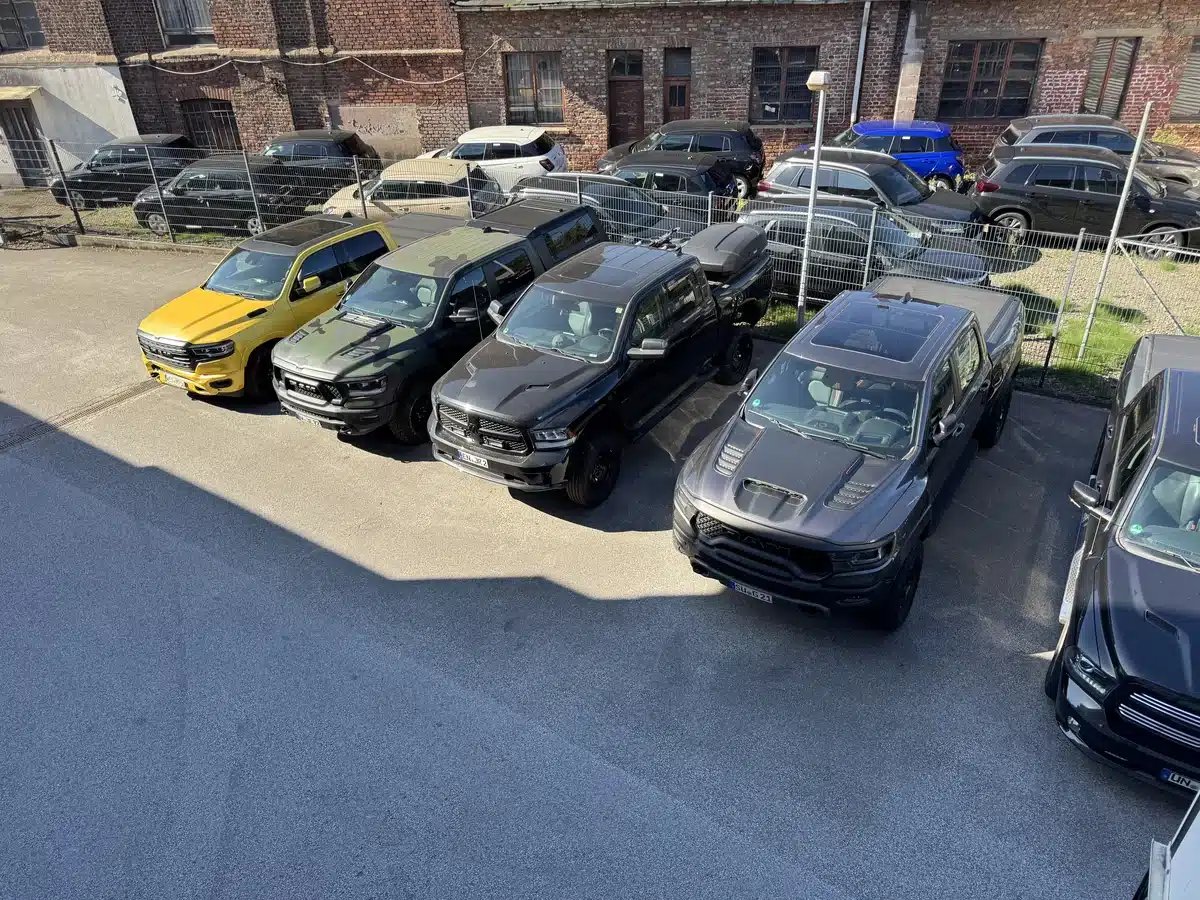
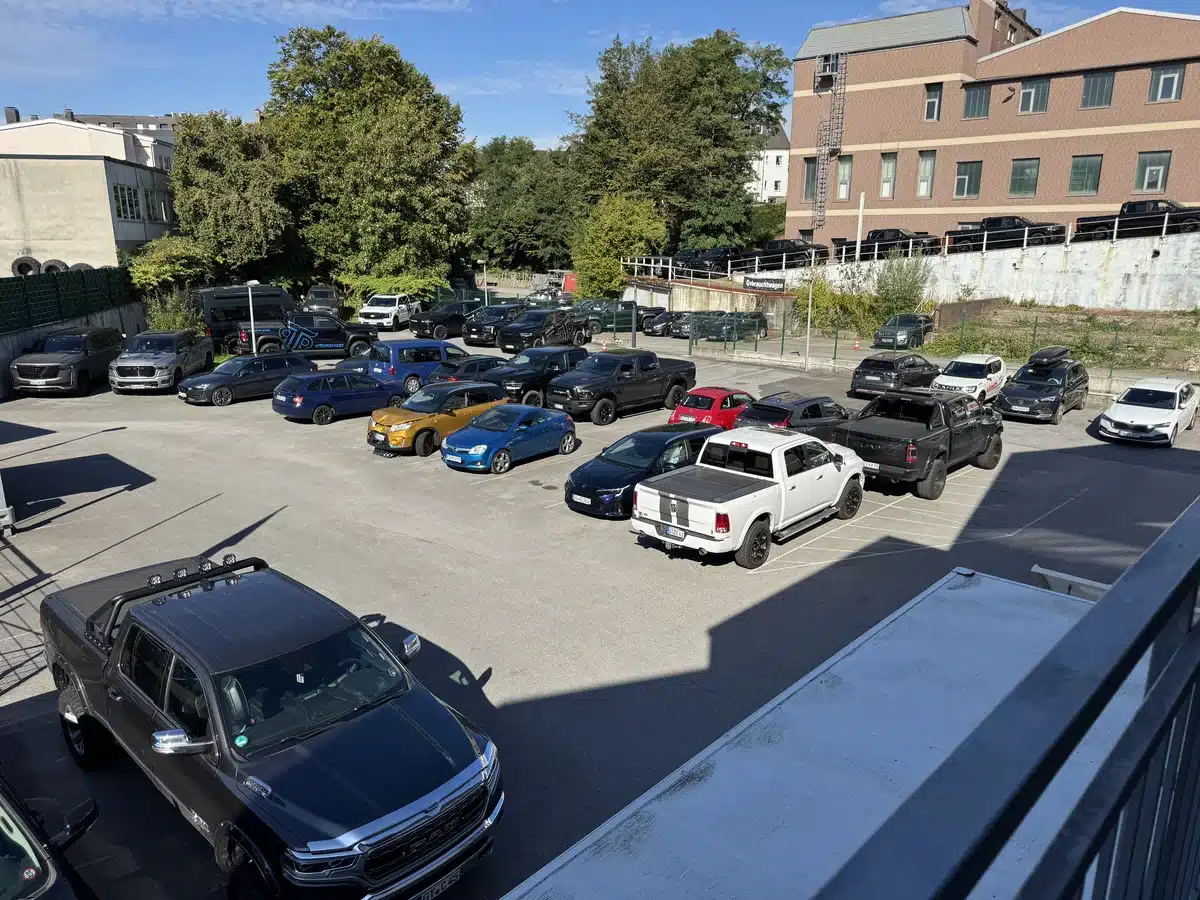
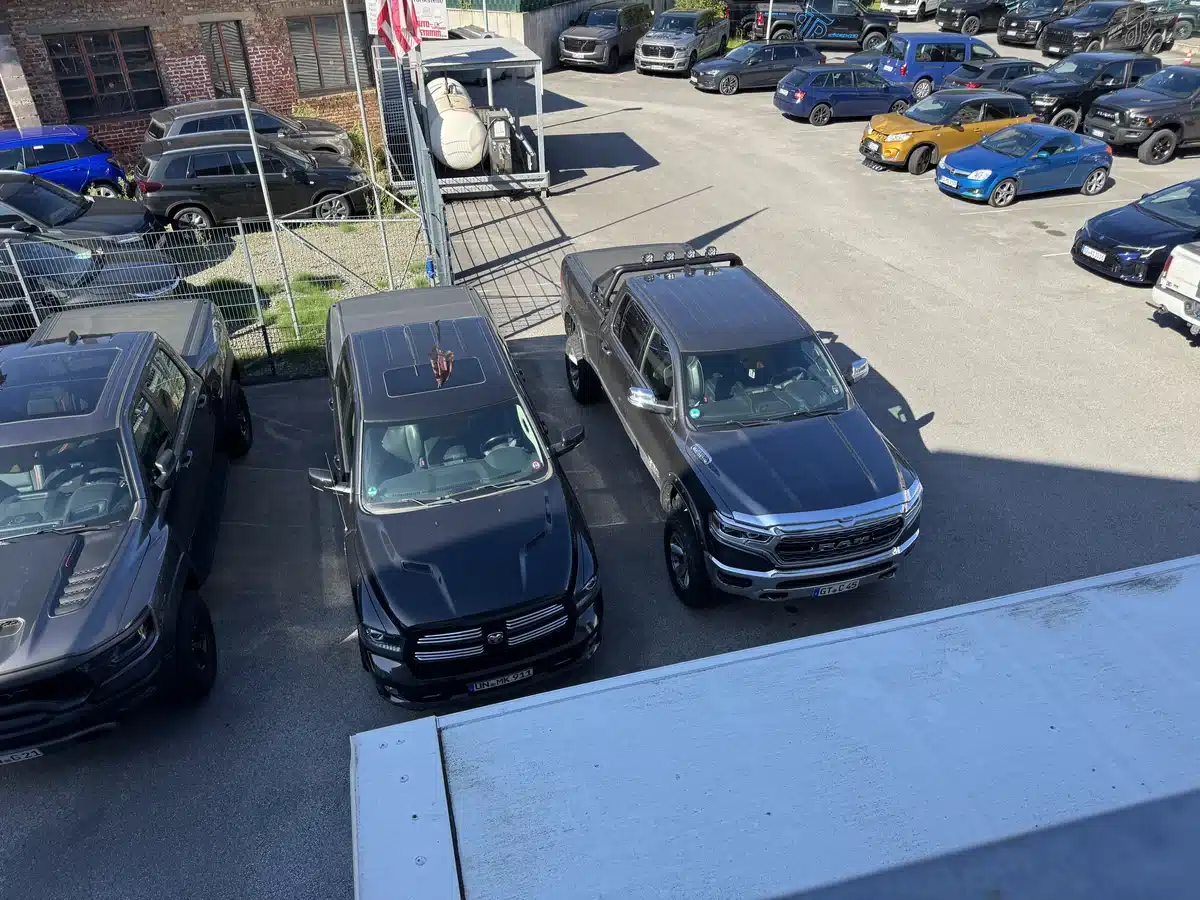
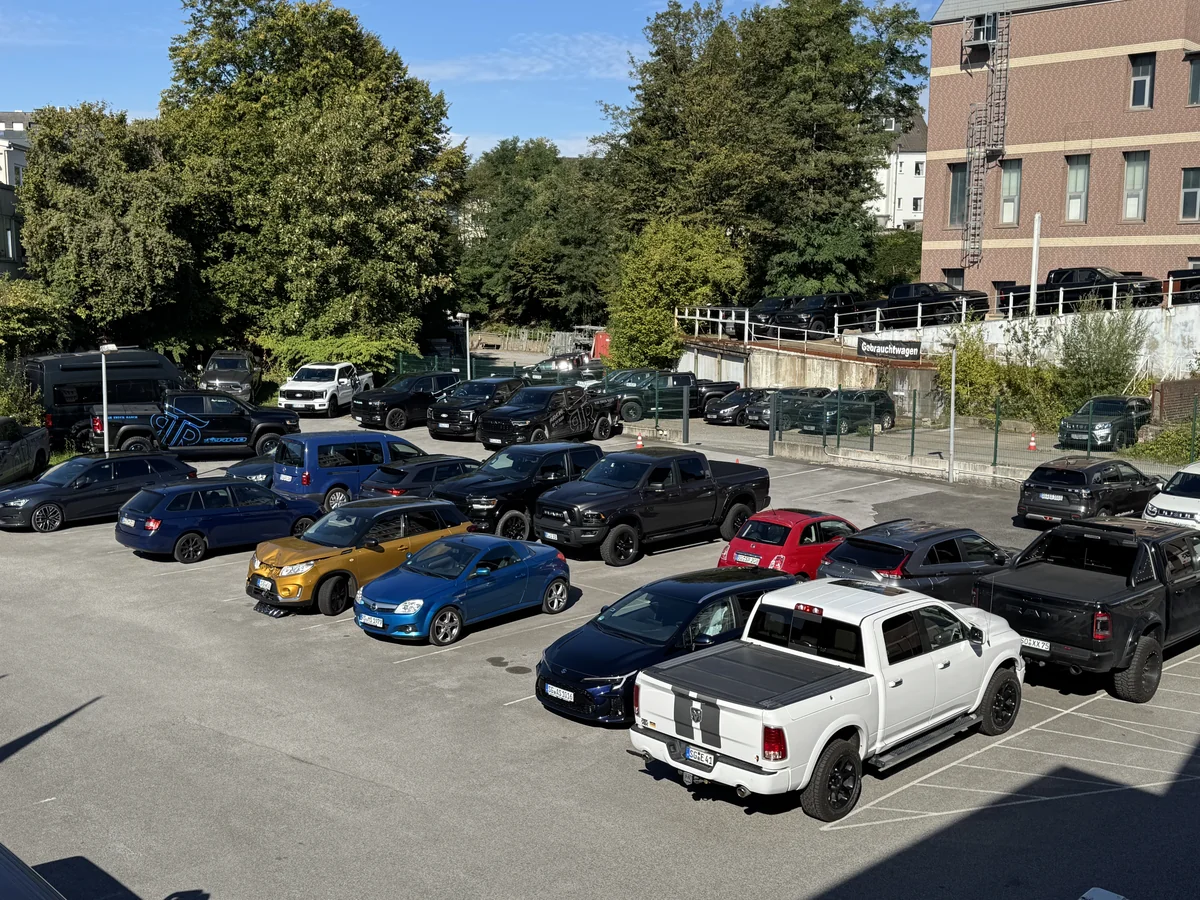
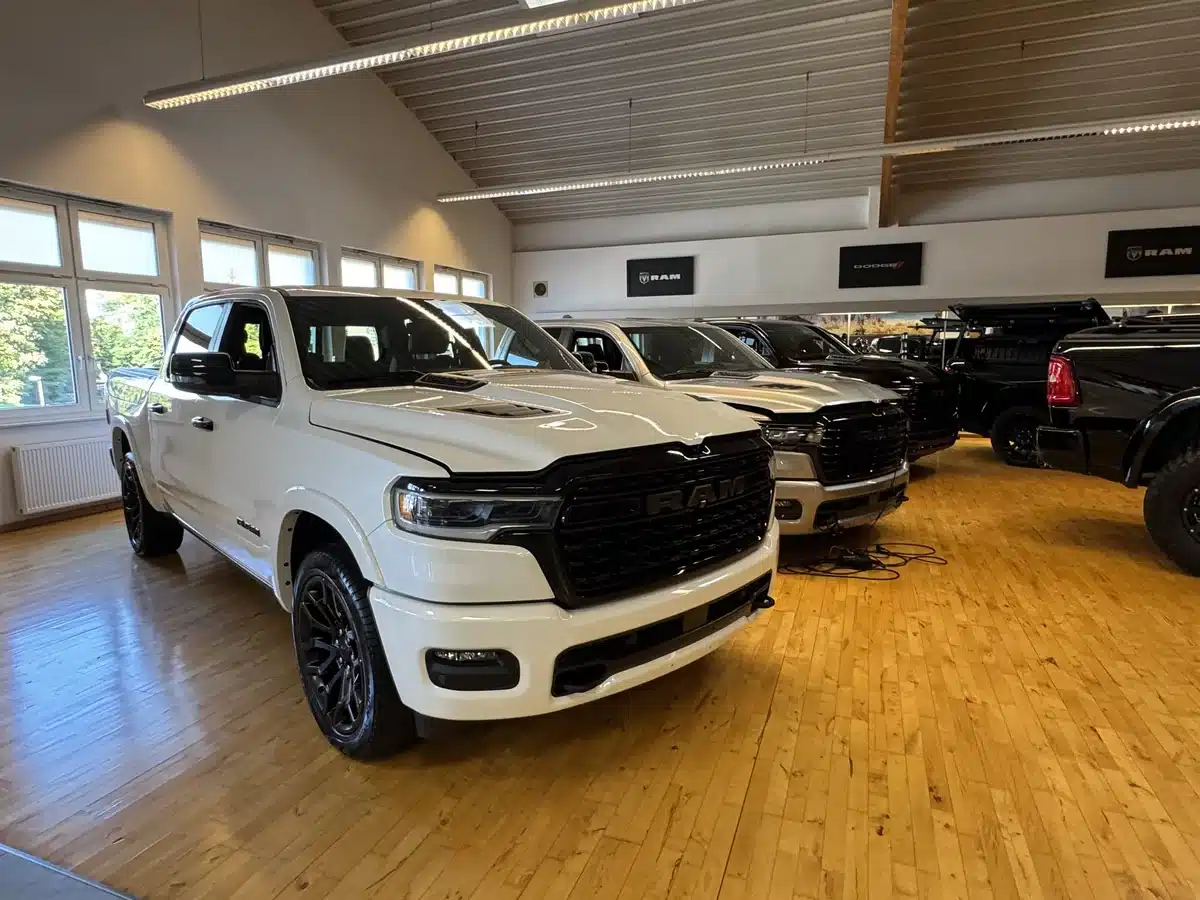
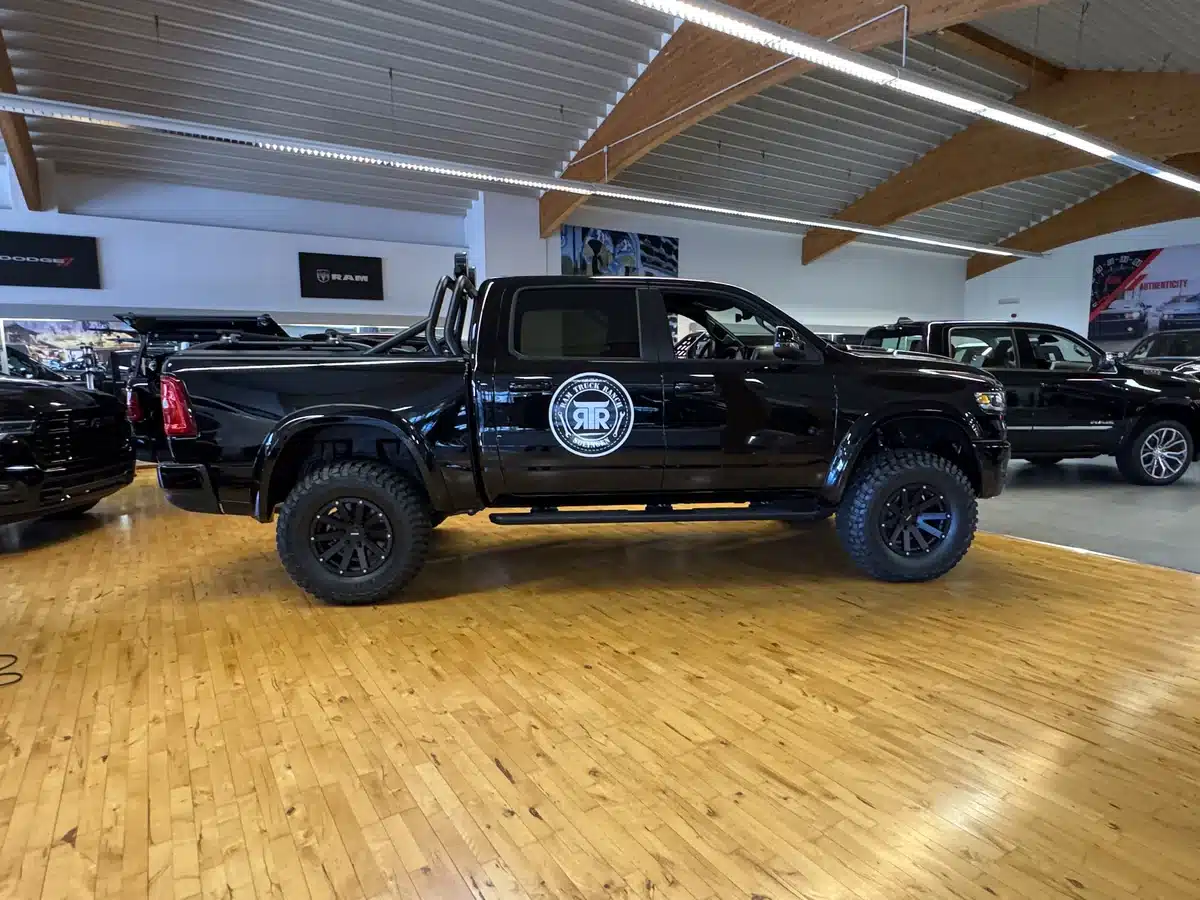
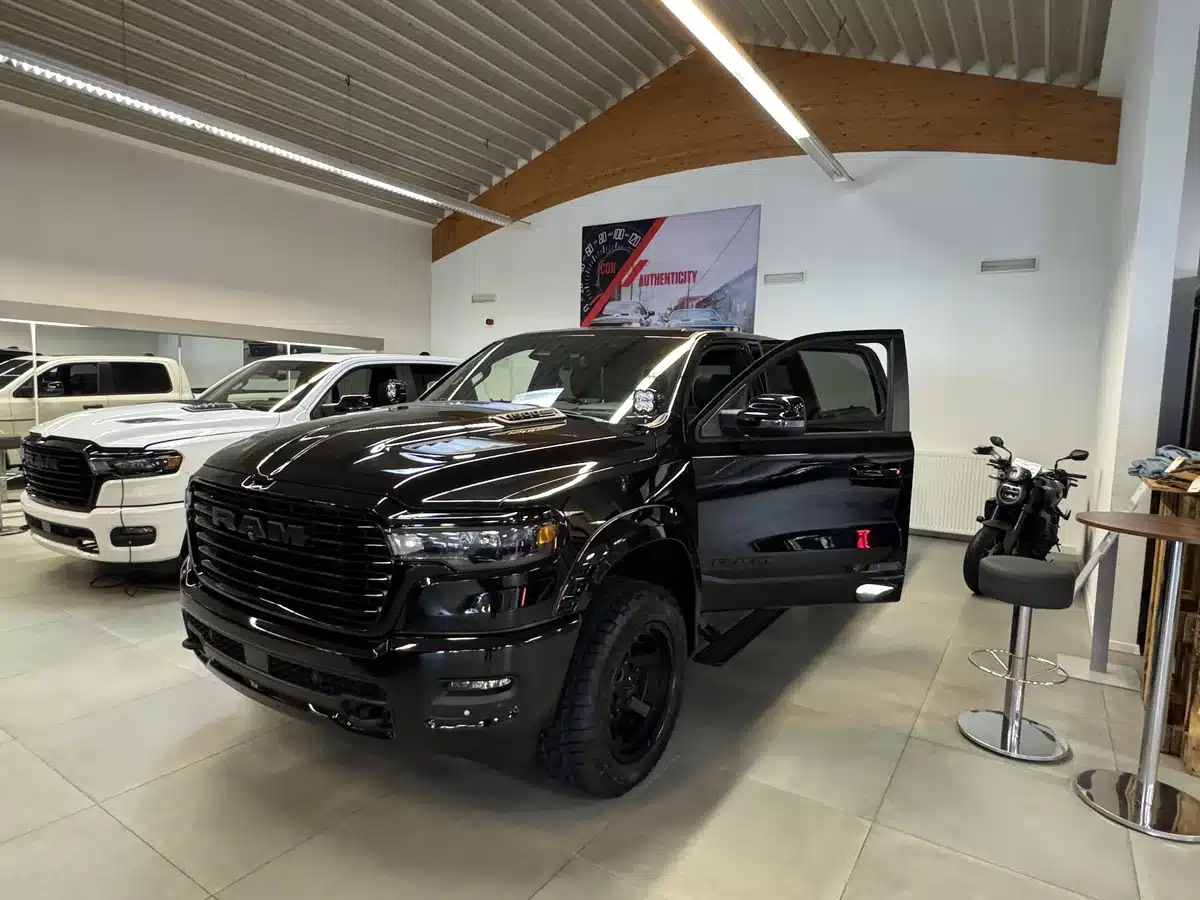
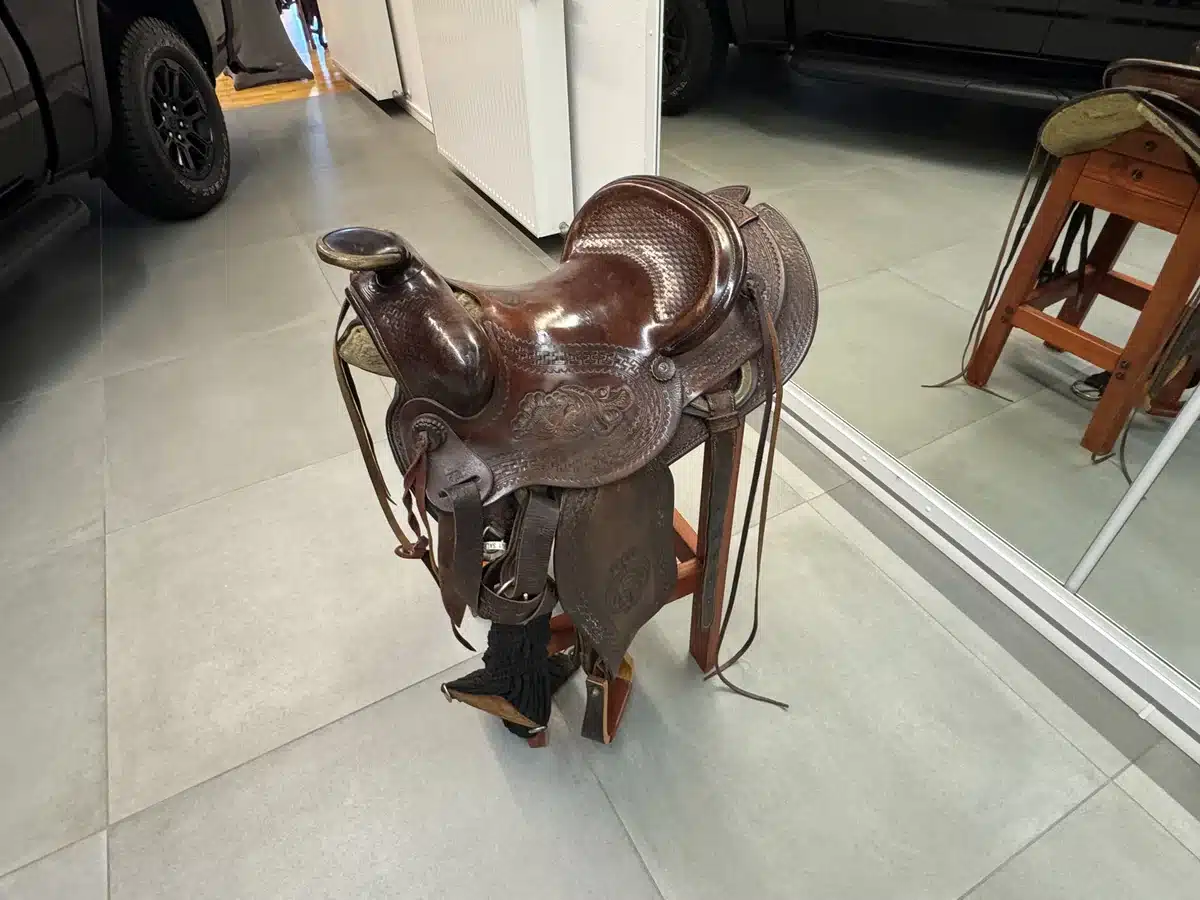
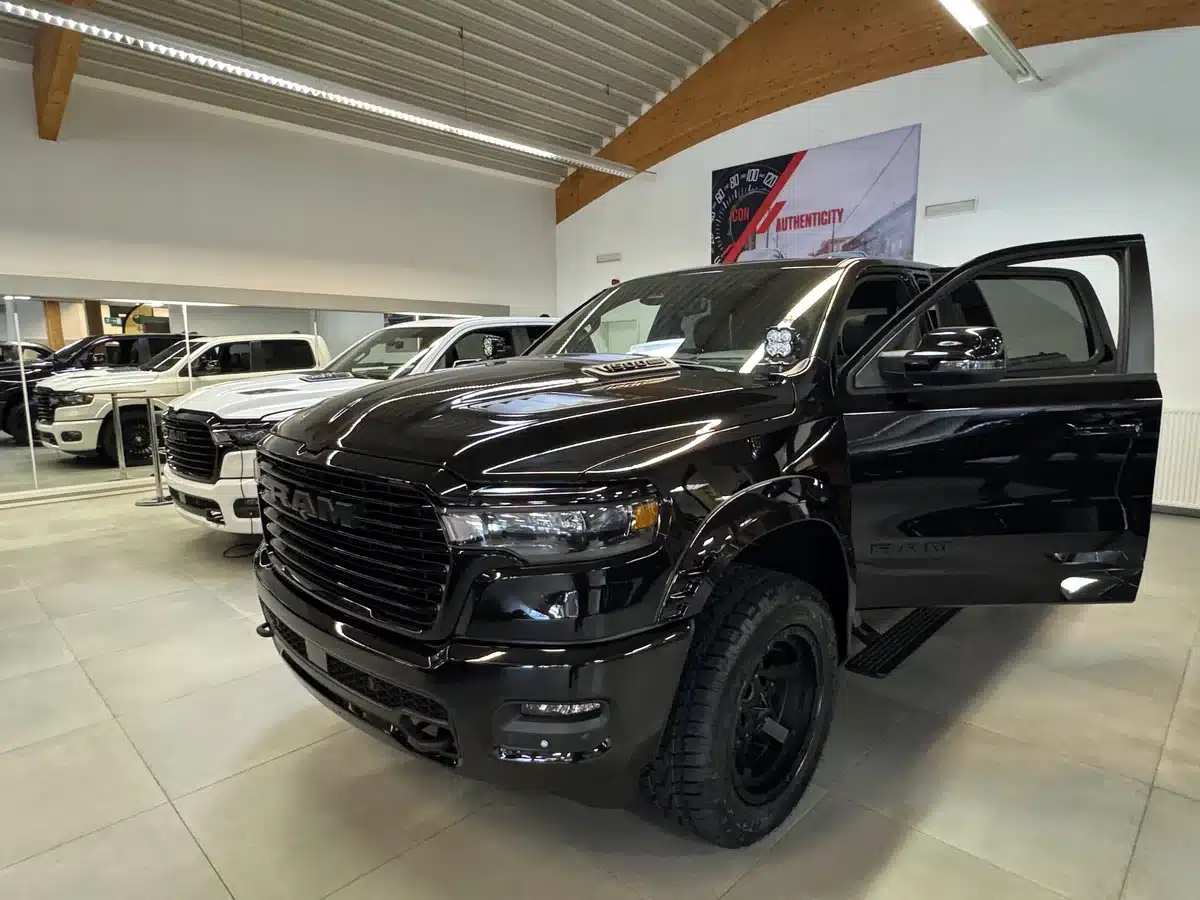
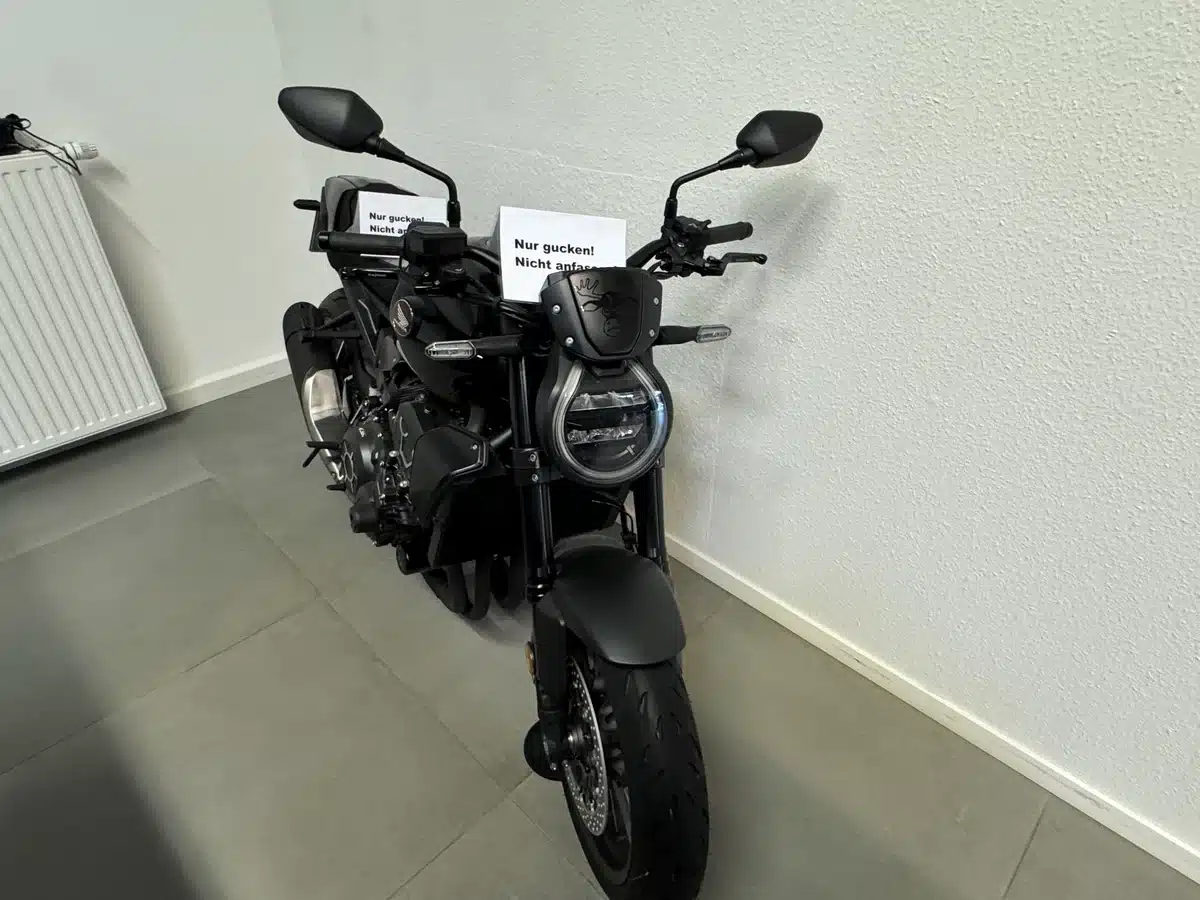
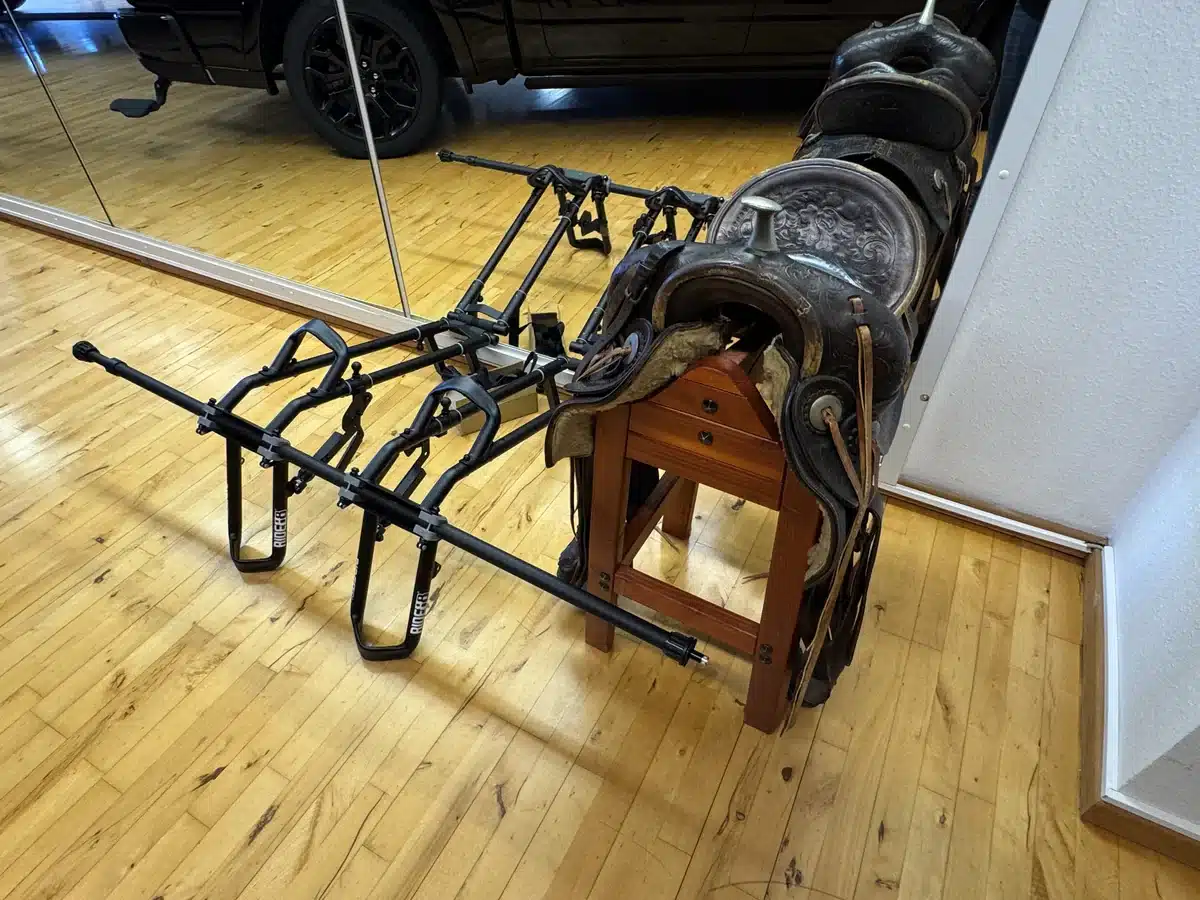
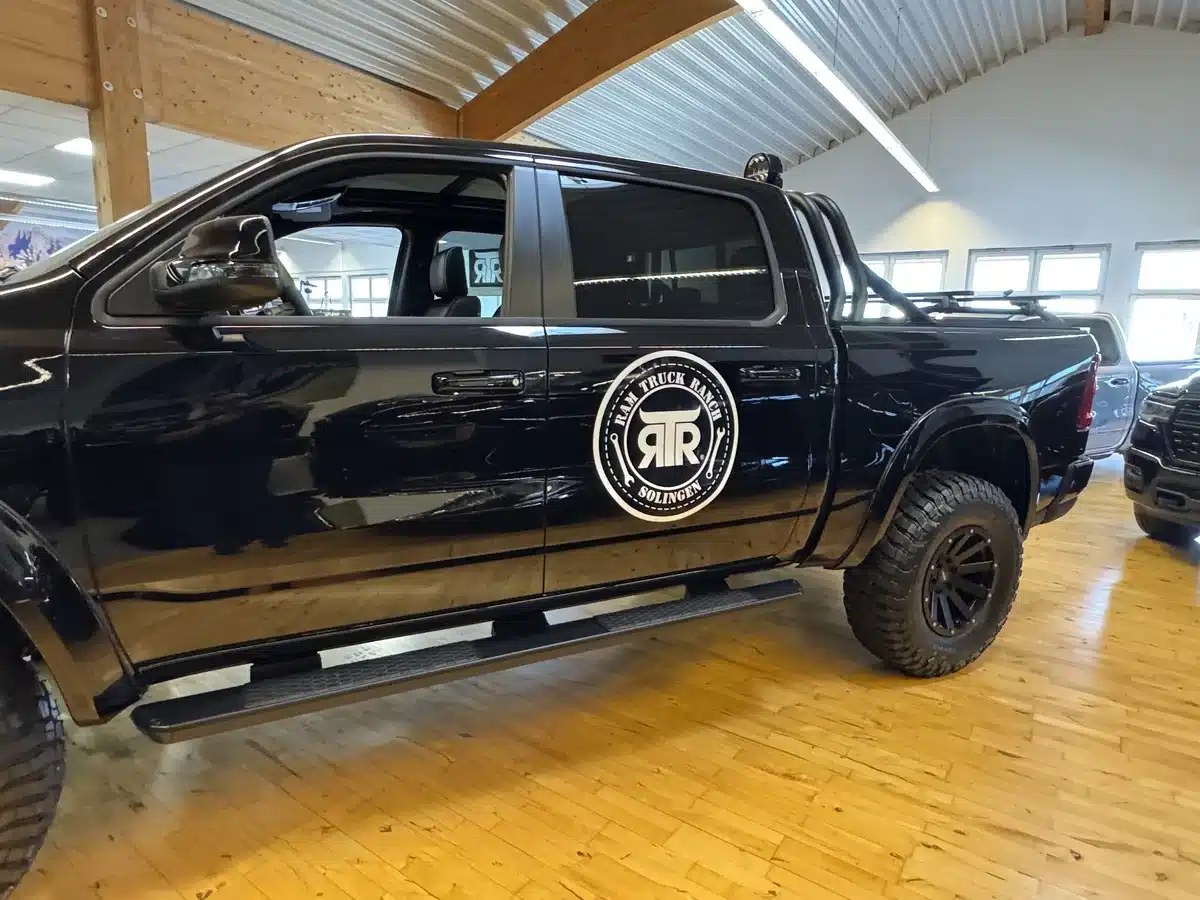
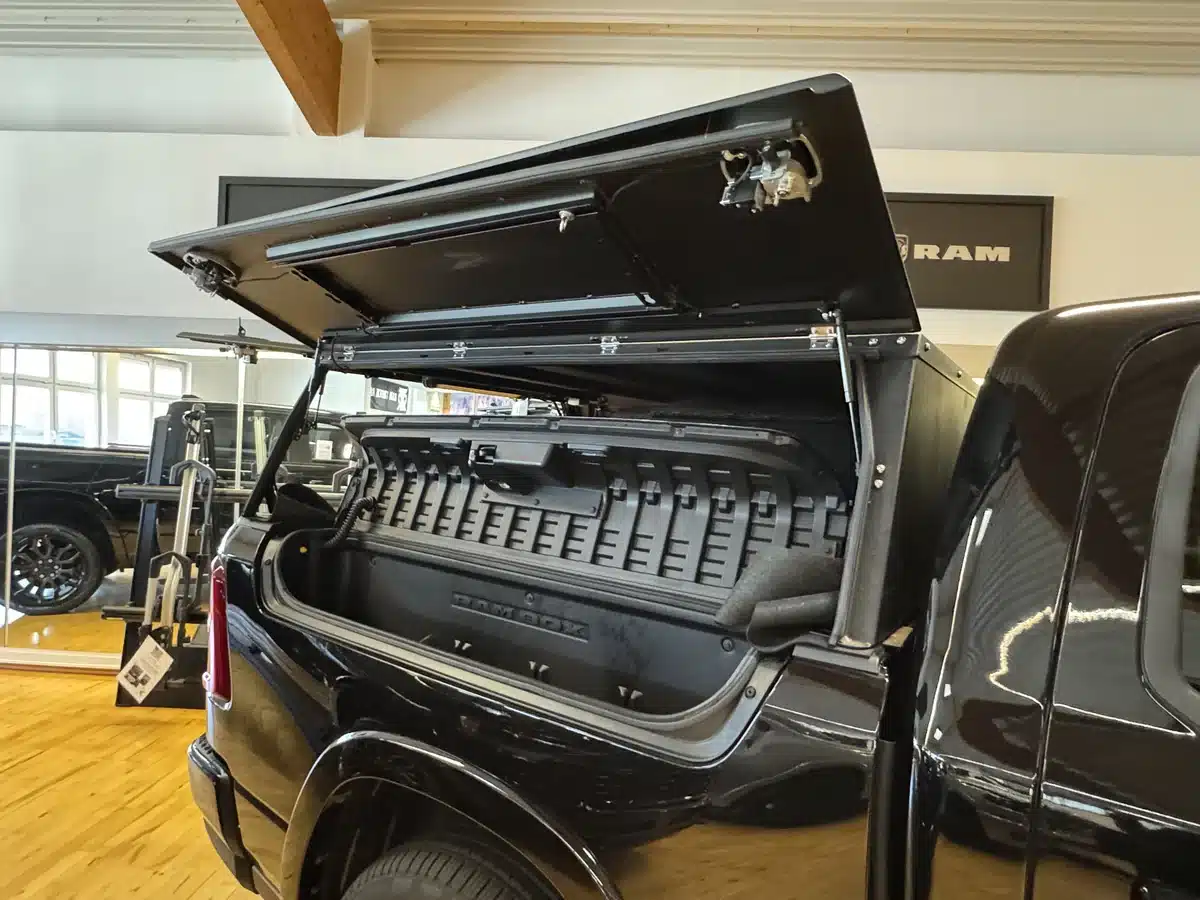
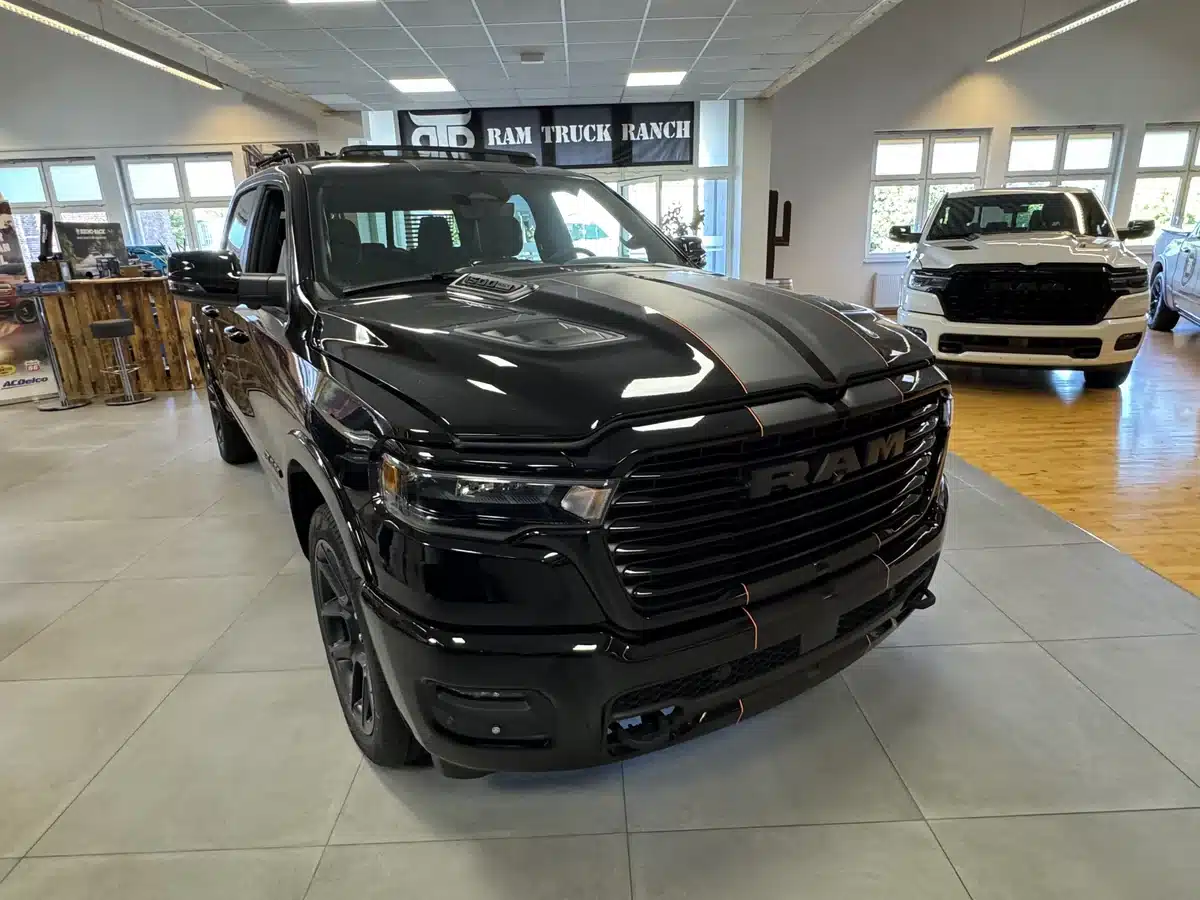
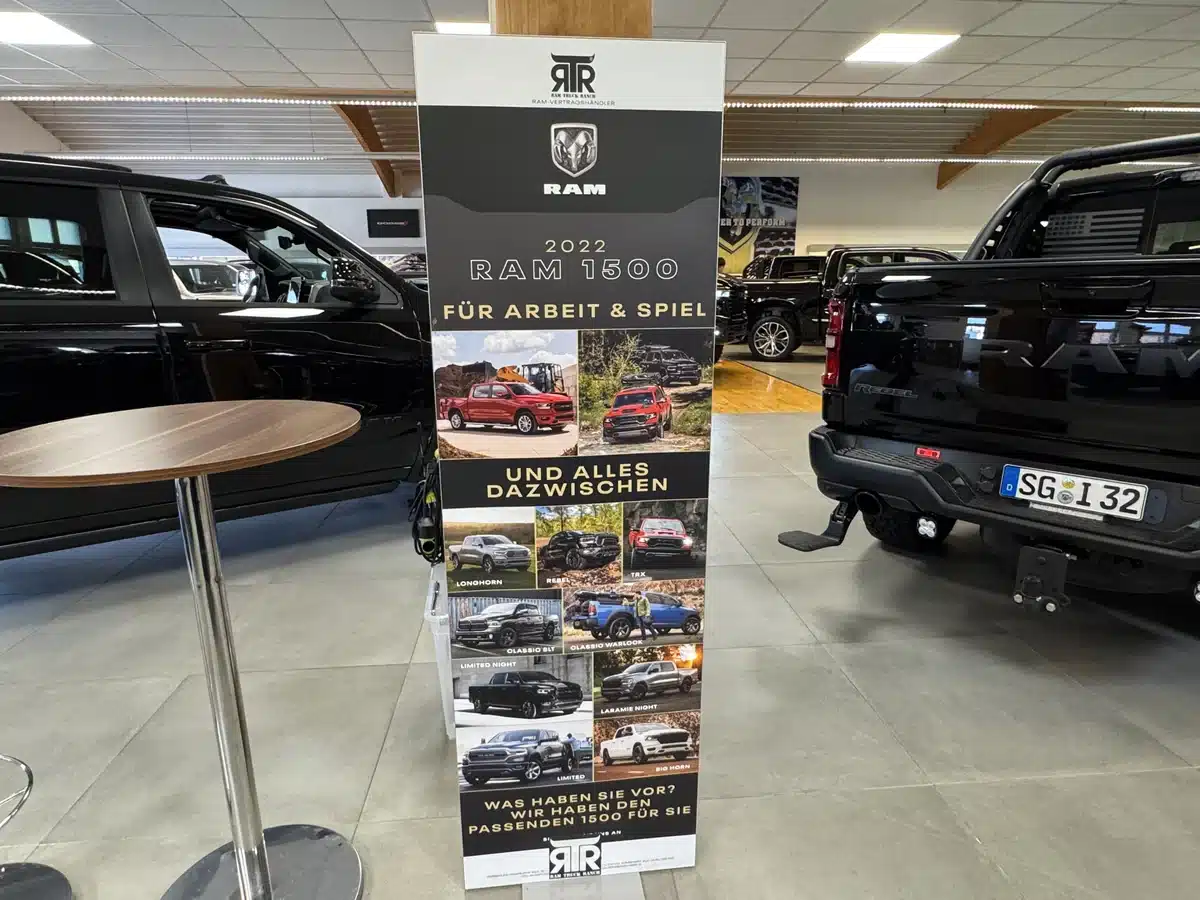
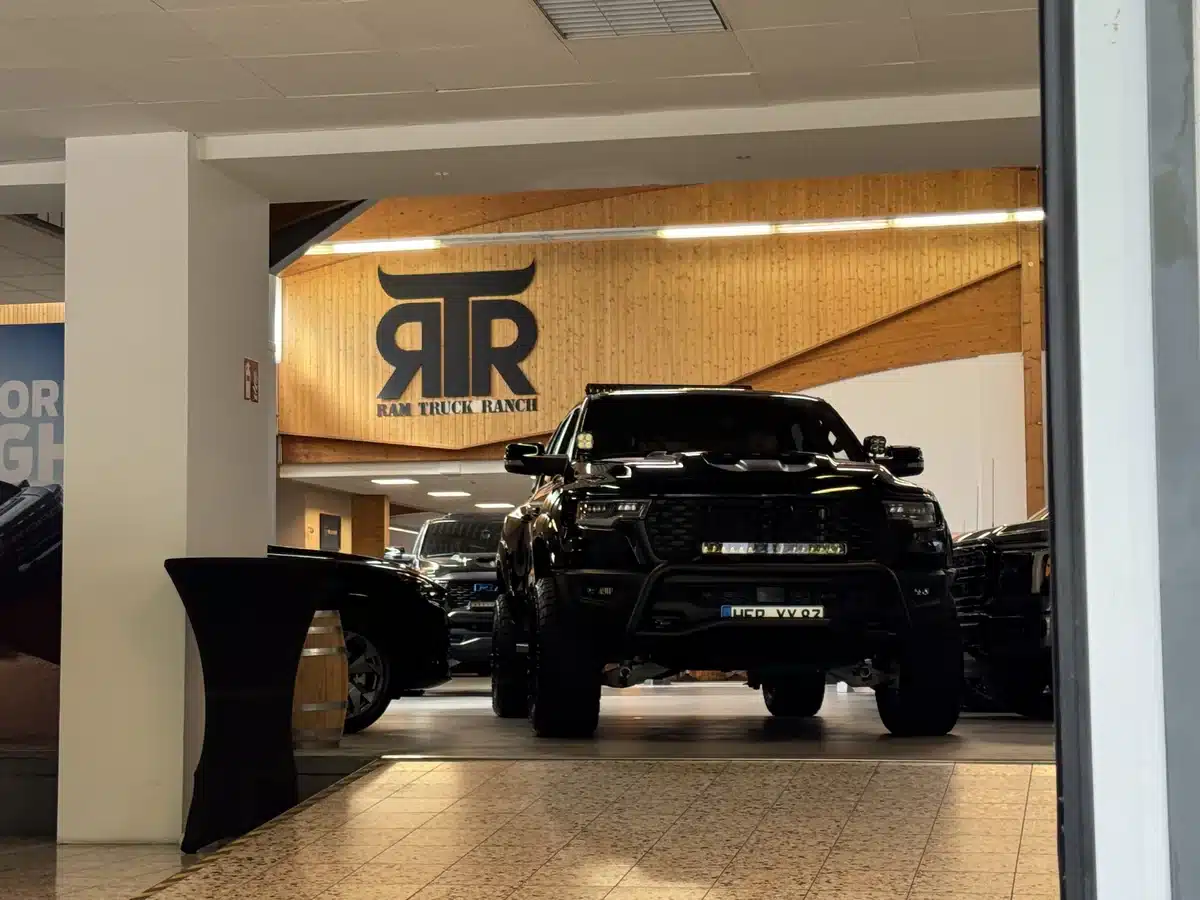
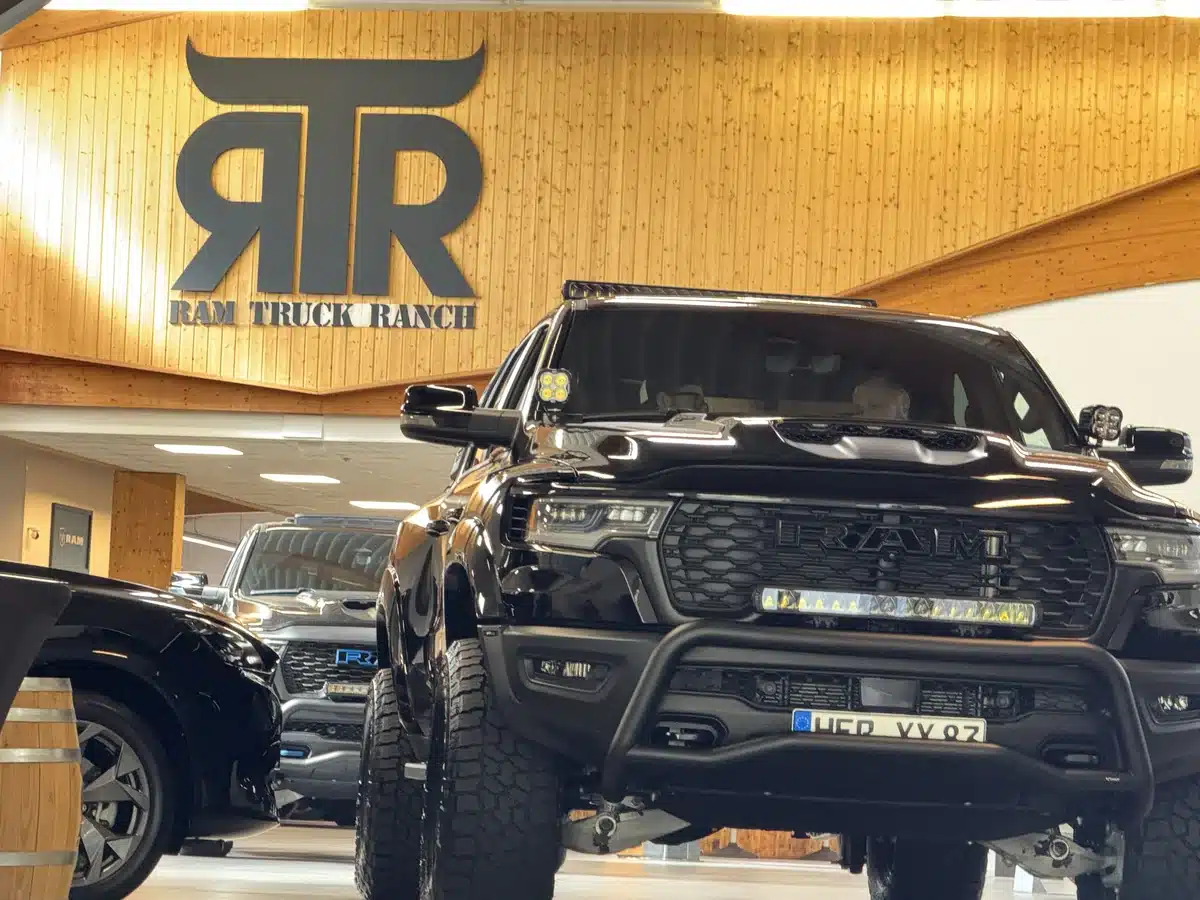
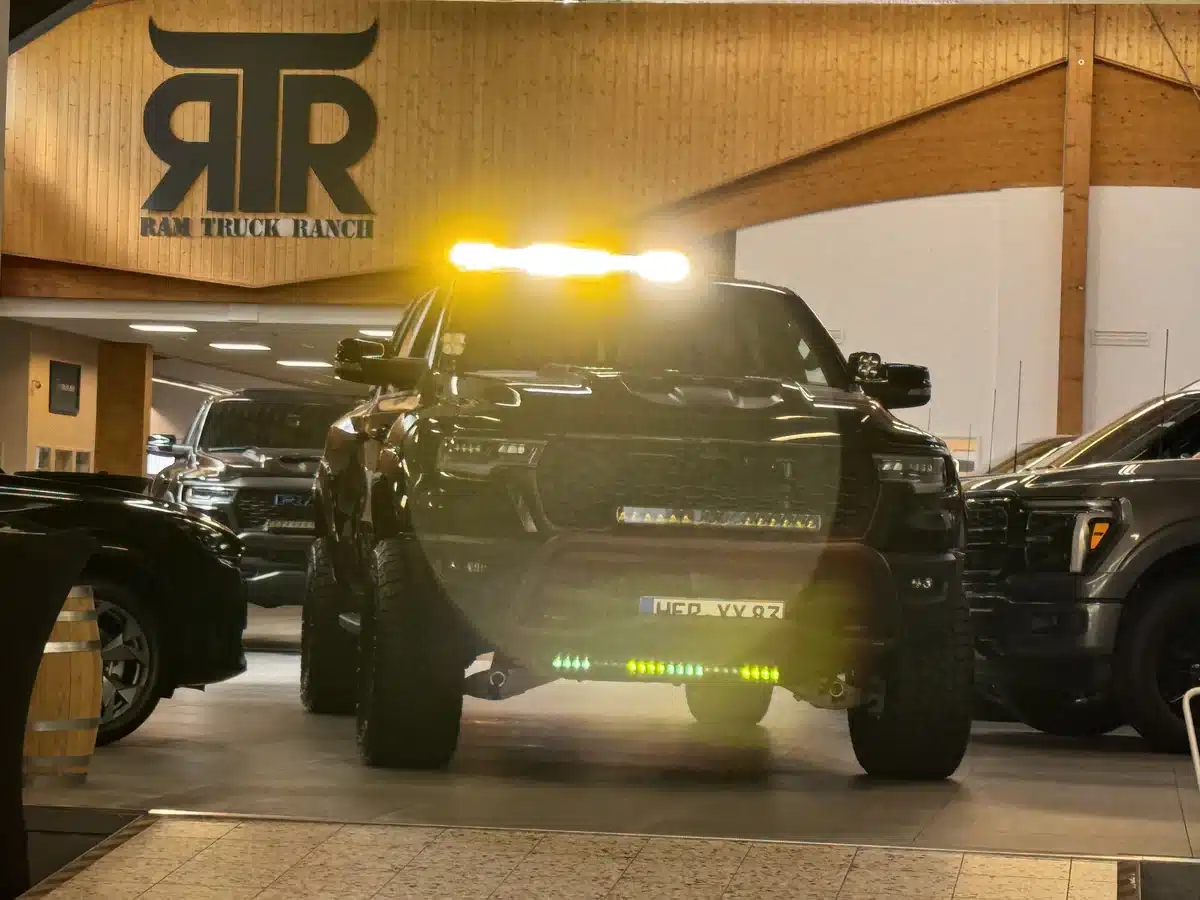
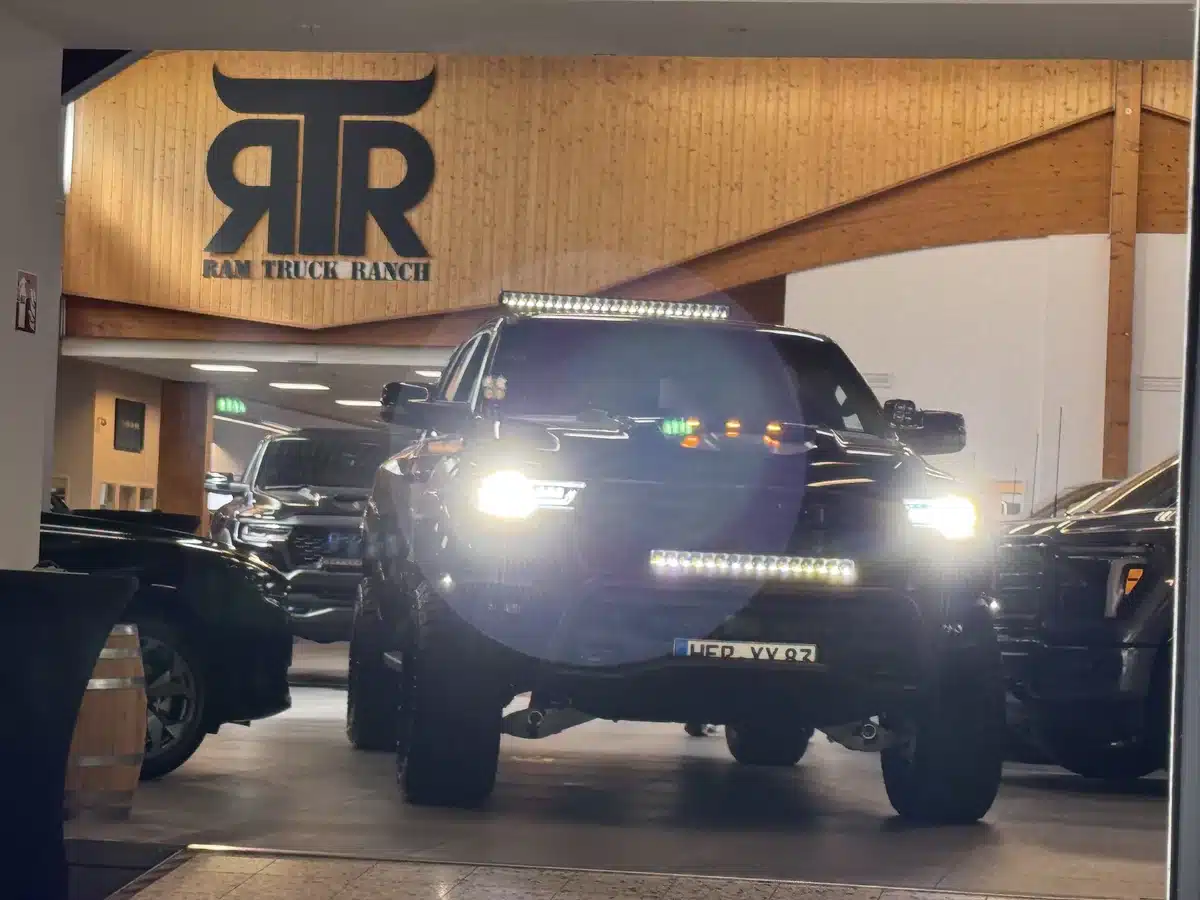
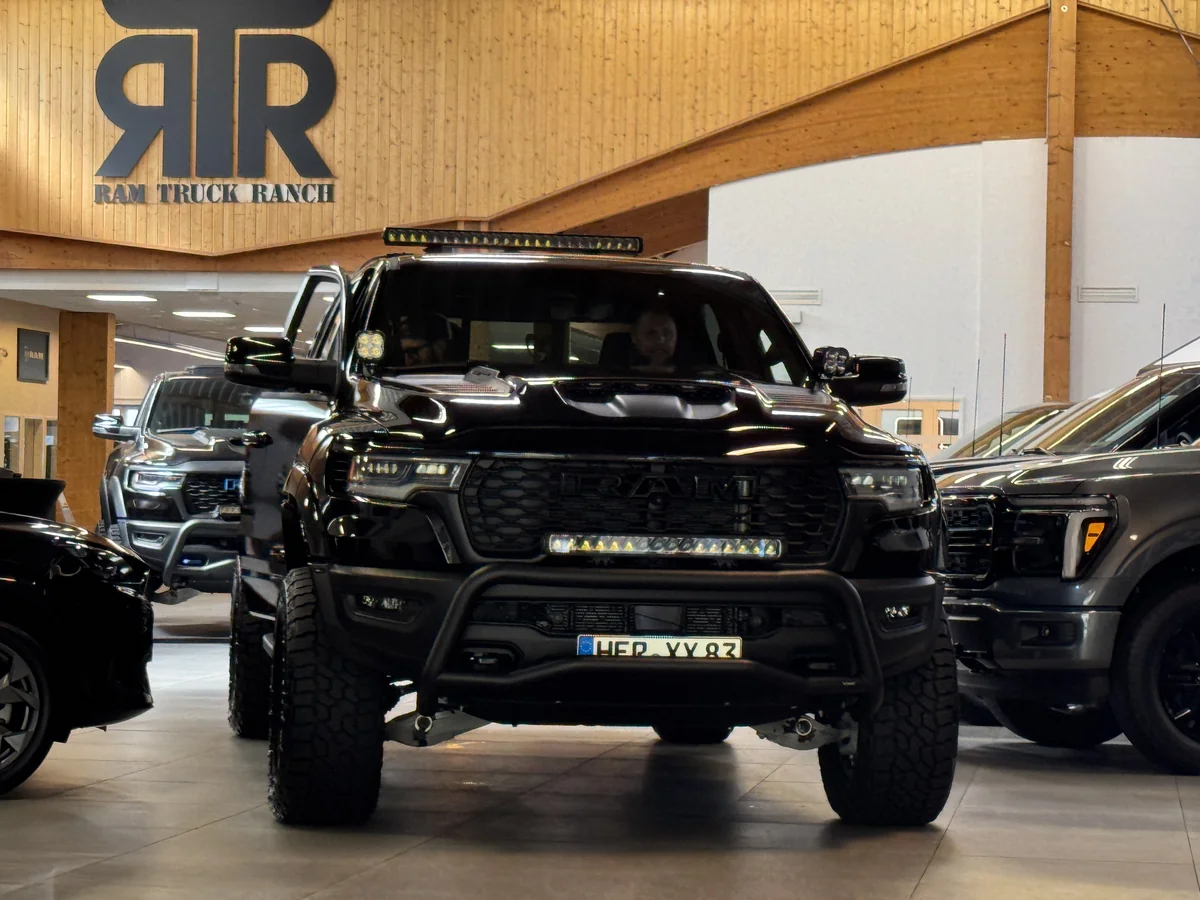
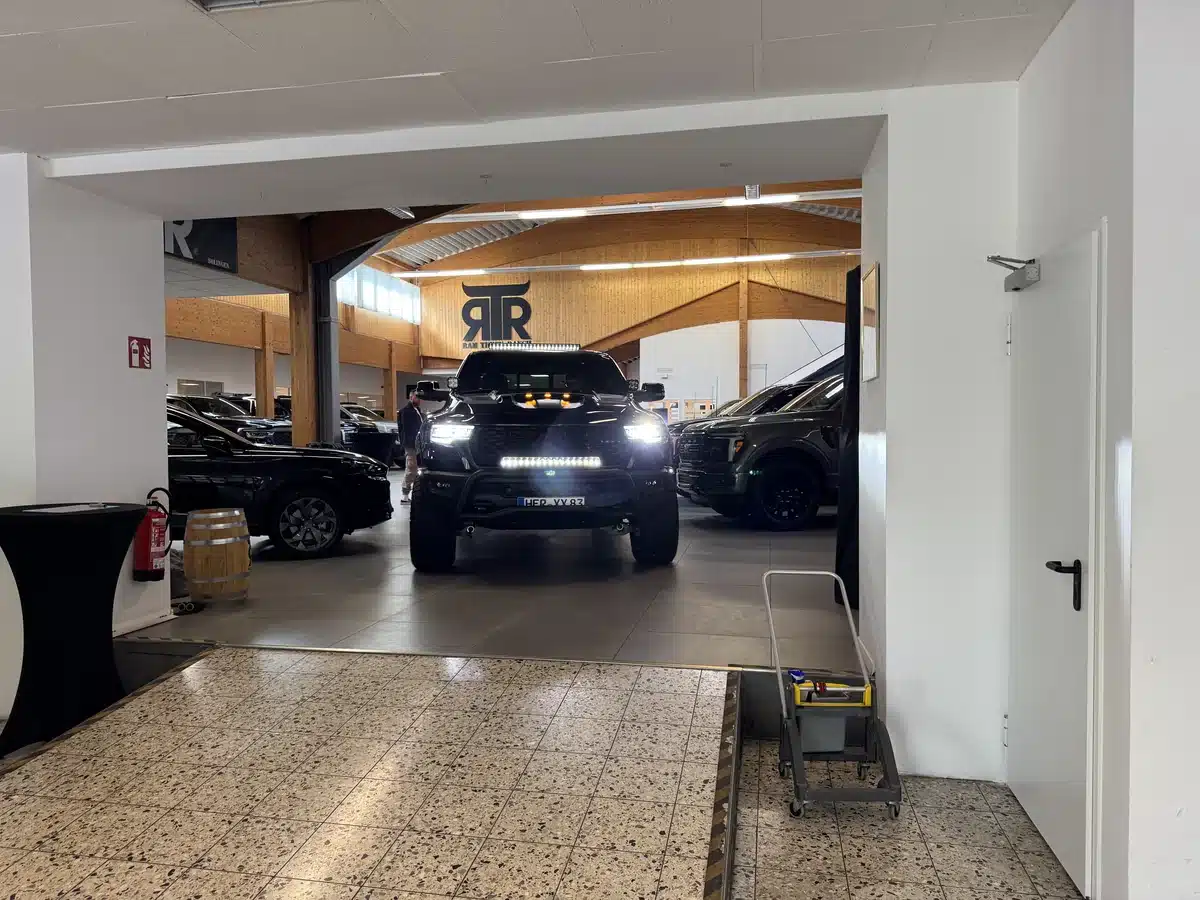
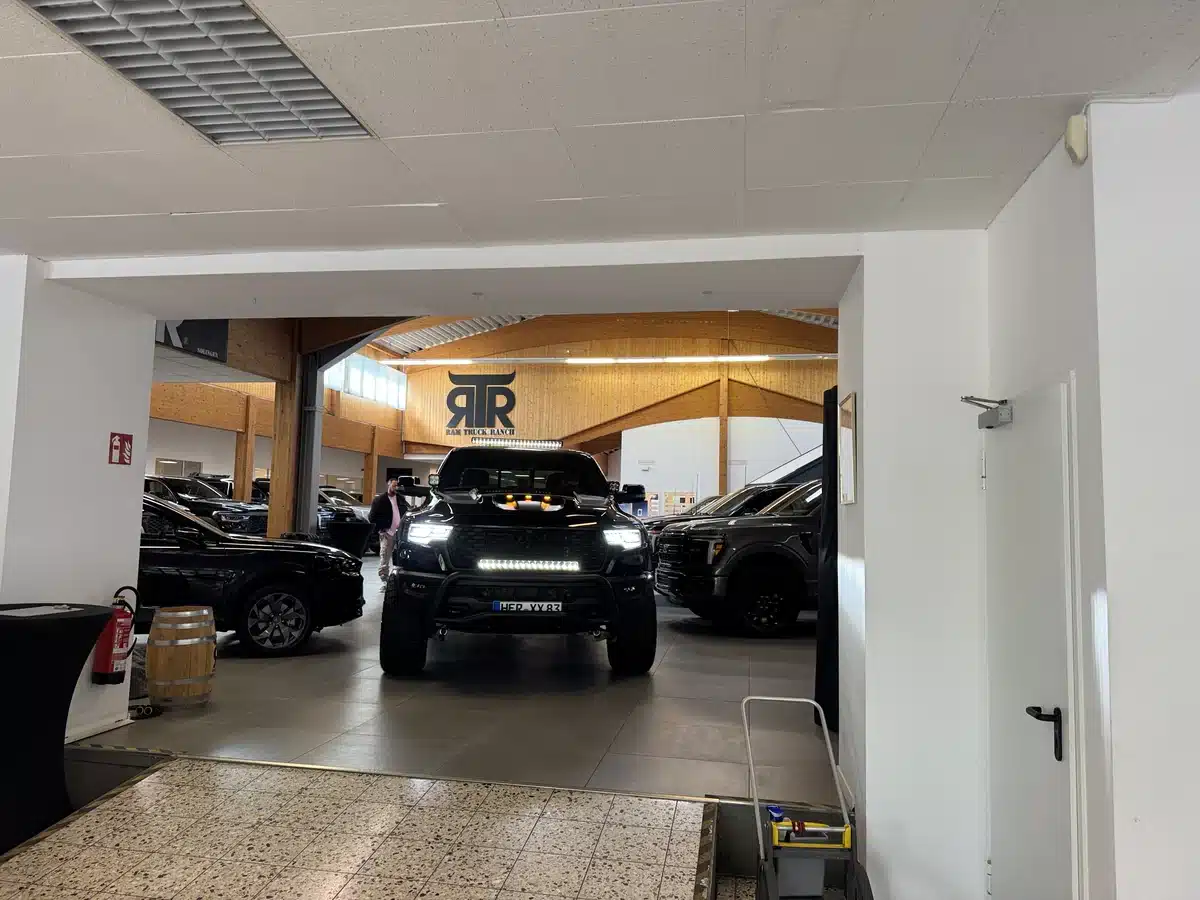
I had followed RTR Ram Truck Ranch on Facebook for a couple of years before I finally walked into its showroom. Even then, I wasn’t prepared for how much it would feel like home. There were Ram trucks, saddles and an American Southwest display, plus a Harley-Davidson sitting in the bed of a pickup. Outside, swaying over a lot full of Ram trucks, an American flag flew over a business that Nico Stamm told me had roughly 80–90 trucks in stock during my visit.
This wasn’t Texas, Arizona, Montana or even Colorado. It was Solingen, near Düsseldorf, about two hours by train from Frankfurt on my trip. The question I wanted answered was simple: Why are Germans buying American pickups? Why Ram trucks? And frankly, the simplest question of all: why?
I was in Germany to cover Automechanika Frankfurt, the automotive aftermarket show. The show’s organizers flew me over to cover the event, and the trip also gave me the chance to make this visit to Stamm’s ranch.
Buying a piece of America
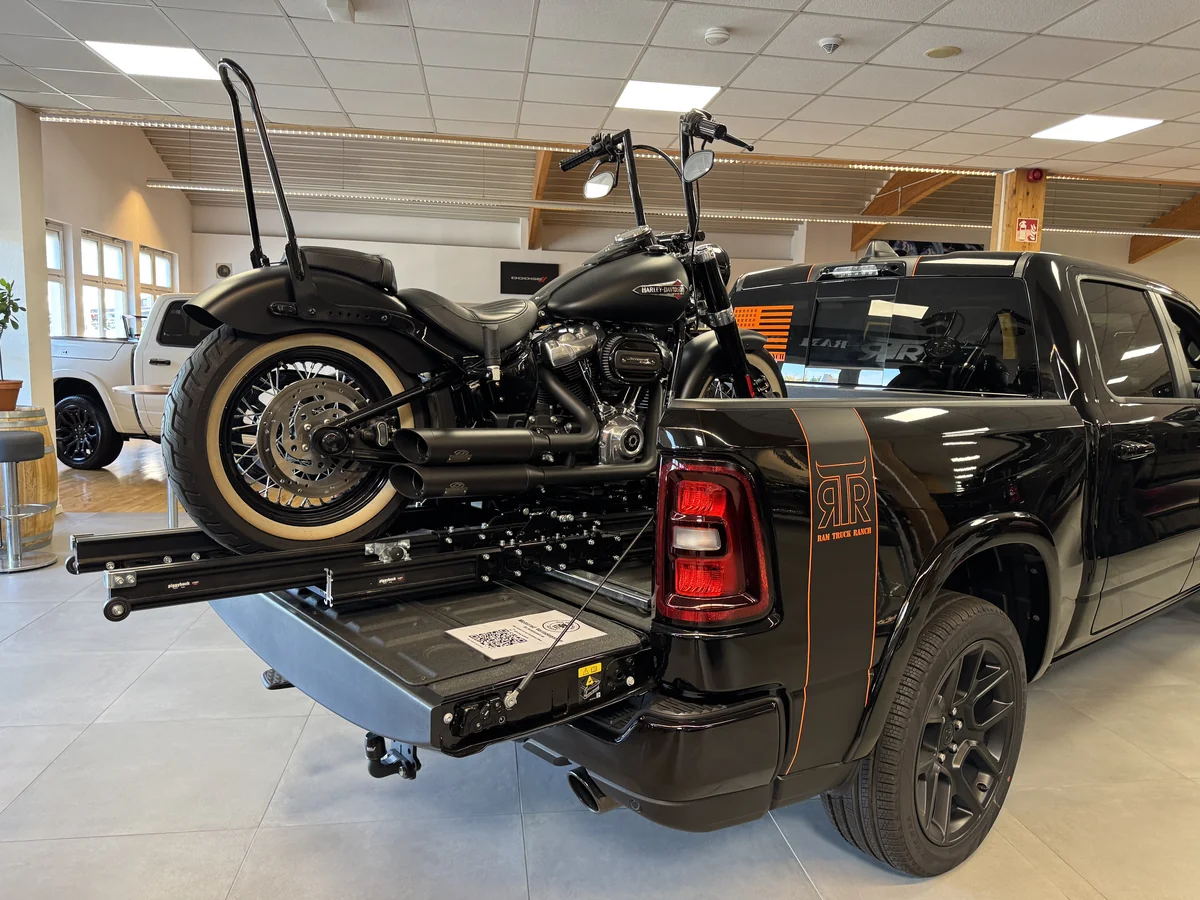
For many of Stamm’s customers, the answer has less to do with needing a truck bed than wanting the experience that comes with it. “It’s a passion,” he told me. A Ram represents something different here. In the United States, it might be a work truck, a family vehicle or the pickup you use to tow your camper. Stamm described many of his German customers as buyers drawn to the lifestyle and their idea of America.
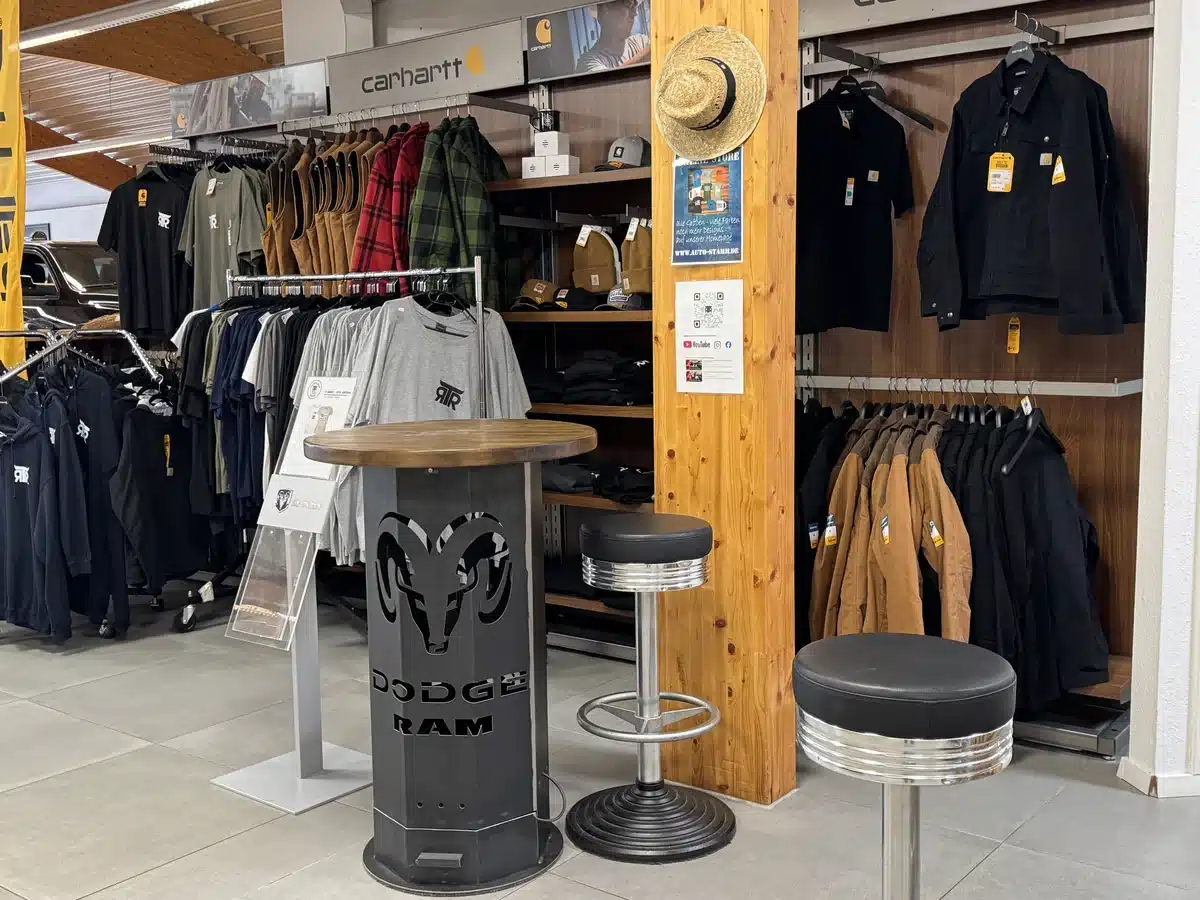
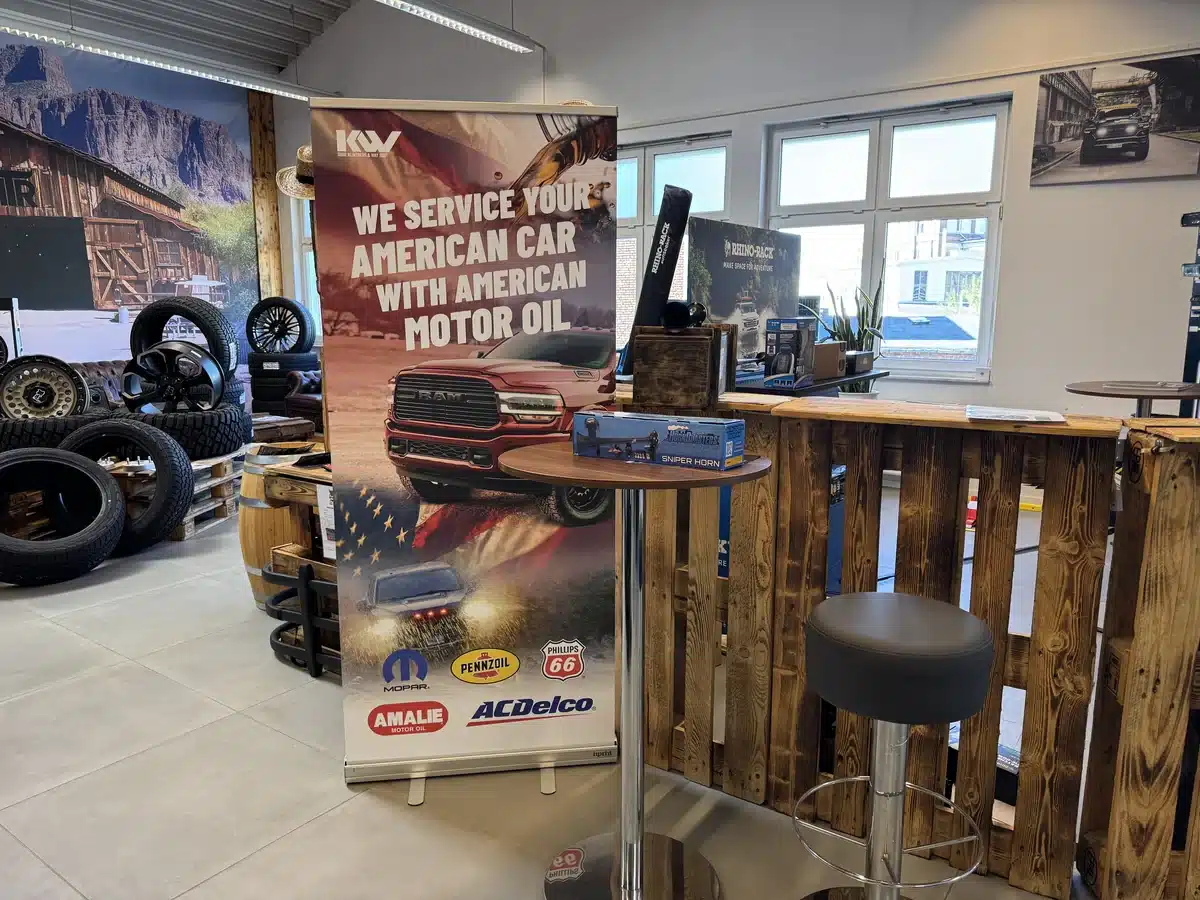
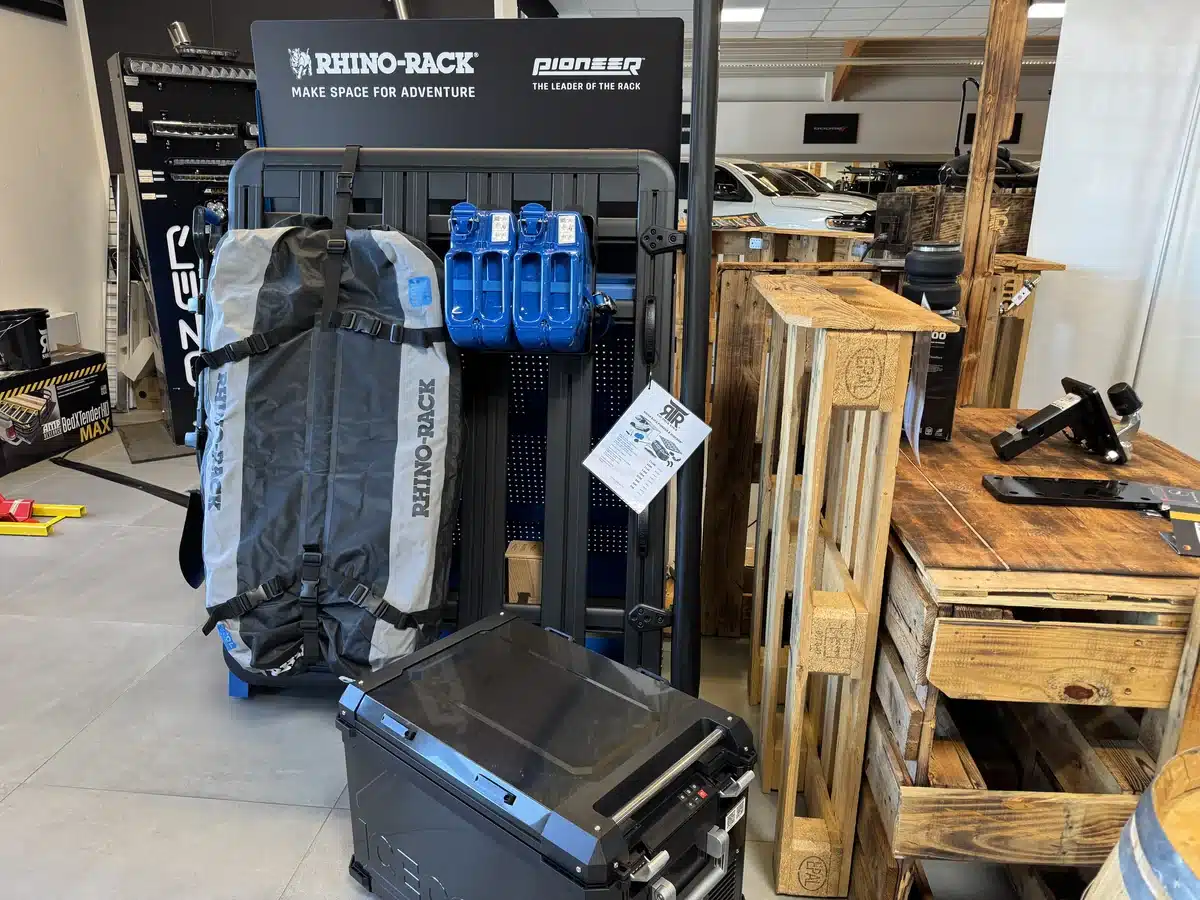
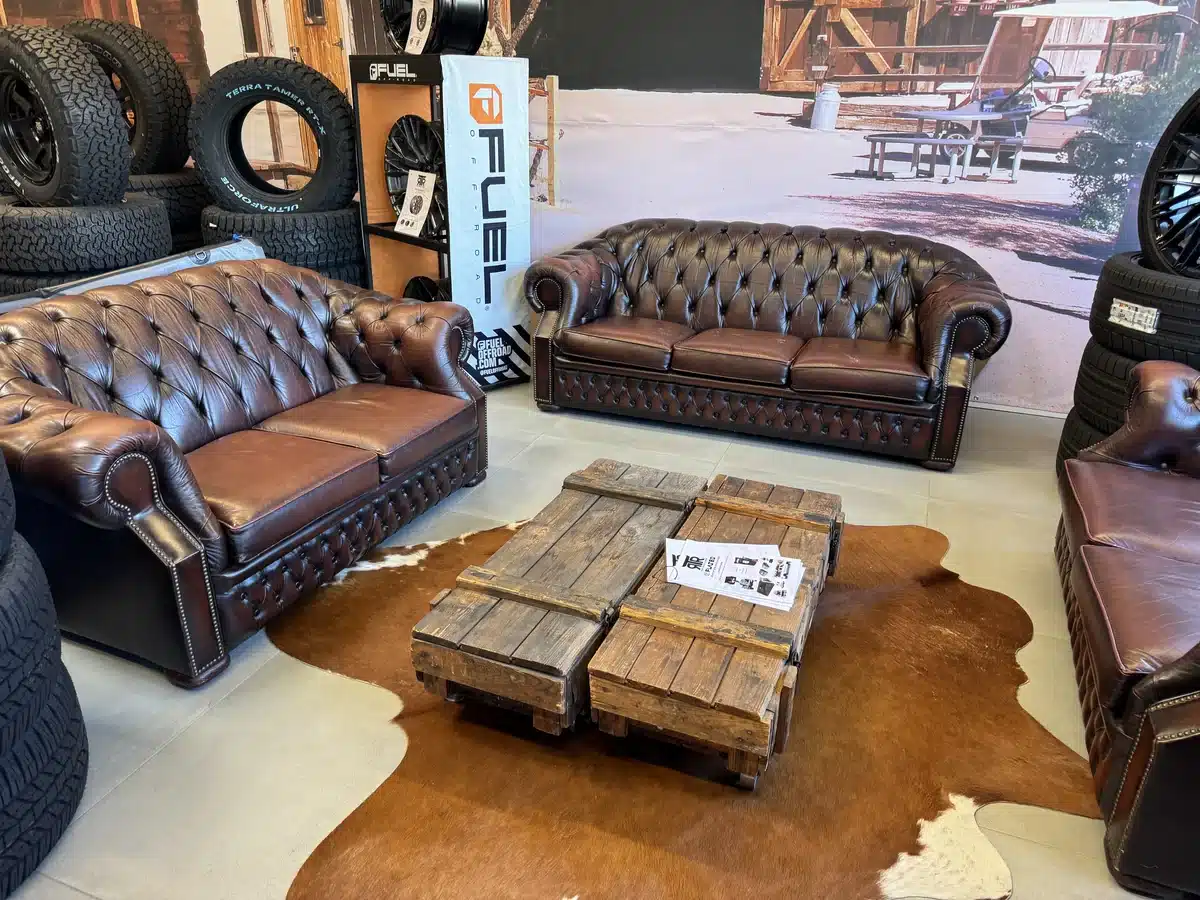
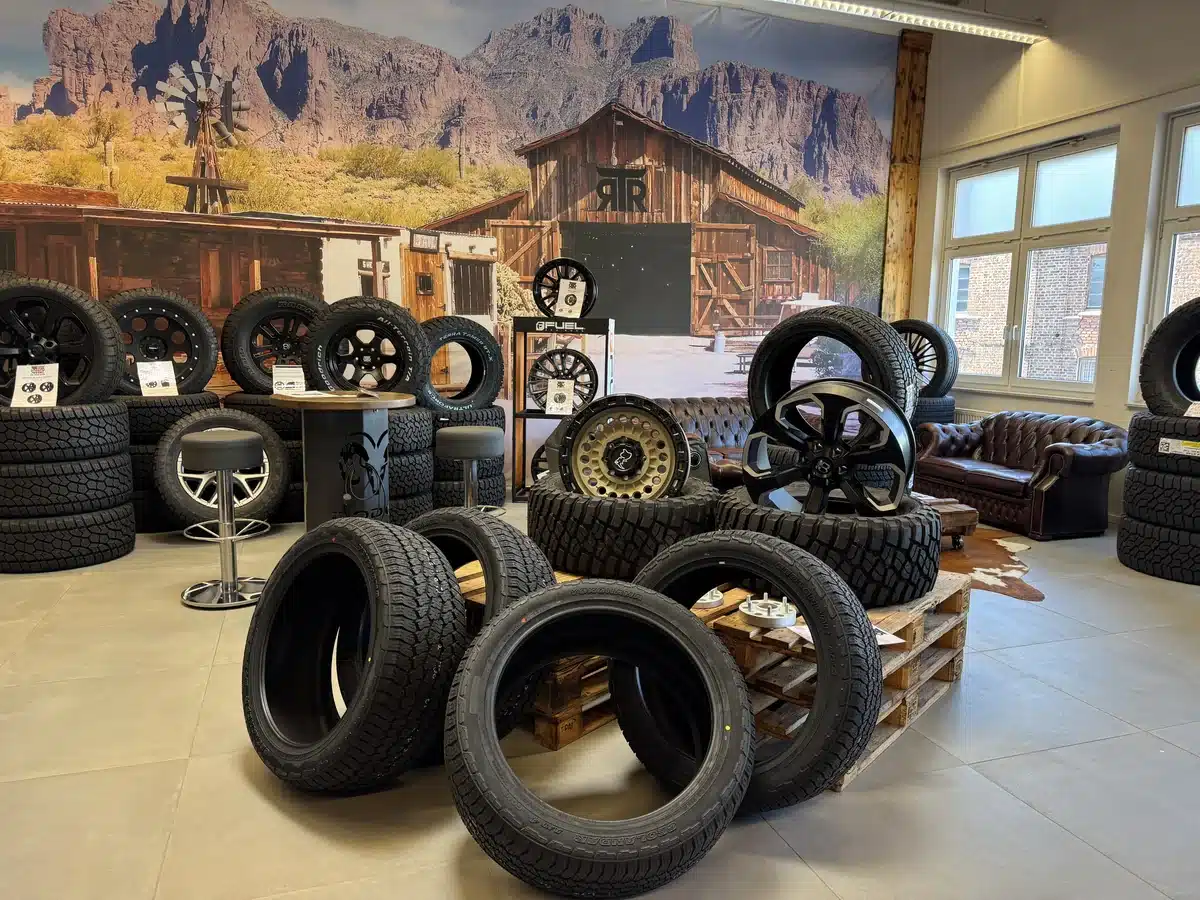
The showroom makes that connection obvious. It is packed with Americana, and the trucks often have the bigger tires, blacked-out trim and accessories that fit the image. Stamm likes traveling to the United States. When work keeps him in Germany, he has found another way to enjoy it: bring some of America to his workplace.
The flag outside is part of that feeling for him, too. It is something he can see from his office while he works with customers, rather than simply a decoration hung up for visitors. “So I’m feeling like living in Montana, Texas somewhere when I’m calling and chatting with my customer,” Stamm said. “I see the flag waving.”
From two trucks to a ranch
The business didn’t start with rows of Rams. Stamm’s father began selling conventional German cars in 1994. Nico joined the company after finishing school in 2005 and trained as a mechanic. A trip to the United States around 2007 helped turn an interest in American vehicles into something bigger. They bought two trucks: one to keep and one to sell. From there, the business grew. Stamm recalled making weekend trips with other drivers to collect more vehicles from the harbor. Eventually, transport trucks took over those deliveries.
The early business plan was as much about finding a way to own the trucks themselves as it was about selling them. “So if we want to have something for us, we need to find a solution to get money with it, to afford it,” Stamm said. “So we bought two cars, one for us, one for selling. And then it start growing.” Stamm told me this in his rarely used English, which, I should add, is quite good.
The showroom where we sat used to be a fitness club. It became a home for the trucks in 2017, although maneuvering large pickups between the building’s existing features still takes a careful hand. Watching his team work around the tight spaces had me holding my breath.
At one point, they had less than an inch to spare between a beam and a desk. I couldn’t watch.
Stamm laughed when I told him this. He said, “We have been doing this for years and have only scratched one.”
Today, Stamm said the business has about 60 employees and draws customers from across Germany, as well as Belgium, the Netherlands, Luxembourg and Switzerland.
Hemi versus Hurricane sounds familiar
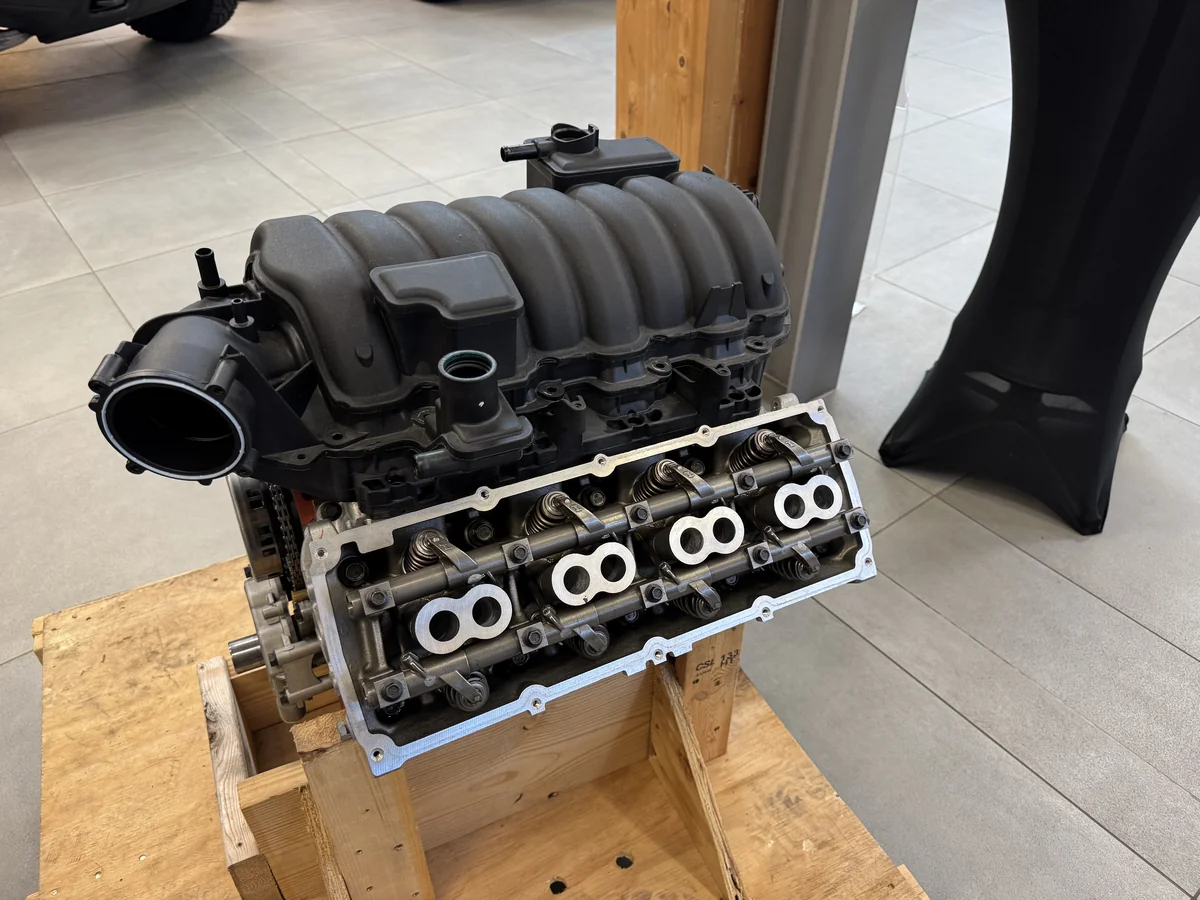
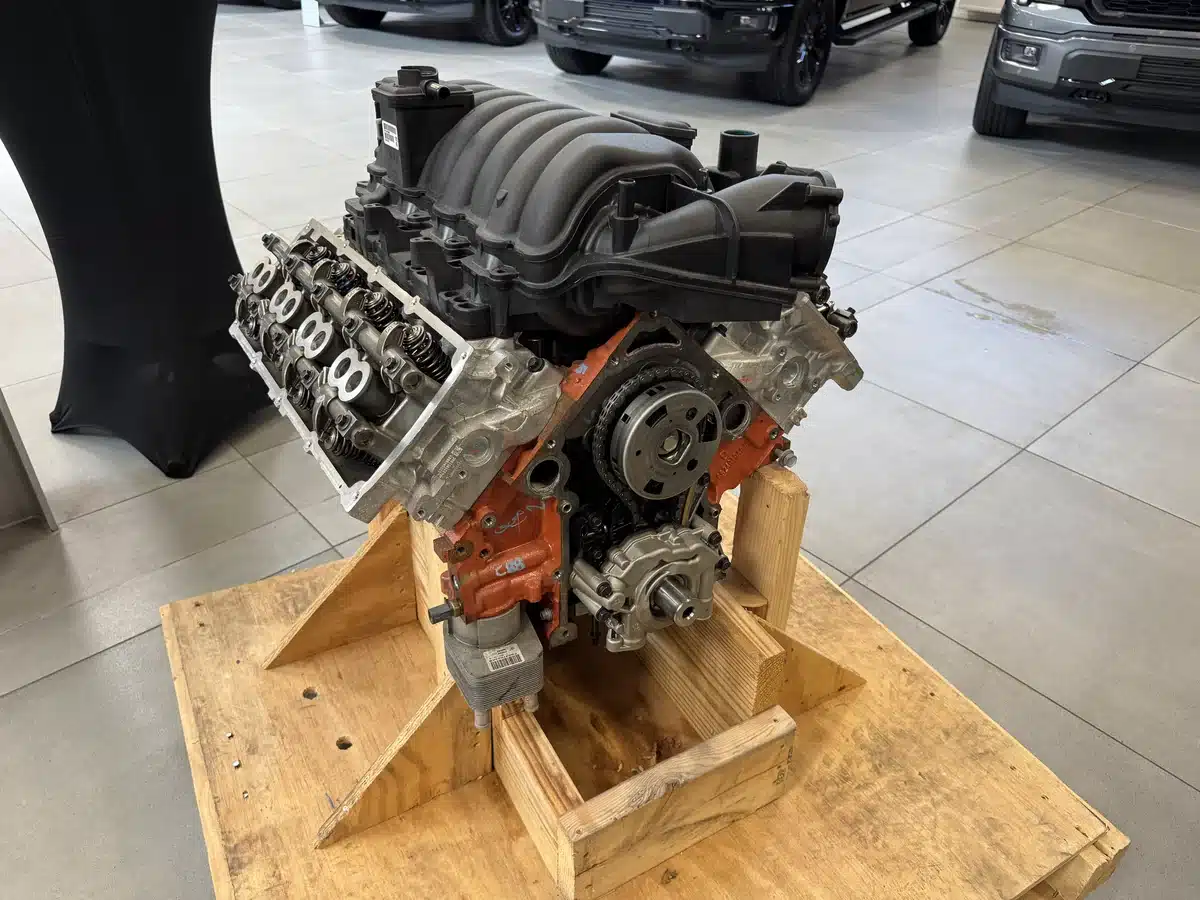
The engine debate has crossed the Atlantic, too. When German buyers picture an American vehicle, Stamm said, many picture a V8. That gives the Hemi an emotional appeal that will sound familiar to Ram fans back home. But he said driving the Hurricane-powered truck can change minds. Customers who arrive focused on the V8 sometimes come away impressed by the inline-six’s acceleration and performance.
Stamm put the emotional side of that purchase plainly: “It’s just for fun. It’s passion. It’s lifestyle. And when a German thinks of a U.S. car, they are thinking about a V8.” That is the expectation a Hurricane-powered truck has to overcome before its performance gets a chance to make the argument.
Of course, I had to ask about the Autobahn. Germany gives these buyers a chance to experience the performance Stamm was talking about, and some discover a limit they would rather not have. He told me the Ram trucks he was discussing are limited to 175 kilometers per hour, or about 109 mph. “And people asking me, ‘Can we delete this? I want to go faster,’” Stamm said. These customers are asking about removing the truck’s speed limiter.
I also asked him about the infamous Nürburgring Ram event that brought together hundreds of German Ram truck owners. Of course, he was there, and it was “too slow” for his liking.
That enthusiasm for performance carried into our conversation after we stopped filming. Stamm told me he was particularly excited about the Ram Rumble Bee and the 6.4-liter Hemi V8 offered in the Rumble Bee 392. That part of our conversation isn’t in the video, but it was another reminder of how closely he follows what Ram is doing back in the United States.
The luxury-trim discussion is familiar as well, although the reason takes on a different weight here. Stamm said higher trim levels are popular because buyers are already spending a substantial amount to get an American truck into their driveway. Customers coming out of an Audi or BMW typically want an interior that feels like an upgrade, rather than a basic truck with cloth seats.
“So people came from Audi, they come from BMW and they don’t want to have a Tradesman with cloth seats,” Stamm said. He sees a similar preference in the exterior styling. Asked about chrome grilles, he explained, “No, no, people are not asking for that. So everything has to be blacked out.”
Although a few trucks still have some chrome, most have blacked-out appearance packages throughout.
Getting a Ram to Germany is only the beginning
The price comparison stopped me for a moment. During our conversation, Stamm quoted a starting price of €120,000 for an RHO, or roughly $140,000 USD. I compared that with the roughly $80,000 I paid for mine in the United States. Those were the figures discussed during the visit, rather than current offers or an exact comparison of equipment and transaction costs.
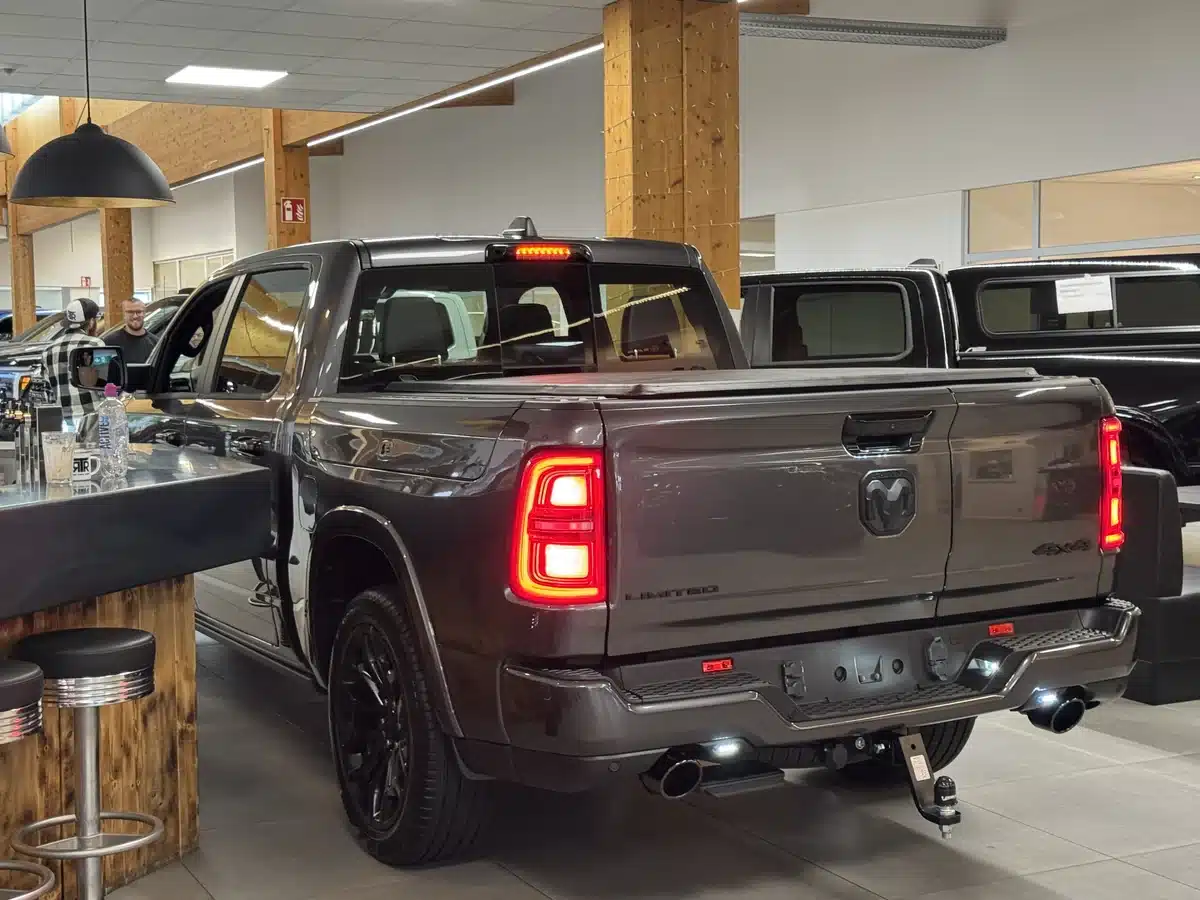
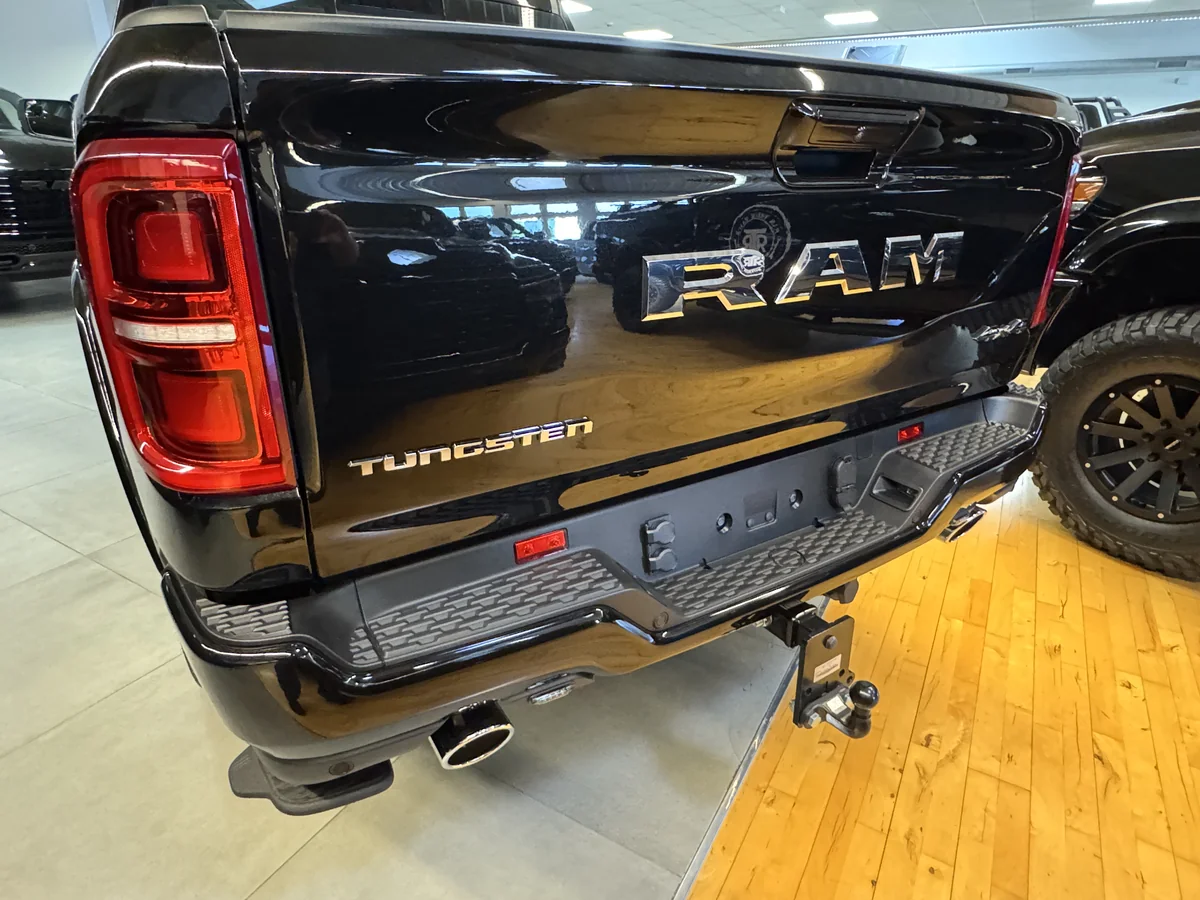
Moving a truck across the ocean is only part of the work. Stamm walked me through changes his operation makes for the European market, including lighting, rear fog lights, trailer-hitch equipment and wiring. Modern LED lamp assemblies make those changes more involved than simply adding a bulb.
“And all the lights have to be changed here for us,” Stamm said. On an LED taillight, that work goes beyond the sort of simple wiring modification I might have imagined. “You can’t cut a wire and put a bulb in it,” he explained. When I asked whether that meant replacing the whole unit, his answer was direct: “Yeah, it’s a completely new unit.”
His list included headlights, taillights and an additional feature that I had looked right past: rear fog lights. “And they are red illuminated, so you can see a car from behind better in fog,” Stamm said. These are lights intended to make the truck easier to see from the rear, rather than another set of lamps to light up the road in front of it.
The inspection discussion also took a little sorting out. We initially got crossed up over “twice a year” versus “every two years.” Stamm clarified that he was describing a two-year interval for a regular car, while vehicles above 3.5 tons are inspected yearly in the system he was explaining. His point was that the required equipment has to be present and working when the vehicle goes back for inspection; fitting it is only the beginning.
The hitch hardware is different, too.
“I know you have the little smaller ball,” I said, referring to the trailer hitch. “Yeah, small balls in Germany,” Stamm replied with a smile. “Small balls in Germany,” I repeated with a smile, barely keeping my composure.
After we laughed, the conversation turned to a much bigger electrical job than plugging in an adapter. I asked whether they could simply use an adapter or whether the wiring had to be changed. Stamm said it was a complete change, then explained why the American lighting arrangement creates extra work.
“Because your indicator and your brake lights are together on one wire,” Stamm said. “In Germany it’s completely separated because our indicator is orange and the brake light is red.” The separate functions have to remain separate in the converted setup. As he put it, “So we have to separate everything.” That means the hitch conversion includes the electrical connections and the way those signals are handled, as well as the hitch itself.
The truck’s navigation system needs attention, too.
“Yeah, we have to remove the navigation system and bring European software in it,” Stamm said. I asked whether the answer was a completely different navigation unit. “No, we can bring a different software in, but for this we have to remove it,” he explained. In other words, they retain the unit and change what it can run; this is not simply choosing Germany from an existing menu of maps.
He described working with a company in Sweden that can make the unit accept the European software and maps. Phone integration is a different matter: “Yeah, CarPlay is the same,” Stamm said. Sirius satellite radio was another distinction in our conversation; he said the satellite service was not available there. And when I asked about cabin lighting and the windshield, he said those could stay as they were.
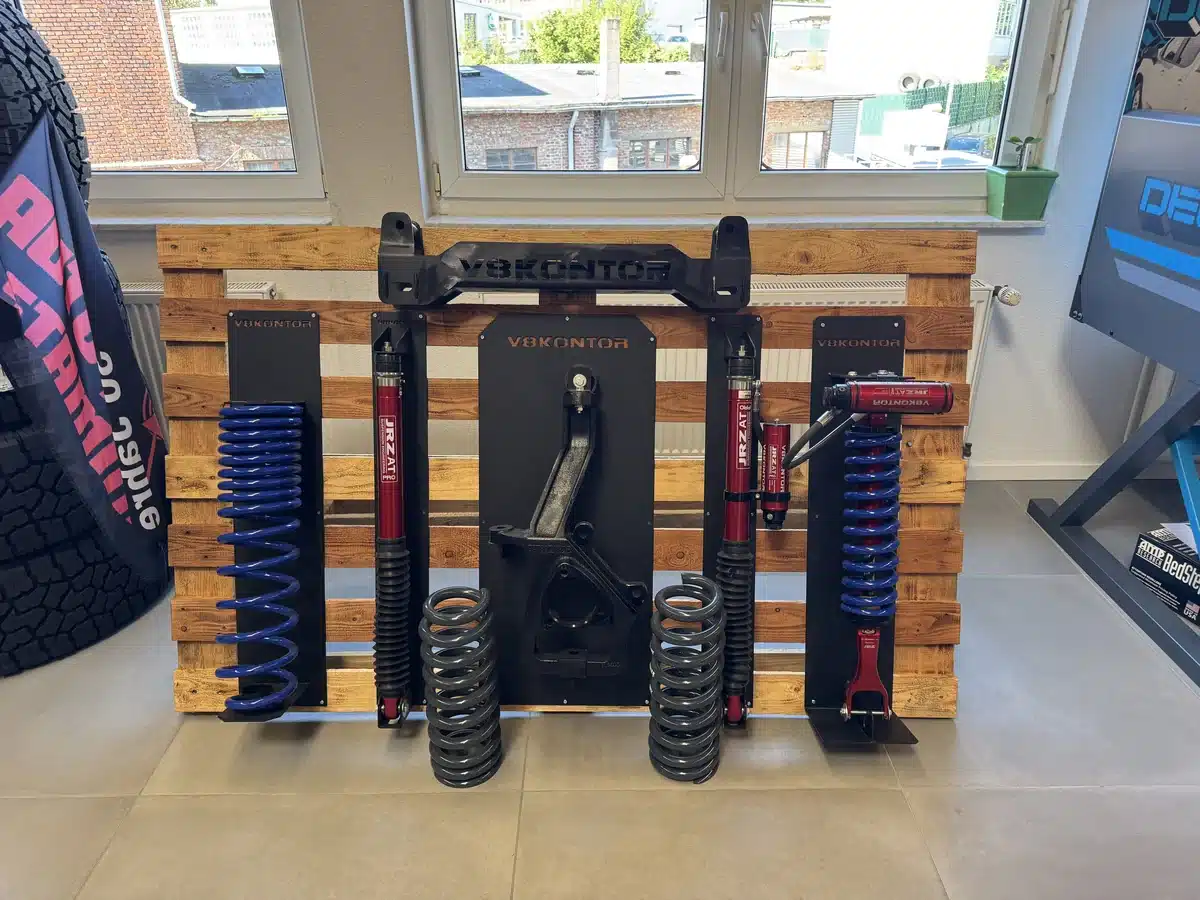
Customizing the trucks brings more work. According to Stamm, getting wheels and other aftermarket components tested and approved is a substantial part of offering modified pickups to his customers. He sees that preparation as one reason buyers come to his business.
“Every part, every rim has to be tested,” Stamm said. “So all the American parts, like rims and wheels and stuff, we have to test them to get a certificate for it, and then we can sell it.” He was describing approval through TÜV, the inspection and testing organization we discussed, and the preparation behind offering those modifications to his customers.
That is another part of what customers are buying when they choose a truck already built up by RTR. The wheels, tires and other accessories may create the look that draws them into the showroom, but Stamm’s explanation was that his business also does the work behind getting those parts tested and documented. The difficulty of that process is part of how he tries to distinguish the ranch from smaller dealers.
We also discussed LPG conversions, which give buyers another fueling option alongside gasoline. Stamm said the lower local price of LPG is part of its appeal; the economics depend on the conversion, fuel consumption and local fuel prices. The Ram truck, with the LPG conversion, is like driving a large BMW or Mercedes-Benz sedan in Germany.
The LPG conversion is an additional option for fuel costs, separate from the lighting and other changes needed to prepare the imported truck. Stamm described a system that lets the truck use either regular gasoline or LPG, with a separate tank underneath the truck bed. “And then you can fill it with half price,” he said, describing the local fuel-price comparison during our visit. That comparison was about the price of the fuel, not a promise that the conversion itself cuts every running cost in half.
I also wanted to know whether changing fuels changed the engine’s sound. Stamm had clearly answered that question before. “Fire is fire,” he said with a laugh. We both laughed at this, actually. He then added, “People ask me this three times a day.” His comparison with German luxury cars also extended to the Hurricane engine itself: “But the Hurricane engine is drinking the same, like a very big Mercedes or BMW.”
A familiar truck in a different setting
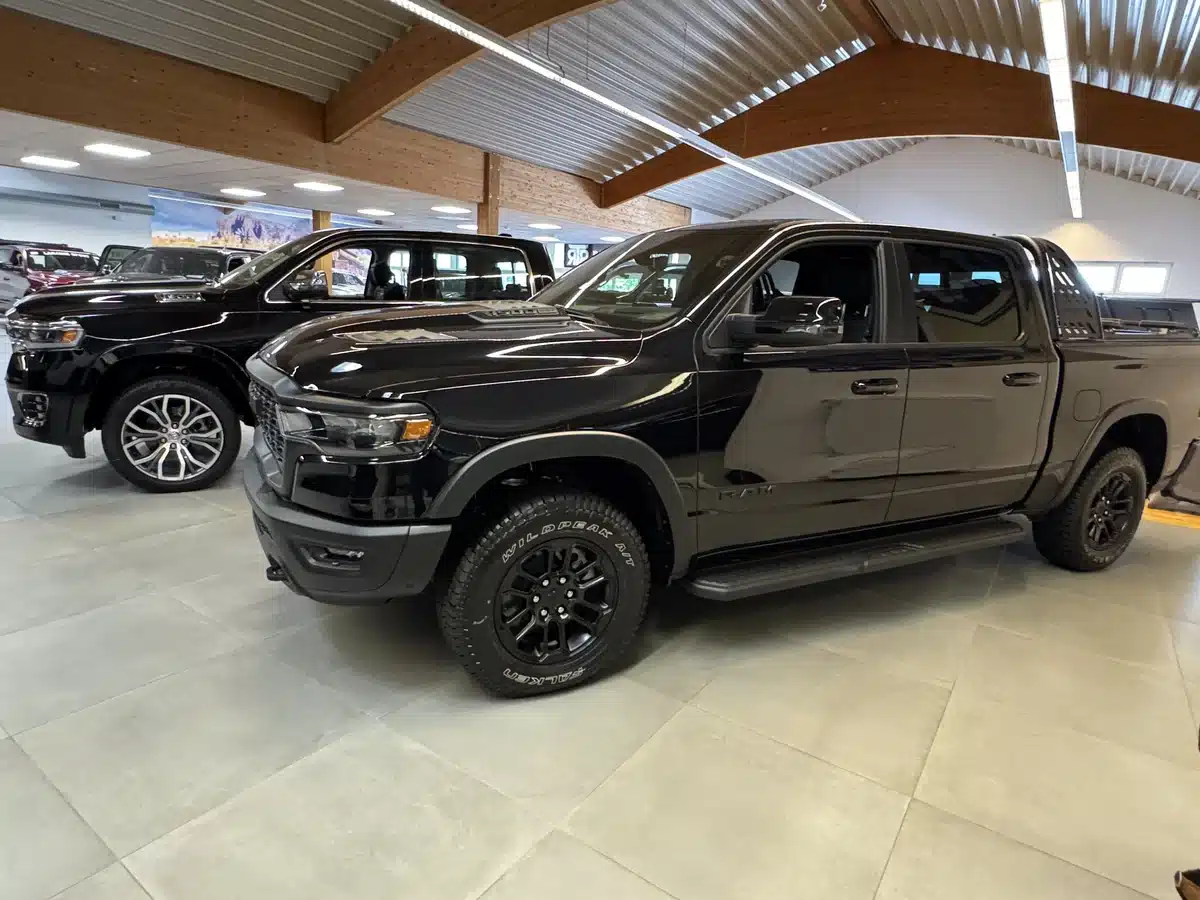
I didn’t know what to expect when I finally made it to his store. The two-hour trip, switching between three different trains, was quite the journey itself. Upon arriving in the small German town, walking through the streets, down a narrow sidewalk and then stumbling across the storefront that Americans would describe as a strip mall was, well, completely different from what Americans are used to with our large dealerships with large buildings, rows of trucks and acres of pavement.
Inside the building, it seems to stretch further in depth than width and is filled with trucks alongside the car dealership his father built. Below the main sales floor is another level where the mechanics work completely out of sight of customers.
What stuck with me was the enthusiasm surrounding the trucks. A Ram that Americans see every day can feel special somewhere else. At RTR, the truck, the showroom and the American imagery all work together to deliver that experience.
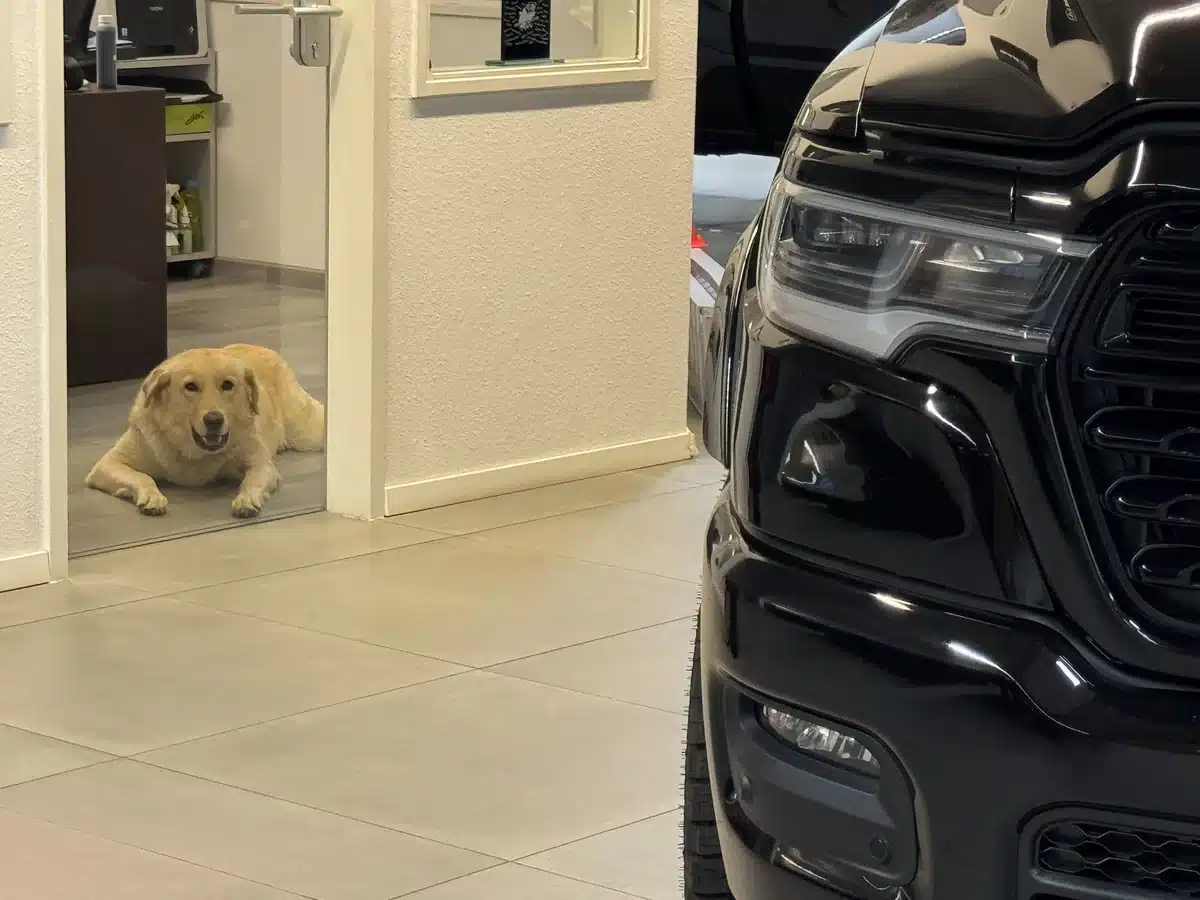
These Germans talk German, but remove that, and this is like any American dealership. They even had a yellow Labrador retriever shop dog—so typically American—and a grill on the patio for BBQ. They walk around with ballcaps on, turned backwards, of course, blue jeans, and Carhartt shirts. In my four days in Germany, this was the most “at home” I had felt on the trip. This is ‘Murica in Germany.
I still had questions about squeezing a full-size pickup down narrow European streets. Stamm’s response was practical: if the garbage truck can get through, they can make it work. After spending time there, I understood why he calls it a ranch.
Visit RTR Ram Truck Ranch / Auto-Treffpunkt Stamm.
Photo gallery: All around RTR Ram Truck Ranch