At Toyota’s proving ground in Arizona, I expected some off-roading and a good excuse to escape Nebraska in December. What I found was a much better explanation of why truck development takes so much repeated work.
During my visit, Toyota engineers talked me through braking on slick surfaces, suspension compromises, Crawl Control tuning and the role of computer simulation. The common thread was simple: changing one part of a truck can send the team back to check how the whole vehicle behaves.
Slick tiles create a repeatable braking challenge
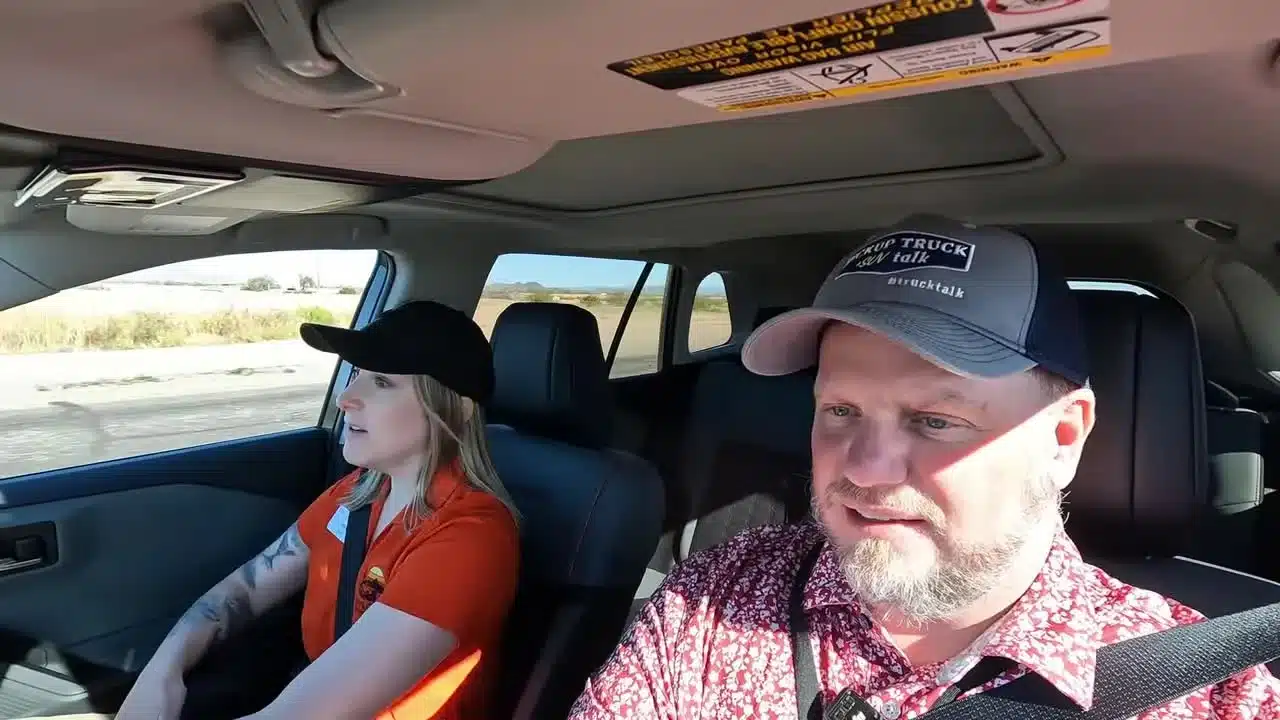
One exercise put the tires on the left side of the vehicle onto wet, slippery tile while the tires on the right stayed on a surface with more grip. The instructor asked me to approach at up to about 35 mph, make a full ABS braking application on her cue and manage the steering. This was a supervised closed-course demonstration, with a deliberately uneven amount of grip from one side to the other.
The next run put the vehicle fully onto the slick surface. The instructor described the tiles as a way to approximate very slick, compacted snow. That is a useful distinction: Toyota was creating a controlled low-grip condition in Arizona, not claiming that water and tile reproduce every winter-driving situation.
I did not nail the first approach and asked for another try. That little moment matters because a repeatable surface is only part of a repeatable test. The driver also needs to follow the procedure. The engineer explained that this area supports driver training for people who will operate prototypes, as well as repeated braking tests when a system needs tuning.
What I came away with was an appreciation for how much discipline is behind the exercise. This was not a stopping-distance comparison with another brand. It was a chance to feel the condition engineers use and understand why they return to it.
A tire or shock change can mean another round of work
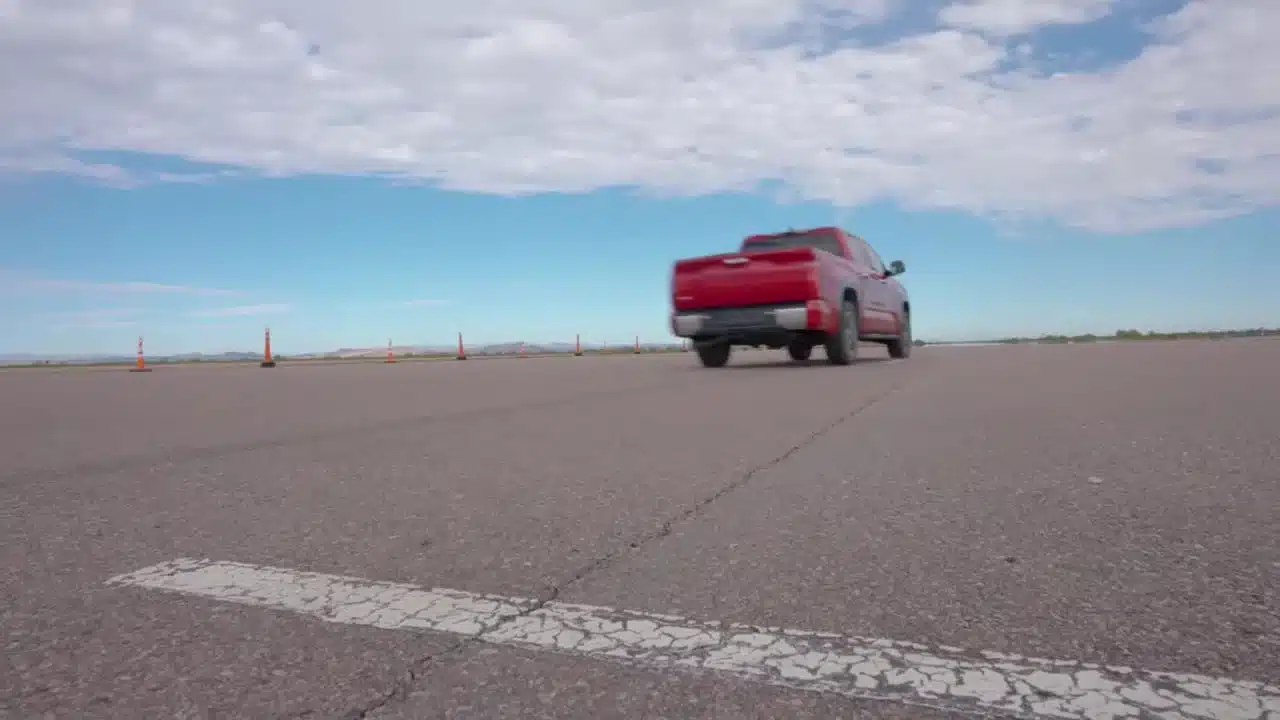
During the ride-and-handling discussion, an engineer who works on truck springs and shock absorbers explained the balancing act. Isolating passengers from road inputs improves comfort, while a more connected feeling can support the handling character the team wants. Those goals can pull in different directions.
Her job is to work toward the balance intended for the particular vehicle and trim. That is why there is no single setting that automatically makes every truck better. A change that feels more controlled in one situation may bring a comfort penalty somewhere else.
I asked about changing tires, tire pressure or shock tuning and then repeating the evaluation loop. She confirmed that even small changes bring more testing. Engineers need to understand how a component change affects the complete vehicle, rather than judging the part in isolation.
She also said the team pays attention to reviews after a truck reaches the public. Engineers share reactions when a reviewer notices the behavior they worked to create. That was a useful reminder that the feel of a production truck is the result of many deliberate choices, even when the driver never sees the work behind them.
Crawl Control needs checking across different Tacomas
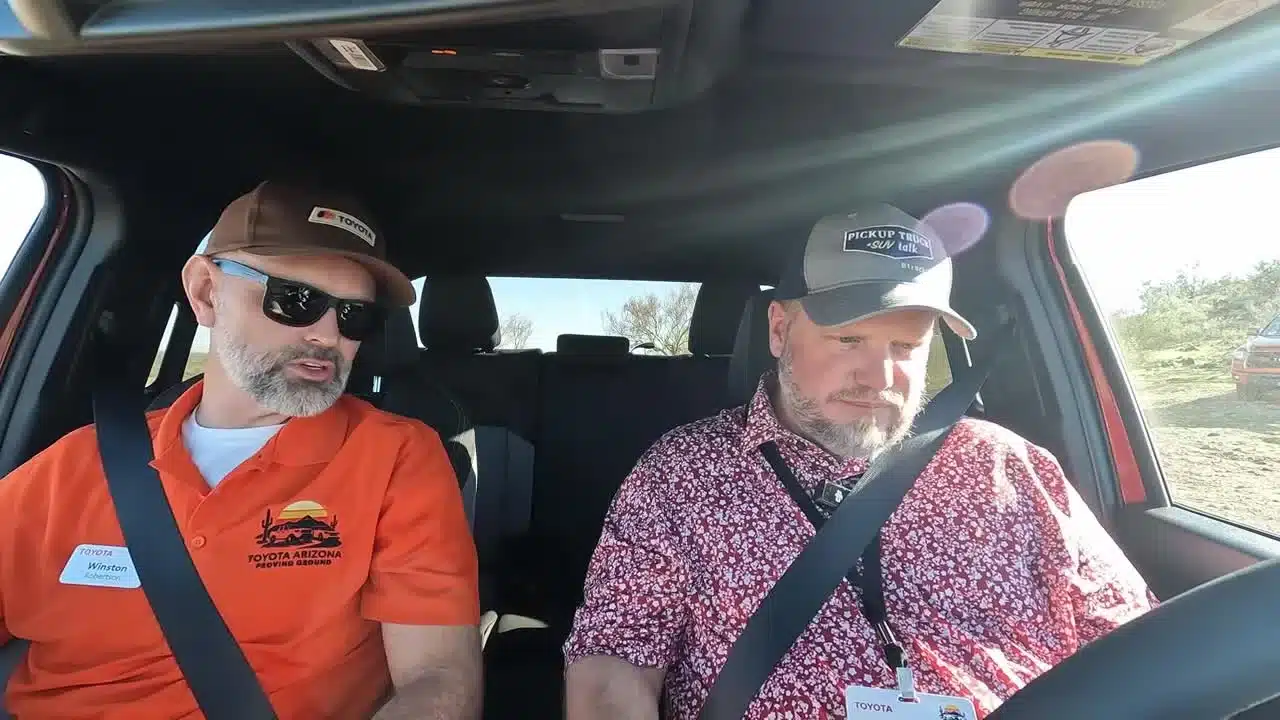
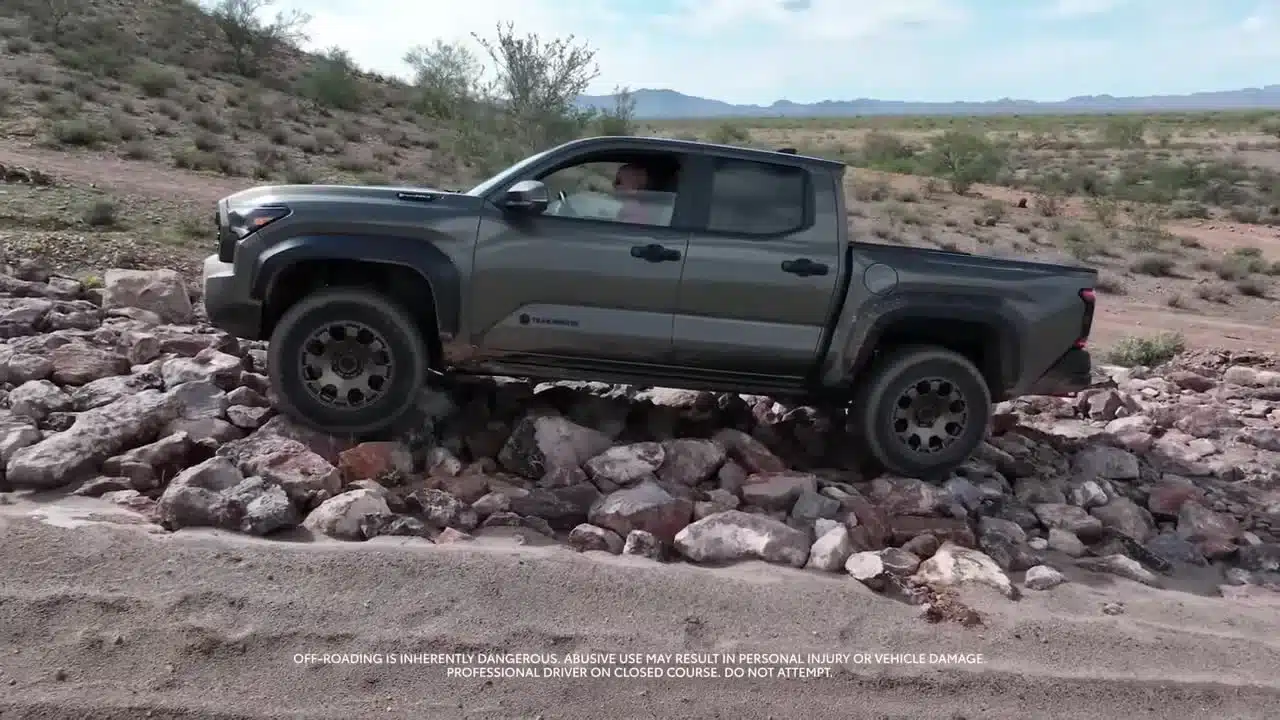
On the rocky section, I drove a Tacoma with Crawl Control and talked with an engineer about how the system is developed. The system managed acceleration and braking while I concentrated on placing the tires. This particular truck did not have the front camera I had become accustomed to using in other vehicles.
The engineer described starting with the control logic and tuning for a particular grade, then checking the result across other grades. Tire size, ground clearance and powertrain differences all enter that work. The goal is for the customer’s experience to feel smooth, natural and confidence-inspiring across the configurations.
That explanation answers a question I hear from buyers: if two versions of a truck have the same named feature, why does the manufacturer keep testing both? Shared branding does not remove the differences in the hardware around the system. The calibration and confirmation work still have to account for them.
He also outlined several development stages, including platform work, vehicle development and production confirmation. The rocky course was one place to check the result, not the entirety of the development program.
Simulation helps engineers narrow the problem before driving
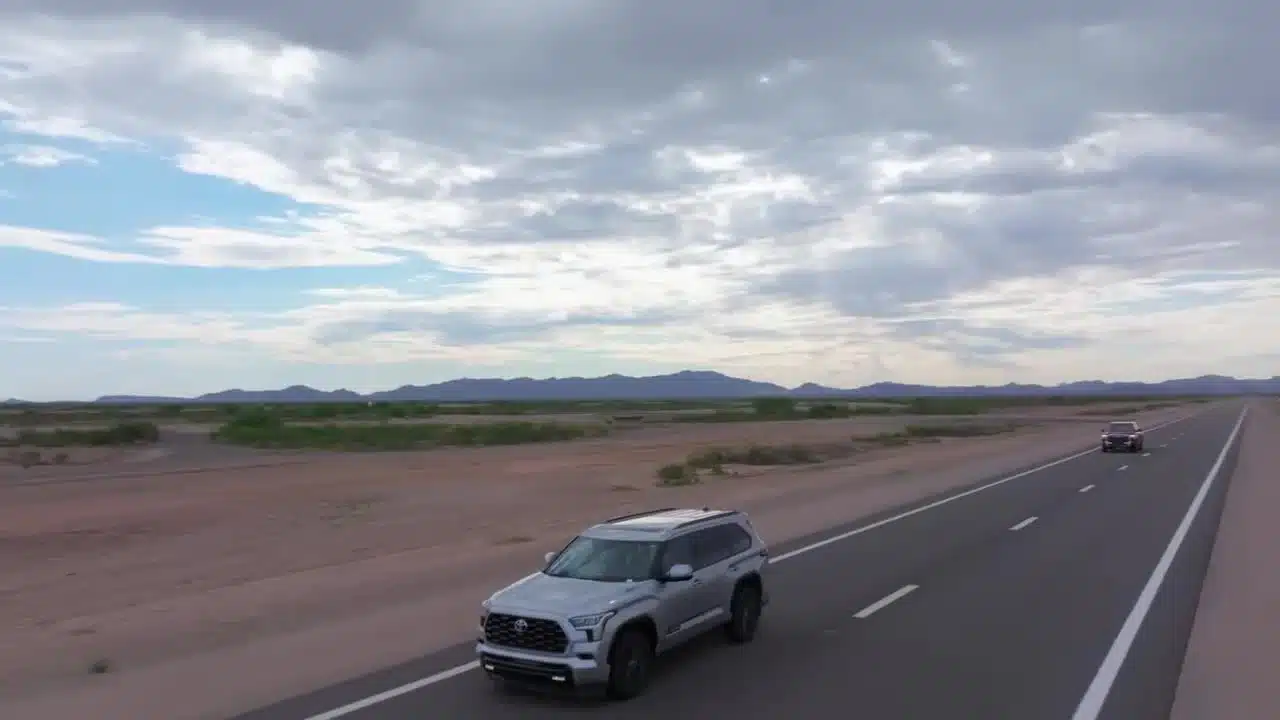
I asked directly whether manufacturers test less or more now. The engineer’s answer was more interesting than a simple yes or no. Compared with the era before advanced computer tools, he said there is less physical testing, but simulation lets the team explore more variables before checking the actual vehicle.
He emphasized accuracy as well as speed. Digital work helps the engineers get closer to a solution before they bring a truck to the course. They still check the customer experience in the real vehicle. His answer described how Toyota approaches the development process; it was not a published count of test miles or a promise that any model cannot fail.
The Trailhunter demonstration gave that process a practical example. On washboard terrain, the discussion centered on keeping occupants comfortable enough for extended travel to a campsite. The instructor distinguished that mission from the higher-speed development work for TRD Pro on the same grounds. Different intended uses lead engineers toward different tuning targets.
For me, that was the most useful lesson of the visit. A proving ground gives engineers surfaces they can revisit, with specific questions to answer each time. The dirt and the driving are the visible part. The real work is understanding what changed, checking the tradeoff and doing it again until the vehicle behaves the way the team intends.