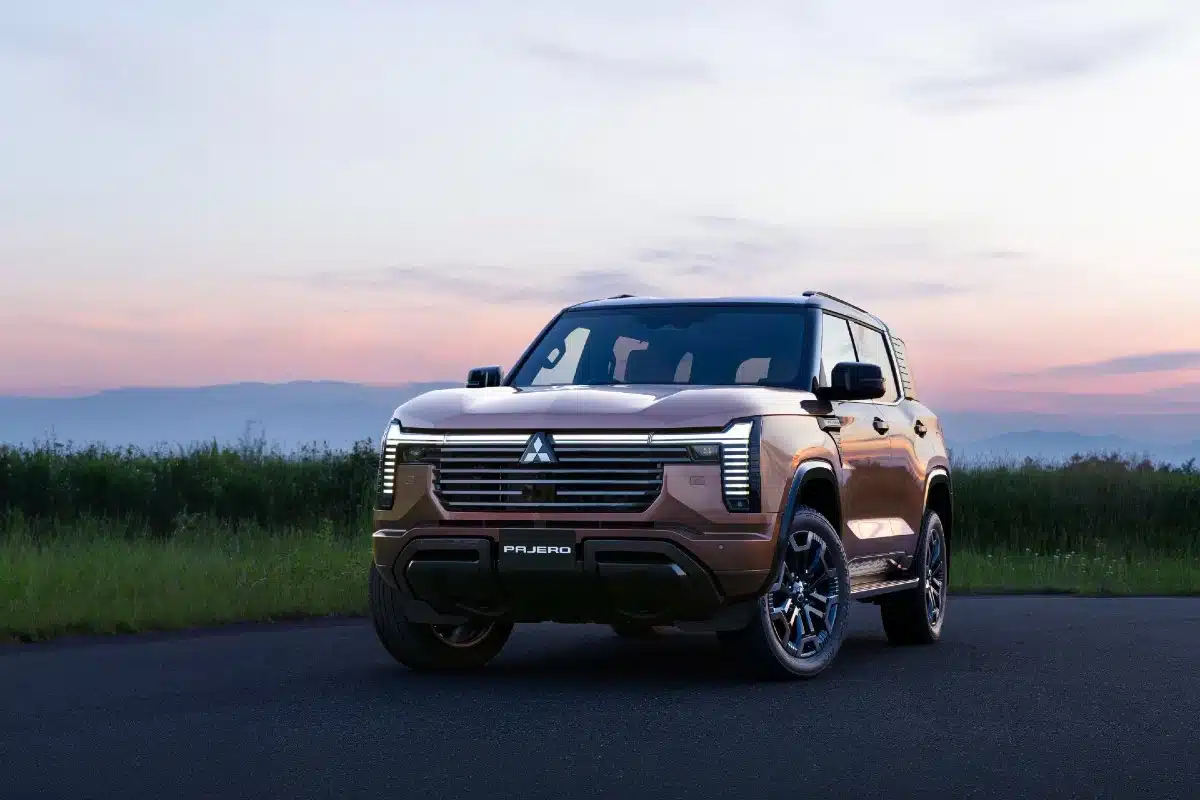
With its future in North America very much in doubt, Mitsubishi’s made an effort to prove it’s not done innovating on a global scale with the all-new Pajero cross-country SUV. Intended for markets in Thailand, Japan, and Australia, with many more countries to come. the Pajero sports an all-new architecture, bold styling, and enough tech to impress. Knowing this, don’t be surprised if North Americans start feeling some serious SUV envy.
A Big Boxy 4×4 Styled Just Right
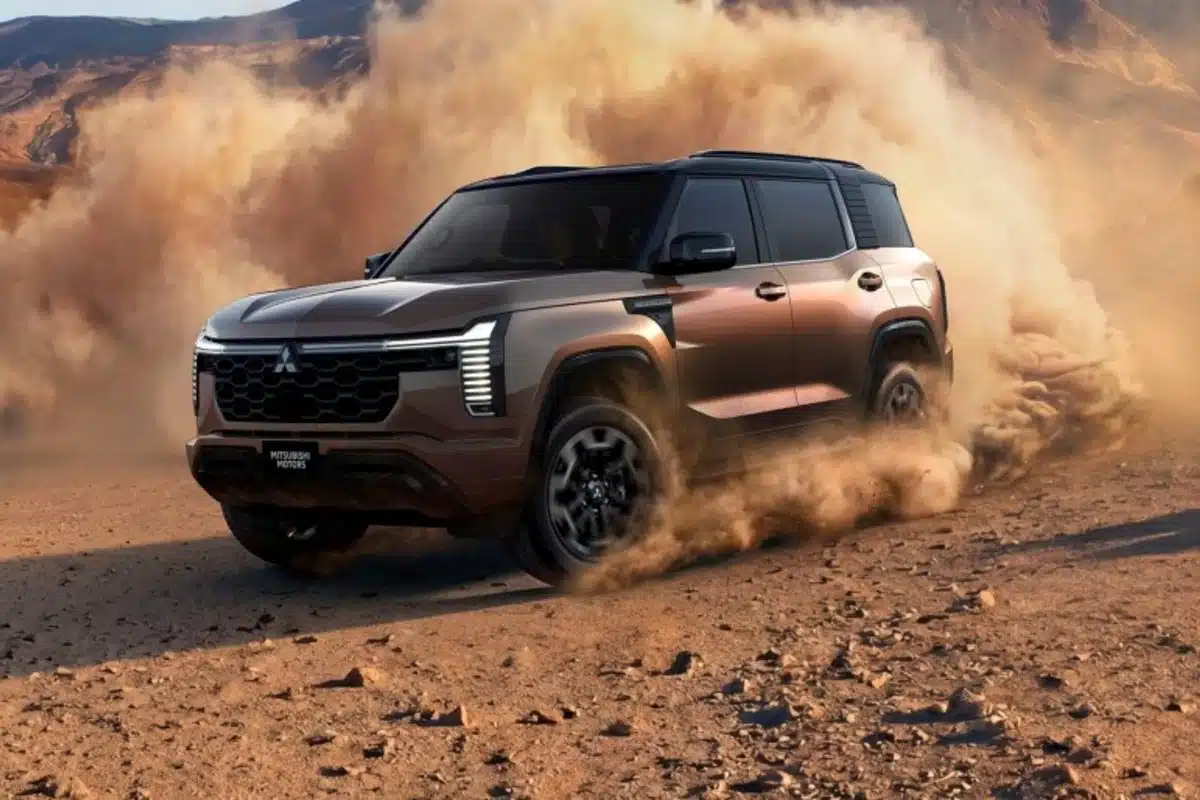
Right off the bat, the new Pajero looks radically different from any Mitsubishi on sale stateside. Its stout, boxy styling lines and prominent stacked headlights joined by an LED lightbar at the top of the front grille, look rugged in a way that even some domestic off-roaders struggle with. Happily, this rugged-looking exterior is far from just skin deep, as the new Pajero rides on a genuine body-on-frame chassis, much the same as what underpins the equally US-unobtanium Triton pickup truck.
Doubling down on durability, Mitsubishi’s expanded its use of high-tensile steel in the chassis, fitted an all-new five-link solid rear axle with coil springs, and added a high-mount double wishbone front suspension for some serious suspension travel. Complete with Mitsubishi’s Super Select 4WD-II system with a proper low-range transfer case, the new Pajero carries the legacy of older models as Mitsubishi’s flagship off-road product.
US-Levels of Tech, and an Interior to Match
Add Super-All-Wheel Control, complete with seven drive modes covering everything from snow, mud, sand, rock, and typical on-road conditions, and you have one of the most complete driving experiences Mitsubishi’s ever fitted to a production vehicle. Under the hood, each new Pajero rocks the same 2.4-liter turbodiesel four-pot engine you’d find optionally in the Triton pickup. In the Triton, this diesel sends 201 horsepower and 347 lb-ft of torque to all four wheels.
It’s not exactly a power monster, but thanks to a newly-developed eight-speed automatic gearbox over the six-speed in the equivalent pickup, the performance it has is put to the road or the trail far more efficiently. Unique to the new Pajero, Mitsubishi fitted a clever variable-geometry turbocharger to boost peak torque figures to 354 lb-ft when you need it most. Inside, the new Pajero’s interior is a night and day improvement to what we’ve come to expect from the brand in the US.
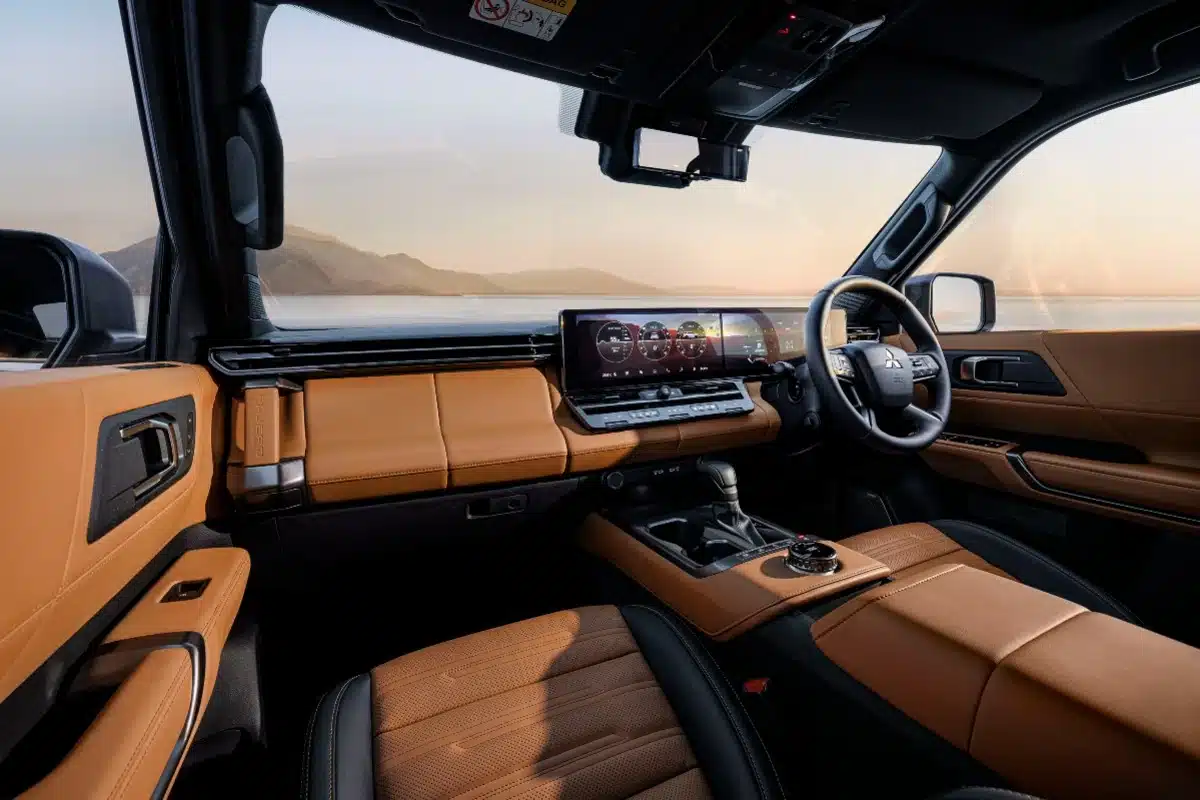
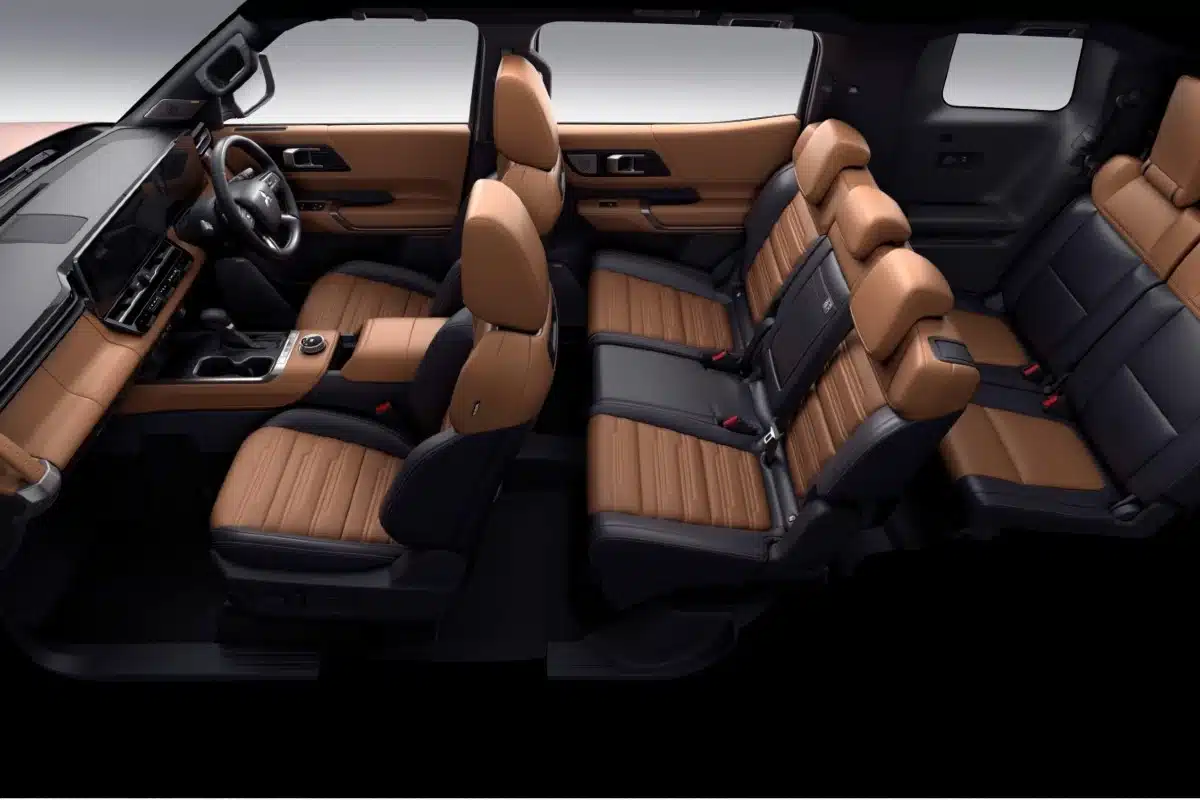
A driver’s-side monolith display, complete with two 14.3-inch screens, includes a simulated triple-gauge cluster which mimics the old Pajero’s rally-inspired setup. Premium leather, complete with Kimekomi stitching on the dashboard is a hallmark feature of the Pajero’s top trims while typical fabric shores up the low end of the trim range. At the high-end, a 12-speaker Yamaha premium audio unit, much like you’d find optionally in the Outlander SUV stateside, provides a truly high-end feel to a markedly middle-of-the-road automotive brand.
Please oh Please, Mitsubishi, Bring it to America
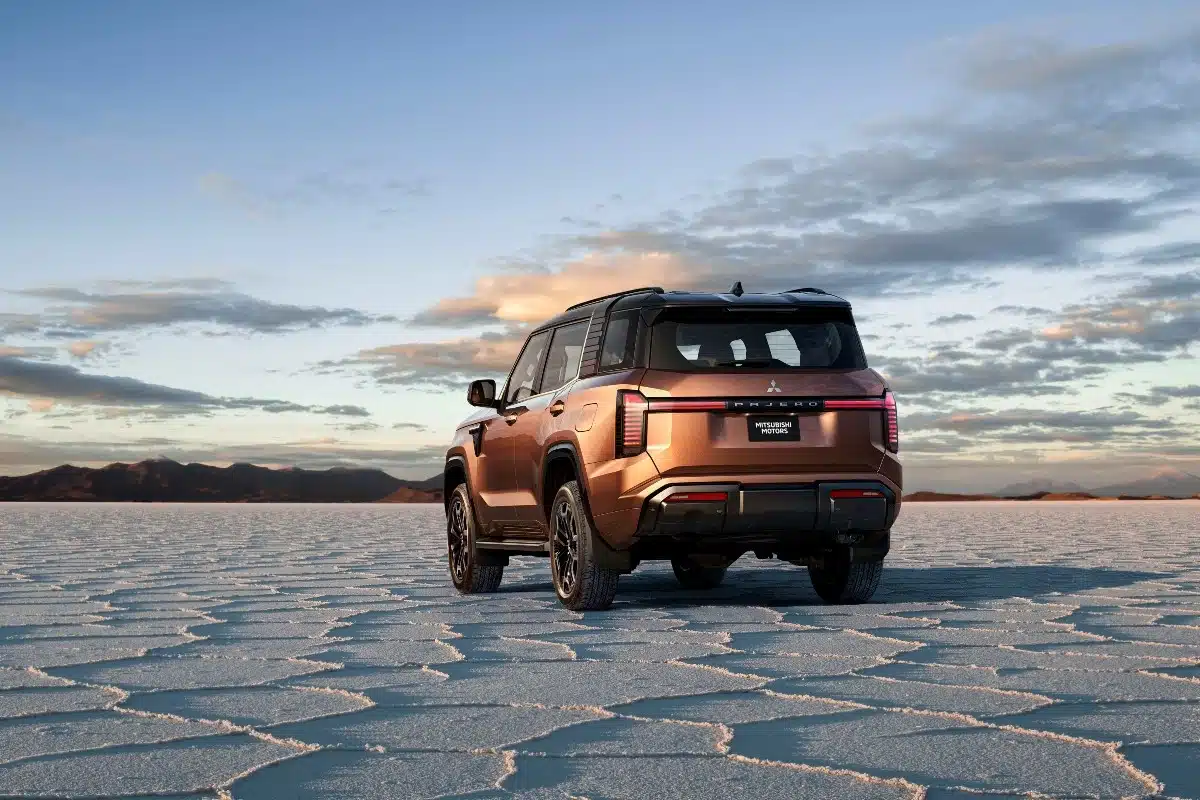
Add a third row of seating far more useful and effective at carrying passengers than the glorified jump seats in the Outlander, and the Pajero has an extra layer of practicality we in the States should envy. Yet, this begs the question, could the Pajero really be a smash hit if it found its way to North America? Truthfully, that’s not an easy question to answer. The new Pajero may be a night and day refinement for Mitsubishi; but here in the US, body-on-frame, three-row SUVs are an altogether different ballgame.
Heavy hitters like the Chevy Tahoe and GMC Yukon, or even the Nissan Armada and Toyota Sequoia, are gigantic titans of the road, packing V8s or twin-turbo V6s, and tasked with heavy-duty towing or hauling as much as off-roading or carrying families. In this regard, the new Pajero might not be the best fit. Still, as a three-row alternative to smaller 4x4s like the Ford Bronco, the Toyota 4Runner, or the Jeep Wrangler Unlimited, the Pajero would certainly have several advantages over existing fare.
Momentum 2030: The Plan That MIGHT Bring it Here
Given the price of diesel stateside, perhaps the biggest barrier to entry for the Pajero is its powertrain. Even so, Mitsubishi’s long-term plan does involve an influx of fresh faces to the US. Potentially, even a Pajero analog with a powertrain better suited to American purchasing habits.
If you’re an American and practically drooling at the new Pajero and brimming with jealousy, we think settling for a plug-in hybrid a la the Outlander PHEV isn’t such a huge compromise. Yet, for a company in as volatile a state as Mitsubishi, perhaps nothing at all is a certainty anymore.
As of the present, Mitsubishi’s “Momentum 2030” five-year plan involves increasing its US lineup by as much as double, complete with a new fleet of hybrids, plug-in hybrids, and battery-EVs. Whether the Pajero factors into the new scheme remains to be seen, and yet, it’s fair to say a Wrangler rival with a functional third row has curb appeal regardless of the emblem on the grille.