
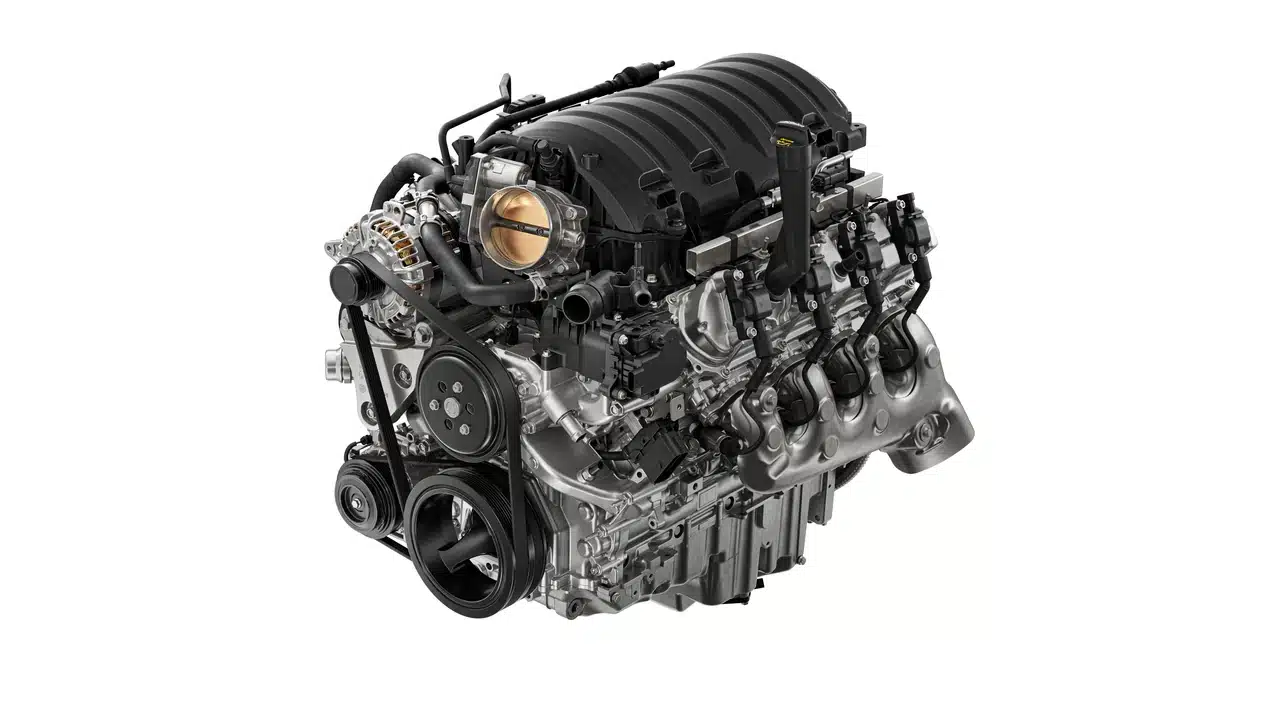
The 350 and 400 are back. The new GM V8 engines, displacing 5.7 and 6.6 liters, will power the 2027 Chevrolet Silverado 1500 and GMC Sierra 1500, with the larger engine delivering 481 horsepower and 501 pound-feet of torque. But after attending GM’s powertrain event in Flint, Michigan, I came away with more than output figures.
The new V8s lose the traditional oil dipstick, retain Dynamic Fuel Management and come with automatic engine stop/start. They also get a new lubrication system and both direct and port fuel injection. Those are the details I wanted engineers to explain, because they affect how owners use and maintain these trucks.
The event fills in several of the powertrain questions left after the Silverado reveal and adds to our 2027 GMC Sierra coverage. Here is what GM announced and what I learned in the engineering discussions.
GM V8 engines bring back the 350 and 400
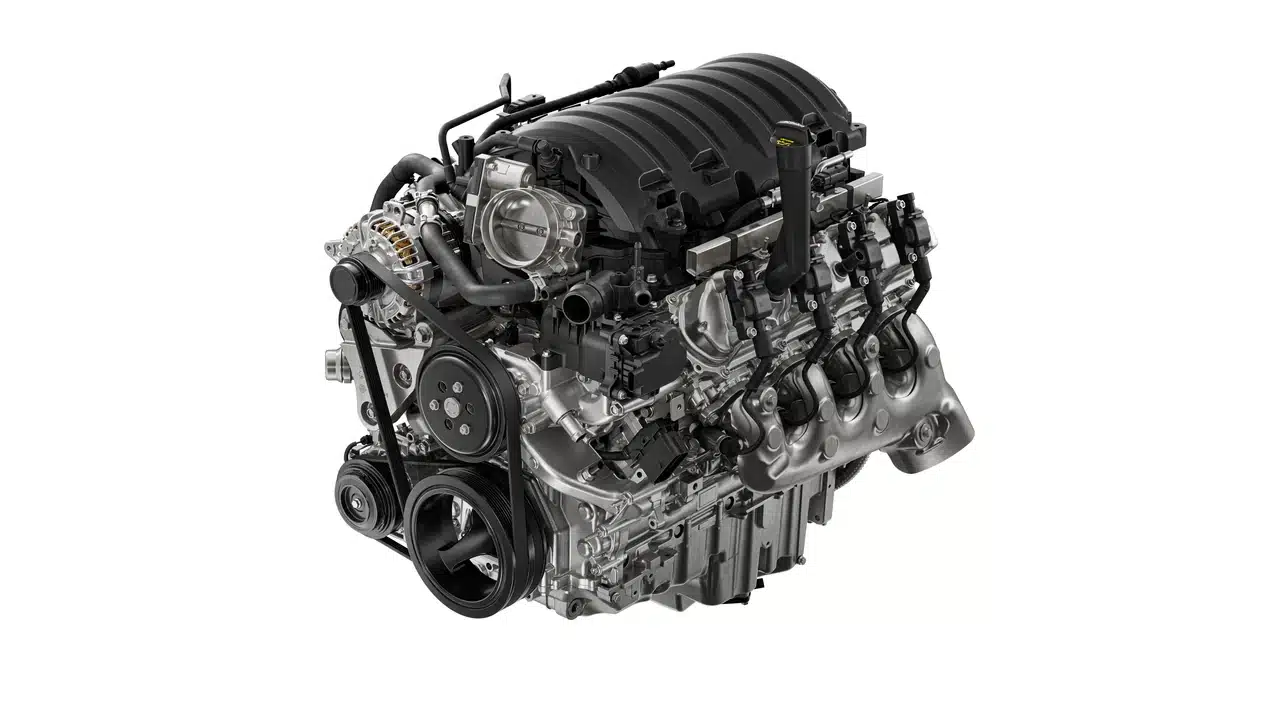
The L76 5.7-liter replaces the 5.3-liter, while the L78 6.6-liter replaces the 6.2-liter. GM increased piston stroke by 6 millimeters, added higher compression ratios, enlarged the throttle openings and developed new intake manifolds with tuned runners. The engines retain the Small Block family’s familiar 4.40-inch spacing between cylinder bore centers.
The 5.7-liter produces 402 horsepower and 428 pound-feet of torque. The 6.6-liter steps up to 481 horsepower and 501 pound-feet. GM describes the larger engine as the most powerful naturally aspirated V8 in the light-duty truck segment.
The smaller V8 has the highest listed towing rating. A properly equipped Silverado with the 5.7-liter is rated to tow up to 13,700 pounds, compared with 9,700 pounds for the highest-rated 6.6-liter Silverado configuration in GM’s announcement. Sierra figures are 13,500 and 9,400 pounds, respectively. More horsepower alone does not determine a truck’s tow rating; buyers still need to match the engine, configuration and available packages to the job.
| Engine | Horsepower | Torque | Max Silverado towing | Max Sierra towing |
|---|---|---|---|---|
| Enhanced TurboMax | 350 hp | 455 lb-ft | 9,400 lb | 9,400 lb |
| 3.0L Duramax | 305 hp | 495 lb-ft | 12,000 lb | 12,100 lb |
| 5.7L V8 | 402 hp | 428 lb-ft | 13,700 lb | 13,500 lb |
| 6.6L V8 | 481 hp | 501 lb-ft | 9,700 lb | 9,400 lb |
No Dipstick, DFM Cylinder Deactivation Remains
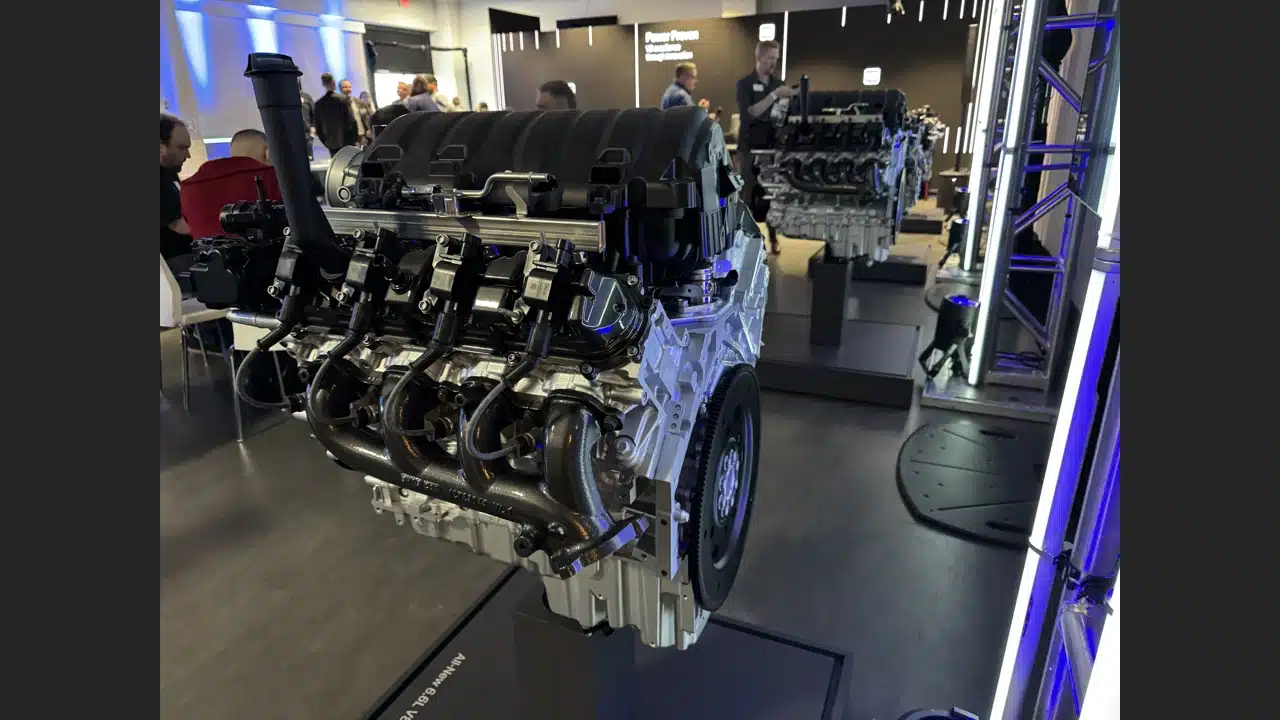
Drivers will check the new V8s’ oil level through the infotainment screen inside the cabin. When I asked why the dipstick was going away, Randy Dufresne, design system engineer for GM’s Gen 6 Small Block engines, pointed to packaging: the added port-injection hardware and other components made routing a conventional dipstick difficult. Seriously, take a look. There is no way to put a dipstick to route it in the engine unless it is some sort of wiggly stick.
GM replaced both the dipstick and the previous low-oil-level switch with a sensor that can provide an oil-level reading and warn when the level is low. The practical change is that owners will use the electronic reading instead of pulling a stick under the hood. The interviews did not establish the precise conditions required for an accurate reading, so that procedure still needs to be checked against the owner’s manual.
Cylinder deactivation remains Dynamic Fuel Management, or DFM. Dufresne confirmed that the system retains the operating design used in the current 5.3-liter and 6.2-liter engines, with eight solenoids in the engine valley routing oil to deactivate the lifters as requested. It is not the different rocker-based system discussed in a patent I asked about.
He also explained the distinction from the older Active Fuel Management system. That system shut down the same four cylinders; DFM can deactivate any of the eight cylinders as operating conditions require. I asked about durability concerns often found online and he said GM develops test schedules around the number of switching events the system is expected to experience. That describes the testing approach, but it does not yet tell us how the new engines will perform over years of ownership.
Both V8s also have automatic engine stop/start. That is separate from cylinder deactivation: stop/start shuts the engine off during certain stops, while DFM changes which cylinders are firing while the engine is running.
New oil system and port injection explained

The lubrication system gets a continuously variable-displacement oil pump, an oil cooler integrated with the oil pan, and revised oil passages. Dufresne described a pump that adjusts oil flow and pressure to driving conditions, rather than simply switching between two operating stages. The goal is to deliver the oil the engine needs while reducing energy spent driving the pump.
He also described larger lifter oil galleries, larger dual feeds to the main bearings and machined passages intended to improve cleanliness and avoid residual casting sand. When I asked whether the larger passages were about clearing debris, he corrected that interpretation. Their purpose is efficient oil delivery where it is needed.
Dufresne specified 0W-30 oil for the new 6.6-liter V8, explaining that the 30-grade oil provides a bearing oil-film benefit while meeting the program’s fuel-consumption targets.
Both GM V8 engines combine direct injection with port fuel injection. I specifically asked whether port injection was being added because of carbon buildup on the intake valves. Dufresne explicitly said that was not the reason. Future emissions regulations were the driving reason for adding it.
That clarification matters because it is easy to see the added hardware and assume GM is addressing a particular problem. In this case, Dufresne gave a different explanation. GM says the combined injection system expands the conditions in which it can optimize power, efficiency and emissions.
Final V8 fuel-economy figures were not provided at the event. Engineers said they met their engine fuel-consumption targets, but that is not the same as a published mpg rating for a complete truck.
TurboMax Gains Power, Duramax Gains Range
The V8s are only half of the four-engine lineup. The enhanced 2.7-liter TurboMax gains 40 horsepower and 25 pound-feet of torque, reaching 350 horsepower and 455 pound-feet. Updates include a new turbocharger, upgraded fuel injection, redesigned pistons, and revised thermal management. It also moves to a 10-speed automatic, making that transmission standard across all four engine choices.
The 3.0-liter Duramax diesel returns with 305 horsepower and 495 pound-feet of torque. GM lists updates to pistons, turbo vanes, the nitrogen-oxide sensor, sealing, and fuel-injector corrosion protection. During the presentation, Mark Dickens, executive chief engineer for GM’s full-size trucks and SUVs, also said the diesel exhaust fluid tank grows by 2 gallons, or 37%, with improved level messaging.
An available approximately 34-gallon fuel tank gives the diesel more than 900 miles of projected highway range, according to GM. That estimate is based on 27 highway mpg in a two-wheel-drive configuration. It is not a towing-range claim, and actual range will vary. The larger fuel tank will also be available with the two V8s.
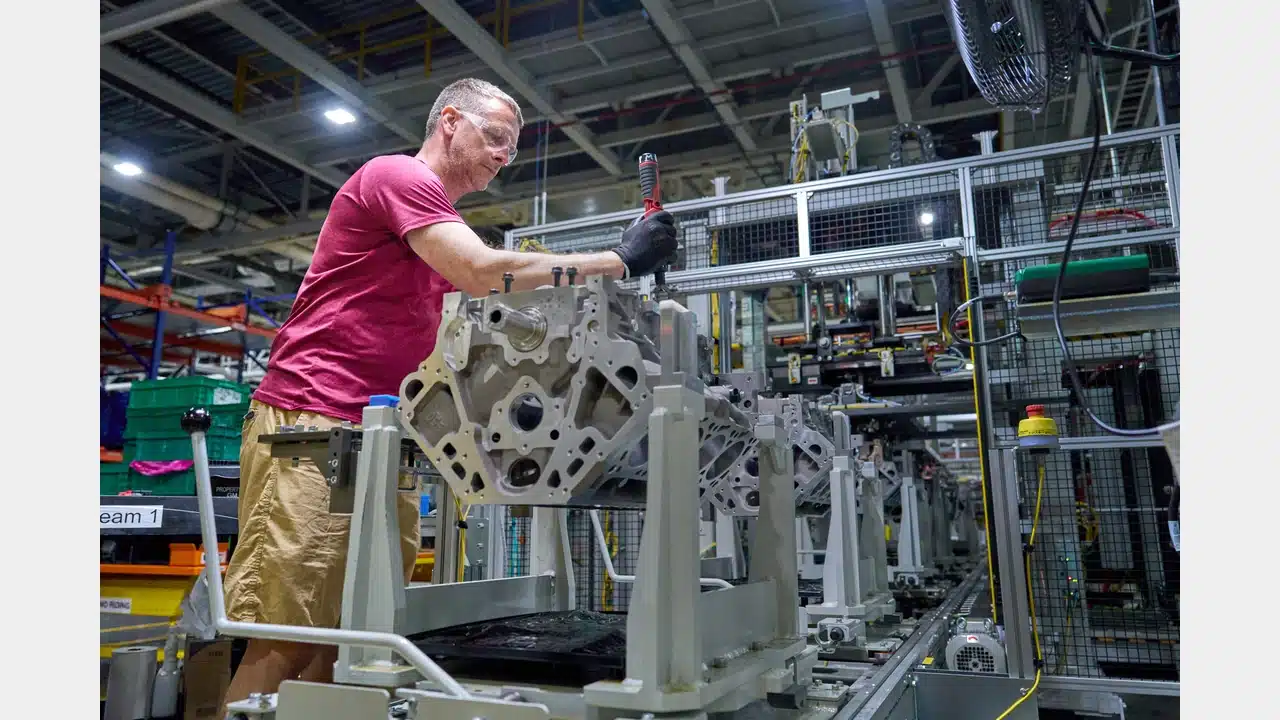
Initial V8 production is at Flint Engine Operations, with additional capacity planned at Tonawanda in New York and St. Catharines in Ontario. Mark Reuss, president of General Motors, said the new V8s will accumulate more than 1.5 million miles of on-road validation before the trucks reach dealerships later this year. Pricing and additional vehicle details are still to come.
My main takeaway is that the new GM V8 engines bring meaningful changes beyond displacement. More power and a larger fuel tank are easy to appreciate. Electronic oil checks, retained DFM and revised oiling hardware deserve just as much attention. Those are the details I will be watching once we can put the trucks to work.











1 comment
Patrick Rall
Those are pretty good numbers for an NA V8.
8 replies
Loading new replies...
Well-known member
Moderator
Well-known member
Moderator
Administrator
Moderator
Well-known member
Moderator
Well-known member
Join the full discussion at the Forum Pickuptrucktalk →