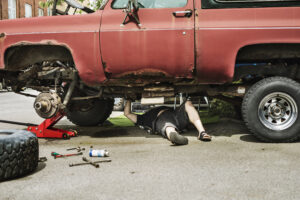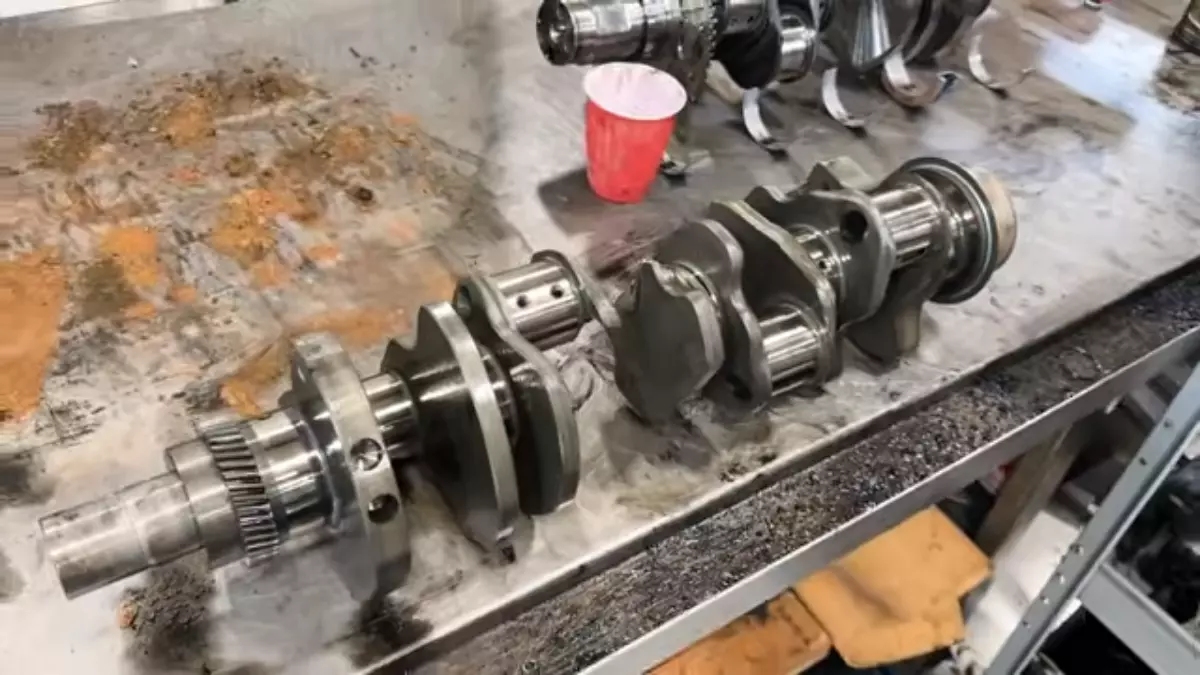
One common issue for 6.6L Duramax engines is snapped crankshafts. A shop tear-down of an engine core from an unmodified, stock, heavy-duty truck with a correctly-torqued crank bolt and harmonic balancer provides evidence as to why this happens, and offers valuable insights into the Duramax crankshafts failure issue and how to prevent such failures.
A great teardown video from Dave’s Auto Center gives us a look at the Duramax’s biggest breakdown conundrum.
Is Your Truck Affected?
All General Motors (Chevrolet, GMC) heavy-duty pickup trucks with the Duramax V8 diesel engine option from model years 2001 to present are affected here. This includes 2001-2026 Silverado 2500HD and 3500HD models, 2001-2026 Sierra 2500 HD and 3500HD models, and 2019-2026 Silverado 4500HD, 5500HD, and 6500HD models.
The Broken Crank and Why
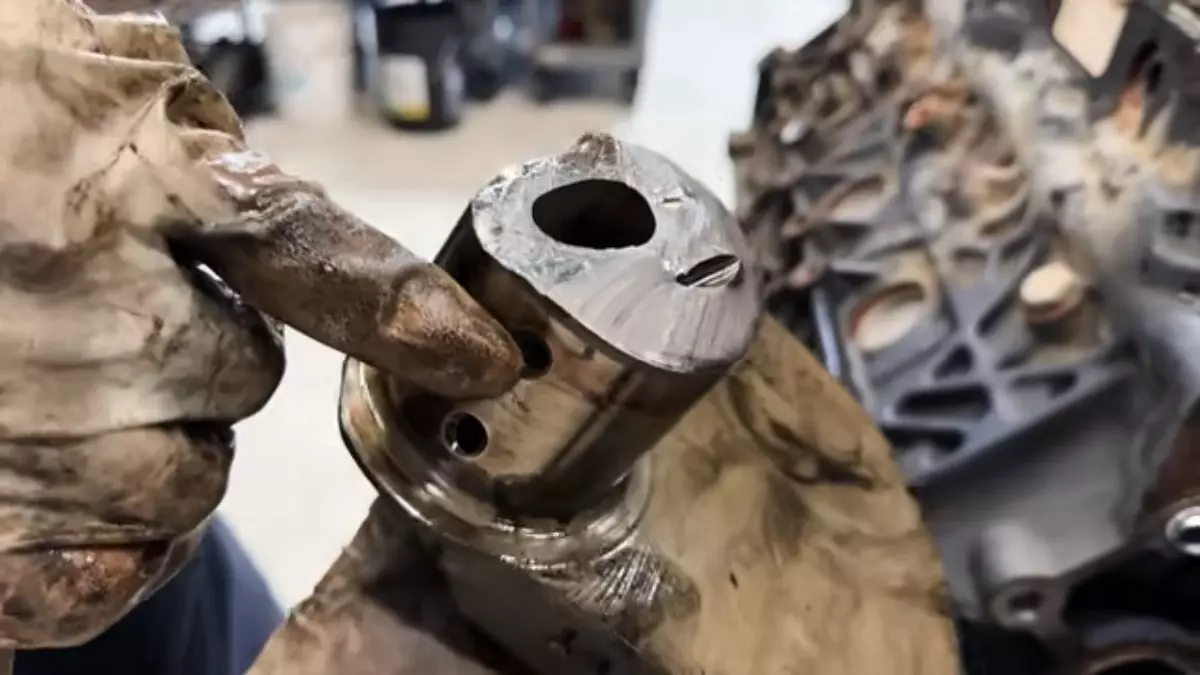
The crankshaft was found broken near the front, around the number one and two rod journals. But the team noted that they’d seen them break at the rear and mid-section as well. In this case, the harmonic balancer pin showed signs of movement, indicating it was compromised. The break was severe enough that the crankshaft could not be removed without further disassembly.
Surprisingly, the bearings throughout the engine were in good condition with no deep scoring or significant wear. The block itself showed no signs of spinning mains or severe damage, suggesting the failure was isolated to the crankshaft.
To understand the cause of the failure, the pistons and rods were washed and weighed. The team found a weight difference of about 8 to 10 grams between assemblies, particularly around the area where the crank broke. This imbalance can create significant dynamic forces on the crankshaft during operation. It’s not the first time Dave’s team has seen this.
A Tiny Imbalance Maths Into Big Forces
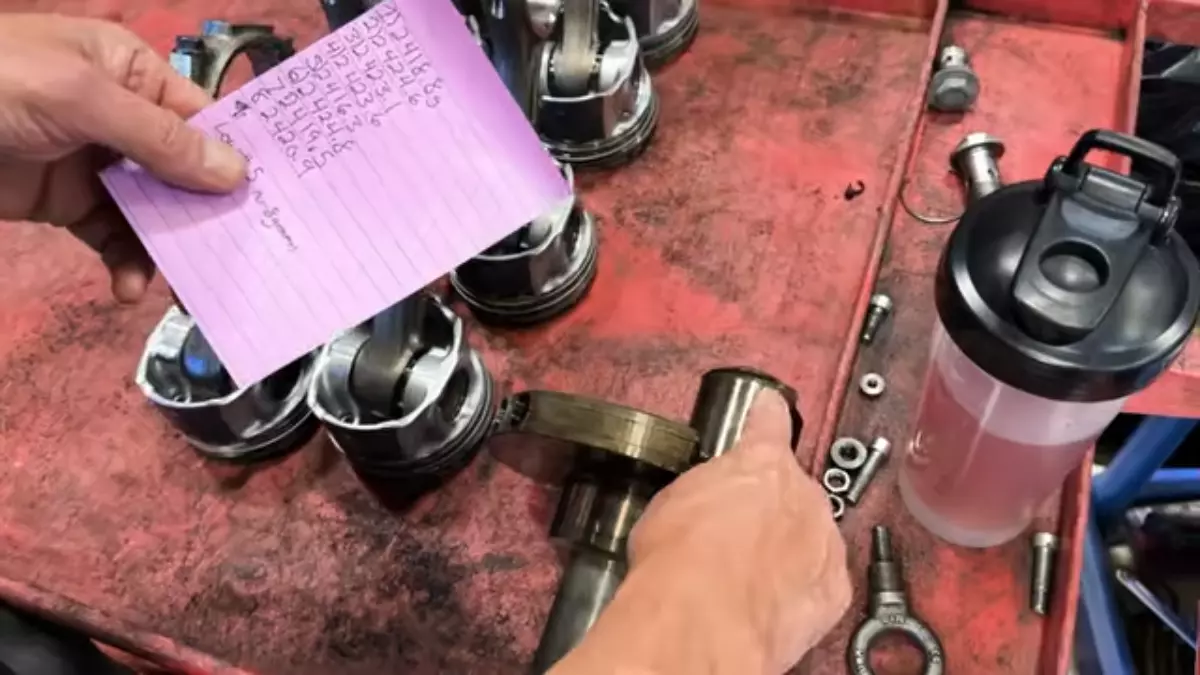
Using calculations for a Duramax engine spinning at 3,000 RPM, a 10-gram imbalance at a radius of approximately 2.5 inches generates about 5.5 pounds of force per inch of radius. This force acts like a 20-pound hammer striking the crankshaft 50 times per second, continuously over thousands of minutes of engine operation. Such repetitive stress can lead to crankshaft fatigue and eventual failure.
Duramax crankshafts are known to crack and fail faster than many other diesel engines. The root cause appears to be the imbalance built into the crankshaft design combined with inadequate harmonic balancers and torque converters that do not sufficiently absorb these forces. The factory harmonic balancers are often not enough to prevent crankshaft damage.
Duramax Engine Strengths Highlighted During Teardown
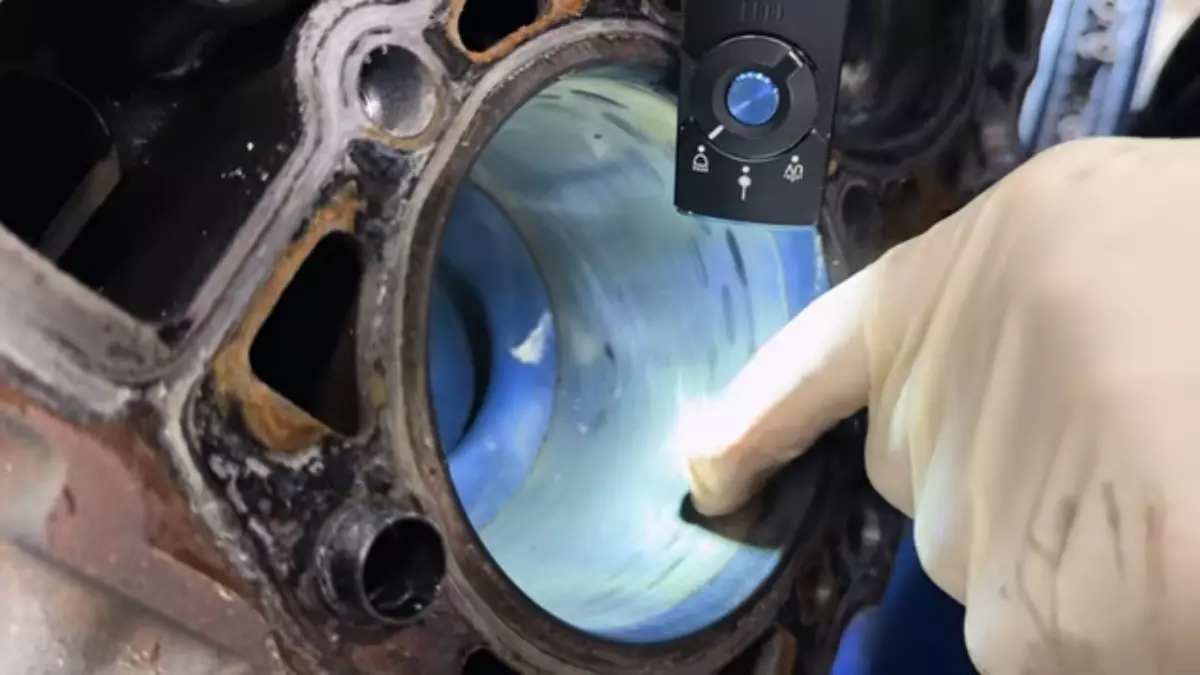
During the teardown, the team highlighted the DuraBore cylinder wall hardening process used in Duramax engines. This induction hardening is applied only to the top part of the cylinder wall where ring pressure is highest due to combustion forces. This technique effectively prevents wear and lip formation on the cylinder walls, contributing to engine longevity.
In addition, oil (lubricant) routing and distribution is very well designed in the Duramax. These engines are also known for their robust thermal management. The thick, cast connecting rods and robust aluminum heads are complements to the deep-skirt block design that is a high point for strength in the Duramax.
What You Can Do To Prevent Duramax Crankshaft Failure
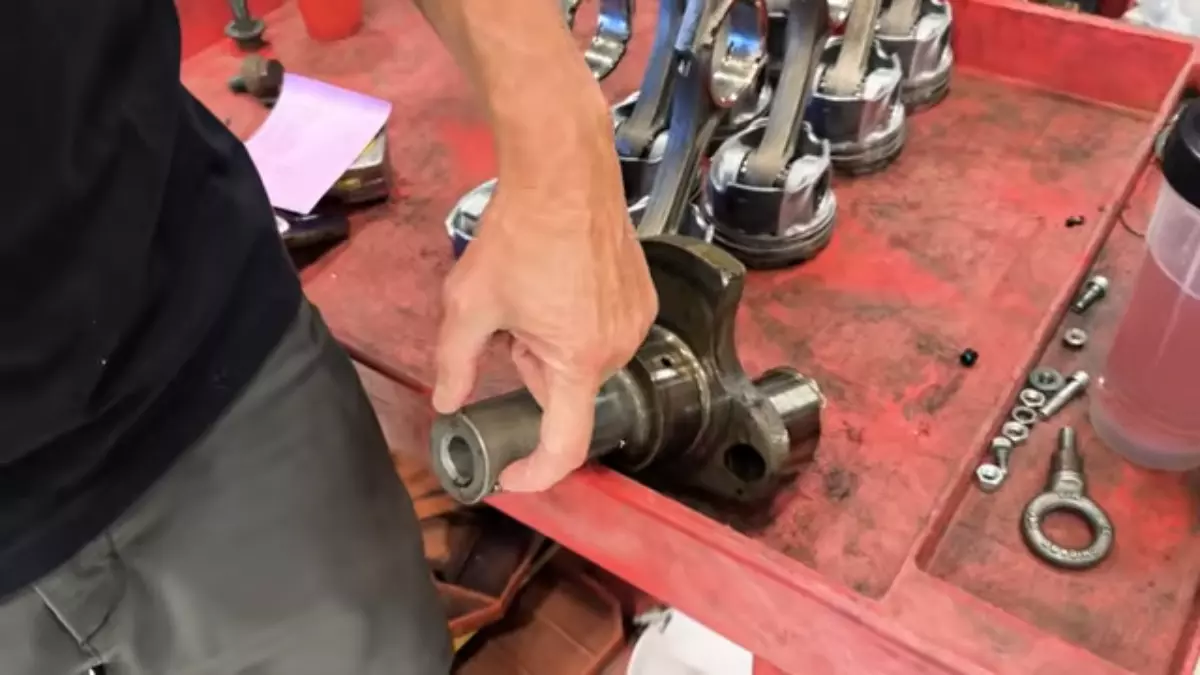
The best preventative measure is to replace the factory harmonic balancer with a high-quality damper balancer with either a multi-band rubber or viscous (liquid) core. This upgrade helps absorb the imbalance forces more effectively, reducing stress on the crankshaft. Proper installation with the correct torque specifications is critical to ensure the balancer functions correctly and does not cause further issues.
If the crankshaft pins are damaged or show signs of impending failure, they should be replaced during the repair process. For those wanting a crankshaft with a keyway (which provides better harmonic balancer retention), the crankshaft must be removed and machined accordingly.
Understanding why Duramax crankshafts snap is essential for owners and mechanics to prevent costly engine failures. Imbalance in piston and rod assemblies, combined with insufficient harmonic balancer performance, leads to significant dynamic forces that cause crankshaft fatigue. Upgrading to a better quality harmonic balancer and ensuring proper torque procedures can greatly extend the life of these engines. This teardown and analysis provide a clear path forward for maintaining and improving Duramax engine reliability.