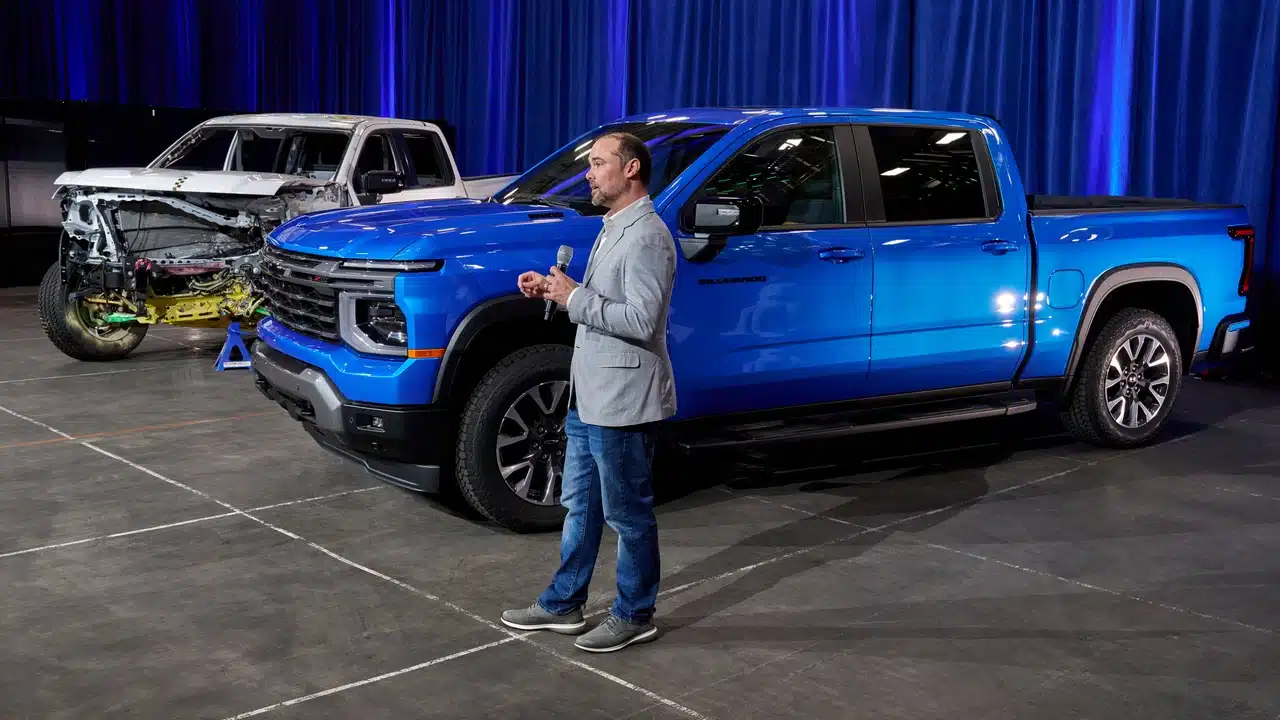
A warning light in a mirror is useful, but a trailer can make it harder to judge what is beside you. The 2027 Chevrolet Silverado 1500 trailer safety walkthrough, led by vehicle chief engineer Scott Garver, showed how GM’s driver-assistance systems are intended to help.
One feature goes beyond an illuminated warning. GM says its side blind-zone system can also apply steering resistance when a vehicle is alongside the truck or a properly configured trailer.
Trailer awareness and braking assistance
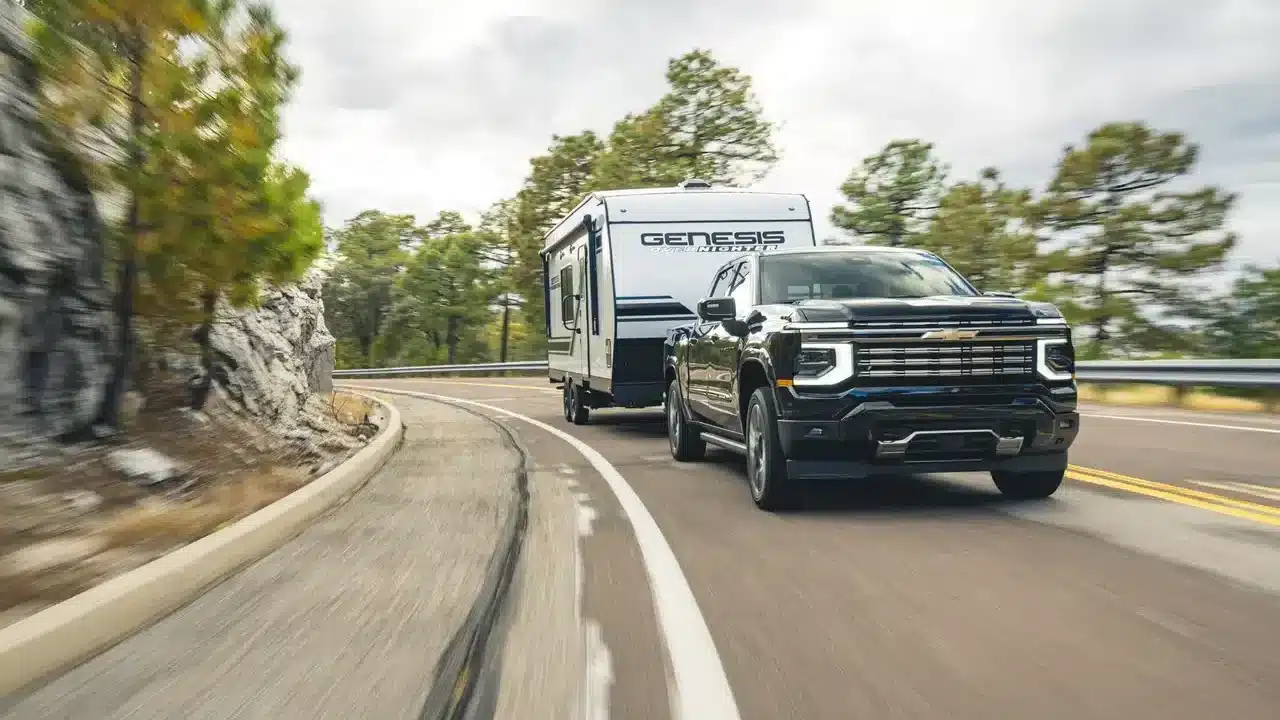
GM explained that the system uses a trailer profile to account for the trailer’s length. It can warn about a vehicle beside the trailer and provide steering resistance if the driver starts moving toward that occupied lane.
That gives the driver another cue when somebody is in the space the truck and trailer would need. It is steering assistance, not a promise to prevent every lane-change collision. Drivers still need to check their surroundings.
The walkthrough also covered a mirror-mounted camera view that can be activated with the turn signal. GM described the view as targeting the side blind zone so drivers can see what is beside the truck or trailer.
The camera view and the steering assistance serve different purposes. One helps the driver see; the other provides an additional cue through the steering wheel.
GM described a system that monitors crossing traffic as the truck approaches an intersection. If it detects a vehicle crossing the truck’s path and determines a crash is imminent, it is designed to apply the brakes.
That is not permission to enter an intersection without checking traffic, or a promise to anticipate every driver’s mistake.
The rear cross-traffic braking function is intended to detect an approaching vehicle while the Silverado is reversing and apply the brakes when necessary.
A driveway was the example used: the truck backs out while another vehicle approaches from the side. The system is intended to help when the driver has not seen that approaching traffic.
The computing behind the features
I asked whether these systems required different processing hardware to react in time. GM’s answer was that the truck uses a different sensor suite and the processing needed to support it.
GM specifically described these technologies as assistance for the driver, not a replacement. Buyers will still need to check the equipment and package availability on the specific trim they are considering.