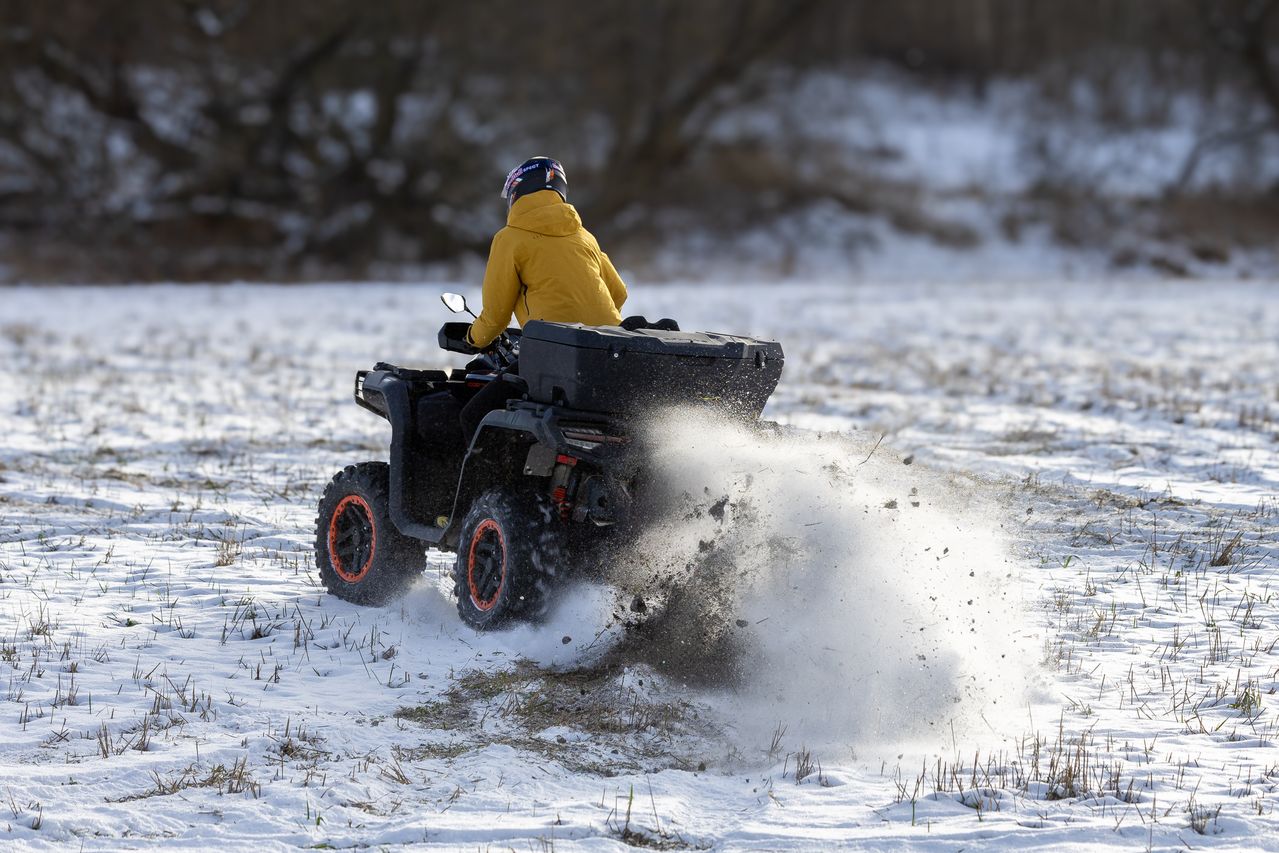
The end of riding season creates a familiar problem for anyone with a UTV, ATV, snowmobile, or trailer: where exactly is it all supposed to go?
Leaving a machine where you parked it after the last ride isn’t a great long-term plan. Months of exposure can take a toll on batteries, fuel systems, plastics, tires, and electronics, and an expensive machine sitting unused can also become an easy target for theft. Even indoor storage requires more preparation than simply rolling it into the garage and closing the door.
The right off-season setup depends on what you own and how much space you have. Some riders have room to store everything at home, while others need a storage facility or a combination of indoor and outdoor space. Wherever the machine spends the next few months, the goal is the same: keep it secure, protected, and ready for the next riding season.
Decide Where the Machine Is Spending the Off-Season
Start with the space you already have.
A garage or enclosed outbuilding generally provides the most protection from weather and keeps the machine out of sight. The problem is that a UTV can take up a significant portion of a residential garage, particularly if you want to leave it on its trailer. Add another recreational vehicle, lawn equipment, tools, and the truck you actually need to park, and available space disappears quickly.
Outdoor storage at home is another option if local ordinances or HOA rules allow it. A covered area can keep direct sun, snow, and rain off the machine, while a fitted cover provides another layer of protection.
If neither option works, self-storage can free up considerable space at home. Key checks when choosing a self-storage facility include access hours, gates and camera coverage, lighting, pest control, lease terms, and a clear fee structure. With an off-road vehicle, you’ll also need to ask about vehicle-specific rules such as fuel, batteries, insurance, and trailer storage.
Don’t choose based entirely on the monthly rate. How securely and conveniently you can store the machine matters just as much as how much space you’re renting.
Treat Outdoor Storage Like Equipment Storage, Not Parking
If the machine is staying on your property, simply putting it behind the house doesn’t provide much protection.
Start with visibility and access. A UTV sitting in clear view from the road advertises both the machine and its location. When possible, choose a storage location that isn’t easily visible from the street and isn’t directly accessible from a driveway or neighboring property.
Physical barriers can also make the storage area more difficult to access. Depending on the property, that could mean a locked gate, enclosed outbuilding, or a perimeter fence. For larger properties where fencing must also withstand wildlife and outdoor conditions, a heavy-duty deer fence can create a defined barrier around the area while supporting the property’s broader wildlife-control needs.
Fencing shouldn’t be your only security measure, though. A determined thief can get past almost any single barrier. The goal is to create layers between someone entering the property and actually leaving with the machine.
That can include motion lighting, cameras, trailer coupler locks, wheel locks, chains, immobilizers, and alarms. If the vehicle has a removable key or electronic fob, don’t leave it anywhere near the machine.
Make Theft Harder No Matter Where You Store It
Storage changes one important thing about theft: how quickly you’ll notice something is gone.
NICB’s 2025 recreational vehicle theft analysis counted 58,957 motorcycles, ATVs, snowmobiles, and watercraft reported stolen during the year. Roughly 63% were never recovered. Among the 11,050 ATVs reported stolen, only 23% were recovered.
The same data shows that more than half of recoveries happen within two weeks of a theft being reported.
That’s particularly important during the off-season. A machine you ride every weekend will be missed quickly. One stored behind an outbuilding or inside a storage unit that you haven’t visited since October could be gone for weeks before you notice.
Check stored equipment periodically, no matter where you keep it. At home, cameras or motion alerts can help you monitor a storage area you don’t regularly visit. At a storage facility, ask whether gate entries are logged, whether cameras are actively monitored, and whether individual unit alarms are available.
Keep current photos, serial numbers, VINs, registration documents, and insurance information in a place separate from the machine as well.
Measure Everything Before Choosing a Space
Whether you’re building a storage area at home or renting one somewhere else, measure the actual machine rather than relying solely on the manufacturer’s specifications.
Aftermarket roofs, light bars, whip flags, winches, bumpers, mirrors, and other accessories can add inches that factory dimensions don’t reflect.
If you’re renting a unit, measure the door opening too. A unit can be deep and wide enough for your UTV but have a roll-up door that doesn’t clear an aftermarket light bar.
Then decide whether the machine will remain on its trailer.
Leaving it loaded saves an unload-and-reload cycle at both ends of the season, but requires substantially more space. A UTV sitting on a utility trailer may require a 10×20 unit or larger depending on the dimensions of the machine, trailer, and tongue. Unloading the machine may let you rent a smaller unit while keeping the trailer elsewhere.
For home storage, leaving everything hooked together can make the setup considerably longer and more visible. Separating the trailer and machine may make it easier to position both behind a fence, inside a garage, or under covered storage.
Get the Fuel Situation Right Before the Machine Sits
Fuel preparation depends partly on where you’re storing the vehicle.
Standard off-season advice often recommends filling the tank and adding stabilizer to reduce the amount of air space available for moisture to condense. A rented storage facility may have different requirements, as many leases restrict flammable liquids or limit the amount of fuel that may remain in stored vehicles.
Get the facility’s policy in writing before preparing the machine. If the rules require a nearly empty tank, check the manufacturer’s recommendations for your engine rather than assuming it’s appropriate to run it completely dry.
Pay attention to the fuel itself, too. A newer half-ton truck doing the towing may be able to use E15, often sold as Unleaded 88, while the recreational vehicle on the trailer may not.
The federal E15 restrictions for nonroad vehicles prohibit its use in nonroad motorcycles, snowmobiles, boats, and other nonroad vehicles and engines.
That distinction is easy to overlook when you’re fueling the tow vehicle and machine at the same stop.
Don’t Forget the Battery
Even when a machine isn’t in use, its battery continues to lose charge.
Clocks, GPS units, alarms, and aftermarket electronics can create additional parasitic draw. Months of sitting can leave your battery dead or damaged when riding season returns.
If you’re storing at home, a battery maintainer may be an easy solution as long as the setup follows the battery manufacturer’s recommendations.
At a storage facility, don’t assume you’ll have that option. Many units don’t have electrical outlets, and some facilities restrict the use of charging equipment inside storage units. Ask before signing the lease.
If charging isn’t available, removing the battery and maintaining it somewhere appropriate at home may be the better option. Lithium batteries can have different long-term storage requirements, so follow the manufacturer’s recommended storage charge rather than treating every battery the same way.
Control Moisture, Sun, and Rodents
Off-road vehicles are designed to get dirty, but months of exposure can still take a toll.
UV exposure can fade plastics, damage vinyl, and deteriorate soft tops. Standing moisture encourages corrosion on exposed hardware, brake components, and electrical connections. A poorly sealed garage or storage unit can also become an attractive winter home for rodents.
Clean the machine thoroughly before storage, including the cab and any compartments where food wrappers or crumbs may have accumulated. Inspect the storage area for water intrusion and signs of rodents before moving anything inside.
If the machine is outside, use a fitted, weather-resistant cover rather than a loose tarp that can trap moisture or repeatedly rub against painted surfaces in the wind. Keeping the machine on a stable, well-drained surface also helps prevent it from spending the winter surrounded by standing water or mud.
Snowmobiles require a slightly different approach because they spend the longest period in storage during warm weather. A closed metal building or storage unit can get extremely hot in summer, so shade and ventilation matter.
Make Sure You Can Actually Retrieve It
A storage setup isn’t very useful if getting the machine back out requires a 14-point turn and three spotters.
At home, think about what the property will look like when you’re ready to ride again. A storage area that’s easy to access in October might be surrounded by snow, mud, landscaping, or other seasonal equipment several months later.
At a facility, walk the route from the gate to the unit as though you’re already towing. Aisles designed around moving trucks don’t necessarily provide enough room to swing a crew-cab pickup and a long utility trailer into a drive-up unit.
Payload matters on the trip there and back, too. If you haven’t worked through the tongue weight and payload math for your setup, do it before hauling the machine.
Trailer hookup can also get harder in a cramped storage lot. Positioning the truck under the coupler without a spotter is one hookup skill that can catch inexperienced tow-rig drivers off guard.
Finally, check gate hours. A storage facility that doesn’t open until 7 a.m. won’t be particularly convenient if you normally want to be at the trailhead by then.
Read the Storage Rules Before You Commit
If you’re renting space, the lease deserves the same attention you’d give the machine itself.
Start with insurance. A storage facility’s insurance generally protects its property, not necessarily your UTV, ATV, snowmobile, or trailer. Vehicle-storage agreements may require proof of your own insurance and registration.
If you reduce coverage while a recreational vehicle isn’t in use, confirm directly with your insurer what remains covered during storage, including theft.
Also check the facility’s policies for fuel, batteries, vehicle maintenance, tires, and registration. Ask whether rates can increase during your lease and what happens if you miss a payment.
At home, your homework is different. Check local rules and HOA restrictions before adding outdoor storage, fencing, shelters, or other structures. Make sure gates are wide enough for the machine and trailer, and don’t build a storage enclosure only to discover that you can’t comfortably maneuver into it.
Prepare for Next Season Before This One Ends
Good off-season storage isn’t really about finding somewhere to abandon a machine for six months.
It’s about controlling the things most likely to cause problems while you’re not riding: theft, weather exposure, moisture, battery discharge, fuel deterioration, pests, and simple neglect.
The best setup is an enclosed storage facility, a secured area at home, or a combination of the two. Whatever you choose, build security in layers, prepare the machine for the length of time it will sit, and check on it periodically rather than assuming everything is fine behind a locked door.
Do that work now, and you can spend the first good riding weekend next season hooking up the trailer instead of discovering what went wrong while the machine sat.