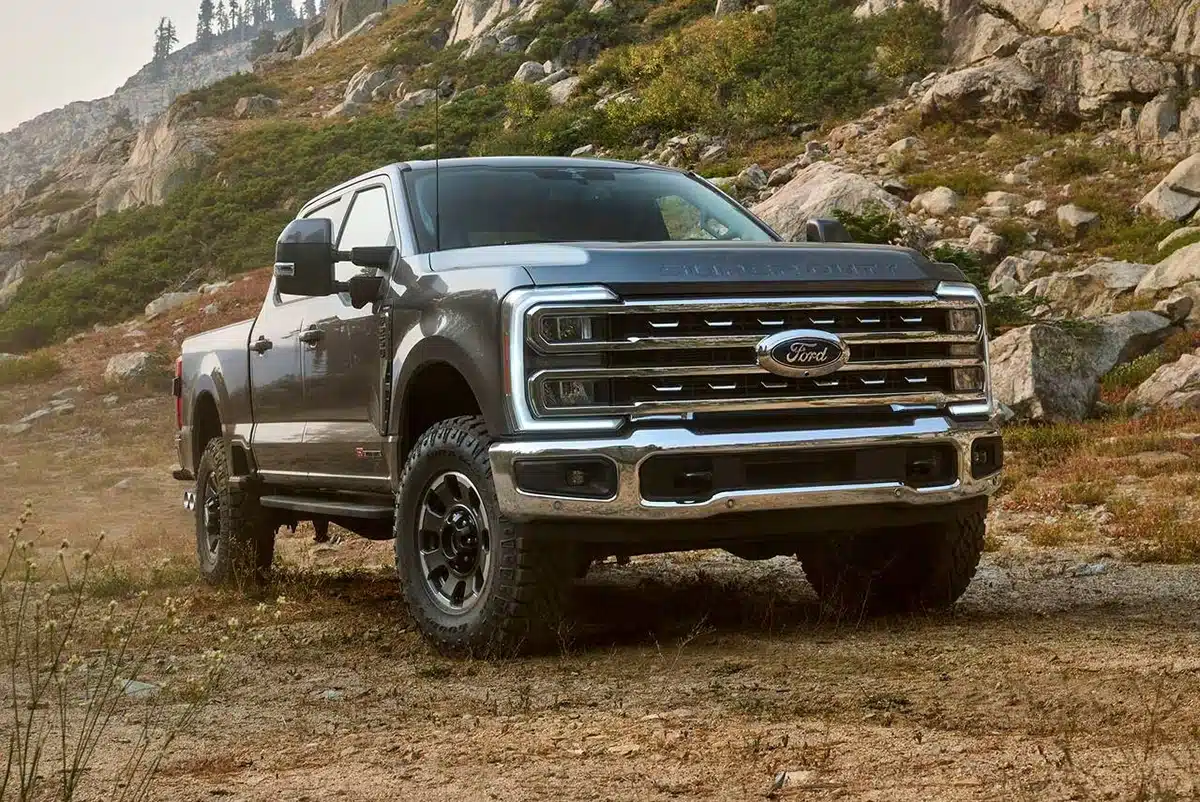
Ask a group of diesel truck owners whether a modern Power Stroke can last 1 million miles, and you’ll probably start an argument. Older diesels were simpler, without diesel particulate filters, selective catalytic reduction systems, ultra-high-pressure fuel injection or nearly as many electronic controls. So, can today’s more complicated diesel engines really last as long?
I asked longtime Ford diesel technical leader Dave Ives that question during an extensive interview about the evolution of diesel engines. His answer was emphatic.
“The biggest attributes our customers are looking for are durability and reliability, so that never takes a back seat during design and implementation,” Ives said.
He also had a remarkable example to back up that claim: an emissions-equipped Ford Super Duty with approximately 860,000 miles that still had its original emissions equipment intact.
Ford Doesn’t Pretend The Transition To Modern Diesels Was Easy

One reason Ives’ perspective is valuable is that he didn’t pretend every step toward the modern diesel engine went smoothly.
He spent decades working on diesel technology at Ford, giving him a front-row seat to some of the industry’s biggest changes.
Ultra-low sulfur diesel fuel was one of them. Diesel particulate filters were another. Then came selective catalytic reduction systems using diesel exhaust fluid.
Those changes were necessary to meet increasingly stringent emissions requirements, but Ives acknowledged manufacturers went through some difficult learning curves.
“We did go through some learning curves,” he said.
At one point during the transition, he said some diesel trucks suffered fuel economy reductions of approximately 25 to 30%.
That’s worth remembering when owners complain about some of the early emissions-equipped diesel trucks. There were legitimate growing pains.
The technology didn’t stop developing, though.
Ives said engineers eventually recovered that lost efficiency while simultaneously producing dramatically more power and reducing emissions.
Today’s Power Stroke Makes About Three Times The Power Of Ford’s Early Diesels
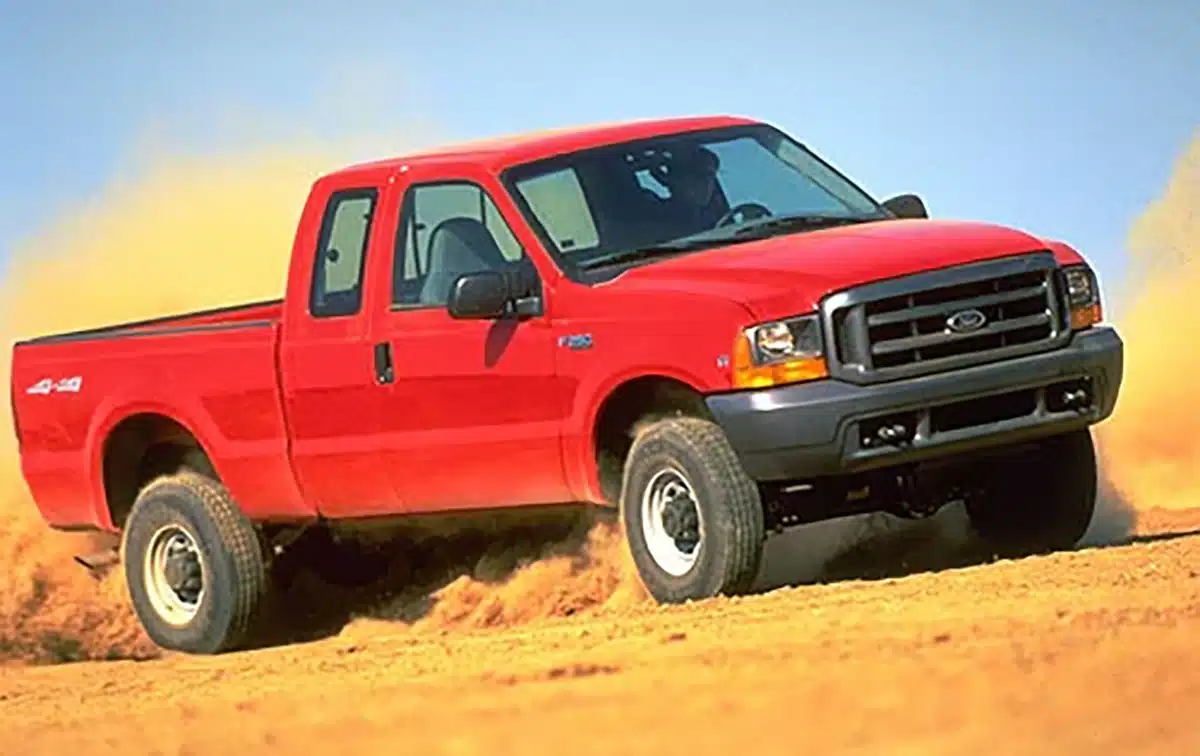
The performance difference between old and new diesels is staggering.
Ives recalled Ford diesels from early in his career producing roughly 160 horsepower and 300 lb-ft of torque.
Compare that with today’s 6.7-liter Power Stroke.
Ford has pushed its heavy-duty diesel well beyond 1,000 lb-ft of torque while simultaneously making the engine cleaner and more efficient than those older designs.
That transformation required far more than increasing turbocharger boost.
Fuel injection technology alone illustrates how much diesel engineering has changed.
Ives recalled working with injection pressures of approximately 3,000 PSI early in his career.
The third-generation 6.7-liter Power Stroke we discussed operated at approximately 36,000 PSI.
That’s roughly 12 times the pressure.
Modern injectors can also perform multiple injection events during a single combustion cycle rather than simply dumping fuel into the cylinder at once.
Those precisely controlled injections allow engineers to manage combustion much more carefully, improving power, emissions, fuel economy and refinement.
Why Does A Diesel Need 36,000 PSI Fuel Pressure?
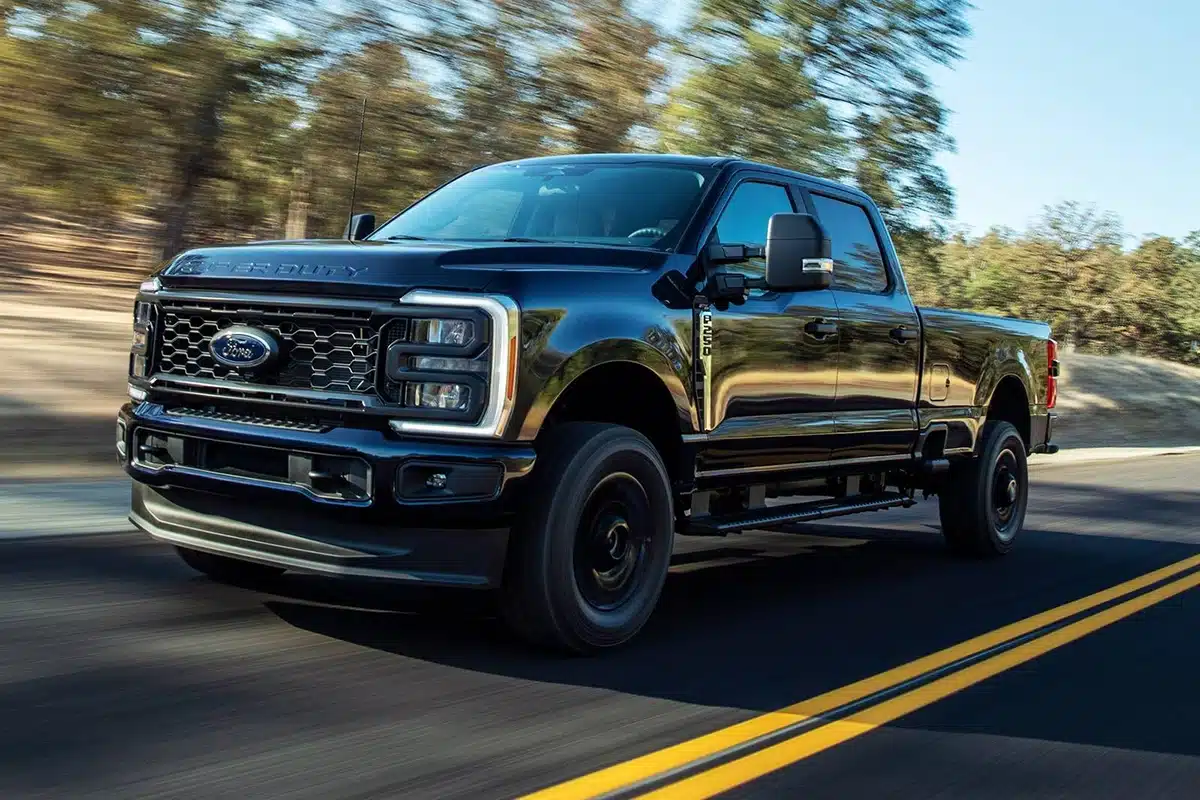
Higher pressure creates much finer fuel atomization.
Think about spraying water through a garden hose versus a fine mist from a spray bottle. Breaking the fuel into smaller droplets allows it to mix more effectively with the air inside the cylinder.
That improves combustion.
It also gives engineers considerably more control over when and how combustion occurs.
Modern diesel engines can use pilot injections before the primary combustion event and additional injections afterward. Those events can help control combustion noise, cylinder pressure and emissions.
It’s one reason today’s diesel engines don’t sound anything like the mechanical diesels many longtime truck owners grew up with.
And it fits directly into a trend I’ve been researching lately across Ford, GM and Cummins: diesel manufacturers are intentionally making these engines quieter.
Ford Has Also Changed How The Power Stroke Turbocharger Works
The turbocharger has undergone a similar evolution.
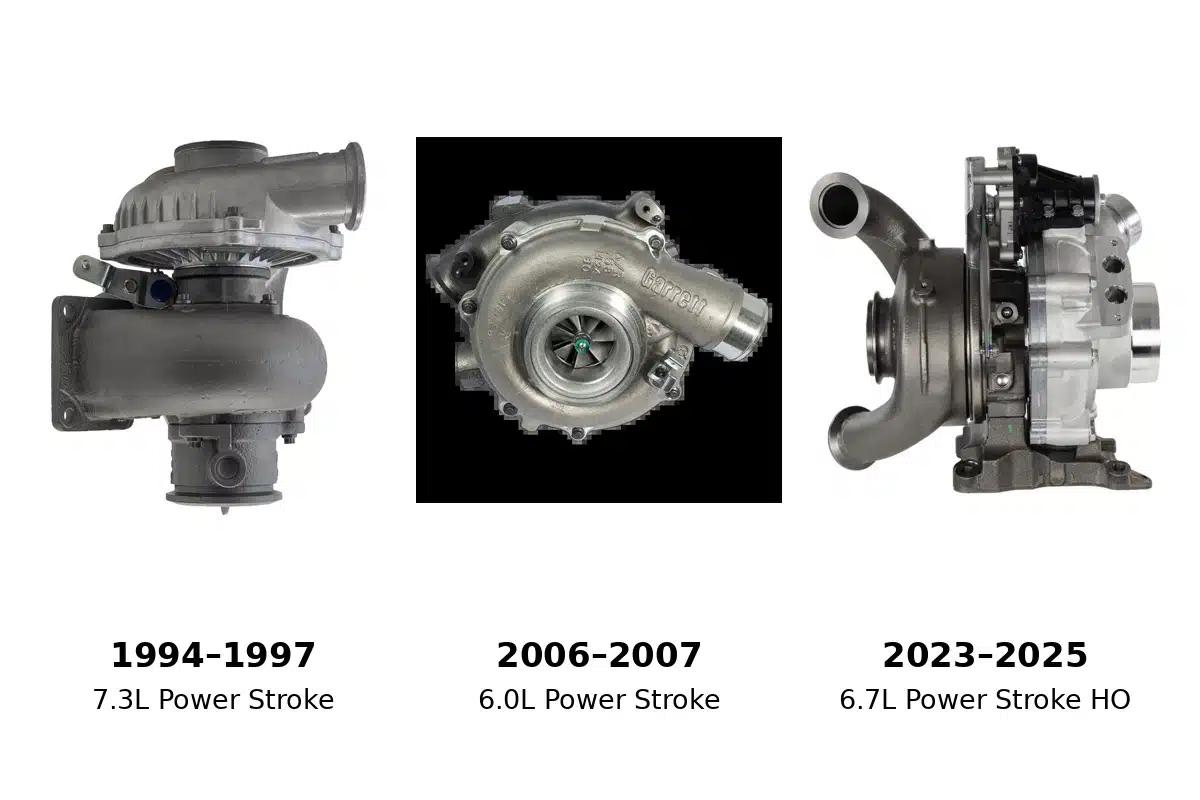
The original 7.3-liter Power Stroke used a comparatively simple fixed-geometry turbocharger. That changed with the 6.0-liter Power Stroke, when Ford adopted a variable geometry turbocharger.
Modern Power Stroke engines continue to use variable geometry technology, allowing engineers to effectively change how the turbo behaves depending on engine speed and load. Movable vanes alter the flow of exhaust gases through the turbine, helping the turbo respond quickly at lower engine speeds while still providing the airflow needed under heavy loads.
The technology didn’t stop evolving with the introduction of variable geometry.
When the 6.7-liter Power Stroke arrived for 2011, Ford used an unusual Garrett DualBoost turbocharger design. Ford changed the turbo architecture again for 2015, moving to a more conventional variable geometry design.
Ford also redesigned the electronic actuator controlling the system.
Ives explained that the electronic actuator offered better response, particularly during cold-weather operation, while engineers continued improving the aerodynamics and tolerances inside the turbocharger itself.
The Power Stroke turbo continued evolving after my interview with Ives.
Another significant change arrived for 2023 with the High Output 6.7-liter Power Stroke. Ford says the higher-output engine uses a unique turbocharger with a cooled compressor, along with upgraded exhaust manifolds and unique engine calibration. Those changes helped Ford extract considerably more power from the same basic 6.7-liter displacement.
Put the generations side by side and the progression is striking. The Power Stroke went from a relatively simple fixed-geometry turbocharger on the original 7.3-liter, to variable geometry on the 6.0-liter, increasingly sophisticated electronic controls and aerodynamics on the 6.7-liter, and eventually a unique cooled-compressor turbocharger for the High Output engine.
Those tighter tolerances and additional technology are another place where some owners understandably get nervous.
More precision can mean more complexity.
But according to Ives, Ford doesn’t simply tighten tolerances, increase operating pressures or add more sophisticated turbocharger technology and hope the engine survives.
The durability requirements remain part of the engineering process.
Does More Diesel Technology Mean Less Reliability?
This was the question I really wanted Ives to answer.
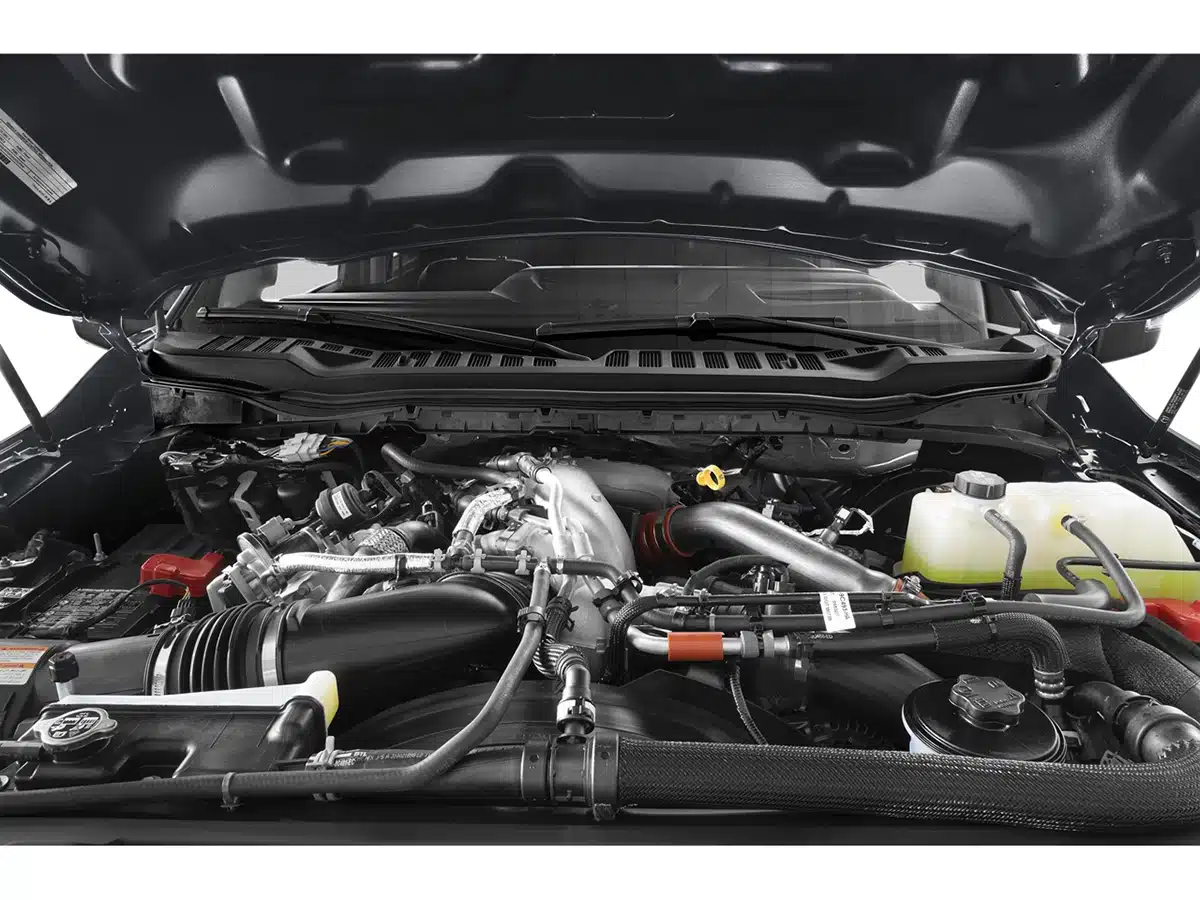
Modern diesels have dramatically higher injection pressures, sophisticated turbochargers, emissions equipment, electronic controls and tighter manufacturing tolerances.
Surely all of that has to affect durability.
Ives said Ford approaches it differently.
“The biggest attributes our customers are looking for are durability and reliability, so that never takes a back seat during design and implementation,” he said.
He pointed specifically to the higher-pressure fuel system and tighter turbocharger clearances.
“Even though we’re raising the pressures on the fuel system and tightening clearances in the turbocharger and things like that, it’s either the same durability or improved durability,” Ives said.
Materials science is one reason engineers can get away with things that would have been impossible decades ago.
Better metallurgy, manufacturing processes, coatings and computer modeling allow components to operate under pressures and temperatures that older engine designs couldn’t tolerate.
The engine became more complicated.
That doesn’t necessarily mean the engine became less durable.
Related Post: 2023-2026 Ford F-250 Known Problems: Driveshaft Separation, Death Wobble, Engine Fires, and Separating Steering Columns
Can A Power Stroke Last 1 Million Miles?
Then Ives gave me one of the best examples I’ve heard during an engineering interview.
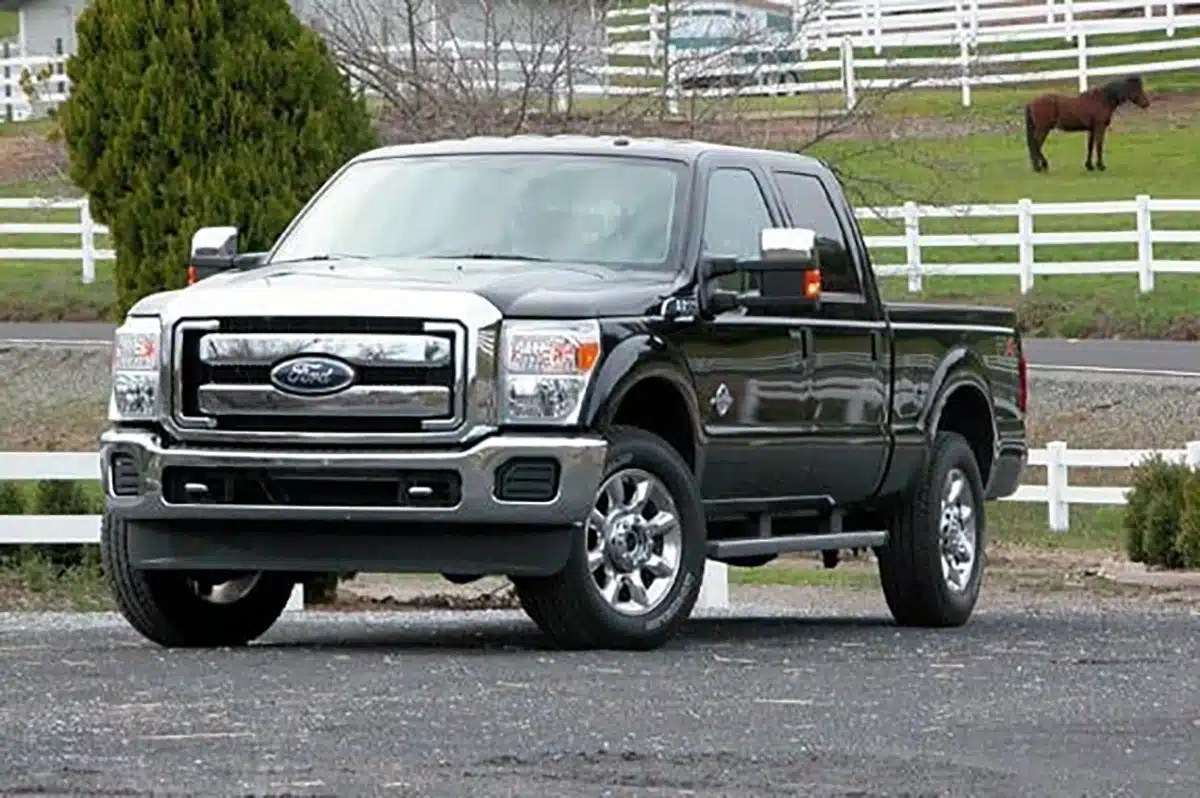
Ford had acquired a 2011 Super Duty from a customer.
The truck had approximately 860,000 miles.
More importantly, this wasn’t an old pre-emissions diesel.
The truck still had its diesel particulate filter and DEF emissions system intact.
I asked Ives whether modern diesel trucks could still reach the enormous mileages associated with some of the legendary older diesel engines.
His answer?
A “resounding yes.”
Ives believed that particular truck was capable of reaching 1 million miles.
That’s significant because emissions equipment is one of the biggest reasons diesel owners question the longevity of modern trucks.
Here’s a real truck that had accumulated more than three-quarters of a million miles with those systems still installed.
Does that mean every modern Power Stroke will make it to 1 million miles?
Of course not.
Neither did every old diesel.
But it does challenge the idea that emissions equipment and modern diesel technology automatically make extreme mileage impossible.
Are New Diesel Engines Actually Better?
After revisiting this interview years later, I think that’s the wrong question.
New diesel engines are unquestionably different.
They are more complicated. They have additional systems that can fail. Repairs can be considerably more expensive when something does go wrong.
But they’re also producing levels of power and torque that would have seemed absurd when Ives started his career.
They’re cleaner.
They’re quieter.
They’re more refined.
And according to the engineers designing them, durability hasn’t stopped being one of the primary objectives.
That 860,000-mile Ford Super Duty might be the best illustration.
A modern emissions-equipped diesel doesn’t need to sound like an old mechanical diesel or be built like one to accumulate extraordinary mileage.
Sometimes better engineering simply looks different.
And in at least one case Ford examined, it looked like a Super Duty with 860,000 miles on the odometer and 1 million miles within reach.