Ford’s 6.7-liter Power Stroke diesel has become one of the most respected heavy-duty truck engines on the market. Introduced for the 2011 model year as Ford’s first in-house diesel V8, the “Scorpion” replaced the troubled 6.0L and 6.4L Power Stroke engines and quickly established a reputation for strong performance and improved reliability. However, no diesel engine is perfect. From the notorious Bosch CP4.2 injection pump to turbocharger issues on early models, there are several known problems owners should understand before buying or maintaining a Super Duty equipped with the 6.7 Power Stroke.
Is Your Truck Affected?
All Ford Super Duty pickup trucks with the Power Stroke diesel engine option from model years 2011 to present are affected here. Specific known problems and issues for each model year are given in the sections below.
The 6.7-liter Power Stroke diesel has been around since 2011 and has seen incremental changes in that time period. Most issues were prevalent in early models and have been largely resolved in the third generation.
There are three generations of the 6.7-liter Power Stroke diesel:
- First Generation: 2011 to 2014
- Second Generation: 2015 to 2019
- Third Generation: 2020 to present
The third generation, especially those made after 2023, are highest in 6.7 Power Stroke reliability.
6.7 Power Stroke Common Issue To All Three Generations
The first generation of the 6.7 engines had some severe growing pains, but still presented far less problems than the preceding Power Stroke engines had. Most of these problems were not immediately catastrophic to the engine with the exception of the injection pump. This issue affects every Power Stroke engine to present.
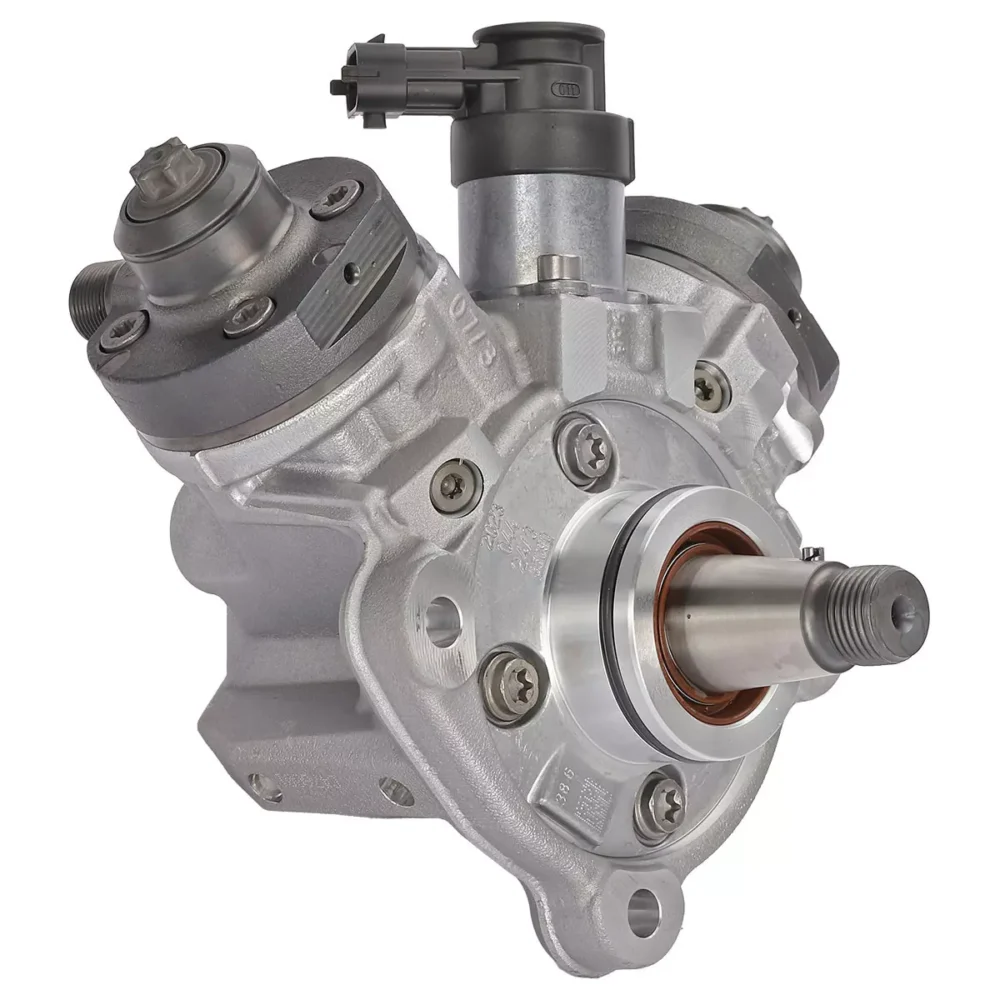
The most critical potential flaw in the 6.7L Power Stroke is the Bosch CP4.2 injection pump. This pump is also used in other diesel trucks such as the LML Duramax, some 6.7L Cummins engines, and the 5.0L V8 in the Titan XD.
The CP4.2 pump is popular due to its lightweight aluminum construction and lower production cost compared to the CP3 pump. While the CP4.2’s failure rate is relatively low, the consequences are severe enough that many owners consider it the engine’s single greatest reliability concern. Unlike the older CP3 pump, the CP4 has less internal lubrication margin and is more sensitive to contaminated fuel and lubrication quality. If the pump fails, it can send metal fragments through the fuel lines, rails, and injectors, causing extensive damage.
Detecting impending failure is nearly impossible, and by the time symptoms appear, the pump and other fuel system components often already require replacement. Proper maintenance, including using high-quality fuel and timely fuel filter changes, is the best way to mitigate this issue.
Major Issues With 2011-2014 Power Stroke
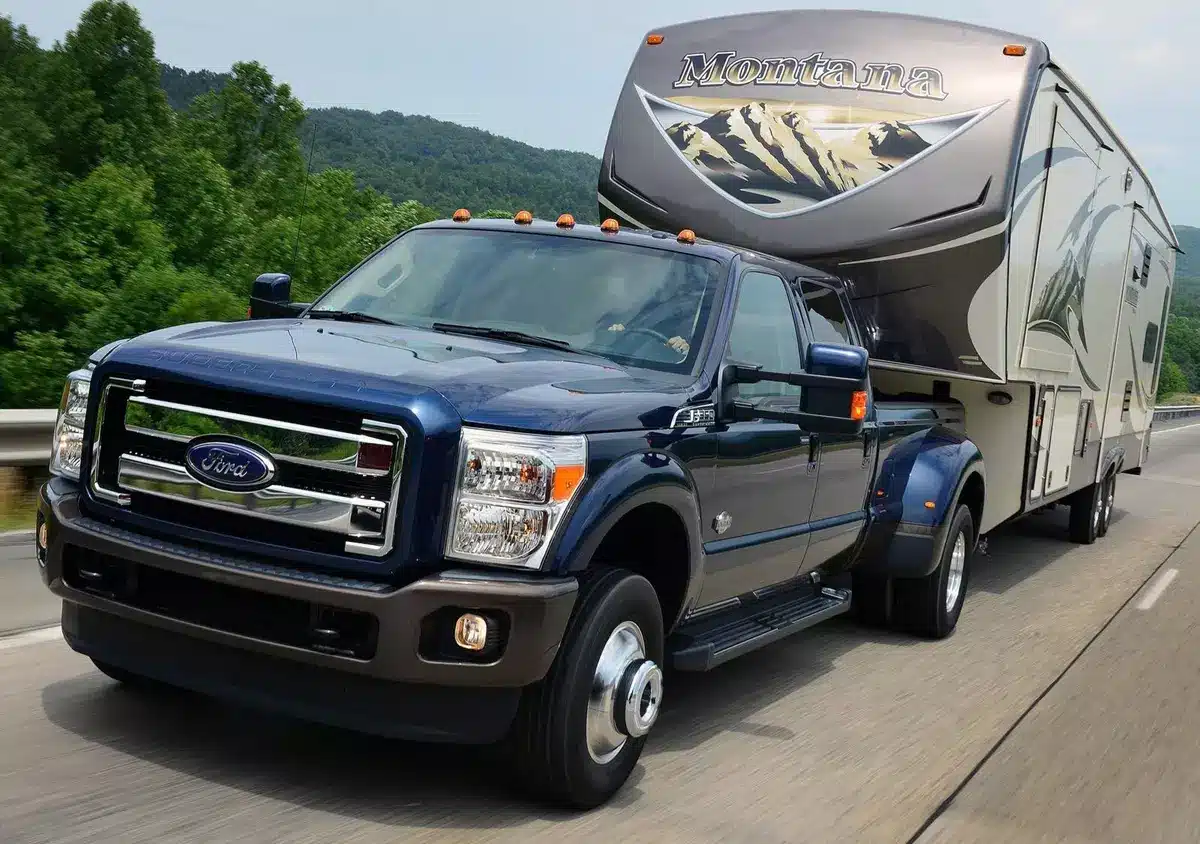
These early versions of the 6.7L Power Stroke presented the most issues of all 6.7s in the series.
Turbocharger Problems
The 2011 to 2014 models used the Garrett GT32 SST turbocharger, which is essentially two turbos in one, using two compressor wheels and one turbine wheel. This design requires the turbo to spin at very high speeds (over 100,000 rpm stock, and up to 150,000 rpm when tuned) to achieve the necessary boost.
Due to these high speeds, the turbocharger is prone to failure, especially because of the dual ceramic ball bearing center section used initially. Ford addressed some issues by switching to steel bearings in 2013.
The high shaft speeds also meant these early models lacked exhaust braking to protect the turbo.
In 2015, Ford switched to the Garrett GT37 turbocharger for the second generation. This turbo has larger compressor wheels, flows more air, spins slower, and provides more power. It uses a journal bearing center section, which is cheaper to rebuild.
Early models (2011-2012) also had a common coolant leak issue at the turbo coolant inlet pipe, which Ford quickly fixed.
Exhaust Gas Temperature (EGT) Sensor Failures
Certain 2011-2012 F-350, F-450, and F-550 trucks with the ambulance package experienced faulty EGT sensors. These sensors are part of the emissions after-treatment system. A failed sensor could cause the vehicle to shut down while driving and fail to restart, leaving emergency vehicles stranded.
Outside of ambulance packages, EGT sensors are generally known to be problematic but are inexpensive (around $35-$50) and easy to replace, usually taking under 20 minutes. Ford did not issue any TSBs or recalls for them.
Other Common Issues
- Nitrogen Oxide (NOx) sensors are known to fail frequently on 2011-2012 trucks.
- Early models had defective radiators from the factory.
- Some early production engines experienced glow plug drop issues, which can cause catastrophic failure. This problem is mostly limited to early chassis cab models and has not led to recalls.
Major Issues With 2015-2026 Power Stroke 6.7L

The second- and third-generation Power Stroke 6.7L engines largely resolved the problems of the earlier models. Yet there are still issues that have arisen. Including the universal problem of the Bosch pump outlined above.
It’s worth noting that the 2023 model year introduced the Power Stroke 6.7L High Output (HO) model, which also created fundamental changes to the standard Power Stroke 6.7 to create manufacturing synergy between the two and lower costs. YouTuber Getty’s Garage did a good breakdown of those changes.
The largest of these shared changes, in summary, include:
- Revised block casting
- Stronger connecting rods
- Higher injection pressure
- Addition of pre-EGR fuel injection to the exhaust
EGR Cooler Issues
Modern diesel trucks with emissions equipment often face problems with the Exhaust Gas Recirculation (EGR) cooler. Ford improved the 6.7L’s EGR cooler reliability compared to the 6.0L and 6.4L by enclosing two EGR coolers within a common housing designed to allow expansion and contraction without rupturing.
The EGR valve controls exhaust flow before the coolers, unlike previous engines. While rupture is less common, the 6.7L EGR cooler can still clog with soot, especially in trucks with extensive idle time. Diesel engines produce less heat while idling, preventing hydrocarbon burn-off and causing soot buildup.
Deleting the EGR system can fix this issue but is illegal and can result in hefty fines. Ford has attempted to mitigate some of the issues here by adding a fuel injector to the exhaust ahead of the EGR, which is a common design fix on many large diesel engines. Ford did this with 2023 and newer Power Stroke 6.7L engines, including the HO.
Notorious Upper Oil Pan Gasket Leaks
Upper oil pan gasket leaks and front cover leaks are common on 2013 and later trucks due to a switch to silicone-style gaskets. Previous generations of the engine used a grooved pan design to allow a fitted gasket. The new design did away with that in favor of a “squirt on”-style gasket. Under compression, these gaskets can fail as they are not seated in place with space to expand when compressed.
A full teardown of a first-gen Power Stroke 6.7L engine at I Do Cars YouTube channel shows the earlier pan design and why it’s so sought after as a replacement on newer models.
Crankcase Pressure Filter Clogs
On third-generation Power Stroke 6.7L engines, the crankcase pressure filter can clog, causing excessive crankcase pressure and additional oil leaks. Software updates for sensors in the third-gen engine should give early warning if this happens.
Why Ford Developed the Power Stroke Series
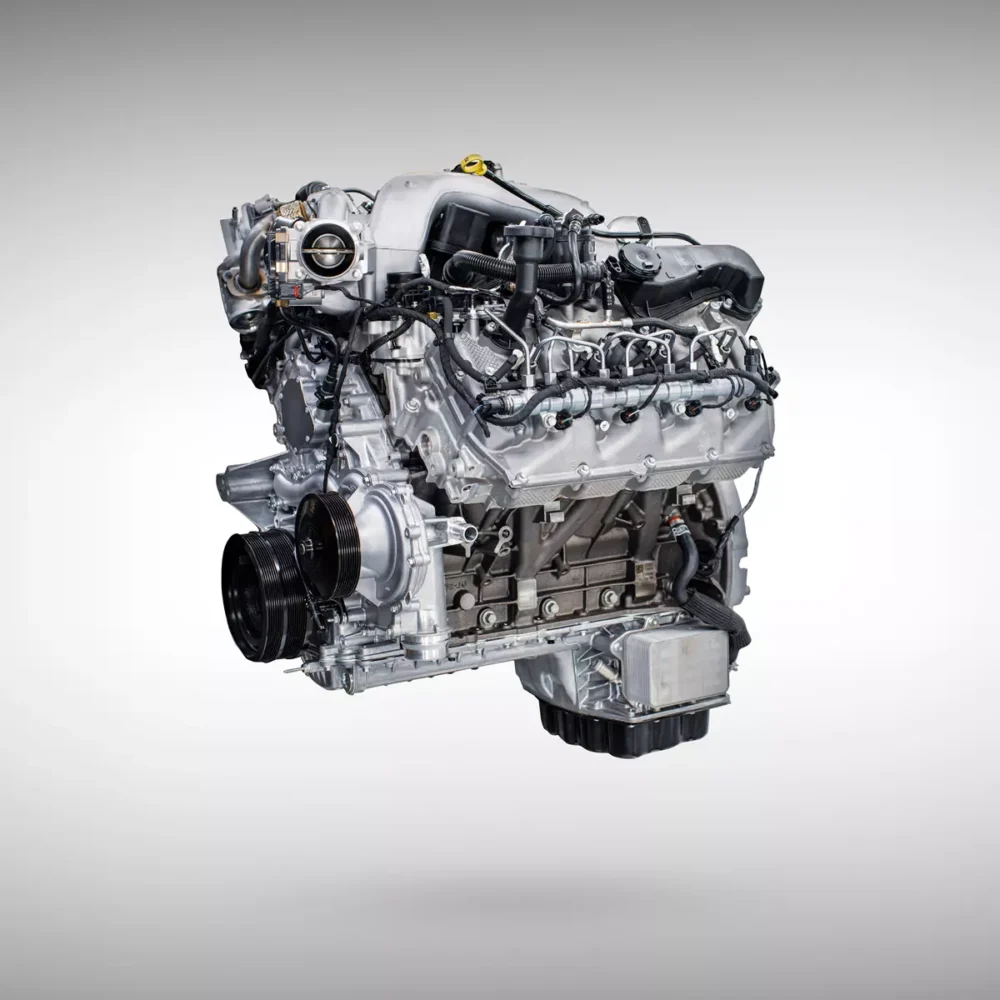
Previous Power Stroke engines, including the 7.3L, 6.0L, and 6.4L, were built by Navistar International rather than Ford itself. Navistar assembled these engines on Ford’s behalf, and Ford installed them in their F-Series trucks. The 6.0L engine was developed to replace the 7.3L primarily due to increasingly strict emission standards imposed by the EPA. The 7.3L could not meet these new standards, but the 6.0L could. For those fans of the 7.3 and its storied reliability, blame cleaner air requirements for its demise.
The 6.0L engine quickly became notorious for its reliability issues, leading to costly warranty claims. Navistar then introduced the 6.4L engine to improve emissions and fix the 6.0L’s problems, but the 6.4L also proved problematic and was only used from 2008 to 2010.
After these failures, Ford decided to drop Navistar and design the next Power Stroke engine in-house. This resulted in the 6.7L Power Stroke, also known as the Scorpion, introduced in 2011. The 6.7L remains in use today, a testament to its superiority over earlier models.
Is the 6.7 Power Stroke Reliable?
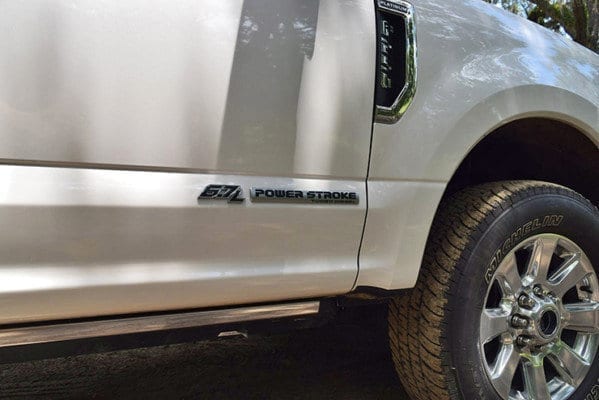
After more than fifteen years on the market, the 6.7L Power Stroke has proven itself to be Ford’s most successful diesel engine. While early trucks suffered from turbocharger issues and every generation remains vulnerable to CP4 fuel pump failures, the engine’s overall durability, towing performance, and refinement place it among the best heavy-duty diesel platforms available today. For buyers seeking the most dependable version, 2020-and-newer trucks offer the strongest combination of reliability, power, and modern emissions-system durability.