A pickup is still the main tool for a serious weekend outside. It can tow, haul, carry gear, handle long highway miles, and bring people closer to a campsite, trailhead, lake, fairground, or race weekend than a smaller vehicle can. For many truck owners, that is the whole point of owning one.
The part that gets overlooked is what happens after the truck is parked.
Maybe the campsite is spread out. Maybe the boat ramp is crowded. Maybe the event parking lot is huge. Maybe the truck is already backed into a good spot with a trailer, cooler, tools, camera bag, or camping setup around it. In those moments, moving the truck again can be more trouble than it is worth, but walking every short errand can get old fast.
That is where an ebike can make sense for truck camping and outdoor weekends. It is not there to replace the pickup. It fills the small mobility gap that starts after the truck has already done the big job.
The Pickup Gets You There. The Short Trips Start After You Park
A pickup is built for the heavy part of the trip. It gets the tent, chairs, recovery gear, fishing rods, cooler, tools, spare clothes, and weekend equipment to the place where the day begins. It also gives you bed space, towing ability, ground clearance, and the kind of flexibility that makes truck-based travel feel easy.
Once you arrive, the truck can become less convenient.
A full-size pickup needs room to turn around, room to park, and enough open space to move without bothering other people. In campgrounds, trailhead lots, event fields, boat ramp areas, and crowded outdoor venues, that space is not always available. If you already have a good parking spot, moving the truck for a five-minute errand can create more friction than the errand itself.
This is the real use case: not long-distance transportation, but short movement after parking. A good add-on should help you get from the truck to the gate, from the campsite to the office, from the trailer area to the dock, or from one side of an event lot to the other without turning every small trip into a production.
Where Truck Owners Run Into Last-Mile Movement
In truck camping, the last mile is often not a mile at all. It might be a quarter mile to the shower building, a slow ride to a camp store, or a quick run to another campsite. The distance is small enough that driving feels wasteful, but long enough that walking it again and again becomes annoying.
Trailheads create a different version of the same problem. A truck can bring the gear to the access point, but you may still need to check signs, look at another parking area, meet someone at the entrance, or move between a staging area and a nearby road. Not every route is rideable, and not every trail allows bikes, but many open access roads and permitted paths are easier to cover with a small secondary vehicle.
Large event lots are another obvious fit. Truck shows, outdoor expos, motorsport weekends, county fairs, swap meets, and music festival parking areas can spread people out over a lot of ground. A small mobility option can save time without forcing you to start the truck, sit in slow traffic, or give up a good parking spot.
Boat ramps and lake access areas can also be awkward. Once the truck and trailer are positioned, you may not want to move them just to reach a restroom, marina office, snack stand, nearby store, or another section of the lot. A compact ride can keep those short trips simple.
Why Walking, Scooters, and Regular Bikes Do Not Always Fit
Walking is always the simplest answer, but truck weekends often happen on surfaces that are not especially friendly to repeated walking. Gravel lots, packed dirt, grass edges, old asphalt, uneven shoulders, and long campground loops can turn a quick errand into a slow one, especially when you are carrying a backpack, camera, water bottle, small tool kit, or extra layer.
A regular bicycle can help, but it still depends completely on leg power. That is fine for a relaxed ride. It is less appealing when the route includes a slope, loose gravel, heat, repeated trips, or a rider who is already tired after setting up camp, unloading gear, or spending the day outside.
Scooters can be convenient on smooth pavement, but they are usually less forgiving when the ground gets rough. Small wheels do not always feel stable on gravel, dirt edges, or broken pavement, and many outdoor spaces simply are not designed around them.
When the route and site rules allow it, an electric bike can lower the effort of short trips without turning the whole weekend into a vehicle shuffle. The rider still has to pay attention, keep speed reasonable, yield to people on foot, and respect posted rules. The benefit is that moving around the area becomes easier, not more complicated.
Where a Fat-Tire Setup Makes Sense
Truck travel often leads to mixed surfaces, not extreme terrain. That distinction matters. A campground loop, gravel event lot, lake access road, packed dirt path, or uneven shoulder is different from a technical trail, mud hole, sand dune, or closed off-road route.
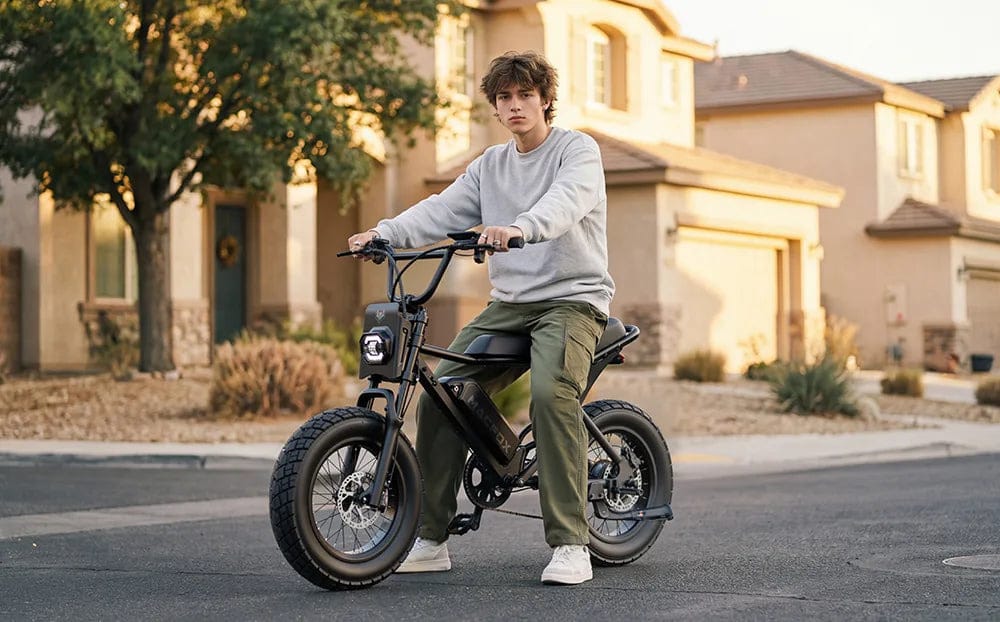
In that kind of setting, a fat tire electric bike is not about hardcore off-roading. It is about stability at low speeds on imperfect ground. Wider tires create a more planted feel when the surface changes from pavement to gravel, from gravel to grass edge, or from smooth road to a rougher access lane.
That can be useful for truck owners because the riding is usually practical rather than sporty. You might be moving from the truck to a registration tent, from the campsite to a restroom, from the trailer area to a dock, or from one end of an outdoor venue to the other. The goal is not speed. It is a calmer, more controlled way to cover short distances that are too annoying to walk and too small to drive.
The boundary should stay clear. Fat tires do not make every surface fair game. They should not be used to cut across restricted land, ride through deep mud, enter closed trails, or move fast around pedestrians. The best fit is open, permitted, low-speed movement on light mixed surfaces.
How to Add an Ebike to a Pickup Setup
Adding an ebike to a truck weekend starts with loading, not riding. Think about where the bike will sit before the trip begins. Some owners may use the truck bed. Others may use a hitch rack. Either way, the bike should be secured properly, should not interfere with other gear, and should not block the license plate, tail lights, backup camera, or access to important equipment.
Weight matters too. Ebikes are heavier than regular bikes because of the motor and battery, so the rack, straps, tailgate pad, or bed setup should be rated for the job. If you are also carrying a cooler, toolbox, recovery gear, camping bins, or a trailer connection, plan the loading order before everything is packed tight.
Charging is the next practical detail. Most truck camping use does not require a dramatic range number. What matters is whether the bike can handle the actual short trips you expect: campsite loops, event lot movement, marina errands, trailhead scouting, or a few runs between parking and the entrance. Start the weekend with a charged battery and avoid treating the bike like a toy that gets used until it is dead.
Locks and parking habits are just as important. Outdoor venues do not always have bike racks. Do not leave the bike blocking walkways, fire lanes, boat ramp operations, vendor entrances, or staff routes. A small ride is useful only if it keeps the area easier to navigate for everyone else too.
Check Rules, Speed, and Parking Boundaries First
Ebike rules in the United States are not the same everywhere. Federal product definitions, state laws, park policies, campground rules, event rules, and private property restrictions can all affect where a rider may go. A route that is fine at one campground or event may be off-limits at another.
Before relying on an ebike, check the destination website, posted signs, event information, campground map, park rules, and staff guidance. Some places allow bikes only on certain roads. Some allow Class 1 or Class 2 bikes but not every device with a motor. Some areas may require riders to walk the bike through gates or crowded zones. Private events can be stricter than public roads.
Speed should stay conservative. Around campers, kids, dogs, parked trucks, trailers, pedestrians, dock traffic, and vendor areas, slow riding is the only riding that makes sense. A truck owner already understands visibility, blind spots, turning space, and the cost of moving too fast in a tight area. The same mindset should apply to any small mobility tool.
A helmet, lights, reflectors, basic brake check, and a lock should be part of the same pre-trip rhythm as checking tire pressure, tie-downs, trailer wiring, and a flashlight. The easier the ride is to use safely, the more likely it is to become a useful part of the trip.
A good add-on should make the truck trip smoother.
The pickup still does the main work. It hauls, tows, carries, and gets you close to the place you want to be. An ebike simply handles some of the short movement after parking, where the truck is too big and walking is too slow.
For truck camping, trailhead access, boat ramp errands, large event lots, and open outdoor venues, that can be a practical upgrade. Choose the right route, follow the rules, keep the speed low, load the bike securely, and treat it as a supporting tool. Used that way, it does not compete with the pickup. It makes the whole setup easier to live with once the truck is parked.