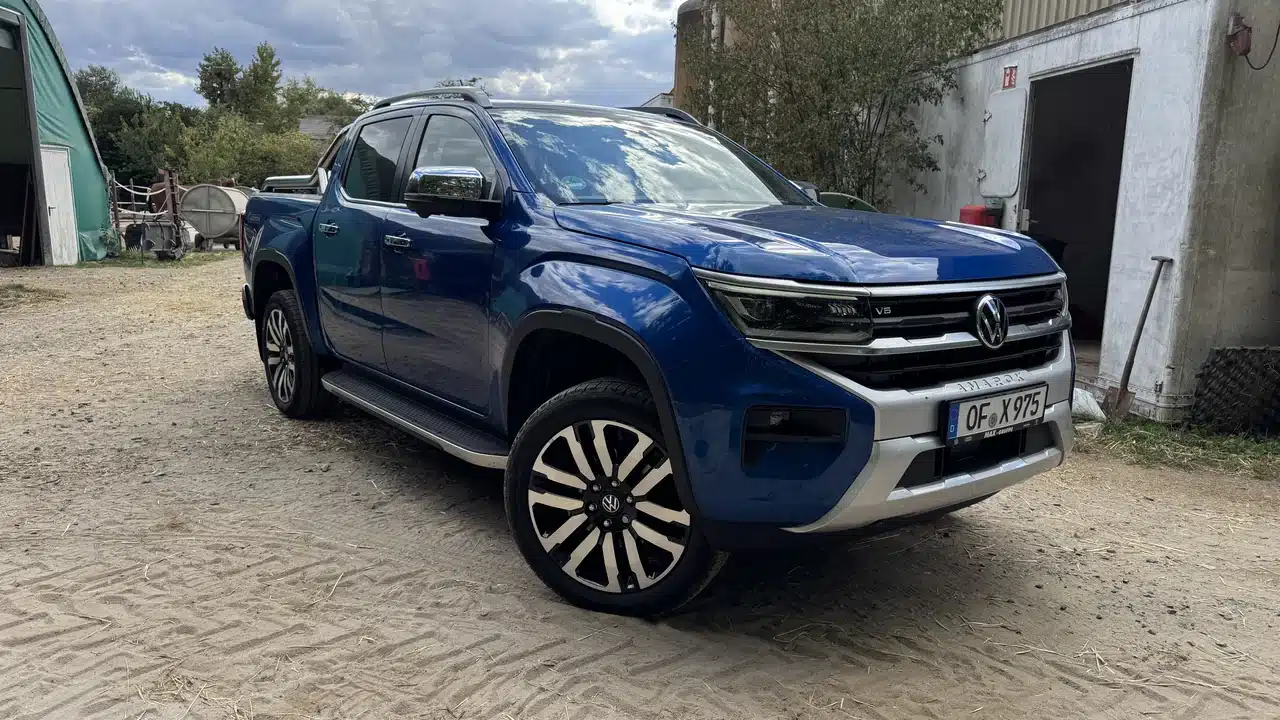
For years, I’ve heard that Americans wouldn’t like the way global midsize pickups ride. Too rough. Too narrow. Too much compromise. Then I drove a VW Amarok V6 diesel with a bed full of mulch in Germany, and I came away asking a very different question: Why can’t we get more of this capability in our midsize trucks?
This drive had been about 10 years in the making. While visiting Germany for Automechanika in Frankfurt, I met an owner who needed a pickup for his horse farm. He let me drive his Amarok loaded and empty. Between that drive, a camper display at the show and some time crawling around U.S. pickups at the State Fair of Texas, I had plenty to think about.
A loaded VW Amarok raises a payload question
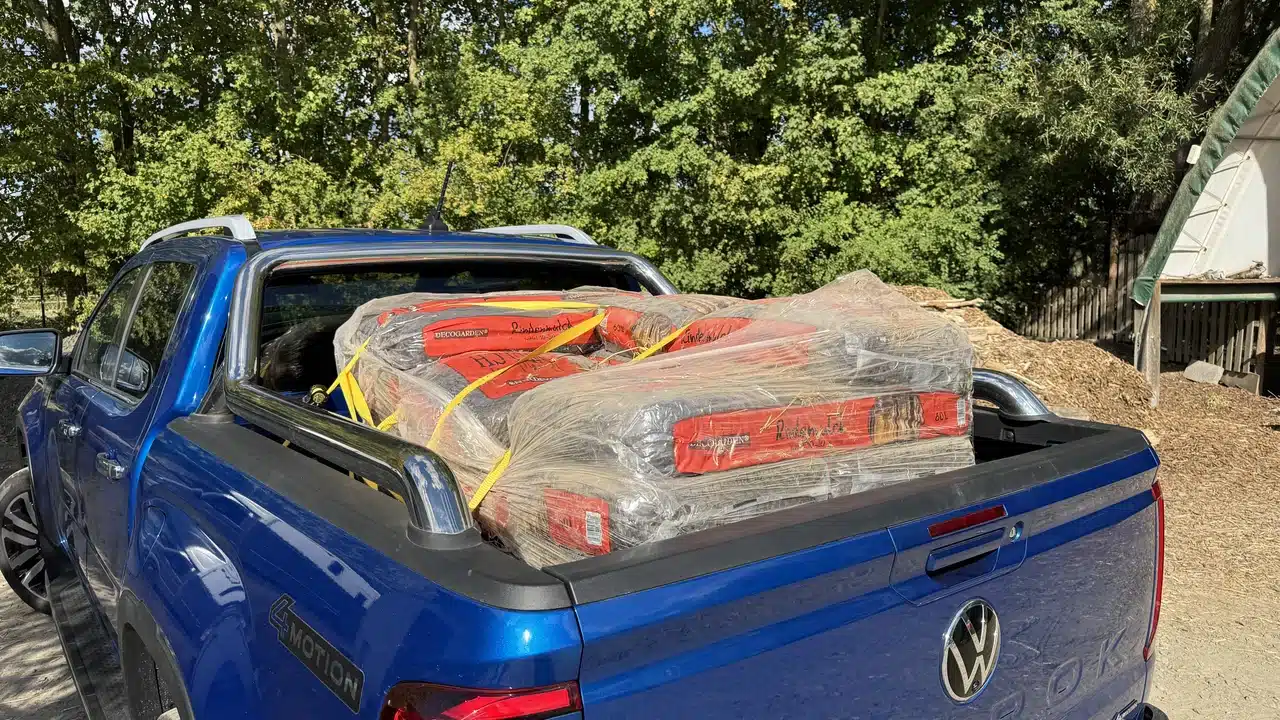
The owner told me his Amarok had about 915 kilograms of payload, which converts to roughly 2,017 pounds. That caught my attention immediately. However, I couldn’t find a U.S.-style payload label on the door, and the plate I photographed listed a maximum vehicle weight of 3,190 kilograms. That number is not payload. I still need the exact truck’s weight documentation to confirm his estimate.
The load itself was substantial. I described it as about 600 kilograms early in the video and 660 kilograms during the drive, so treat the weight as an estimate rather than a scale measurement. Those figures work out to roughly 1,323 to 1,455 pounds. The 1,300-pound conversion I gave while saying 660 kilograms was too low.
My curiosity had already been sparked by an Amarok carrying a Tischer slide-in camper at Automechanika. I also spotted a Nissan Navara with a camper around Frankfurt. Seeing those setups made me wonder why carrying a camper often gets so complicated with the midsize trucks we buy in the United States. A display truck isn’t proof that every Amarok can carry that camper, but it certainly got my attention.
Payload also has to cover more than whatever is sitting in the bed. People and other added weight use up capacity, too. That matters when you move from looking at a camper on a show floor to planning a loaded camping trip.
The V6 diesel made a strong first impression
Behind the wheel, the Amarok felt familiar. Its controls reminded me of my Ford Ranger back home, and I could select two-wheel drive, automatic four-wheel drive, four-wheel-drive high range and low range. Familiarity doesn’t make the two trucks identical, but it helped me settle in quickly.
On town streets and the short highway portion of my loaded drive, the truck felt solid. I knew there was a substantial load behind me, yet the ride wasn’t the punishment I had been led to expect. I also noted that the rear suspension wasn’t sitting on its bump stops.
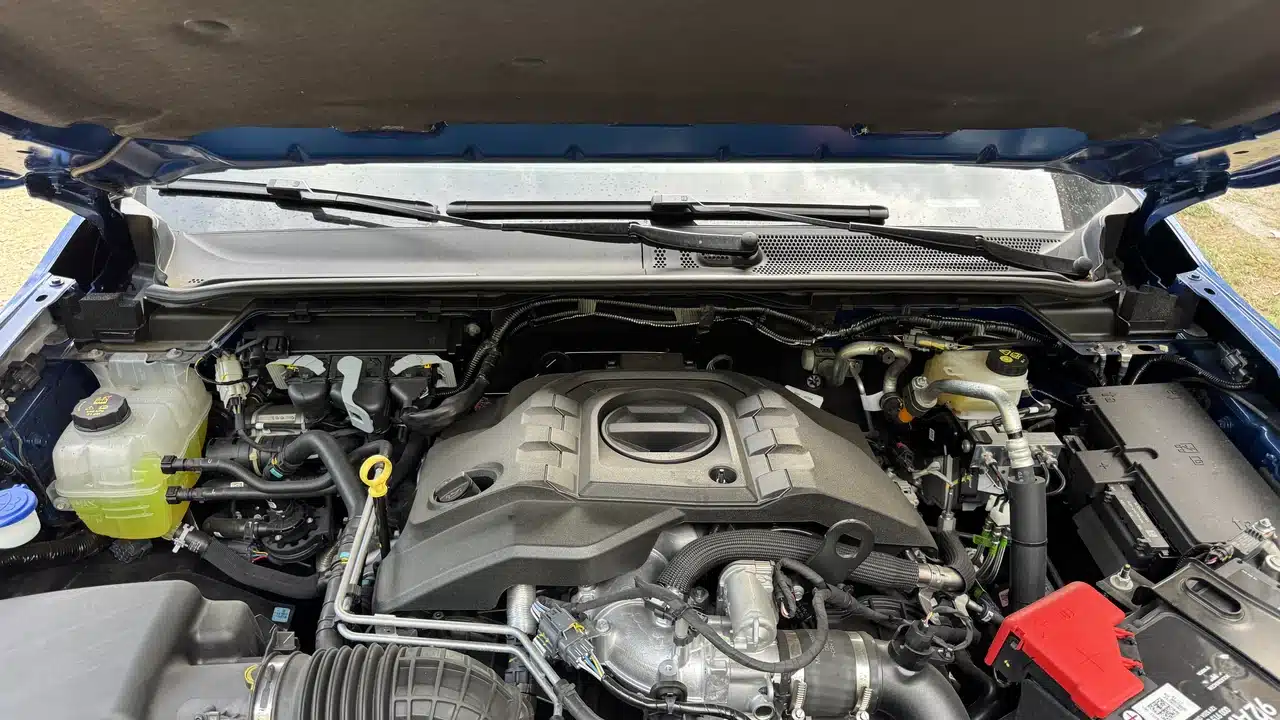
The V6 turbo-diesel was a big part of the appeal. Acceleration put a smile on my face, especially once I drove the truck empty. Volkswagen’s launch specifications for this Amarok generation list a 3.0-liter V6 diesel with a 10-speed automatic, with output varying by market. I’m not assigning one of those power ratings to this owner’s truck without confirming its exact specification.
The transmission wasn’t flawless. During the empty drive, it briefly hunted for a gear. I mentioned it on camera, although I couldn’t tell from that short experience whether my inputs contributed. That’s an observation from one drive, not a long-term reliability verdict.
U.S. truck payload labels tell a different story
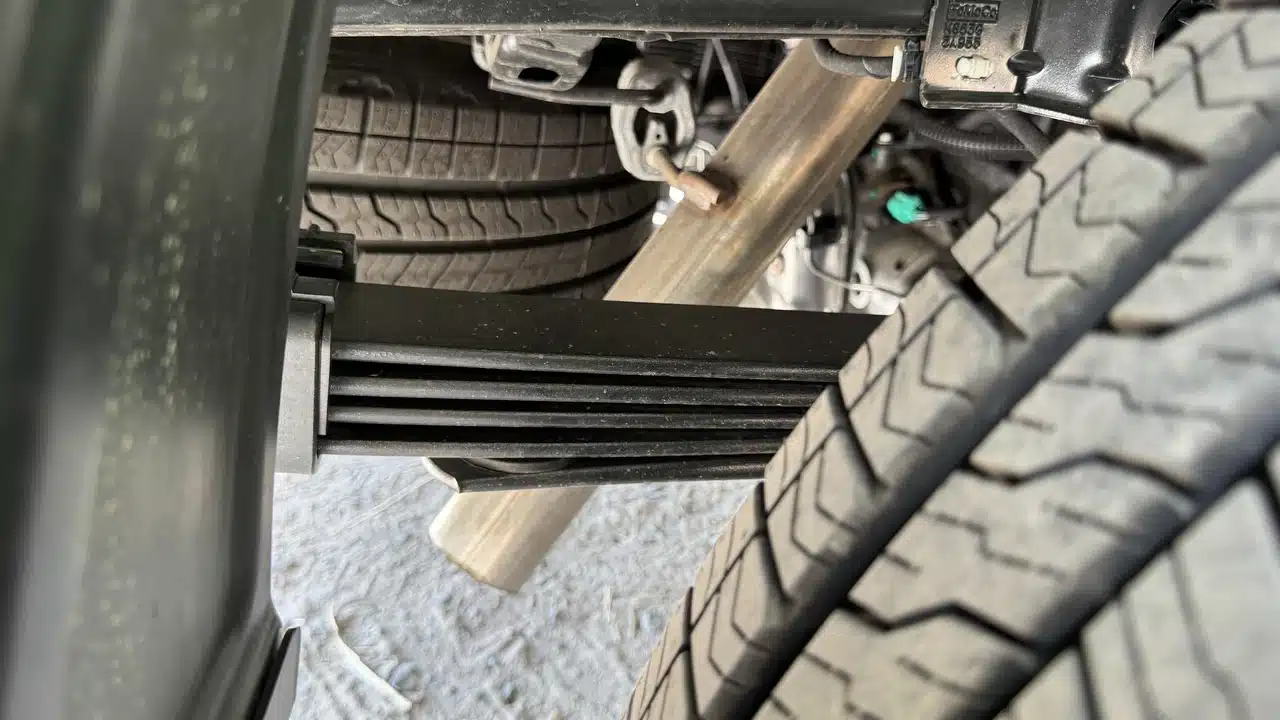
Back in Texas, I looked at the payload labels and rear suspensions on individual Toyota Tacoma, GMC Canyon, Chevrolet Colorado and Nissan Frontier pickups. The examples I called out included about 1,500 pounds for the Canyon, 1,327 pounds for the Colorado Trail Boss and about 1,100 pounds for the Frontier PRO-4X. Those are the trucks I inspected, not maximum ratings for each entire model line.
If the owner’s roughly 2,017-pound Amarok figure checks out, that would be a meaningful difference from these particular U.S. examples. Still, I wasn’t comparing identically equipped trucks or weighing them on the same scale. An off-road trim, added equipment and a different configuration all matter when you look at a truck’s actual capacity.
I spent time photographing leaf springs, overload leaves and bump-stop clearance because I wanted to see what changed with the load. After we unloaded the Amarok, it rose back up and the suspension had more clearance, just as you’d expect.
However, there isn’t a magic answer hiding in a leaf count. As I explain at the end of the video, a rear trailing arm is a sturdy metal suspension link that connects the rear axle to the vehicle’s frame and global trucks have this to further help carry more weight. The entire suspension and its tuning matter. Adding a spring also doesn’t establish a new manufacturer-approved payload rating.
The empty ride challenged what I’d been told
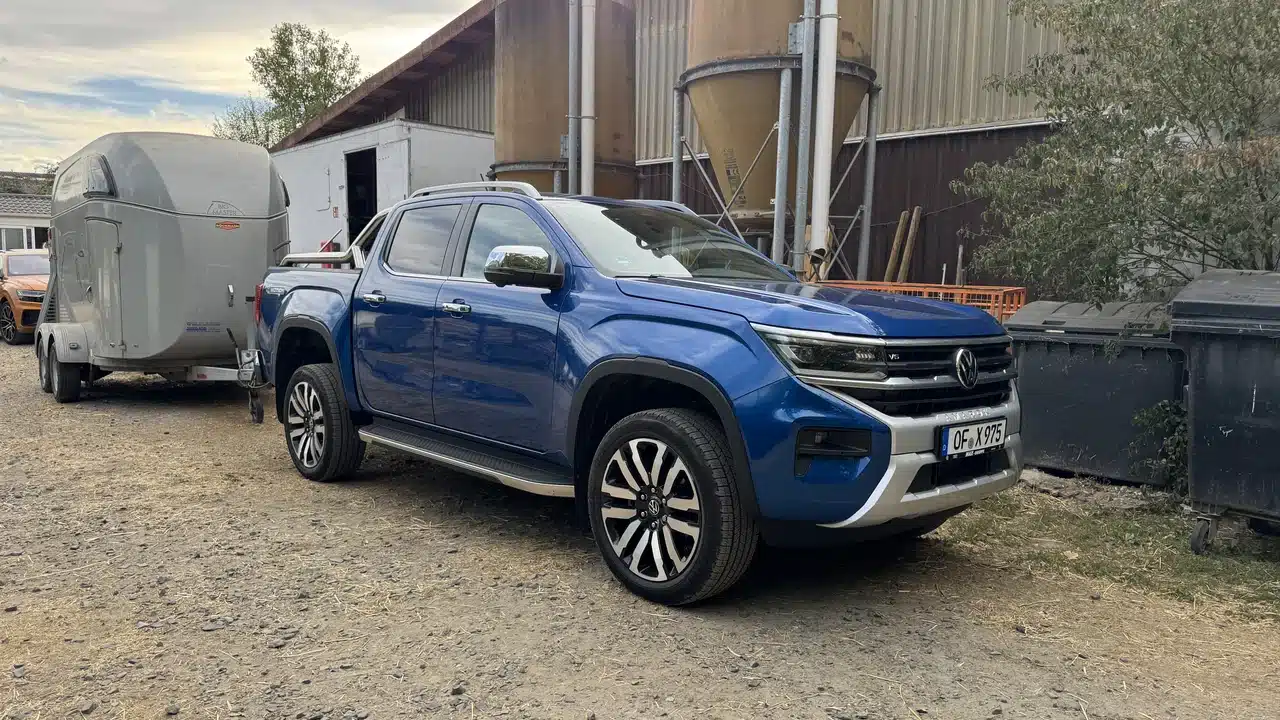
The empty drive was the part I especially wanted to experience. If the price of useful carrying capacity was a miserable unloaded ride, this was where I expected to feel it. I drove on a country road with patched pavement and uneven spots, and I kept waiting for the truck to become unpleasant.
It didn’t. In the moment, I even said I thought it might ride better than my Ranger at home. That’s a seat-of-the-pants impression from a short drive, but it is why this experience stuck with me. The truck I had been told I wouldn’t enjoy was a truck I was thoroughly enjoying.
We’ve been asking about the Amarok’s place in America for years, including our earlier case for bringing it here. This drive gave me a fresh reason to keep asking. I want a midsize pickup that can do useful work and still feel comfortable when the work is done.
So, are American trucks weak? My drive doesn’t prove that, and it doesn’t establish why different trucks carry different ratings. What it does give me is a real example that challenges the blanket claim that Americans wouldn’t like the ride of a global midsize pickup. I drove this one loaded and empty. I liked it. Now I want a better explanation of the trade-offs.