Red-dyed diesel is suddenly getting attention from truck owners seeking a cheaper fill-up after U.S. President Donald Trump’s Oct. 5 announcement. He promised relief at the pump, but the fuel specification, tax bill and permission to use it on the road are separate questions. Here’s what you need to know.
What is red-dyed diesel?

Red-dyed diesel is diesel marked with dye to identify its tax treatment. It is commonly associated with qualifying off-highway work, including farming and construction. The color is a tax marker, not a horsepower upgrade or a fuel-quality rating.
IRS Publication 510 explains that qualifying dyed fuel is generally exempt from the regular federal diesel excise tax, but ordinarily still carries the 0.1-cent-per-gallon Leaking Underground Storage Tank tax. Calling every gallon completely tax-free misses that distinction.
Normally, knowingly using dyed fuel for a taxable purpose can trigger a federal penalty of the greater of $1,000 or $10 per gallon involved, in addition to tax. Repeat violations can increase the penalty. The new order directs relief from specified penalties, which makes the implementing rules important.
How much does it save you?

The White House uses the 24.4-cent federal diesel tax to illustrate the potential benefit. At that rate, 30 gallons represents $7.32 and 34 gallons represents $8.30. Those are tax-rate calculations, not guaranteed pump discounts or permanent savings.
The amount you pay depends on the seller’s price and the taxes that apply where you buy and use the fuel. A deferred tax may still have to be paid later. Compare the total cost rather than assuming the difference on the pump is money you can keep.
Texas shows why location matters. The Texas Comptroller says its Sept. 28 disaster declaration suspends highway-use restrictions on dyed diesel, but does not waive the state’s 20-cent-per-gallon tax on taxable highway use. For 30 gallons, that state tax is still $6. The agency says it is working on payment options. Drivers elsewhere need to read their own state’s current rules.
Can your diesel truck use it?
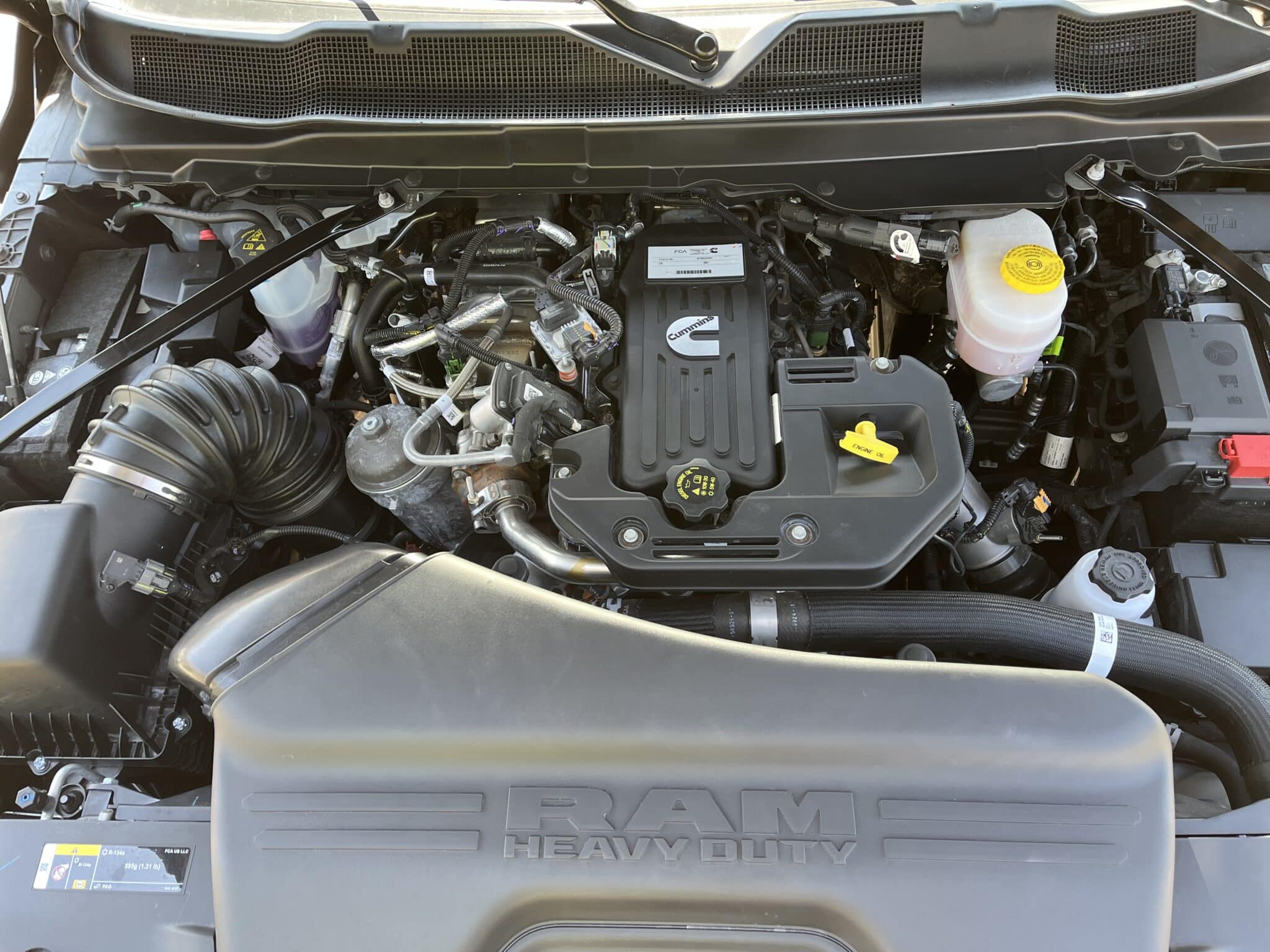
Mechanically, the answer depends on what is in the fuel, not just its color. EPA’s diesel standards specify ultra-low-sulfur diesel, or ULSD, with no more than 15 parts per million sulfur for highway use. Most nonroad diesel is also ULSD, but a red color alone does not establish that a particular supply meets your truck’s requirements.
Check your model’s owner’s manual, the pump label and the supplier’s fuel specifications. Ford’s diesel-fuel guidance, for example, requires ULSD and appropriate ASTM specifications, limits biodiesel content and warns against agricultural fuel or fuel not intended for highway use. It says damage caused by improper fuel is not covered by the vehicle warranty.
Higher-sulfur fuel can harm emissions-control hardware. Our report on short trips and modern diesel trucks explains why operating conditions and emissions equipment deserve attention. Before switching fuels, confirm compatibility with the manufacturer and separately confirm that the applicable federal and state relief covers your use.
What did the president actually announce?

Trump signed Emergency Tax Relief on Diesel Fuel on Oct. 5, 2026. It gives Treasury five days to determine the legal basis and eligible taxpayers for deferring specified diesel taxes incurred Oct. 5 through Dec. 31, 2026. Authorized deferrals would carry no interest or penalties.
It also directs an IRS announcement of relief from specified penalties for selling or using dyed diesel on highways during that period. Treasury’s guidance must identify covered people, locations, conditions and deadlines, including when postponed taxes must be paid.
The order directs Treasury to explore forgiveness, including legislation. It does not itself cancel the deferred tax. It also calls for states to take corresponding action.
As of our Oct. 6 review, we had not located the implementing announcement in the IRS news releases or Treasury press releases. That leaves eligibility and payment details unresolved in this report. Check that guidance and your state’s requirements before treating a red-dyed fill-up as approved for your truck.