
Everybody wanted to hear the Ram 1500 RHO’s exhaust. I wanted to know what was happening between the hood scoop and the tailpipes. During my 2025 RHO launch coverage, I walked around the truck with Ram engineer Doug Killian, who explained the intake, water drainage, air-filter seal and exhaust tuning.
Looking back at that interview, some of the most useful details had nothing to do with whether an inline-six sounds as good as a V8. They explain why the scoop is there, why a clamp matters and why those odd-looking patches on the exhaust pipes should not be dismissed as unnecessary hardware.
The RHO hood scoop actually feeds the engine

A hood scoop can be a styling statement. On the RHO, Killian explained, it is part of the engine’s breathing system. The scoop feeds outside air into ductwork in the hood, while airflow through the grille serves the cooling hardware, including the radiator, condenser and intercooler.
The distinction matters. The engine wants a supply of cooler, denser intake air, and the elevated inlet helps keep that supply away from heat coming off the cooling module. Its location also plays a role when the truck encounters water.
This was a useful part of the walkaround because a bigger grille and a bigger hood opening are easy to lump together. They have different jobs. Killian traced the engine’s intake path from the scoop toward the passenger side of the engine compartment.
Those drains under the hood have a job

Under the hood, the air passes through what Killian called the Ram airflow module. This ductwork routes it toward the filter, but it also has provisions for separating and discharging water and debris before they can reach the engine.
He pointed out three outlets at the back of the module. Their purpose is to let unwanted material escape rather than continue down the intake path. Getting air into an engine is one job. Keeping water out of it is another.
That led us into a discussion about water crossings. Bigger tires alone do not determine what a truck can safely handle. Intake location, electrical components and the rest of the vehicle’s design all matter. The RHO’s elevated intake and drains are parts of that larger system.
The air-filter seal is more important than it looks
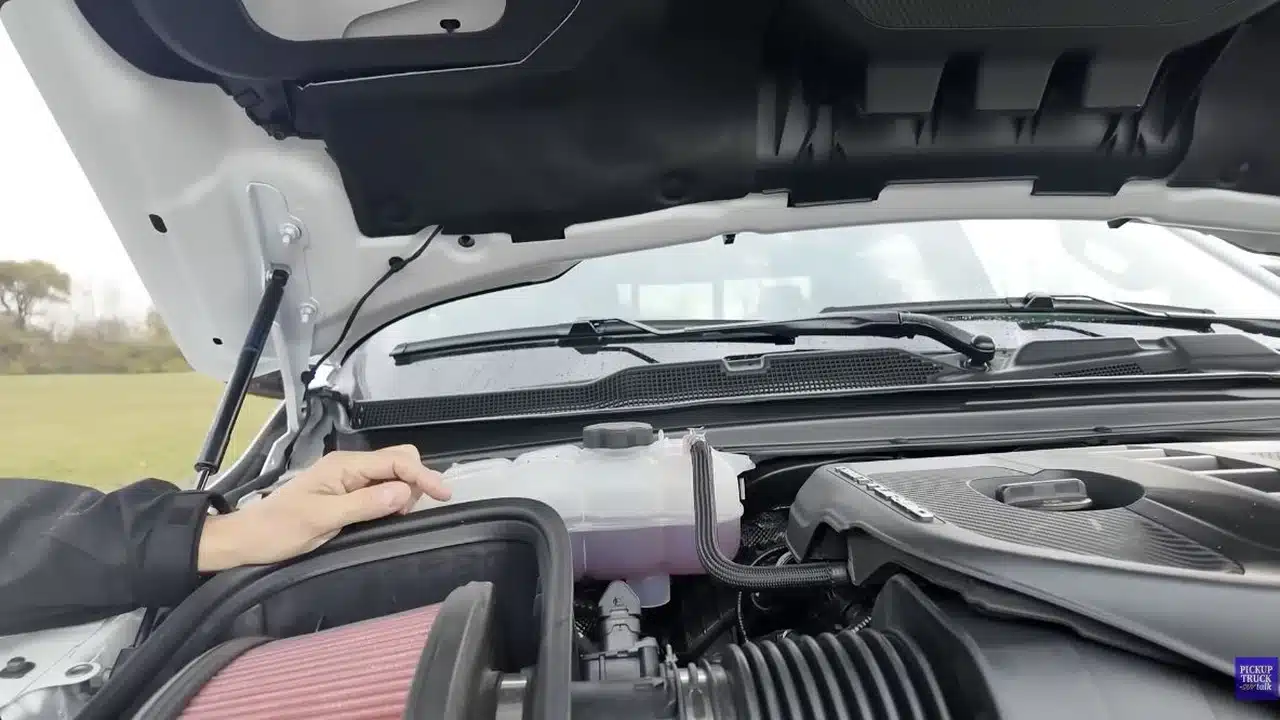
On the passenger side, Killian showed me the seal that runs around the filter housing and meets the underside of the hood. That connection helps keep the intake drawing from the intended air path.
He also explained the choice of a screw-operated worm clamp rather than a quick-release arrangement. Engineers wanted an attachment that could be tightened securely after the filter was accessed. If the connection is loose, he said, it can start drawing air from somewhere other than the intended inlet.
Killian described how sandy development testing made access to the filter area important. For owners, the useful takeaway is to pay attention to both the filter and how the system goes back together. Follow the truck’s service instructions, and make sure the housing, seal and clamp are properly secured. A loose connection can undermine the system the engineers designed.
The exhaust has more going on than two tailpipes
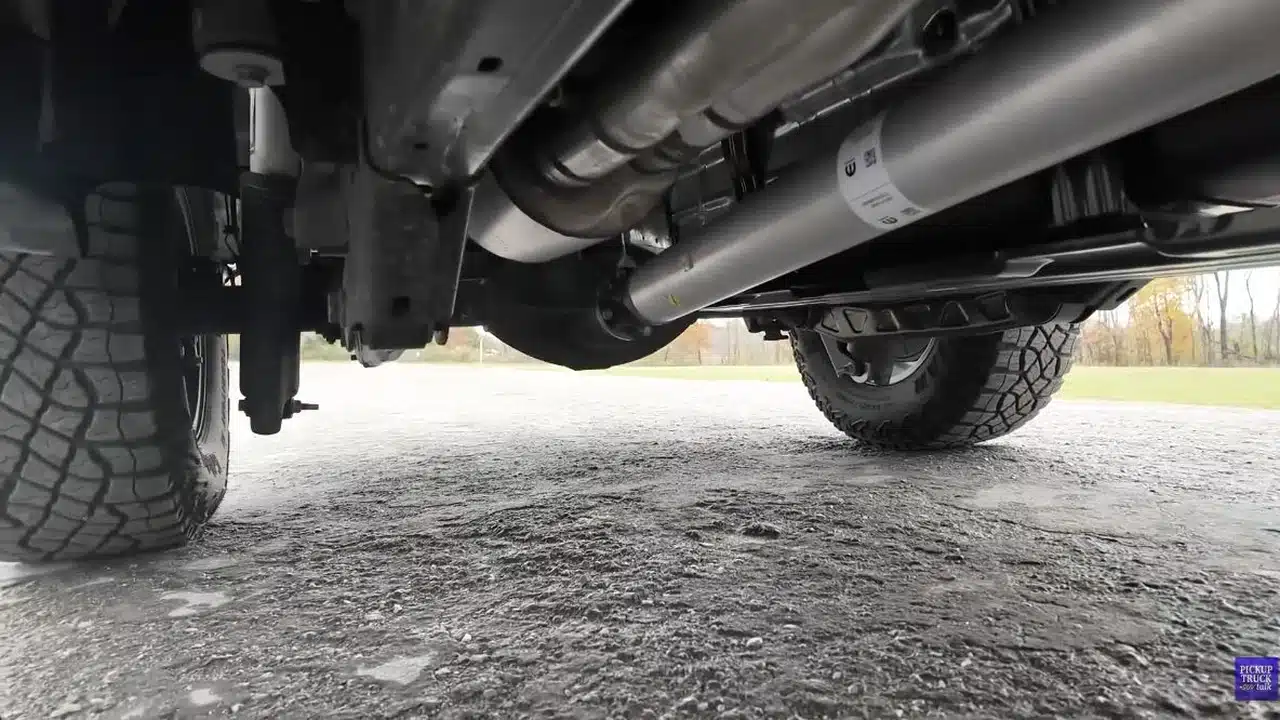
Once we followed the intake path, we moved underneath the truck. Killian described a true dual exhaust with equal-length pipes and an H-shaped crossover. The routing and the crossover’s location were selected to help deliver the performance and sound Ram wanted.
The factory system also uses passive flow-control valves near the center muffler. As exhaust pressure rises, those valves open to allow more sound through. This is a mechanical response to flow, not simply a button that makes the truck louder.
Near the rear, Killian pointed out small patches on the pipes that are easy to overlook. He described them as part of a resonance-free pipe system, with perforations and placement chosen to cancel unwanted sound frequencies. They serve a tuning function while avoiding additional conventional resonator cans.
I asked whether Baja mode changed the exhaust sound. His answer was that the mode keeps engine speed higher more often, so you hear the truck differently. He did not describe a separate sound setting being selected by that mode.
That is what I liked about this interview. You can love or hate the RHO’s exhaust note, but there is a lot more engineering behind it than bolting two tips onto the back. The same goes for the hood scoop. These pieces are working parts of an airflow system, and small details such as drains, seals and clamps deserve attention.
Watch the full 2025 RHO airflow and exhaust interview using the featured video above. For another explanation from Killian, see how Ram 4WD Auto works. I also covered the later MagnaFlow exhaust options for the RHO; those are separate from the factory system discussed here.