Your orders just dropped. You have a report date, a house to pack, and a camper in the driveway that needs to cross six states with you. The truck you pick for that drive shapes the whole move, because the wrong one turns a long haul into a white knuckle grind. Choosing the right truck to tow an RV during a military PCS move comes down to a handful of honest numbers and some paperwork most families never check.
TL;DR: Pick the camper first, then size the truck by payload and combined weight ratings instead of the headline towing number. A properly equipped half ton pickup handles many travel trailers, while fifth wheels and heavy toy haulers call for a three quarter ton. The government does not count a towed RV toward your PCS weight allowance, so you cover the extra cost of hauling it. Check your current truck lease or loan terms before you sign for anything new.
Sort Out Your Truck’s Paperwork Before You Shop for a Hitch
Start with what you already drive. A leased pickup, a financed SUV, and a truck you own outright each give you different options when a permanent change of station (PCS) order arrives.
The Servicemembers Civil Relief Act (SCRA) gives active duty members specific rights on vehicle contracts. If you signed a lease while serving and then receive orders from the continental United States to an overseas station, or orders to deploy for 180 days or more, you can end that lease without an early termination charge. A stateside move, say from Fort Carson to Fort Riley, usually does not qualify. Plan on keeping a leased truck through a domestic PCS, and watch the mileage cap, because a cross-country tow chews through it fast.
Loans follow different rules. The SCRA caps interest at 6 percent on auto loans you took out before entering active duty, and it bars a lender from repossessing a vehicle you financed and started paying on before service without a court order. Lenders and dealers confirm your military status against Defense Department records before they apply those protections, so keep a copy of your orders ready. Once you know where your current vehicle stands, the keep, trade, or upgrade decision gets much simpler.
Why Your RV Won’t Count Toward Your PCS Weight Allowance
Plenty of families learn this one at closeout. The Joint Travel Regulations (JTR) do not treat towed RVs, campers, or fifth wheels as household goods, so their weight never counts on a Personally Procured Move (PPM) claim. Air Force transportation guidance on traditional PPMs states this plainly.
What does that mean for your truck choice? Your mileage allowance covers the drive, not the extra fuel, tire wear, and brake life the camper burns along the way. You can still haul household goods in the truck bed for PPM credit if you get empty and full weight tickets, but confirm the specifics with your Personal Property Processing Office before you load a single box.
That cost gap is the strongest argument for a tow vehicle that runs efficiently under load. Every mile the camper adds comes out of your pocket, which makes the next decision, the camper itself, worth getting right.
Pick the Camper First, Then Size the Truck
Most families do this backward. They buy a truck, then hunt for a trailer it can pull. Flip the order: the camper’s loaded weight, hitch type, and length set the minimum truck you need, and no aftermarket part fixes an undersized tow vehicle.
If you don’t own a camper yet, a PCS makes a natural moment to buy one. It doubles as lodging on the road and as a place to live while you wait on base housing at the new station. Families who weigh their options often look at buying used RVs from rental fleets, since those units tend to come professionally maintained and road-tested. That market also opens two very different paths:
- A compact travel trailer that a full-size SUV or half-ton pickup can tow without strain
- A Class C motorhome that carries the family and pulls a small car behind it, which can spare you from buying a heavy-duty pickup at all
Whichever route you take, pull the Gross Vehicle Weight Rating (GVWR) from the camper’s sticker. Brochure dry weight leaves out water, propane, batteries, and gear, and a loaded camper often weighs well over a thousand pounds more than that number suggests.
How to Size a Truck to Tow an RV During a Military PCS Move
Size the truck by payload and combined weight first. The big towing number in the ads assumes a nearly empty truck with one driver, and a PCS truck carries anything but that.
Five ratings decide whether a truck can do the job:
- GVWR: the maximum weight of the truck plus everything in it, including the trailer’s tongue weight
- Payload: what the truck can carry, printed on the yellow Tire and Loading Information sticker in the driver’s door jamb
- Gross Combined Weight Rating (GCWR): the maximum weight of truck and trailer together
- Tongue weight: roughly 10 to 15 percent of a travel trailer’s loaded weight, or 15 to 25 percent for a fifth wheel’s pin weight
- Rear axle rating: the limit that often gets exceeded quietly on short bed trucks
Here’s how payload disappears on a real move. Picture a half-ton crew cab with 1,600 pounds of payload hooked to a travel trailer that weighs 7,500 pounds loaded. Tongue weight at 13 percent adds about 975 pounds. Two adults and two kids add roughly 550, the hitch adds 100, and the cooler, tools, and dog crate add another 150. That totals 1,775 pounds against a 1,600-pound limit, and the family hasn’t left the driveway.
Experienced tow riggers often keep the loaded trailer at about 80 percent of the truck’s rated capacity. That margin buys stability in crosswinds, cooler transmission temperatures on long grades, and room for the stuff that always ends up in the cab.
Half Ton, Three-Quarter Ton, or Full-Size SUV?
Each class of tow vehicle fits a different kind of PCS. This breakdown covers the common choices:
| Tow vehicle class | Common models | Best fit | Watch for |
| Full size SUV | Chevy Tahoe and Suburban, Ford Expedition, Toyota Sequoia | Lighter travel trailers, families who need three rows | Lower payload, no bed for a fifth wheel hitch |
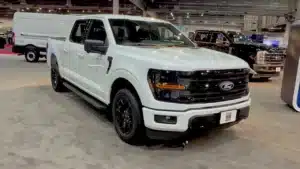
| Half ton pickup | Ford F150, Ram 1500, Chevy Silverado 1500, Toyota Tundra | Most travel trailers | Payload runs out before towing capacity does |
| Three quarter ton pickup | Ford F250 Super Duty, Ram 2500, Chevy Silverado 2500HD | Heavy travel trailers, fifth wheels, toy haulers | Stiffer ride, higher price, tight parking on base |
| One ton pickup | Ford F350 Super Duty, Ram 3500, Chevy Silverado 3500HD | Large fifth wheels and full time setups | More truck than most families need between moves |
SUVs earn a place on this list for a reason. They keep kids, pets, and valuables in a locked, climate-controlled space, which matters during a week of motel stops. The longer wheelbase versions, like the Suburban and the extended Expedition, track noticeably better behind a trailer than their shorter siblings.
Pickups win once the camper gets heavy or uses a fifth wheel or gooseneck connection, since both need a bed. On a short-bed truck, a sliding fifth wheel hitch keeps the camper’s front cap from hitting the cab in tight turns.
Gas or Diesel for a Cross-Country Tow?
Torque is the diesel’s calling card. A turbo diesel pulls hard up long grades like Interstate 70 through the Colorado Rockies, an exhaust brake helps control speed on the way down, and fuel economy holds up better under a heavy load.
The tradeoffs show up in the purchase price and the upkeep. Diesel pickups cost thousands more up front, they need diesel exhaust fluid, and their emissions systems dislike short trips around base. If your next orders send you overseas, you may end up selling or storing the truck anyway, which weakens the case for paying the diesel premium.
For most military families who tow two or three times per tour, a gas half-ton or three-quarter-ton makes more sense. Diesel pays off for heavy fifth wheels, frequent mountain routes, and families planning to RV full time after they separate or retire.
Gear That Turns a Capable Truck Into a Safe Tow Rig
A strong truck still needs the right equipment between it and the camper. These pieces matter most on a long PCS drive:
- Proportional brake controller: most states require trailer brakes above certain weights, and a proportional unit applies them smoothly
- Weight distribution hitch with sway control: it shifts load back to the front axle and calms the trailer when semis pass
- Extended tow mirrors: you need to see past a camper that runs wider than the truck
- Load range E tires at the right pressure: check the placard for towing pressures before every travel day
- Transmission cooler and tow haul mode: both protect the drivetrain on long climbs
Finish with a trip to a certified truck scale. A CAT scale ticket shows your real steer axle, drive axle, and trailer weights for a few dollars, and it settles any guesswork before the convoy rolls.
PCS Towing Mistakes That Cost Families Time and Money
Even well-prepared families stumble on the same few things:
- Trusting the brochure: dry weight and maximum tow ratings both describe best-case conditions that no PCS load matches
- Overplanning daily mileage: a loaded tow rig moves slower than a car, so build extra margin into the travel days your orders authorize
- Forgetting the destination: many installations run FamCamps and RV storage lots with waitlists, so call ahead before you arrive with a 30-foot trailer
- Assuming the camper goes overseas: the government generally ships one privately owned vehicle on an overseas PCS, and a camper rarely makes that cut, so plan to sell or store it
Each of these mistakes traces back to the same habit: planning around the truck’s best day instead of its most loaded one.
What Makes a Truck PCS Ready for RV Towing
The right truck is the one whose numbers still hold up on day three of the drive, loaded with your family, your gear, and a camper full of water and propane. Ad copy towing figures rarely tell you that. Payload, combined weight, and the right hitch setup do.
Treat the tow vehicle as part of the move budget, not a separate purchase. A truck matched to your camper keeps fuel costs predictable, protects your report date, and still serves your family well at the next duty station and the one after that. Get the paperwork, the weights, and the equipment right, and the drive itself becomes the easy part of choosing the right truck to tow an RV during a military PCS move.
FAQs
Can a half-ton truck tow a travel trailer on a PCS move?
Yes, in many cases. A half-ton pickup with a towing package handles most travel trailers, but payload usually becomes the limit before towing capacity does. Add up tongue weight, passengers, and cargo, and compare the total with the payload sticker in the door jamb.
Does the military pay to move my RV during a PCS?
No. The Joint Travel Regulations do not count towed RVs, campers, or fifth wheels as household goods, so their weight earns no PPM reimbursement. Your standard travel allowance still covers the drive itself.
Can I break my truck lease when I get PCS orders?
Only under certain orders. The SCRA lets you end a vehicle lease signed while serving if you receive orders from the continental United States to an overseas station or orders to deploy for 180 days or more. A move between two stateside bases usually does not qualify.
How many miles a day should I plan when towing an RV?
Plan conservatively. Most tow-ers find 300 to 400 miles a comfortable day, depending on terrain, weather, and how many kids and pets ride along. Leave buffer days before your report date in case of tire or weather delays.
Should I sell my camper before an overseas PCS?
Usually, yes, or store it. The government generally ships only one privately owned vehicle overseas, and shipping a camper privately costs a lot. Many families sell before an overseas tour and buy again when they return stateside.