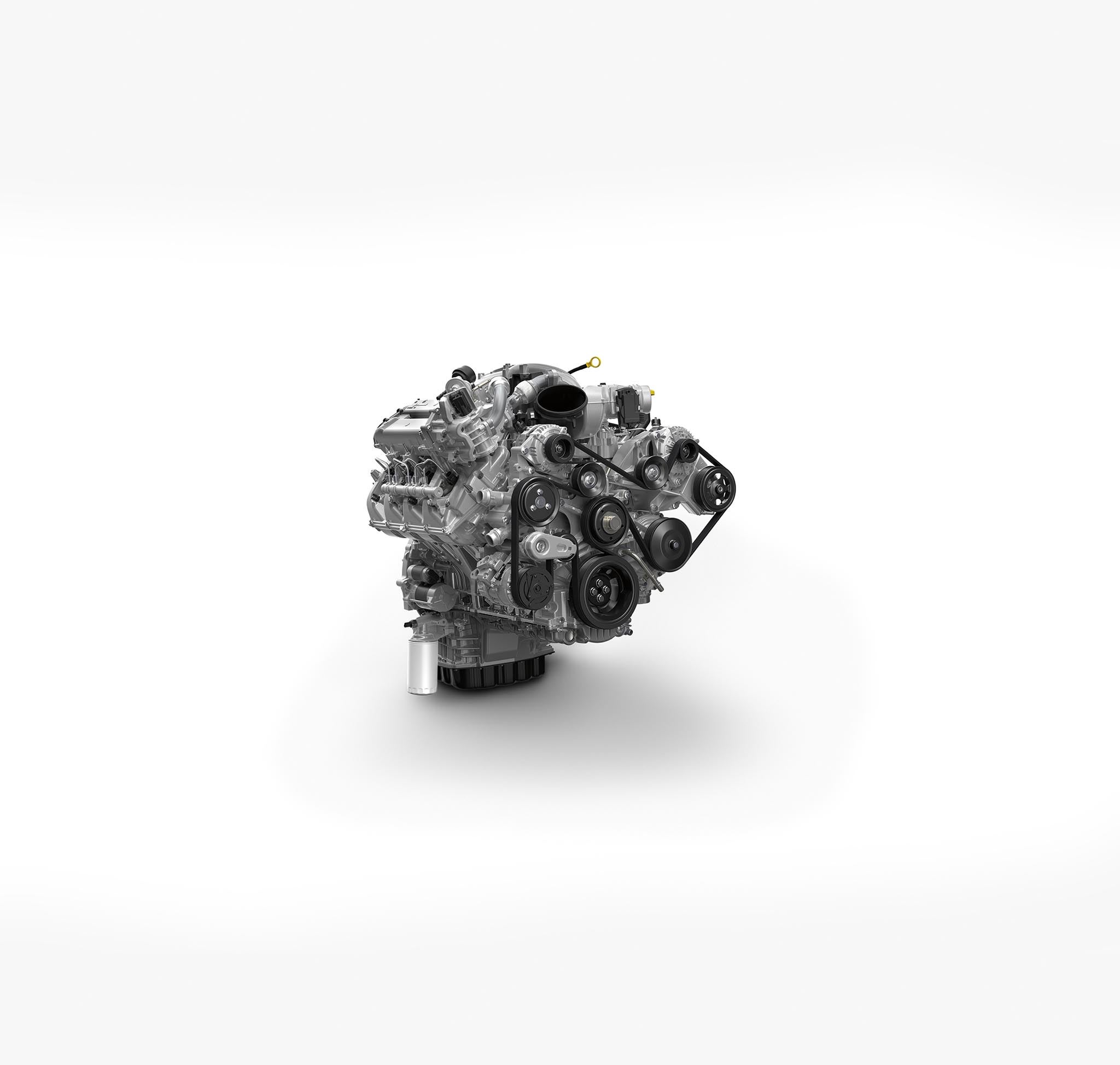
Ford has announced a new Super Duty is on the way by 2029, but that’s not going to be the whole story. Recent clues from a Shell technical center event, more information about EPA27 regulations, historical references, and a look at the competition all point to the same thing: a new Power Stroke Diesel is all but assured to arrive as well.
How big? Horsepower and torque? Well, this new “Scorpion” won’t be as big as GM’s 8.3-liter Mongoose, but with what I think will be an 8.0-liter diesel, it will have more torque than the weasel could ever dream of producing.
History lesson first: 6.7L Power Stroke
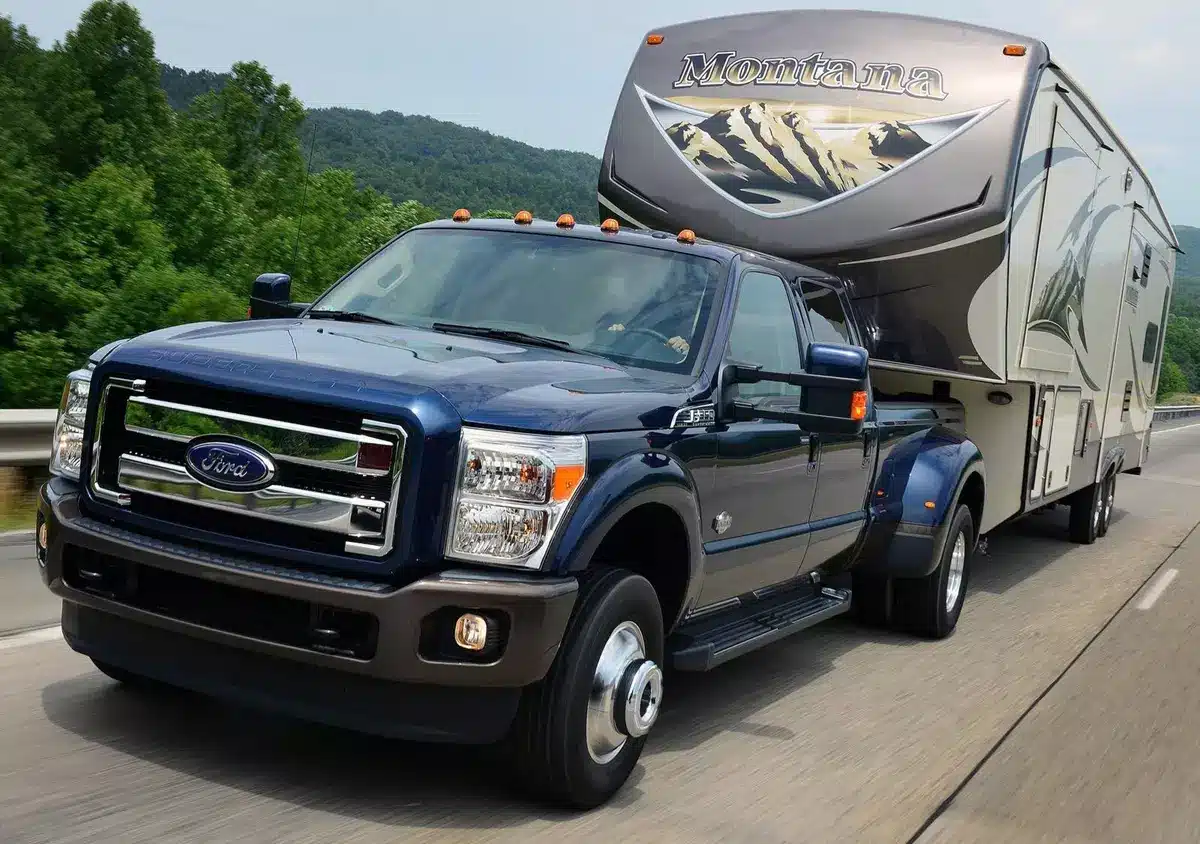
Before I get into the 8.0-liter Power Stroke, let’s step back in time.
Ford’s 6.7L Power Stroke arrived in April 2010 for the 2011 model year, replacing the 6.4-liter used in 2008–2010 Super Duty trucks. The short-lived 6.4-liter was replaced for two reasons: to bring production in-house away from Navistar and to meet new federal emissions rules.
The in-house production is important, but let’s focus on the latter part, the emissions rules.
In its 2010 launch explanation, Ford said the new engine’s aftertreatment system helped meet federal rules requiring more than an 80% reduction in diesel NOx compared with the preceding standard. DEF dosing and selective catalytic reduction were central to that response, alongside the oxidation catalyst and particulate filter.
The 2010 rules were the final phase of the EPA standards adopted in 2001 that gradually let engine manufacturers adopt the new emissions system technologies.
Over the years, the 6.7L has evolved, including a second-generation update for 2015 and a third-generation version for 2020. Its long run gives the current discussion useful perspective. Age alone does not establish that an 8.0L replacement is coming; however, the new EPA27 rules are calling once again for major reductions in NOx gases.
GM’s new 8.3L Duramax reveals more than you think
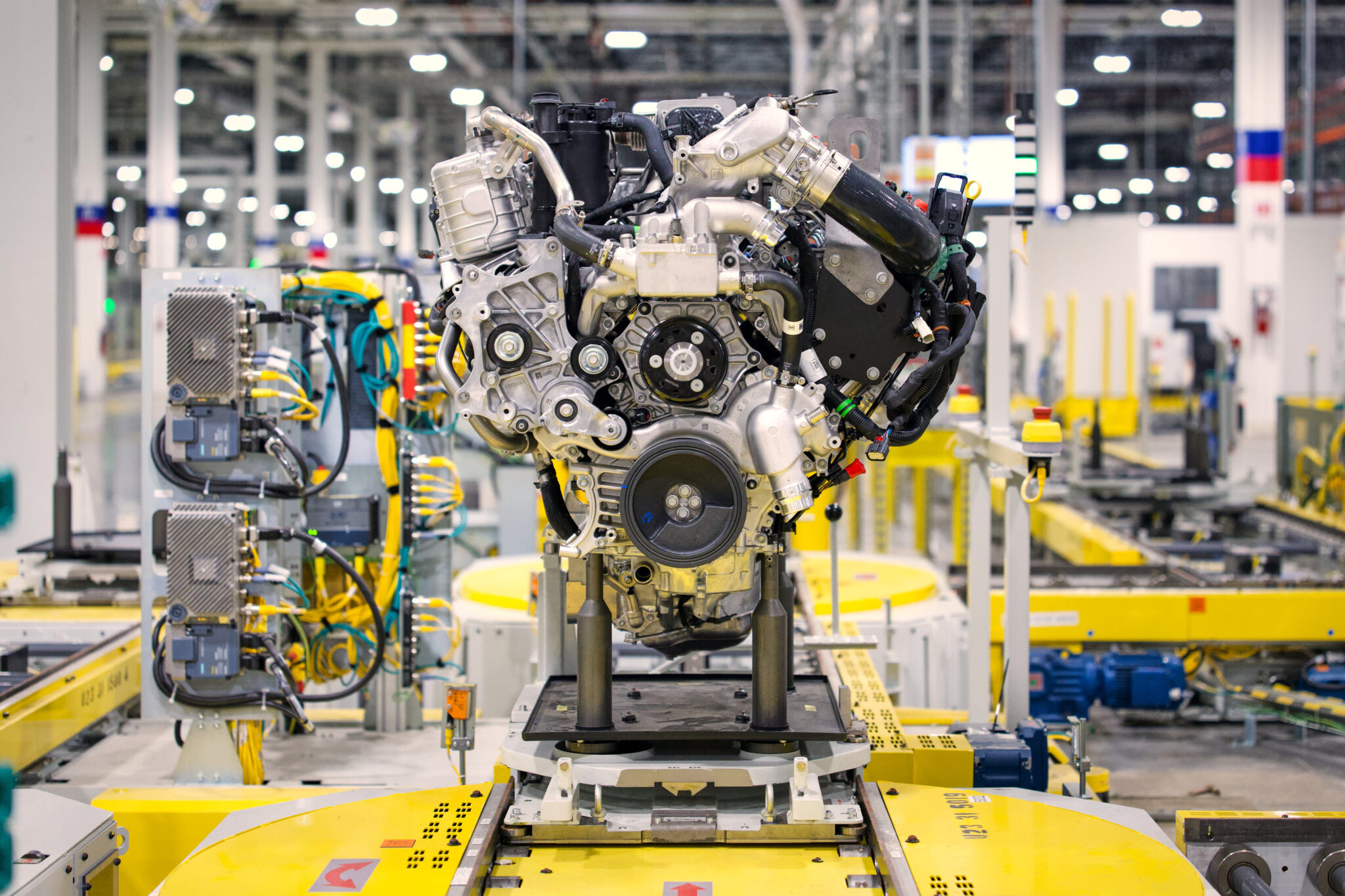
If you weren’t aware, GM has announced an 8.3L Duramax for the 2027 Chevrolet Silverado HD and GMC Sierra HD, rated at 555 horsepower and 1,230 lb-ft of torque. Its release describes a new combustion system, cooling and turbocharging changes, and a new exhaust-aftertreatment layout with a dual-injection DEF system that I’ll explain later.
The larger-displacement engine is interesting because it allows them to go with a higher compression ratio, producing more power and thermal efficiency, but it also creates more challenges for increasing NOx unless you have a new exhaust-aftertreatment layout to take care of that.
A higher-compression engine doesn’t have to work as hard as other engines and is more efficient with the same amount of fuel. It does require stronger internal parts and better oils to handle the pressures.
GM is able to do this with its engine going from a 16.0:1 compression ratio on the 6.6-liter Duramax to 16.8:1 on the 8.3-liter Duramax, a 5% increase. That’s pretty massive in today’s engineering world.
Shell’s slide identifies Ford’s proposed oil specification
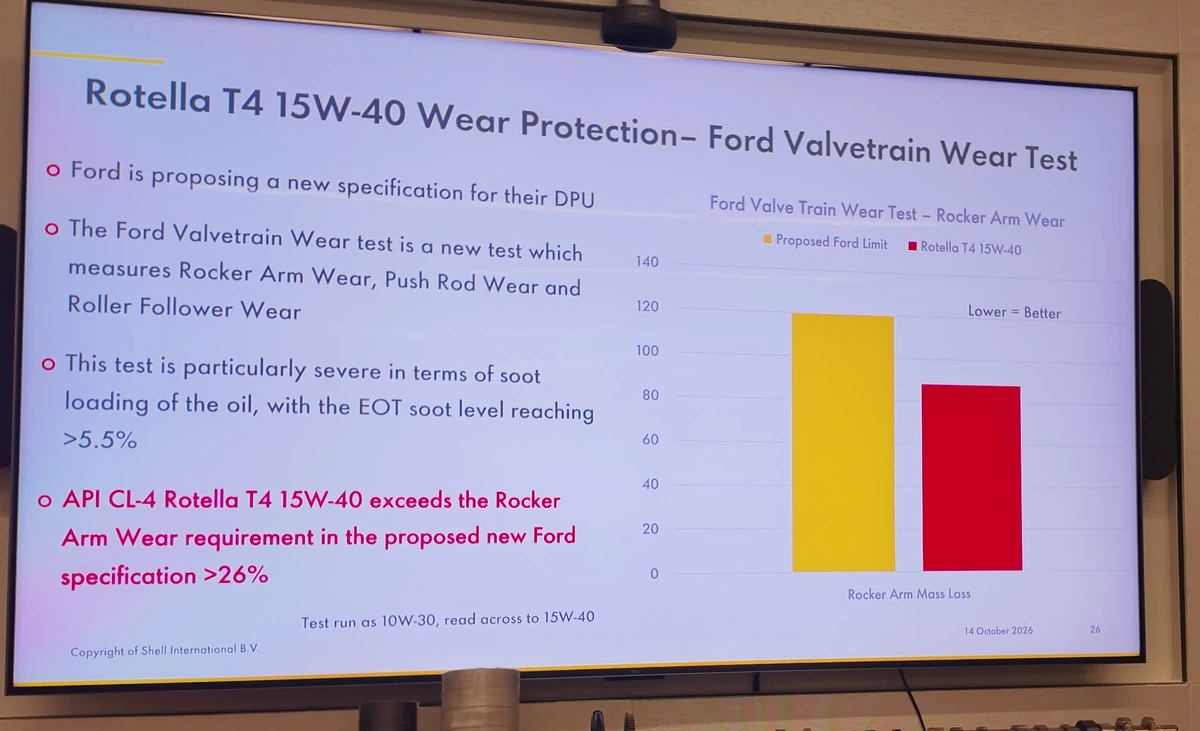
This week, I was at the Shell Technology Center in Houston, Texas, listening to a presentation from Shell engineers and presenters when this slide came on the screen.
The key line on Shell’s Oct. 14 slide reads: “Ford is proposing a new specification for their DPU.” In the accompanying presentation, Rotella technology manager Matt Urbanak described the application as diesel pickups and emphasized that the proposed wear limit was still a draft. Shell did not know when Ford would finalize it.
The slide describes a new Ford valvetrain wear test measuring rocker-arm, push-rod and roller-follower wear. It is particularly severe in its soot loading, with the end-of-test soot level exceeding 5.5%. Shell reported rocker-arm wear more than 26% below the proposed Ford limit, with lower wear being better.
There is an important footnote: the test was run with 10W-30 oil and the result was read across to the 15W-40 formulation shown. The comparison is with a proposed specification limit, not proof of 26% longer engine life or a 26% improvement over an owner’s current oil.
For the Power Stroke discussion, the critical detail is that Ford is developing an oil requirement specifically for diesel pickups, plus they are concerned about wear on major components. Why would you be concerned about major component wear when you haven’t had a history of this with the 6.7-liter Power Stroke from what I know? My theory is that you want a higher-compression engine with more horsepower and torque, and, as I explained above, you need stronger parts to withstand this compression, plus oil to go along with it.
Our full Shell report explains the wider testing program.
Why I estimate 550 horsepower and 1,400 lb-ft
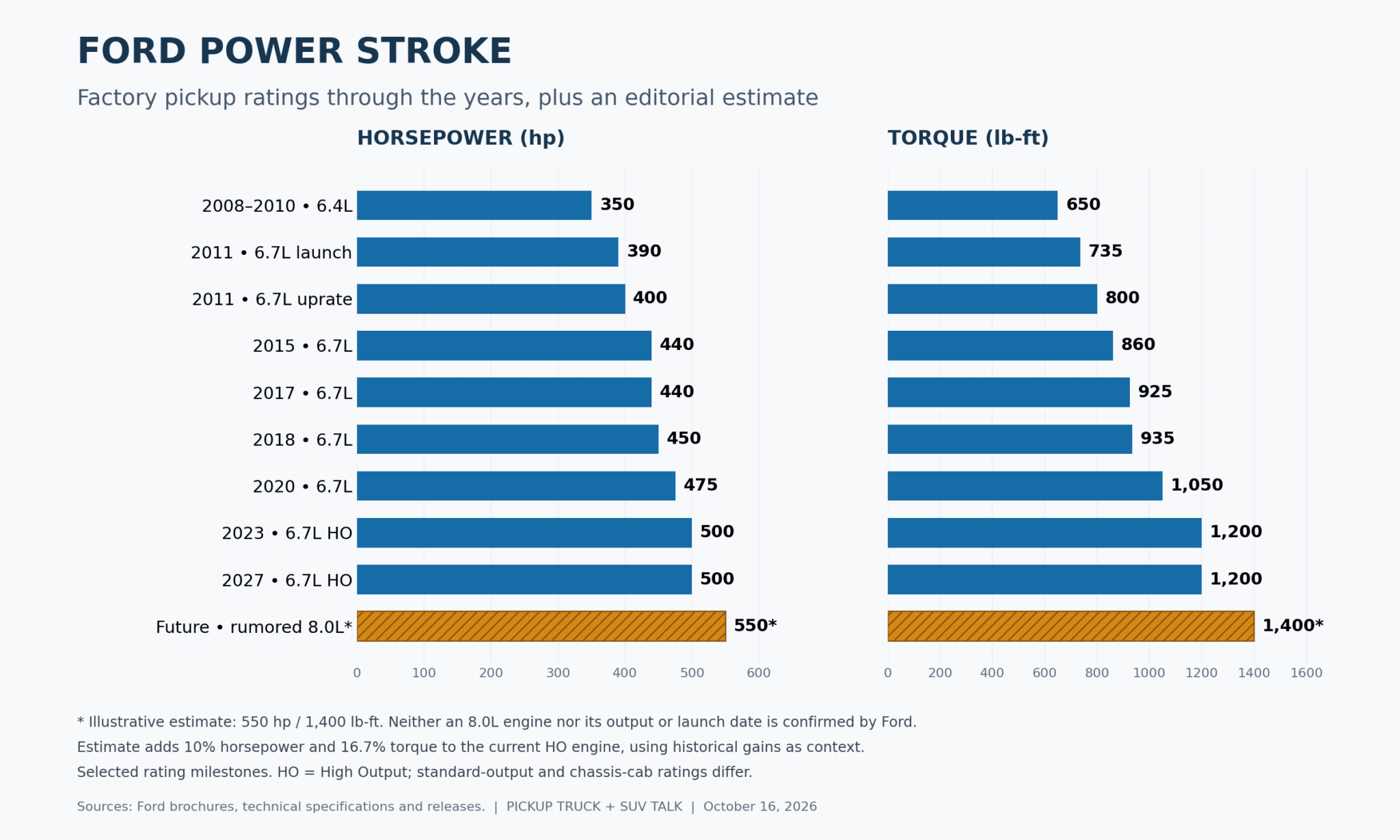
If Ford builds the larger Power Stroke I expect, my working estimate is 550 horsepower and 1,400 lb-ft of torque. That would add 10% more horsepower and 16.7% more torque to the current High-Output engine’s 500 horsepower and 1,200 lb-ft. Those are illustrative estimates, not leaked specifications.
The last displacement change gives us a useful comparison. Ford’s 2011 launch announcement put the new 6.7L at 390 horsepower and 735 lb-ft, up from the outgoing 6.4L’s 350 horsepower and 650 lb-ft. That was an 11.4% horsepower increase and a 13.1% torque increase. The later 2011-model-year uprate to 400 horsepower and 800 lb-ft brought the gains over the 6.4L to 14.3% and 23.1%.
Apply those two sets of percentage gains to today’s High-Output engine and you get roughly 557–571 horsepower and 1,357–1,477 lb-ft. My rounded 550-horsepower estimate is slightly below that horsepower range; 1,400 lb-ft falls within the torque range. That is the historical basis for my estimate, rather than simply assuming an 8.0L engine would make proportionally more power than a 6.7L.
The chart also shows that gains have been uneven. The 2020 update moved from 450 horsepower and 935 lb-ft to 475 and 1,050, increases of about 5.6% and 12.3%. The 2023 High-Output version raised those peak pickup ratings another 5.3% and 14.3%, to 500 and 1,200. Ford has improved output substantially while retaining 6.7 liters.
How Bosch’s double-DEF system works
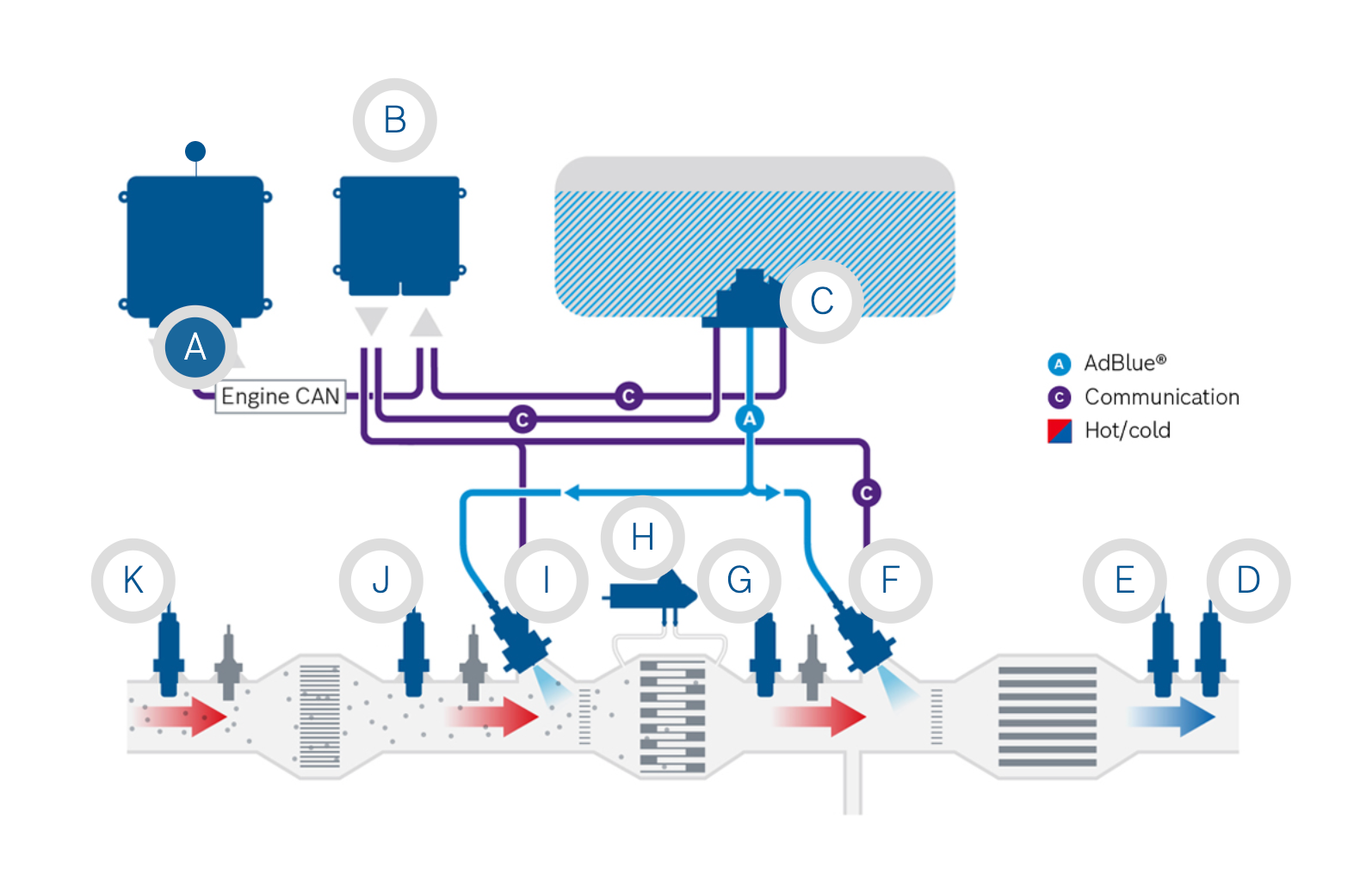
There is another part of the emissions discussion worth separating from engine size: double DEF dosing. This got a lot of attention with GM’s 8.3-liter Duramax, with many people assuming it would simply use twice the DEF, which is really not the case.
DEF is a urea-and-water solution injected into the exhaust, not diesel fuel injected into the cylinders. It produces ammonia that helps the selective catalytic reduction, or SCR, catalyst convert nitrogen oxides into nitrogen and water. It is a key part of reducing NOx emissions from coming out of the tailpipe.
In order to understand how a double DEF-dosing system works, I found a great example from Bosch. They are a large supplier and are pretty well known for developing diesel parts, including fuel pumps that Ford, Ram and GM currently use in their trucks.
Bosch’s DI-SCR setup doses DEF at two locations: one serving an SCR catalyst near the engine and another serving a catalyst farther downstream under the vehicle. The two locations operate at different temperatures. Sensors and control software adjust dosing so the system can use each catalyst where it works best.
That wider operating range matters when the exhaust is warming after a cold start, during low-load driving, under high engine load and during particulate-filter regeneration. Bosch describes the goal as maintaining strong NOx conversion across those conditions while using DEF efficiently.
In the diagram, I is the fluid-cooled dosing module suited to the hotter near-engine location, while F is the air-cooled module farther downstream. The blue lines show the DEF supply; the purple lines show communication between components.
Two dosing points do not automatically mean twice the DEF consumption. Bosch meters the quantity for the driving conditions. You could use significantly less than you do today, say, when you are driving empty, or you could use more if you are driving fully loaded down across the Arizona desert.
Why EPA27 strengthens my Power Stroke prediction
EPA27 is another big clue for expecting a new Power Stroke. If you didn’t know, this is the next evolution of emissions standards that all engine manufacturers, oil makers, diesel parts suppliers, etc., have been working on for years.
These standards call for many things, including, most importantly for this story, a 90% reduction in NOx gases.
The EPA’s Tier 4 timing page still describes the proposed change from model year 2027 to 2029 for light- and medium-duty vehicles. Our EPA27 hub brings that broader coverage together.
This uncertainty around EPA27 is causing disruptions in product launches. For example, GM, Daimler and now Shell have had us on-site to see what they have been working on, while, notably, Ford and Cummins have been able to push back their timing.
Ford has also put a vehicle-development window on the record. In its April 15, 2026 product-plan announcement, Ford said it plans to refresh 80% of its North American portfolio by volume by 2029, including the next-generation F-150 and F-Series Super Duty. That gives my timing argument support from Ford’s own vehicle plan.
My bottom line: I think Ford’s next major diesel move will include a larger Power Stroke. The proposed oil specification, EPA27, GM competition and historical references are my reasons for expecting that change, while Ford’s next-generation Super Duty plan strengthens the case for a by-2029 window. Whether the 8.0-liter prediction proves accurate is the next question. A larger diesel arriving within that vehicle-plan window remains my forecast, rather than a Ford-confirmed engine program or an EPA requirement.