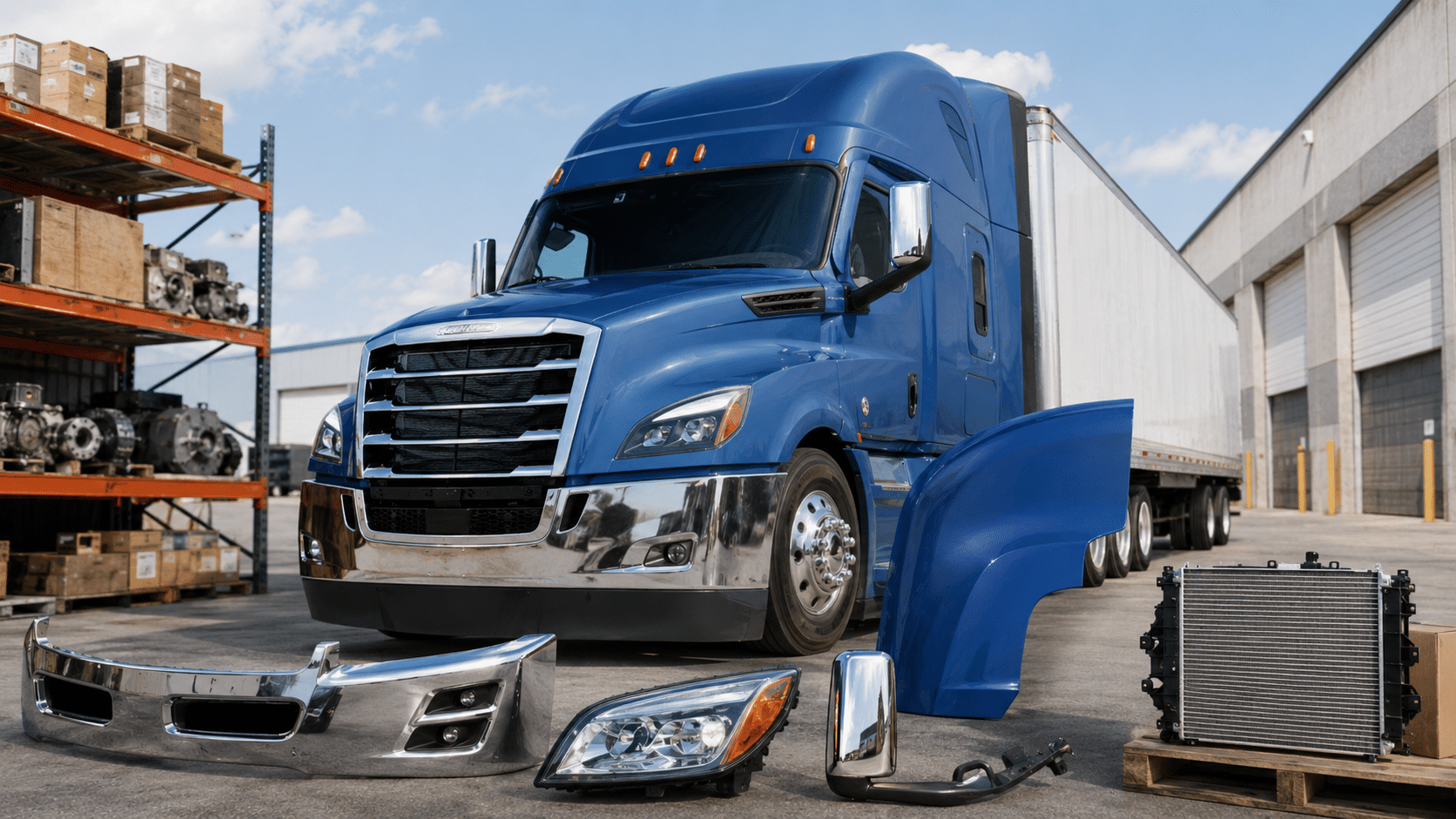
The Freightliner Cascadia has become one of the most recognizable trucks on North American highways, and for good reason. Since its introduction, it has earned a reputation for fuel efficiency, driver comfort, and a design that balances aerodynamics with everyday practicality. With so many of these trucks logging hundreds of thousands of miles each year, a steady demand for quality replacement components naturally follows. Owner-operators and fleet managers alike understand that keeping a Cascadia productive depends on timely maintenance and access to the right parts. When a repair is needed, many drivers begin by looking for semi truck parts near me in the hope of finding a fast, reliable solution. That instinct makes sense, since downtime is one of the largest hidden costs in trucking. Yet local availability is not always guaranteed for every component a specific model year requires. A nearby shop may stock common wear items but rarely carries every panel, bracket, or cooling part for both Cascadia generations. Shopping for freightliner truck parts online has become a practical and increasingly popular way to find exactly the right piece without long searches or wasted trips.
This guide takes an informational look at how the Cascadia is built, which systems tend to need attention over time, and how to approach sourcing parts with confidence. Understanding these details helps any owner make smart, cost-effective decisions and keep a hardworking truck on the road where it belongs.
Understanding the Freightliner Cascadia Platform
The Cascadia has evolved through two broad generations that matter a great deal when ordering parts. The earlier models, commonly referred to as the 113 and 125, were produced roughly from 2008 through 2017. The newer generation, known as the 116 and 126, arrived in 2018 and introduced updated styling, refined aerodynamics, and revised component designs. While the two generations share the same core purpose, many of their exterior and structural parts are not interchangeable. Bumpers, headlights, fairings, hoods, and mirrors were all reshaped between generations, so identifying the correct model year is the single most important step in any parts search.
Because the Cascadia was engineered with efficiency in mind, its body panels and fairings play a functional role beyond appearance. Aerodynamic surfaces guide airflow around the cab and chassis, reducing drag and helping the truck conserve fuel over long routes. This means that even a cracked or missing fairing panel is more than a cosmetic issue; it can quietly increase fuel consumption over thousands of miles. Recognizing how each component contributes to the whole makes maintenance decisions clearer and more rewarding.
Common Systems That Need Attention
Every long-haul truck has predictable wear points, and the Cascadia is no exception. Knowing where to look helps owners plan repairs before small problems grow into expensive ones. The categories below cover the areas that most frequently bring drivers to the parts catalog.
Front-End Protection and Bumpers
The front of the truck absorbs the daily punishment of road debris, weather, and the occasional minor impact. Bumpers, bumper corners, inner reinforcements, and trim pieces all take the brunt of that abuse. The Cascadia offers steel and chrome bumper options in both fourteen-inch styles, with and without fog light holes, so owners can match the configuration their truck originally used or upgrade to a look they prefer. Many drivers also add grille guards and deer guards for extra protection on rural routes, where wildlife collisions are a genuine risk. These guards rely on properly matched mounting brackets to transfer impact safely to the frame, which is why bracket sets are a category of their own. Choosing the correct bracket set for a specific generation matters just as much as choosing the guard itself, since a secure mount is what allows the entire protection system to do its job. Even a small mismatch in hardware can leave a guard loose or misaligned, so pairing the right components together is always worth the extra attention.
Lighting and Visibility
Clear vision after dark is essential for safe operation, and lighting is one of the most valued upgrade areas on any Cascadia. Headlights are available in both halogen and modern LED forms, with LED units offering brighter output, a whiter beam closer to daylight, and a significantly longer service life. Fog lights, headlight trims, and mounting brackets round out the lighting category. Alongside the headlights, mirrors deserve attention as well. Heated door mirrors and hood mirrors keep the driver aware of surrounding traffic and blind spots, and heated versions stay clear in frost, rain, and snow. Together, well-maintained lighting and mirrors make a meaningful difference in both safety and driver confidence.
Cooling and Engine Support
Stable engine temperatures are critical for a truck that spends its days under heavy load. Cooling components such as charge air coolers, condensers, and radiators wear gradually with age and repeated heat cycling. When these parts begin to fail, the risk of costly overheating rises quickly, so proactive replacement is a wise investment. Related items like coolant reservoir tanks and water pumps support the same system and are commonly refreshed during larger cooling repairs. Because these components are designed for straightforward replacement, addressing them promptly keeps downtime short and performance dependable.
Hoods, Fairings, and Exterior Panels
The Cascadia’s exterior is made up of numerous panels that protect the truck and shape its aerodynamic profile. Hoods, hood fenders, cowl panels, grilles, splash guards, and quarter fenders all contribute to both function and appearance. Fairing panels and cabin fairings smooth airflow along the sides of the truck, while drop visors add a finished, professional look to the cab. Over years of service, these pieces can crack, fade, or loosen, and replacing them restores both the truck’s efficiency and its clean, cared-for presentation.
How to Source Cascadia Parts With Confidence
With so many components involved, a clear approach to ordering saves time and prevents costly mistakes. The most important habit is confirming the exact generation and model year of the truck before purchasing anything. A bumper or headlight built for a 2008 to 2017 Cascadia will differ from one made for a 2018 or newer model, and matching the correct year ensures a clean, bolt-on fit. Checking whether a part requires specific hole patterns, brackets, or accessories is equally valuable, since these details determine how smoothly installation will go.
Detailed product listings make this process far easier. Clear photographs, specifications, and year ranges allow an owner to compare options and select the right piece with confidence. At tacoma-truckparts.com, Cascadia components are organized by system and generation, covering grille guards, bumpers, fairings, lighting, hoods, cooling, mirrors, and a range of practical accessories. This kind of structured catalog reduces the chance of ordering the wrong item and helps drivers get back on the road quickly.
The Advantages of Ordering Online
Buying parts online offers several benefits that appeal to busy drivers and fleet managers. A well-stocked online catalog provides access to components that a nearby shop may not carry, especially for specific generations or less common pieces. Fast order processing and prompt shipping mean that even an urgent repair can be handled without a lengthy wait. Secure checkout and knowledgeable support add further peace of mind, ensuring the buying experience is as dependable as the parts themselves. For many owners, the ability to compare categories, read clear descriptions, and order at any hour makes online sourcing the most convenient option available.
Planning Maintenance for the Long Haul
Preventive maintenance is what allows a Cascadia to keep earning reliably for years. Inspecting lighting, cooling, and exterior components on a regular schedule lets small issues surface before they strand a driver on the road. Keeping track of which parts match a particular truck also shortens the response time when something does need replacing. Simple habits, such as noting the model year and generation and checking mounting hardware during any repair, pay off in smoother installations and fewer surprises. A truck that is maintained thoughtfully not only performs better but also holds its resale value, since a clean, well-kept Cascadia signals reliability to any future buyer.
Keeping Your Cascadia Road-Ready
The Freightliner Cascadia has earned its place as a dependable workhorse, and keeping one in top condition is well within reach for any attentive owner. By understanding how the platform is built, recognizing the systems that need periodic care, and approaching parts sourcing with a clear strategy, drivers can minimize downtime and maximize the return on their investment. Whether the need is a fresh bumper, a brighter set of headlights, a replacement cooling component, or an aerodynamic fairing panel, matching the right part to the right truck is the foundation of a successful repair. With quality components, correct fitment, and a convenient way to shop, a Cascadia can keep delivering strong, efficient performance mile after mile, ready for whatever the next long route brings. A little planning today, combined with dependable parts and clear product information, turns routine upkeep into a straightforward task rather than a stressful scramble. That is the real advantage of treating maintenance as an ongoing habit instead of a last-minute reaction.