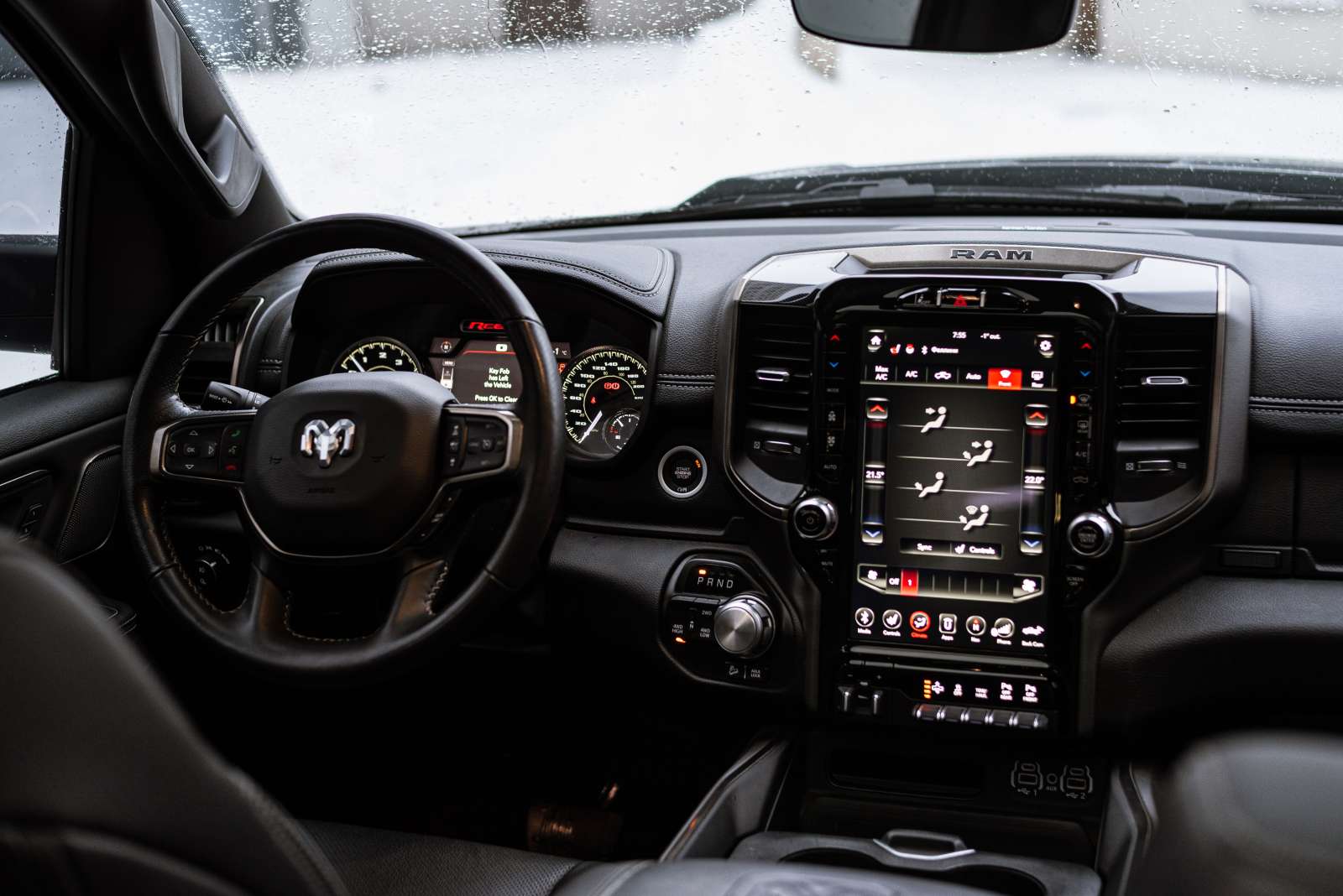
When the touchscreen in an older Ram 1500 stops responding, a clean 8.4-inch Uconnect unit from a salvage truck can look like a straightforward replacement. The faceplate appears to match, the seller says the unit came from a running truck, and the price is attractive. None of that confirms it will work in the buyer’s truck.
A used factory radio can fit the dash and power on while leaving important features unavailable. Before buying it or scheduling installation, the owner should compare the truck’s original configuration with the replacement unit’s exact part number and specifications, then clarify what the installer will do if the unit is locked, defective, or incompatible.
A Factory Ram Radio Has to Match More Than the Dash Opening
A listing that says a unit “fits Ram trucks” may describe little more than a general physical fit. Two trucks can share a dash opening or screen size while using different radio hardware and factory configurations.
Match the replacement unit to the truck’s model year and exact model, whether it is a 1500, 1500 Classic, 2500, or 3500. Trim and original equipment also matter because navigation, a factory amplifier, and the speaker package may be tied to a particular radio configuration.
Start with the exact radio or Mopar part number and, where available, the sales code or original build information. The Uconnect generation, screen size, and connector layout should also match. Depending on the truck, the radio may interact with the backup camera, steering-wheel controls, vehicle settings, or climate functions displayed on the screen. The level of integration varies by model year, trim, and factory system.
Listings based only on screen size deserve extra caution. Different underlying units can use the same 8.4-inch display across model years, while navigation, connected services, and amplifier outputs can change which functions the truck’s electronics are configured to support.
Verify the Truck and the Unit Before Buying
Before paying, ask for clear photos of the front, rear connectors, and identification label. Obtain the complete part number and serial number, plus the donor vehicle’s year, model, trim, and VIN if available. Ask which functions were tested, what the return policy covers, and whether the seller can provide a receipt or other proof of purchase.
If an otherwise compatible replacement unit powers up with an anti-theft prompt, the unit’s serial number is the key detail needed to request a Ram radio code from FindRadioCode.com.
A seller’s statement that the unit came from a running truck is useful background, but it does not confirm that the radio was fully tested or that it will work in a different Ram. A donor VIN can help identify the radio’s original configuration, but it does not prove that the same configuration exists in the receiving truck.
Save the original listing and any written compatibility statement with the receipt. If a shop will verify the part before installation, send the label photos and the receiving truck’s build information ahead of the appointment instead of waiting until the unit is on the workbench.
Record the Serial Number Before Installation
Photograph the replacement unit’s label and retain its serial number, full part number, seller information, and purchase record. Once the radio is back in the dash, reading a rear label may require removing the unit and surrounding trim again.
Keep three issues separate: physical and electronic compatibility, any programming or configuration required for integrated features, and the anti-theft prompt itself. The correct code can address that prompt, but it cannot correct mismatched connectors, add unsupported functions, or repair a defective radio.
Set Expectations for a Customer-Supplied Used Unit
An owner may buy the used radio and then ask a repair shop, audio installer, or dealership to install it. Before the appointment, confirm whether the shop accepts customer-supplied used electronics and who is responsible for verifying compatibility.
Also ask whether programming may be required, whether labor remains chargeable if the unit is locked or incompatible, and what part of the work the shop is willing to warranty. Policies vary, so getting the terms in writing can prevent a disagreement after the dash is opened.
Follow the owner’s manual or applicable service procedure before disconnecting power or unplugging the radio. If the procedure requires battery disconnection, treat it as an installation step; it does not predict whether the replacement unit will request an anti-theft code.
Test Every Integrated Function
A radio that powers on and receives an FM station has passed only the most basic test. Depending on the truck’s original equipment, verify audio from every speaker, the touchscreen and physical controls, steering-wheel controls, Bluetooth pairing, USB ports, and the backup-camera display. When equipped, also test navigation, satellite radio, factory amplifier behavior, and any vehicle or climate settings handled by the screen.
The Uconnect generation affects what is available to test. Uconnect 5 became available across the 2022 Ram lineup with a broader set of connected and customizable features, as Pickup Truck + SUV Talk explained in its overview of Uconnect 5 in the 2022 Ram lineup. That generational difference is another reason screen size alone cannot establish compatibility.
Run every relevant check before the dash is fully reassembled or the seller’s return period expires. A later unit may not integrate with an older truck exactly as it did with the donor vehicle.
The Cost of Getting the Match Wrong
Treat a used Ram radio as an electronic module tied to the truck’s factory configuration, not as a screen selected by size alone. Matching the part number, original equipment, and Uconnect generation reduces the risk of buying the wrong unit, while recording the serial number can prevent another removal if a code prompt appears.
A low purchase price means little if the unit adds diagnosis, programming, return shipping, or a second installation to the bill.