By Big Mission Automotive
A clean pickup can spend most of its life pulling near its limit. Fresh tyres and polished paint will not show how often the transmission ran hot, whether the trailer brakes worked or how many miles the rear suspension carried a heavy tongue weight.
When a used truck or SUV has a towing history, inspect the systems that absorbed that work. The goal is to understand the duty cycle, rather than reject every vehicle that has pulled a trailer.
Ask towing questions that produce details
“Did you tow with it?” invites a yes or no. Ask what the vehicle pulled, the loaded trailer weight, hitch type, usual distance, terrain and frequency. Ask when it last towed and why the owner stopped.
Specific answers can be checked against the vehicle. A seller who pulled a small utility trailer twice a year describes a different duty cycle from one who hauled a large camper through mountain passes every month.
Request maintenance records and look for services related to the manufacturer’s severe-duty or towing schedule. Check for transmission, transfer-case, differential, cooling-system and brake work applicable to that model. Missing records do not prove neglect. They increase the amount the inspection must answer.
Verify the rating for the exact configuration
Tow ratings can change with engine, axle ratio, drivetrain, wheelbase, cab, bed, options and payload. A rating quoted for the model line may not apply to the truck in front of you.
Use the VIN, certification labels and owner’s manual to confirm gross vehicle weight, axle limits, payload and tow guidance for that configuration. The National Highway Traffic Safety Administration reminds drivers in its tire and loading guidance to follow the vehicle’s load information and owner’s manual when carrying or towing weight.
Remember that passengers, tools, accessories and cargo consume payload before trailer tongue weight is added. A truck can remain under a headline tow rating while exceeding another limit.
Inspect the hitch as a record of use
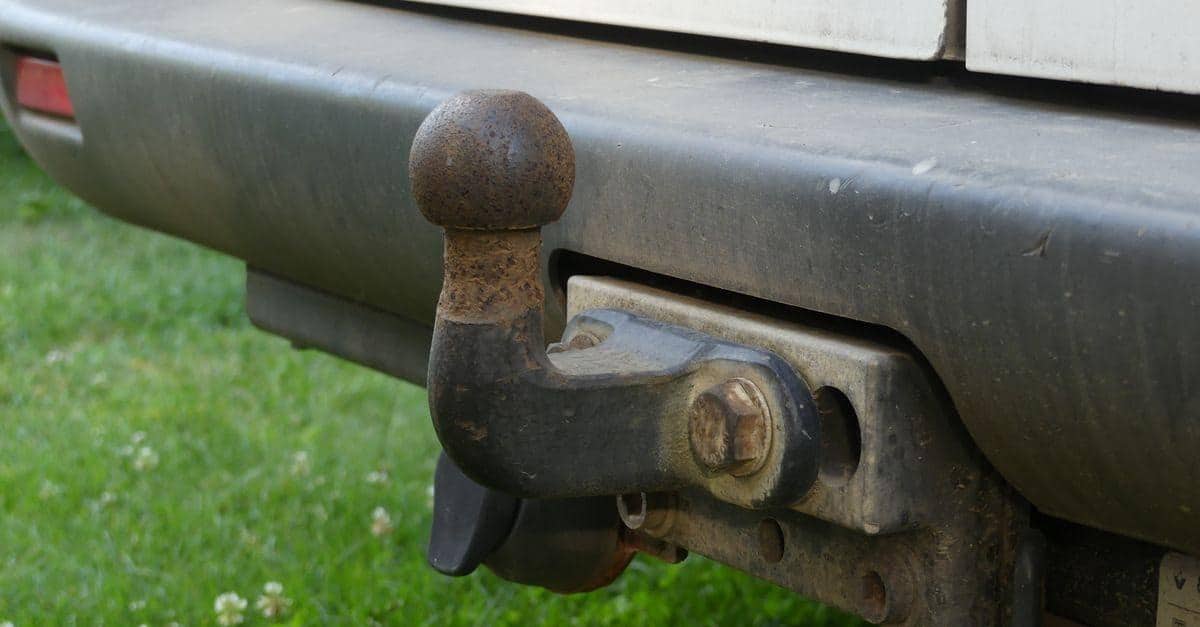
Look at the receiver, mounting points, safety-chain loops and surrounding frame. Heavy surface wear is expected on a used hitch. Elongated holes, cracked welds, bent metal or fresh paint over one small area deserve closer review.
Check whether the receiver class and ball mount match the towing story. Aftermarket weight-distribution or fifth-wheel hardware should be mounted correctly for the vehicle. Missing brackets, extra drilled holes or improvised wiring can reveal past changes.
Test the trailer connector with proper equipment. Corrosion, damaged pins and loose wiring may indicate water exposure or rushed installation. Confirm the integrated brake controller and tow-mode controls operate without warning messages.
Read tyres and suspension together
Uneven rear-tyre wear can point to alignment, axle, bearing or suspension concerns. Compare tyre brand, size, load rating and date codes across all positions. New rear tyres with old fronts are worth asking about.
Inspect rear springs, shocks, bump stops, air-assist equipment and mounting points. A sagging stance can be visible, but some wear appears only when the vehicle is lifted and measured. Look for leaks, cracked bushings, broken leaves and signs that components have contacted their travel limits.
Airbags or helper springs can be useful towing equipment. They do not raise the manufacturer’s axle, tyre or vehicle rating. Inspect the lines, brackets and controls, then verify that the installation did not damage adjacent parts.
Check heat-managed systems
Towing turns load into heat. The cooling system, engine oil, transmission and brakes all have to manage it.
Inspect coolant condition, hoses, radiator area, fans and evidence of leakage. Check transmission behaviour from cold through full operating temperature. Delayed engagement, flare, harsh shifts or shudder under load require diagnosis.
Look for fluid changes documented at sensible intervals for the actual use. A recent fluid service can be good maintenance. It can also appear shortly before sale because a symptom developed. The road test and scan data help distinguish the two.
Brake inspection should include pad and rotor measurements, fluid condition and operation of the parking brake. A trailer with functioning brakes reduces demand on the tow vehicle, while a poorly set system can transfer too much work to one end of the combination.
Scan more than the engine module
A dashboard without warning lights is a starting point. Scan the powertrain, transmission, four-wheel-drive, brake, suspension and body systems available on the vehicle.
Record current, pending and history codes before clearing anything. Freeze-frame or event data can show the conditions under which a fault set. Ask whether the battery was recently disconnected, since that can remove some clues and reset readiness monitors.
Test tow mode, four-wheel drive, hill-descent functions, cameras and trailer-related driver aids fitted to the vehicle. A feature listed in the advertisement should work during the inspection.
Use a road test that reflects the purchase
Drive the vehicle cold, then continue until it reaches operating temperature. Include low-speed turns, rough pavement, a steady higher-speed section and firm braking where safe.
Listen for driveline clunks as load moves on and off the throttle. Watch temperatures and shift quality. Check steering response and vibration. A truck that behaves well for the first five minutes may change after the fluids warm.
Do not attach a trailer for a test without the owner’s permission, correct equipment and suitable insurance. A professional inspection can identify whether a loaded test is appropriate.
Make the inspection independent
The Federal Trade Commission advises buyers that a history report does not replace an independent pre-purchase inspection. That is especially important when the truck’s value depends on work history the report cannot show.
An inspection from a shop such as Big Mission Automotive can put the vehicle on a lift, document wear, scan its systems and separate current defects from normal evidence of towing use. The report can support a price adjustment, a repair request or a decision to walk away.
A tow vehicle does not need a gentle past. It needs a past that its condition, records and seller can explain. When those three stories agree, years of trailer duty can be evidence of useful work instead of a hidden reason for the sale.