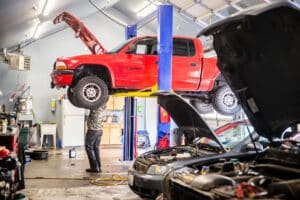
There is a ritual most truck owners run through before they sell. New tires. A fresh set of brakes. Maybe a coat of touch-up paint on the tailgate where a decade of loading scuffed it raw. The thinking is simple. A truck that looks cared for sells for more. The thinking is also, in most cases, wrong.
A truck is not a sedan. It earns its keep. It tows, it hauls, it sits in job-site mud, and it racks up miles a commuter car never sees. By the time an owner is ready to sell, the average work truck has absorbed years of wear that no single weekend of repairs can undo. So the owner spends anyway. Twelve hundred dollars on tires. Eight hundred on a brake job. A few hundred more on a detail. Then they list it and find out the buyer does not care.
Here is why.
The Repair Math Nobody Runs
When you spend $2,000 getting a truck sale-ready, you are betting the sale price climbs by at least $2,000. It almost never does. Buyers price a used truck on year, mileage, and model, then adjust down for obvious problems. Fresh tires might add a couple hundred dollars in a private buyer’s head. They do not add back the twelve hundred you paid. The distance between what you spend and what you recover is pure loss, and on a truck, where parts and labor run higher than on a compact car, that distance is wider than owners expect.
The instinct behind all of it is the fear that a rough-looking truck gets lowballed into the ground. That fear is real when your only buyer is one stranger answering a classified ad at nine at night. It stops being real the moment the buyer is a company that reconditions vehicles itself. That is the whole model behind Fast Penny Cars, which buys trucks directly, does the reconditioning in-house, and builds the offer on what the truck actually is, not on how recently you cleaned it.
Any Condition Means Any Condition
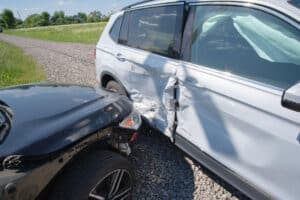
The phrase gets thrown around loosely, so it is worth being exact. A truck with a slipping transmission, a salvage title, 240,000 miles, or a bed you would be embarrassed to photograph is still a truck with value. It has an engine, a frame, a drivetrain, and a market. A buyer that takes vehicles in any condition, including trucks that will not start, is not doing you a favor. They are pricing the parts and the reconditioning labor into an offer and moving on with their day.
That changes your job completely. You stop being an unpaid repair shop. You go back to being someone who owns a truck and wants to sell it.
It also kills the worst part of the pre-sale spend, which is the guessing. You never actually know whether the new tires will pay for themselves. You find out weeks later, after the money is already gone, when the best offer lands flat anyway. Skip the repairs and you skip the bet entirely. There is no wager to lose because you never placed one.
What Selling As-Is Actually Looks Like
The process is closer to getting a quote than staging a sale. You enter the truck’s details and get a number, usually in well under a minute. If the number works, a quick verification confirms the condition, the offer locks in for seven days, and payment lands within a day or two. Free towing means a truck that does not run is not your problem to move. Anyone who wants to see exactly how the buying process works before committing can walk through the steps first, and not one of them asks you to spend a dollar prepping the vehicle.
For a company that has bought and reconditioned more than two thousand vehicles, a worn truck is not a warning sign. It is a Tuesday. The 99 percent offer acceptance rate exists because the offers are built for trucks in the condition trucks are actually in, not the condition owners wish they were in after a weekend and a credit card.
Run the Other Number First
So before you book the brake job and order the tires, do the arithmetic in the other direction. Add up what you are about to spend to make the truck presentable. Then get an offer on it exactly as it sits, dents and all. If the as-is offer plus the repair money you kept in your pocket beats the fixed-up offer, and it usually will, you have your answer. The truck was ready to sell the whole time. You were the one getting it ready for no reason.