
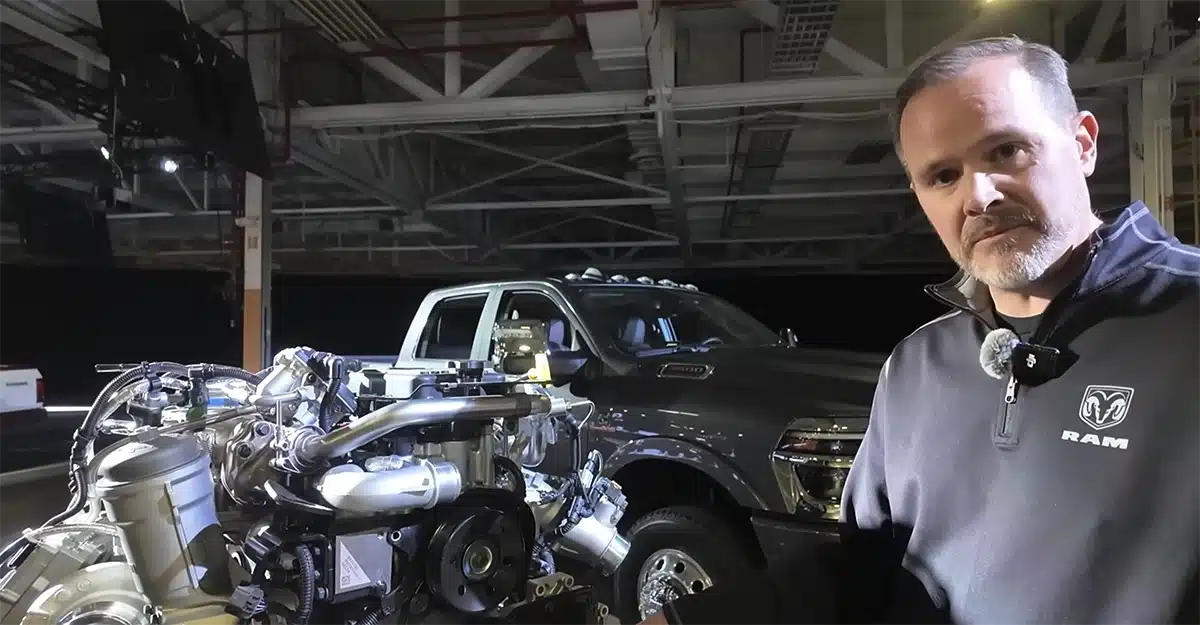
During the launch of the new Cummins 6.7-liter turbo diesel engine, I sat down with Doug Killian, Stellantis Chief Vehicle Synthesis Manager, to walk through the engineering changes. While the new engine features improvements to fuel delivery, serviceability and refinement, one question quickly surfaced from viewers after I published my first video: Why did Cummins continue using hydraulic lifters instead of returning to flat tappets?
Why Cummins Chose Hydraulic Lifters Instead of Flat Tappets
The question about hydraulic lifters isn’t new. Diesel owners have watched hydraulic lifter failures become a hot topic in some gasoline engines, leading many to wonder whether a traditional solid lifter design would be more reliable.
According to Killian, Cummins considered the tradeoffs and chose to continue using hydraulic lifters.
“Previous versions of the motor did have solid lifters,” Killian explained. “Solid lifters are great mechanically. There does tend to be some noise issues with them.”
Instead, Cummins believes hydraulic lifters offer better overall refinement while maintaining valve train durability.
Killian also acknowledged the company experienced supplier quality issues when hydraulic lifters were first introduced on an earlier version of the engine.
“We got through that, learned a little bit from it, took care of the situation, and continue to refine and evolve them,” he said. “We’ve really had good performance on the hydraulic lifters in the Cummins 6.7 since then.”
In other words, Cummins says today’s hydraulic lifters aren’t simply the same parts from years ago. They have continued to evolve through supplier improvements and engineering refinements.
Cummins Isn’t Alone in Modern Diesel Valvetrain Design
While some owners still prefer the simplicity of solid lifters, Cummins isn’t taking a different path than the rest of the heavy-duty truck market.
Ford’s 6.7-liter Power Stroke and GM’s 6.6-liter Duramax also rely on modern hydraulic valvetrain designs rather than traditional adjustable solid lifters.
The reason is similar across all three manufacturers. Engineers today must balance durability, maintenance requirements, refinement, fuel economy and emissions regulations while designing engines expected to last hundreds of thousands of miles.
Hydraulic lifters eliminate periodic valve lash adjustments, reduce valvetrain noise and improve day-to-day drivability. Solid lifters remain mechanically simple, but they typically require additional maintenance and produce more valvetrain noise.
For Cummins, the company believes years of refinement have addressed the early concerns surrounding its hydraulic lifter design.
The New Cummins Engine Gets More Than Just Lifter Updates
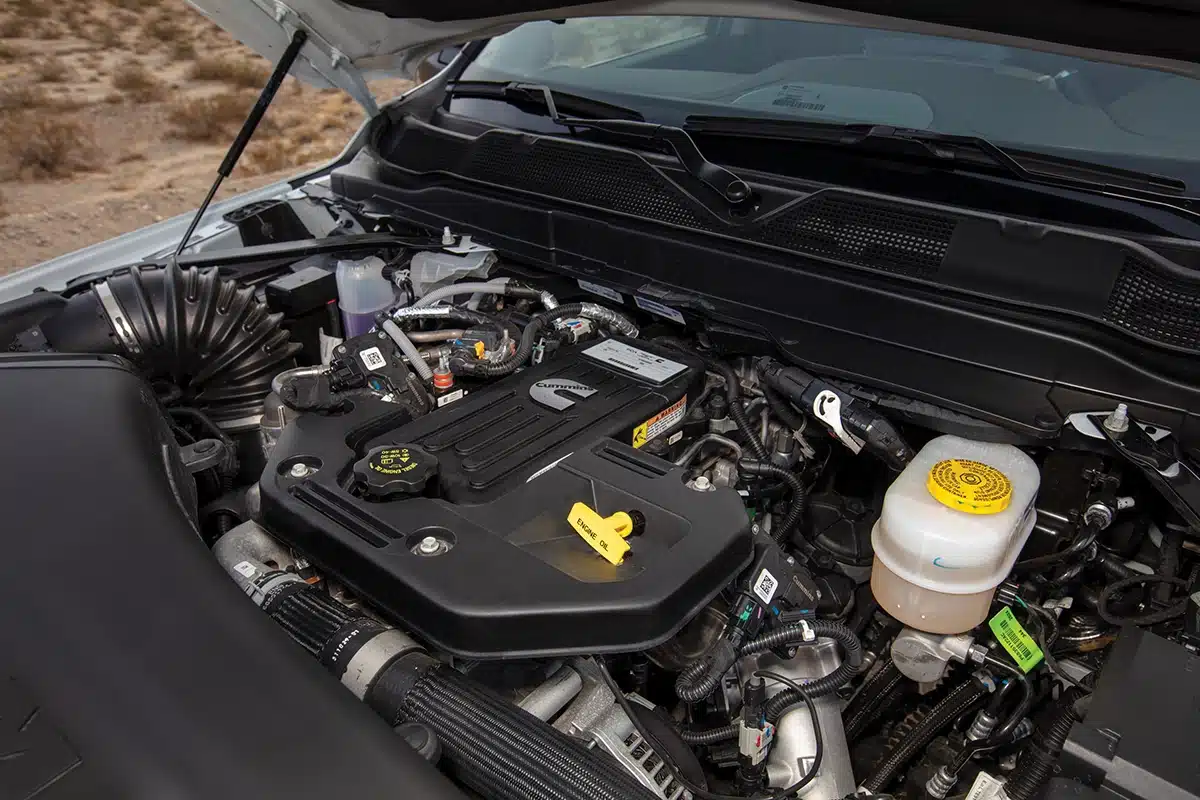
The valvetrain wasn’t the only area engineers revisited.
Although the engine remains a 6.7-liter inline-six producing more than 1,000 lb-ft of torque, nearly every major system received updates.
Among the biggest improvements are:
| New Cummins Updates | Benefit |
|---|---|
| Helical timing gears | Reduced gear whine while preserving classic Cummins sound |
| 2,200-bar fuel pressure | Better fuel atomization, increased power and lower emissions |
| Cast aluminum intake manifold | Improved airflow and better cylinder balance |
| Larger intake valves | Increased breathing and combustion efficiency |
| Over-the-air engine software updates | Future drivability improvements without dealer visits |
| Individual glow plugs | Faster cold-weather starts |
| Top-mounted fuel filters | Easier routine maintenance |
| Top-mounted oil filter | Cleaner, faster oil changes |
| New CP8 high-pressure fuel pump | Greater durability and improved resistance to fuel contamination |
Killian said replacing the previous spur gears with helical gears removes much of the mechanical gear whine while allowing the familiar Cummins diesel sound to come through more clearly. Engineers also increased fuel pressure to more than 30,000 psi and redesigned the intake system with a cast aluminum manifold and larger intake valves to improve airflow and combustion efficiency.
Easier Maintenance Was a Major Engineering Goal

Beyond performance, Cummins focused heavily on making routine maintenance easier for both fleet operators and individual owners.
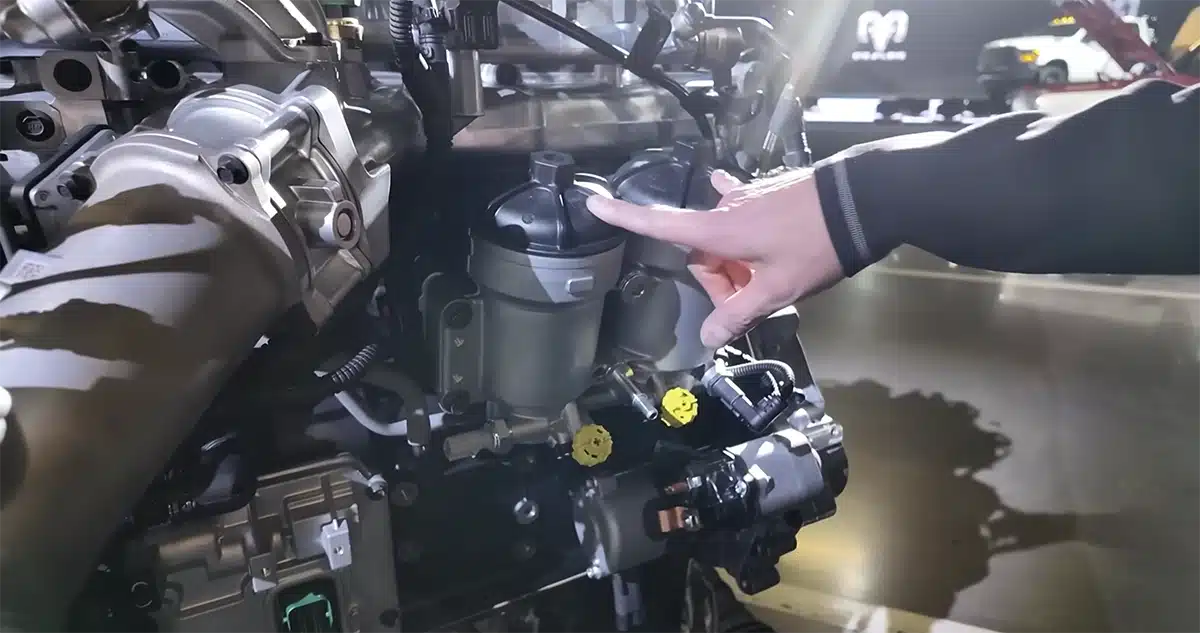
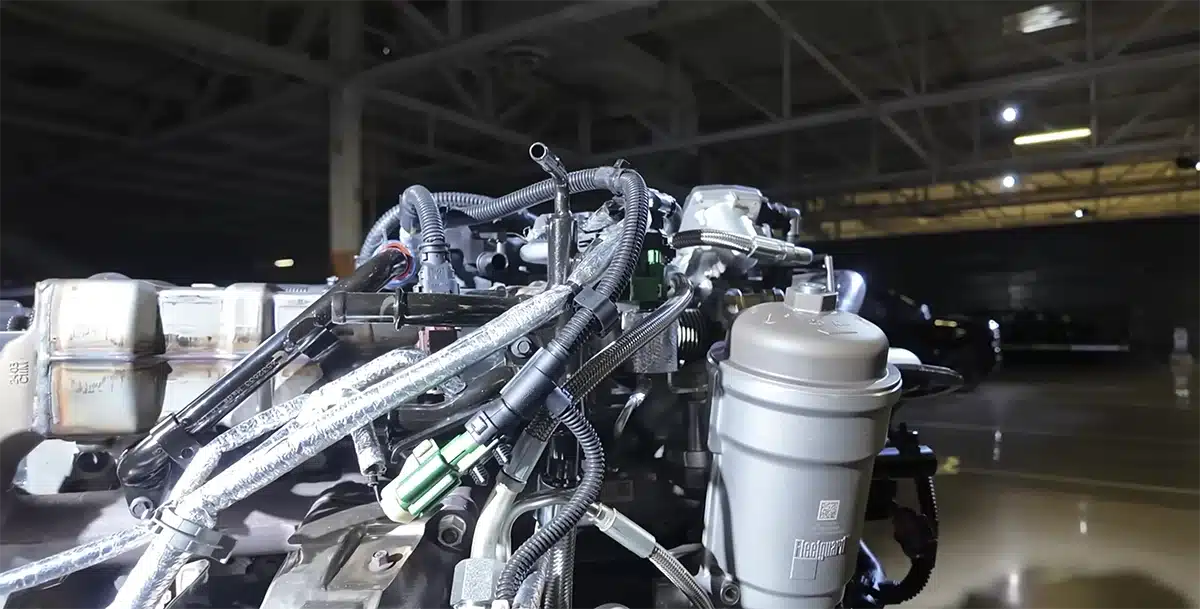
Both fuel filters now mount on top of the engine instead of requiring owners to crawl underneath the truck. The oil filter has also moved to the top of the engine, allowing oil changes to be completed more cleanly and efficiently.
Another notable upgrade is the new CP8 high-pressure fuel pump.
The previous CP4 pump generated years of discussion among diesel owners because of durability concerns. Killian said the new CP8 features redesigned internal materials and components that dramatically improve robustness.
He even revealed Cummins developed what engineers called a “fuel pump killer test” during development.
According to Killian, while the previous CP4 eventually passed the company’s durability testing, the new CP8 “just crushes it.”
Disclosure: Links in this article are affiliate or sponsored links, which means we earn a commission if you click on them and make a purchase. This helps support the website and allows us to continue creating content.













No replies yet
Loading new replies...
Administrator
Join the full discussion at the Forum Pickuptrucktalk →