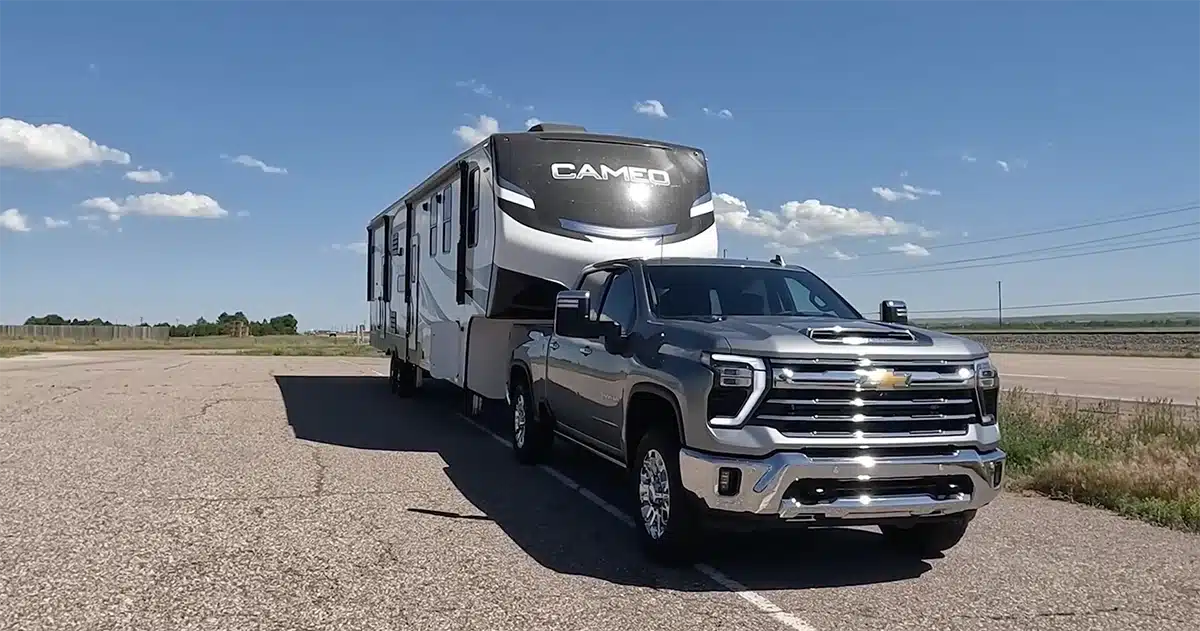
A Chevy Silverado 3500 Duramax towing a 15,000-pound fifth-wheel camper sounds like an ideal pairing. The truck has the power, payload capacity and maximum towing rating to handle the load, but does that mean a single-rear-wheel truck is the best choice?
I tested that exact combination with a 44-foot fifth-wheel camper and a Chevrolet Silverado 3500 HD LTZ crew cab. The truck used the 6.6-liter Duramax diesel, 10-speed automatic transmission and single-rear-wheel configuration.
The Silverado never felt short on power. It accelerated confidently, kept its transmission temperature under control and returned surprisingly respectable fuel economy. However, once the wind started blowing, the advantages of a dually became much easier to understand.
Silverado 3500 Duramax towing specifications
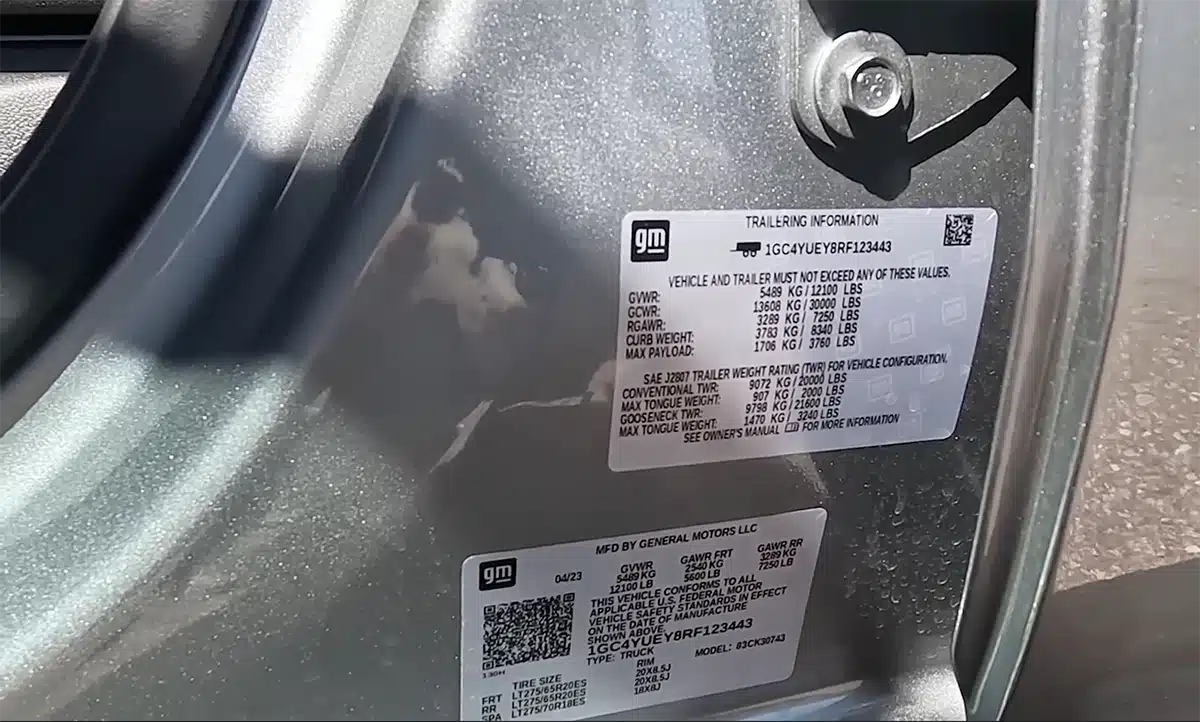
The Silverado 3500 HD used for this test had a gross vehicle weight rating of 12,100 pounds and a gross combined weight rating of 30,000 pounds.
According to the truck’s trailering information:
- Curb weight: 8,340 pounds
- Maximum payload: 3,760 pounds
- Fifth-wheel or gooseneck towing capacity: 21,600 pounds
- Conventional trailer towing capacity: 20,000 pounds
- Gross combined weight rating: 30,000 pounds
- Rear axle ratio: 3.42
- Wheel size: 20 inches
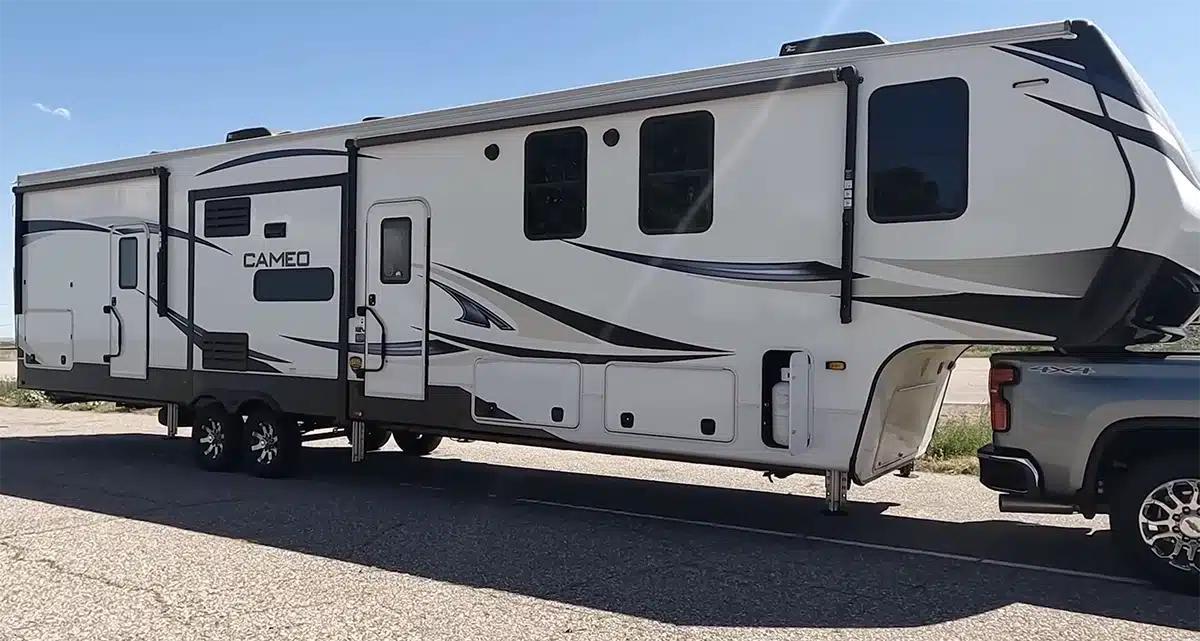
The fifth-wheel was a 44-foot Keystone RV camper with an unloaded vehicle weight of approximately 13,900 pounds. With cargo and other items inside, its estimated loaded weight was around 15,000 pounds. Its gross vehicle weight rating was 16,500 pounds.
That placed the camper well below the truck’s advertised maximum fifth-wheel towing capacity. It was still an enormous trailer, particularly in terms of its length and the surface area exposed to crosswinds.
The Duramax-powered LTZ had a sticker price of approximately $83,000. That is a lot of money, but the diesel engine alone represented roughly $10,000 of the truck’s price.
How did the Silverado 3500 handle 15,000 pounds?
The Silverado 3500 Duramax had no trouble getting the truck and camper combination up to highway speed. During the test, it accelerated to 70 mph without drama.
The Duramax’s power delivery was one of the highlights. It felt strong leaving a stop and had enough reserve power to merge onto the highway comfortably. Acceleration became much slower at higher speeds, particularly when attempting to accelerate from 70 toward 80 mph.
That is not necessarily a criticism. Passing another vehicle quickly with a 44-foot, 15,000-pound fifth-wheel attached is not something a driver should do casually. The test simply showed the difference between having enough power to maintain highway speed and having enough power for rapid passing.
Braking performance was also impressive. The truck slowed the camper in a controlled manner without the rear of the truck feeling like it was being pushed around. The diesel exhaust brake helped manage speed and reduced the amount of work required from the service brakes.
The transmission temperature showed 178 degrees after approximately 31 miles of towing. Ambient temperatures were around 90 degrees, making that a reassuring result.
Towing fuel economy was better than expected

The Silverado’s towing computer separated fuel economy while towing from its normal fuel economy history. This allowed the truck to track mileage specifically with the camper attached.
Early in the drive, the truck displayed approximately 8 MPG after 53 miles of recorded trailer use. At the turnaround point during my test, it showed 9.1 MPG after 31 miles.
Fuel economy fluctuated between approximately 8.5 and 9.5 MPG depending on vehicle speed and driving conditions.
That is not remarkable fuel economy in isolation, but it is respectable considering the camper weighed approximately 15,000 pounds and measured 44 feet long. Speed, terrain, temperature and wind can all have a substantial effect on towing mileage.
The route had relatively little elevation change. The test began at approximately 4,000 feet above sea level and climbed by only around 400 feet. Wind was minimal at the beginning of the drive, although it increased closer to Guernsey, Wyoming.
Owners should not assume they will always see 9 MPG while towing a camper this large. However, the result showed the Duramax could move 15,000 pounds without burning fuel at an alarming rate.
Single rear wheel or dually for a fifth-wheel?
This was the most important part of the test.
The single-rear-wheel Silverado 3500 had enough rated capacity to tow the camper. It had enough engine power, sufficient braking performance and a properly configured fifth-wheel hitch.
That did not mean it felt as stable as a dually.
When the wind increased to an estimated 15 to 20 mph, I could feel the rear of the truck moving around. It was not uncontrollable, and my towing experience kept it from becoming a white-knuckle situation. Still, the movement was noticeable.
A dually places two tires on each side of the rear axle. The additional tire contact and wider rear track help the truck feel more planted, especially when towing a tall fifth-wheel through crosswinds.
The tradeoffs are familiar. A dually is wider, more difficult to park and comes with two additional tires to purchase and maintain. It may also be unnecessary for an owner who only occasionally tows a smaller trailer.
For someone regularly pulling a 44-foot camper weighing around 15,000 pounds, however, I would choose the dually. The added stability and peace of mind would be worth the additional maintenance and inconvenience.
Towing cameras provide a better view
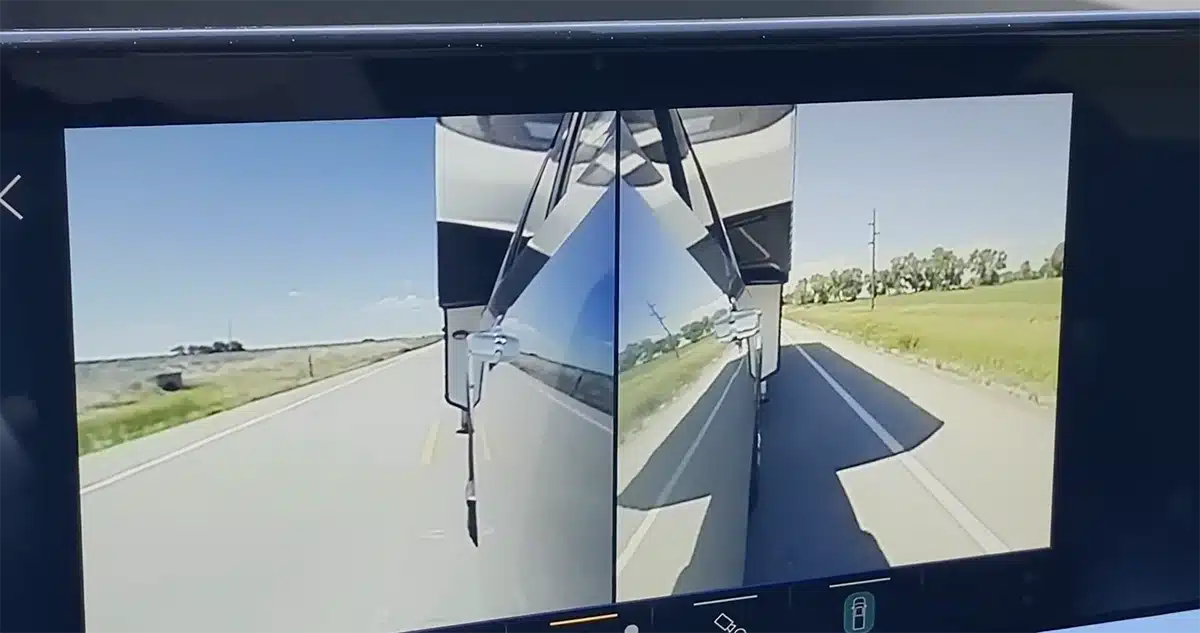
One of the Silverado’s most useful towing features was its camera system. Unlike older systems that shut off the camera image once the truck reached a certain speed, these cameras could remain active while driving.
The driver could switch between different views, including a camera looking into the bed. That made it possible to check the fifth-wheel connection without pulling over.
An auxiliary camera could also be connected to provide a view behind the camper or even inside an enclosed trailer. A camera mounted inside a camper could help the driver check whether a refrigerator door, cabinet or other item had opened while traveling.
A rear-mounted trailer camera would be even more valuable. A 44-foot camper creates a massive blind spot, and being able to see directly behind it can make changing lanes considerably easier.
The truck also included trailer profiles, maintenance reminders, a predeparture checklist, trailer-light testing and a gross combined weight alert. These features do not replace proper loading or safe driving, but they make managing a large trailer easier.
Is the Silverado 3500 Duramax enough, or do you need a dually?
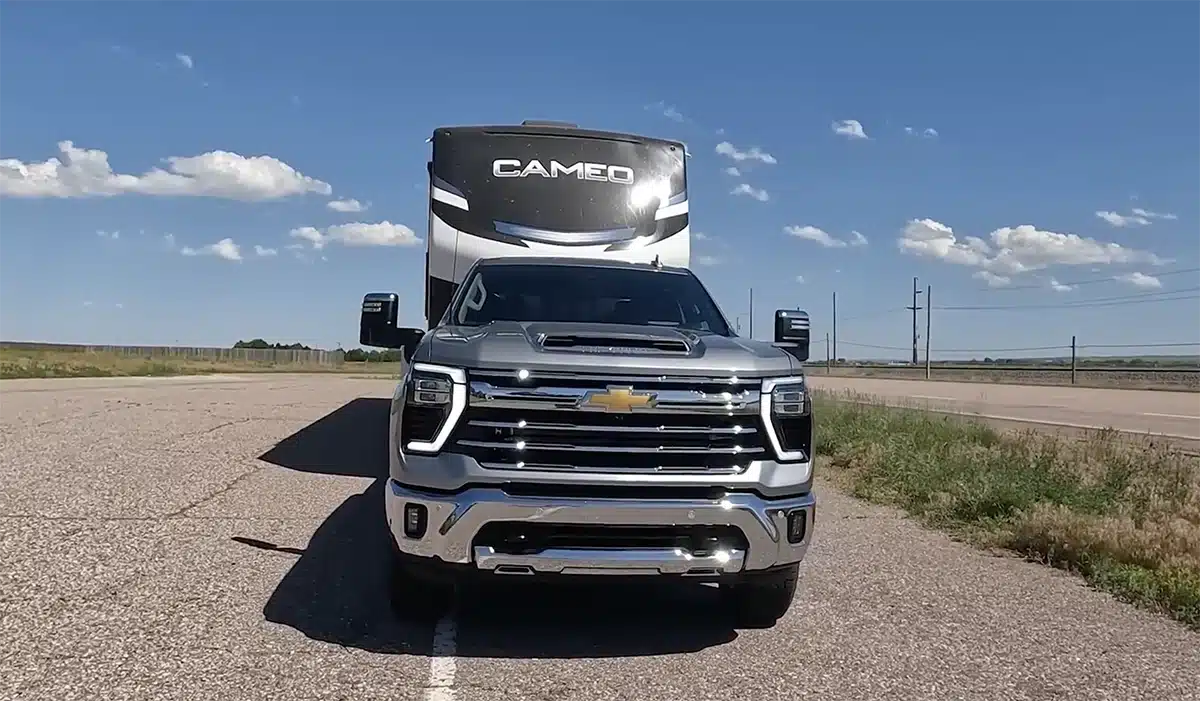
The Chevy Silverado 3500 Duramax proved it had enough power and capability to tow a 15,000-pound fifth-wheel. The engine never felt overworked, the transmission temperature remained under control and fuel economy approached 9 MPG during the test.
The real question is not whether the Silverado 3500 can handle the weight. It clearly can.
The question is how frequently you plan to tow, where you plan to travel and how much stability you want when the wind begins pushing against 44 feet of camper.
For occasional towing in relatively calm conditions, a properly configured single-rear-wheel Silverado 3500 can do the job. For frequent trips, long highway drives or regular travel through windy areas, I would buy the dually.
When towing something this large, maximum capacity is only part of the equation. Driver confidence and stability matter just as much.