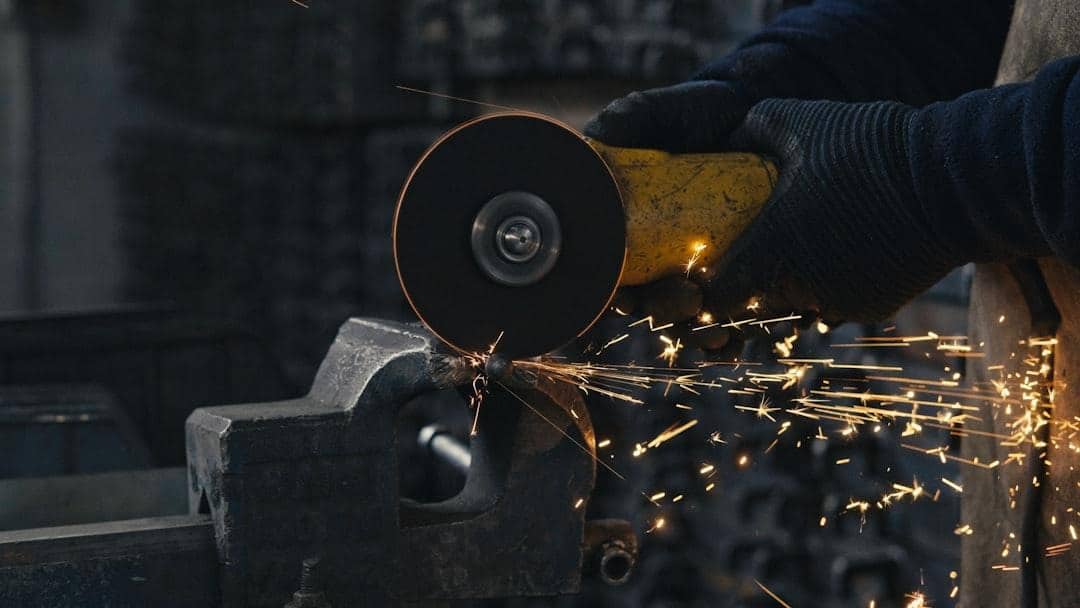
source – https://unsplash.com/photos/a-person-working-with-a-grinder-on-a-piece-of-metal-Riw179Nna6w
You are halfway through knocking scale off a frame rail, or drilling out a seized bracket bolt, and the tool starts to fade. The grinder slows under the wheel. The drill loses its bite. A minute later there is a hot smell and a flicker of sparks inside the vents, and your first thought is that the motor is cooked and you need a new tool.
Most of the time, it is not. On a corded grinder or drill that fades under load, worn carbon brushes are the usual cause, and a fresh set is a few-dollar, ten-minute job that saves the tool. Here is how to tell that is what you are looking at, why it happens sooner on a build, and how to be sure before you spend a cent.
The Two Signs It’s the Brushes, Not the Tool
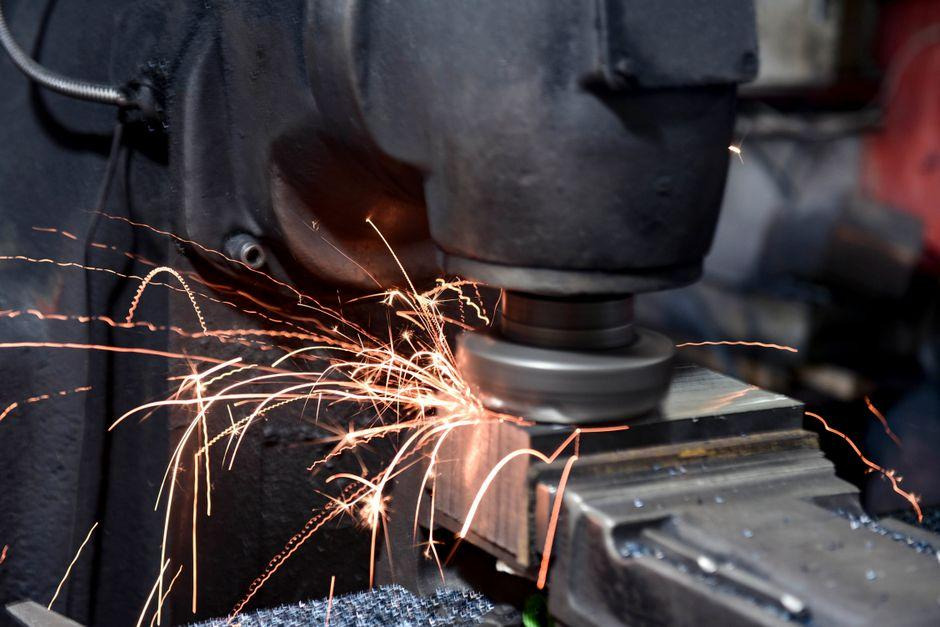
source – https://www.pexels.com/photo/sparkles-under-grinder-17156135/
Two things point straight at the brushes. The first is power that drops off under load: the tool spins fine with nothing against it but bogs down the moment you lean on the wheel or the bit, because worn brushes cannot pass enough current to hold torque. The second is sparking or an orange glow at the motor vents, often with a sharp electrical smell, as the shortened brushes bounce and arc against the commutator instead of riding smooth on it.
A carbon brush is built to be the part that gives way. It is softer than the copper commutator it presses against, so it wears down over time and protects the harder, costlier parts of the motor (source). A small spring pushes each brush onto the commutator; as the carbon block gets shorter, the spring runs out of travel, contact goes patchy, and you get the fade and the arcing. That is the sign the brushes are near the end, not the motor.
Check It’s Actually the Brushes First
Before you order anything, make sure the brushes are the real fault and not something that only looks like it. Swapping fresh brushes into a tool with a bad switch just costs you an afternoon. Four quick checks:
1. Pull a brush and look. Most grinders and drills have two brush caps on opposite sides of the motor housing, either screw-in plastic caps or a clip-off cover. Back them out and slide the brushes free. If the carbon is worn down to about a quarter inch or less, chipped, or burned black and glassy on the contact face, that is your answer.
2. Check the spring and the lead. A spring that has lost its tension, or a burned or broken lead wire on the brush, gives you the same symptoms as a worn block. Look at both while the brush is out.
3. Rule out the switch and cord. A trigger that cuts in and out when you wiggle it, or a cord with a break near the strain relief, mimics a brush fault exactly. Flex both and watch for the tool stumbling.
4. Blow out the dust. Grinding and cutting pack conductive metal and carbon dust into the motor. Now and then a fade clears with a hard blast of compressed air through the vents before you replace a thing.
Why Grinders and Drills Wear Brushes Faster on a Build

source – https://unsplash.com/photos/an-old-rusted-truck-with-a-light-on-the-front-et4k03EVCiw
Heavy sustained grinding is what wears brushes out fast. It loads the motor mechanically and electrically at once, and that combination pushes the contact temperature up and wears the brushes faster than either load alone (source). Frame rust removal, weld cleanup and cut-off wheel work are about the hardest duty a hand grinder ever sees, so if you do your own truck work you will go through brushes quicker than someone who pulls a drill out twice a year. A short brush life there is normal, not a sign of a bad tool.
How fast the carbon wears is not fixed. The same tool that lasts a weekend hobbyist for years can need brushes after a season of real shop use, because it depends on how hot and how hard the motor runs. None of that means the tool is worn out. It means the brushes are doing their job, taking the wear so the motor does not.
What New Carbon Brushes Cost, and Getting a Set That Fits
Once you know it is the brushes, the only thing that matters is getting the right set on the way to you. A pair of carbon brushes for a common grinder or drill runs a few dollars, against a hundred or more for a new tool of the same class, so the repair math is not close. The catch is fit: brushes come in specific sizes and shapes, and a set that is a millimeter off will not seat right or will wear out fast.
The cleanest way to get the correct set is to match your tool. If you can read the model number off the plate, you can look the brushes up by tool brand. If the plate has rubbed off, which happens fast on a shop tool, you measure the old brush instead and match it by size, in millimeters, length by width by height. One place set up for exactly that is TDO Carbon, a UK carbon-brush specialist that has supplied replacement brushes since 2012; you can filter by tool brand or search by measured brush size, and for an older tool the maker no longer supports, they can make a set to fit from your sample or its dimensions. For a current mainstream tool, a local supplier may have the common sizes on the shelf; a specialist is worth it for the odd sizes and the discontinued tools nobody else carries.
Swapping the Brushes: A Ten-Minute Job
With the right brushes in hand, the swap is quick on most tools. Work on a clean bench with the tool unplugged.
1. Unplug the tool. Every time, before the caps come off.
2. Remove the brush caps. Back out the screw-in caps, or lift the clip covers, on each side of the motor housing.
3. Pull the old brushes. Slide each brush out and unhook its lead. Note which way the curved contact face points, because the new one goes in the same way.
4. Seat the new brushes. Slide each new brush in so its curve matches the commutator, reconnect the lead, and let the spring hold it down.
5. Refit the caps and test. Tighten the caps, plug in, and run the tool with no load for a minute. A little sparking as the new brushes bed in is normal and settles down.
Carbon Brushes: Common Questions
What causes carbon brushes to wear out fast?
Heat and load. Heavy sustained work, a motor running hot, and the metal and carbon dust that grinding throws all speed up wear. A weak brush spring or a rough commutator surface makes it worse.
How can you tell if carbon brushes are bad?
The tool loses power under load, sparks or glows at the vents, and may smell hot. Pull a brush: if the carbon is short, around a quarter inch or less, chipped, or burned glassy on the contact face, replace the pair.
How long do carbon brushes last?
There is no fixed number. It depends on hours and how hard the tool runs. Occasional home use can go years; hard shop use can wear a set in a season. Check them whenever the power drops off.
What is the lifespan of an angle grinder?
A corded grinder can run for many years if you keep fresh brushes in it and blow the dust out. Brushes wearing out is normal maintenance, not the tool reaching the end of its life.