Modern full-size pickups, like crew cab F-250s, Ram 2500s, and Silverado HDs, are longer, heavier, and more capable than any previous generation, but that capability comes with a real trade-off: more complex maintenance, more specialized gear, and more equipment competing for floor space.
A well-configured truck garage setup is one of the most underrated upgrades a truck owner can make. Better lighting, organized towing gear, reclaimed overhead storage, and stable under-truck access can reduce clutter, speed up every maintenance session, and expand what you can realistically tackle at home. Here is how to approach all four in order, from floor to ceiling to frame rails.
1. Better Lighting and Dedicated Outlets for Real Wrenching
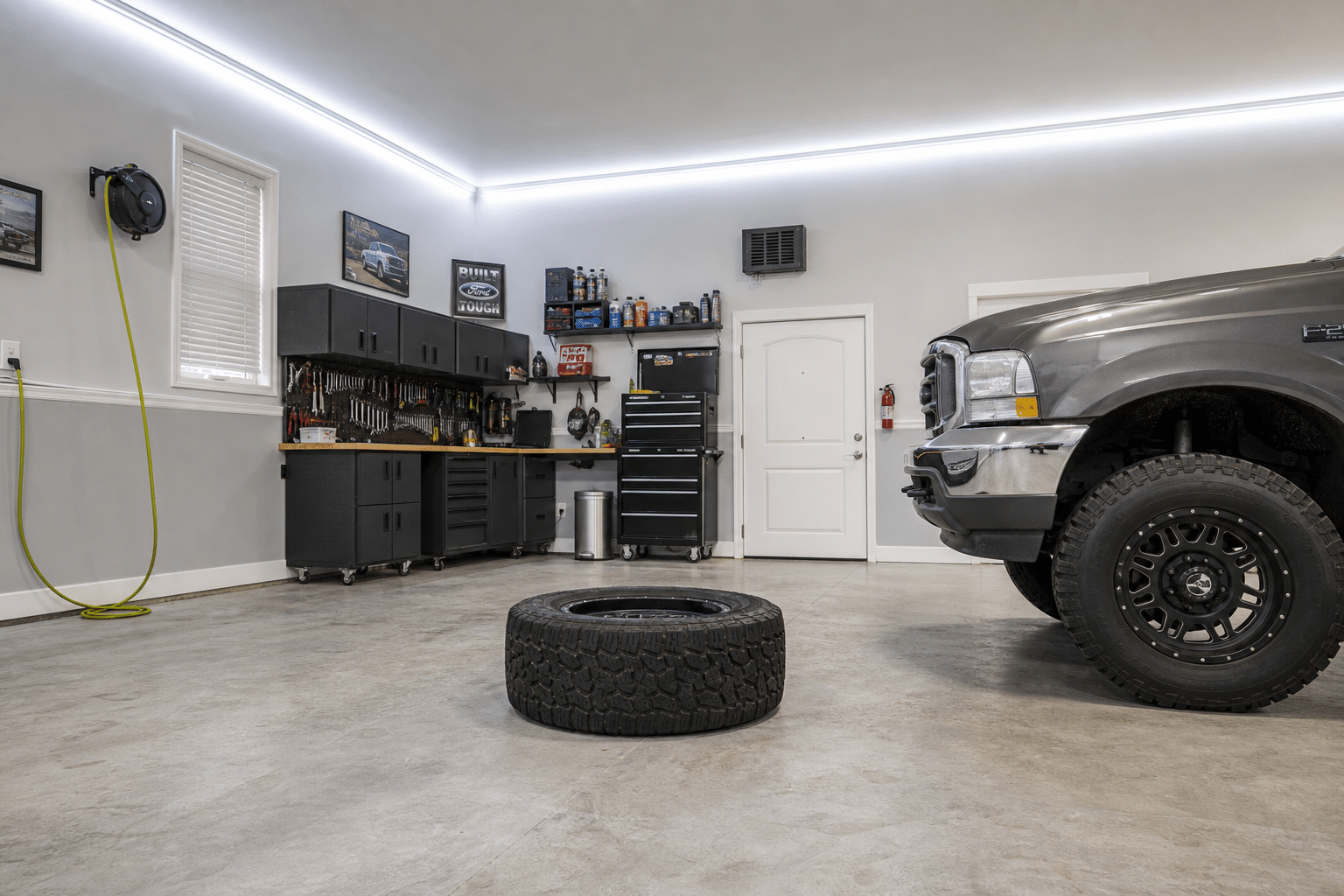
Shadow-free lighting operates as a basic safety requirement for DIY truck maintenance. A corroded brake line or a hairline crack in a CV boot easily hides under a single dim overhead fixture. LED shop lights rated at 4,000 to 5,000 lumens mounted at the ceiling perimeter eliminate the shadow problem that catches most home bays off guard.
Dedicated 20-amp circuits prevent power loss when you run an air compressor, an impact wrench, and a battery charger simultaneously. Position at least two circuits on opposite walls so your main stations never share a load. If your long-term plan involves setting up HeavyLift Direct’s heavy-duty 2-post car lift, ensuring your bay has the proper electrical circuits and bright overhead illumination is the necessary first step.
Add receptacles at bench height and overhead drop-cord access points so extension cords stay off the floor when you roll a creeper. If a full electrical update is still pending, a portable clip-on work light for the hood prop costs under $30 and instantly improves visibility. Start with that simple addition before moving toward a permanent hardwired solution.
2. Build a Dedicated Truck-Gear Zone
Full-size truck ownership generates a specific category of gear that does not belong with general shop tools or piled in the cab. Tow straps, recovery boards, hitch balls, and seasonal fluids migrate to random shelves without a designated pickup gear storage zone. Grouping these items ensures they are ready to grab on a Friday afternoon before a towing job.
Design a durable wall station near the main garage door. Wall-mounted hooks secure bulky straps and chains, while a labeled cabinet section keeps fluids and spare filters sorted by application. Standard pegboard hooks handle lighter recovery tools, but pintle hitches and heavy tow chains require wall-anchored bins with a verified load capacity.
Label everything by category to eliminate visual searching and reduce setup delays. Before you fill floor-level cabinets with bulky supplies, securing an elevated access route opens up your shop layout. Installing the FAKRO folding attic ladder from Inventive Garage ensures you have safe access to the roof cavity for off-season items, keeping daily tow gear completely isolated from deep storage.
| Key Insight: A functional garage isn’t defined by its size but by the absence of friction. Each upgrade targets a specific bottleneck, collectively transforming a cluttered bay into an efficient workspace. |
3. Reclaim Overhead and Attic Space for Seasonal Truck Gear
Truck ownership creates a secondary category of bulky but lightweight equipment used only a few times per year. Roof rack pads, tonneau cover accessories, camping bins, and spare mud flaps are ideal candidates for overhead garage storage. They require accessibility without occupying premium floor space alongside your daily tools.
Ceiling-mounted racks hold items that cycle in and out frequently during the summer months. Always leave at least 24 inches between the rack bottom and the roof of a tall crew cab to prevent clearance issues when backing in. For true off-season items like bagged winter tires or camping gear, the attic serves as a much safer destination.
Retrieving gear from the ceiling requires a highly stable load path. A wobbly pull-down step that flexes under a loaded bin ruins the advantage of reclaiming your top shelf. Using a high-quality insulated metal folding attic ladder ensures retrieval becomes part of your regular maintenance workflow rather than a safety hazard to avoid.
Keep heavy items completely off elevated platforms as a strict rule. Full fluid jugs, steel recovery gear, and heavy toolboxes belong on reinforced shelving near the floor so the load rests securely. Relegating your ceiling zones to lightweight seasonal supplies prevents structural damage and accidental drops.
| Important: Reserve overhead racks for lightweight seasonal items only. Heavy fluid jugs, steel recovery gear, and toolboxes belong on reinforced shelving near the floor where the load path is predictable and safe. |
4. Improve Under-Truck Access for Inspections and Repairs
Full-size pickups sit noticeably higher than passenger cars, creating false confidence about undercarriage access. Extended brake jobs, suspension checks, and rust-prevention undercoating require two free hands and clear sightlines across the frame rails. A traditional floor jack and creeping setup severely restricts your working room and visibility.
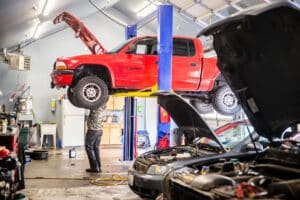
Working at a consistent, elevated height fundamentally changes what repairs you can tackle at home. Owners who monitor their transfer case welds or service the front axle understand how stable positioning improves structural safety. Leaving a truck raised high above the slab eliminates the awkward contortions that lead to incomplete inspections.
Operating safely requires at least 12 feet of ceiling clearance to account for the lift structure and the vehicle roof at full rise, according to industry guidelines from MTF Equipment Sales. Safety margins vanish quickly because heavy-duty trucks like the standard F-250 XLT hit 10,600 pounds GVWR, and modern RAM 2500 HD models reach up to 11,040 pounds. Always verify your slab thickness, as four-inch reinforced concrete acts as the accepted residential minimum for anchoring heavy equipment.
If a concrete update remains out of reach, invest in a reliable floor jack with custom saddle extensions. Setting properly placed jack stands at the exact lift points specified by the manufacturer creates a secure temporary hold. Combining stable ground supports with intense floor-level lighting builds a highly capable intermediate bay for underbody inspection.
A Bay Built for Capability
An optimized bay allows you to grab seasonal tires using an insulated metal attic ladder, swap the wheels, and elevate the chassis on a heavy-duty 2-post lift to quickly check the undercarriage for trail damage.
Stowing your straps on a designated wall system finishes the task in under an hour without tripping over misplaced tools. Dedicated circuits, brilliant LED illumination, secure gear storage, and stable lifting infrastructure turn tedious preventative maintenance into an efficient routine.