For pickup truck owners, independent contractors, and off-road enthusiasts, a truck is far more than a standard means of transportation—it is a heavy-duty production tool, an extension of your workshop, and a significant financial asset. Whether you are driving a late-model heavy-duty workhorse or restoring a classic square-body classic, you know that these vehicles are engineered to survive grueling workloads. However, there is one relentless, chemical enemy that causes more premature vehicular death than catastrophic mechanical failure: chassis and frame corrosion.
If you live in the northern Snow Belt, where thousands of tons of aggressive road salt and chemical de-icers are dumped onto asphalt every winter, or near humid coastal salt-air environments, you have experienced the nightmare firsthand. What starts as minor surface discoloration quickly escalates into structural pitting, flaking “scale,” and compromised structural steel.
When corrosion takes hold of a truck’s boxed frame or C-channel chassis, it doesn’t just tank the vehicle’s resale value; it compromises the entire structural integrity, turning a reliable vehicle into a safety liability during towing or off-roading.
But for decades, the automotive restoration industry has faced a frustrating bottleneck: The traditional methods used to clean and remediate frame rust are incredibly slow, dangerously invasive, and brutally exhausting. Today, a massive technological shift toward portable fiber laser ablation is completely changing the game for professional custom garages and DIY truck restoration shops worldwide.
Part 1: The Frustrating Limitations of Traditional Rust Remediation
To understand why the truck restoration world is moving toward laser technology, we have to look honestly at the deep flaws of traditional rust removal methods. Every shop manager and garage DIYer knows the pain of the standard toolkit:
1. The Wire Wheel and Air Scraper Torture
Attempting to clean a fully assembled truck undercarriage with angled grinders, twisted wire wheels, and pneumatic needle scalers is a miserable rite of passage. It is physically grueling work that requires lying on a cold garage floor for days, showered in stinging rust flakes and toxic old undercoating. Worst of all, mechanical wheels are physically limited—they cannot reach into the tight interior corners of a boxed frame, leaving hidden pockets of rust behind to eat through your steel a few years later.
2. The Chaos and Damage of Sandblasting (Media Blasting)
Sandblasting or garnet blasting is highly effective at stripping metal down to a clean profile, but it introduces massive operational liabilities. First, it requires a complete “frame-off” teardown. If you don’t strip every brake line, wiring harness, fuel line, and suspension bushing off the chassis, the high-pressure abrasive grit will instantly destroy the rubber seals, score the wiring insulation, and contaminate the internal mechanical components. Furthermore, aggressive media blasting can thin out thin-gauge sheet metal and leaf springs, weakening the structural components.
3. The Eco-Hazards of Chemical Acid Stripping
Applying harsh chemical rust converters or acid washes inside a residential garage or a light commercial shop is an environmental and health hazard. The fumes are toxic, the chemical runoff requires strictly regulated hazardous waste disposal, and if you fail to perfectly neutralize the acid hidden inside the frame rails, it will react with moisture and accelerate the corrosion cycle from the inside out.
Part 2: Enter Fiber Laser Ablation—The Ultimate Undamaging Solution
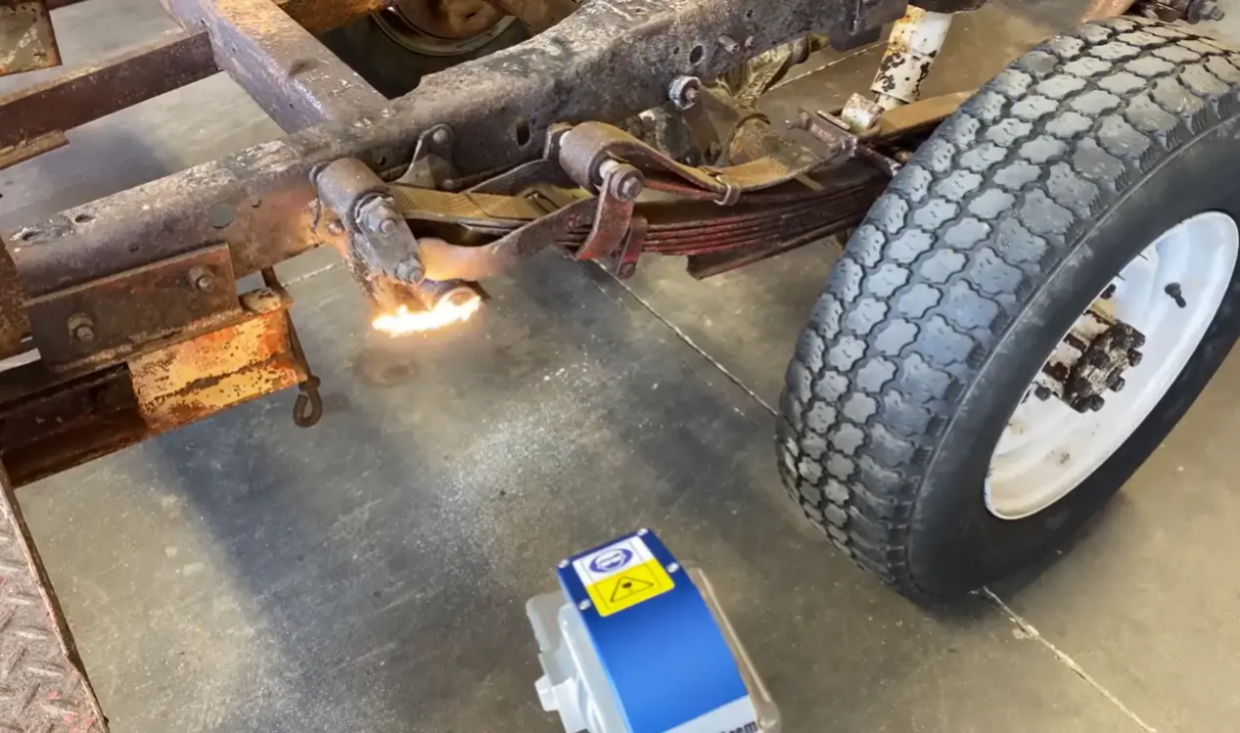
To bypass these traditional bottlenecks, cutting-edge truck modification labs and custom restoration shops are utilizing non-contact fiber laser ablation technology.
Instead of slamming abrasive grit into a truck frame or relying on acidic erosion, this method uses pure, highly concentrated, high-frequency pulses of light to vaporize surface contaminants. The underlying physics is based on a concept called the thermodynamic ablation threshold—the specific energy limit required to break the molecular bonds of a material.
Industrial rust, road grime, ancient oil undercoatings, and flaking factory paint have an exceptionally low ablation threshold. Heavy-duty structural truck steel has an incredibly high threshold. When a calibrated laser beam sweeps across a corroded truck frame, the rust instantly absorbs the photonic energy and vaporizes into a dry gas that can be captured cleanly by local shop exhaust systems.
The moment the laser pulse hits the clean, uncorroded base steel underneath, the metal simply reflects the light away like a mirror. The beam physically cannot cut, score, thin, or introduce thermal distortion to your chassis. You can clean directly over sensitive areas, right up to structural welds, chassis serial numbers, and complex crossmembers, without changing the original geometric integrity of the factory steel.
Part 3: The True Operational Benefits for Truck Restorers
When you look at the math and shop-floor hours, shifting toward modern laser surface preparation fundamentally alters the economics of maintaining and modifying pickup trucks.
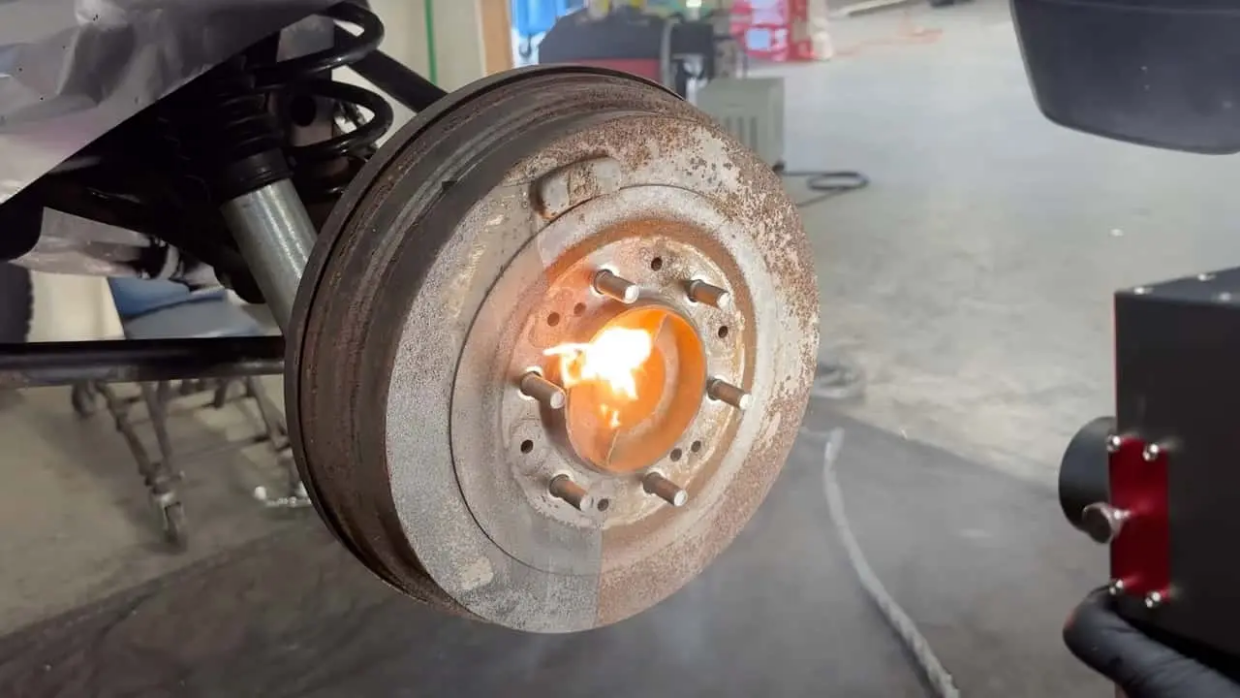
No Disassembly Required: Because the laser beam is highly targeted and creates no flying abrasive debris, you can execute an undercoating refresh without executing a mandatory frame-off teardown. Technicians can clean safely around solid steel axles, heavy-duty drive shafts, and leaf springs without risking mechanical grit intrusion into sensitive bearings or electrical harnesses. Implementing a portable [laser rust remover] allows truck restoration shops to prep frames down to bare metal in a fraction of the time without thinning the structural substrate.
Microscopic Pores De-Contamination: Why do traditional chassis paints and spray-on bedliners often bubble and peel away after just two or three years? Because traditional sandblasting or grinding merely rolls over microscopic corrosion cells and traps microscopic moisture and road chlorides deep inside the metal pores. A high-frequency pulsed laser completely vaporizes these microscopic hidden impurities. This creates an immaculately clean, ultra-decontaminated surface topology that allows high-end chassis coatings (like epoxy primers or polyurethane sealants) to achieve a bulletproof mechanical bond, extending the lifespan of the truck’s protection indefinitely.
Zero Recurring Consumables: Traditional blasting requires a never-ending cycle of purchasing garnet, sand, or soda media, followed by hours of heavy shop cleanup and material disposal fees. A fiber laser system uses absolutely zero consumables. The only operating input is standard electrical power. Forward-thinking asset managers looking for sustainable, zero-consumable pretreatment options are exploring the latest [Continuous laser cleaning machine for sale] solutions to eliminate hazardous chemical waste and slash recurring shop overhead.
Conclusion: The New Blueprint for Truck Longevity
As the costs of modern pickup trucks continue to climb, keeping these valuable machines on the road requires a shift toward smarter, more sustainable maintenance technology. Relying on primitive wire wheels, messy sandblasting media, and harsh chemicals is an inefficient, labor-intensive approach that damages metal and slows down shop throughput.
For professional modification labs, off-road fabricators, and serious truck collectors, integrating non-destructive fiber laser ablation is the ultimate upgrade. It protects the structural integrity of the truck’s steel, guarantees absolute perfection for protective undercoatings, and eliminates the messiest job in automotive restoration. Stop fighting a losing battle against frame rust with outdated tools—embrace the power of precision light and give your truck a chassis setup engineered to outlast the road ahead.