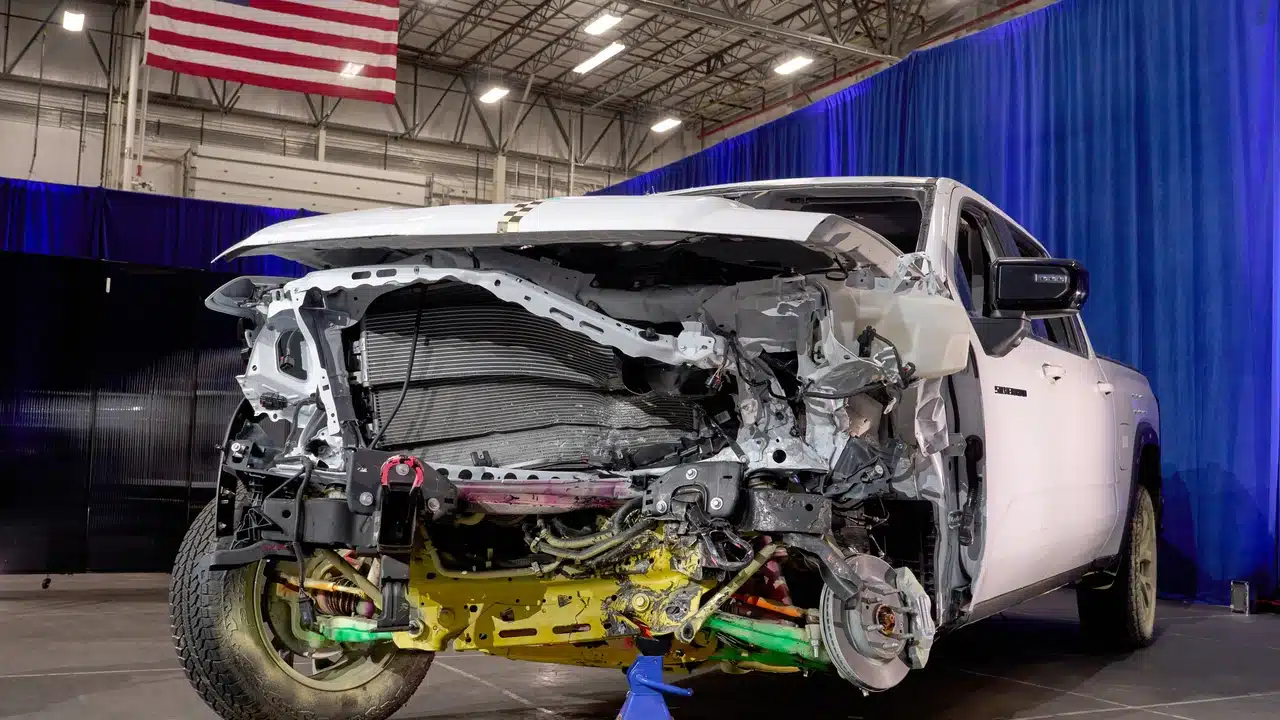
Watching a pickup hit a barrier gets your attention. But the 2027 Chevrolet Silverado 1500 crash test at GM’s Milford Proving Ground showed me why the work before and after the impact deserves a closer look.
GM brought us to its Milford, Michigan, Proving Ground for a look at virtual crash testing, crash-test dummies and safety development. The physical crash was part of a much larger process.
What GM was testing
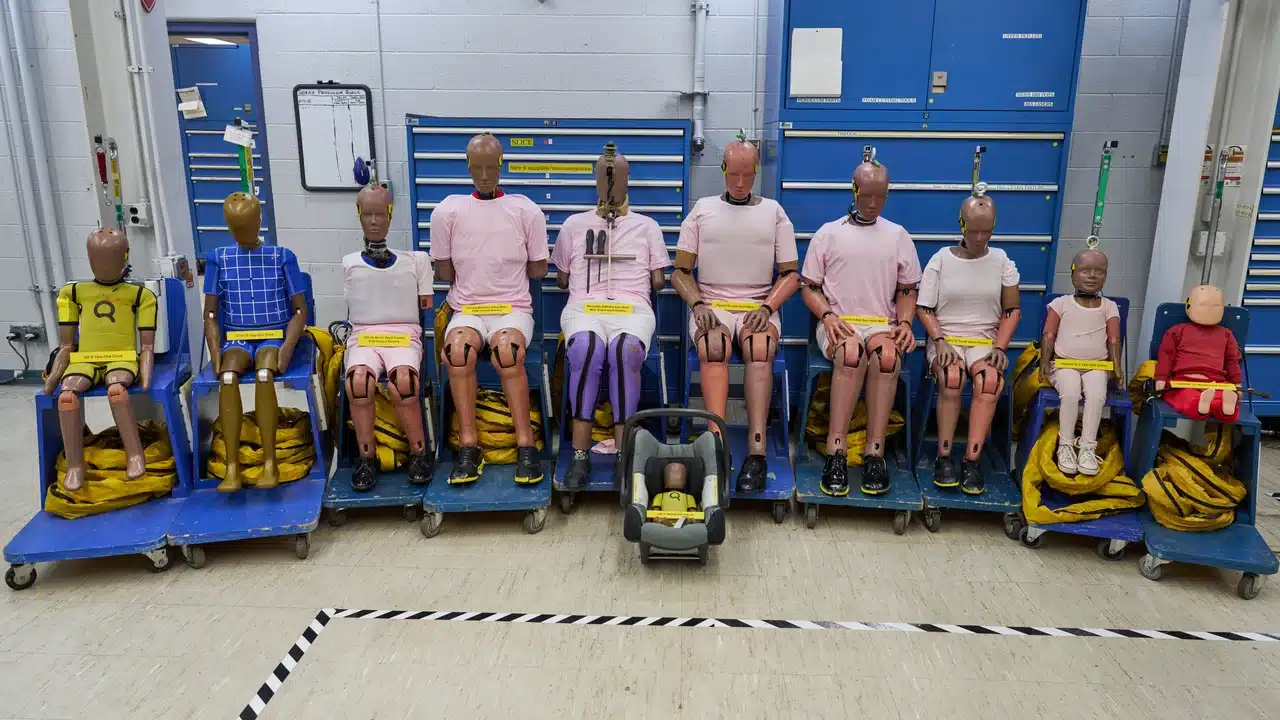
The planned demonstration was a 40-mph impact into a stationary deformable barrier, with 40 percent of the truck’s front end overlapping the barrier on the driver’s side. GM described the setup as representing an offset frontal collision.
The test used an adult-male driver dummy and a smaller female dummy seated behind the driver. The engineers later identified the demonstration as a double-cab validation test and explained that its shorter rear occupant compartment warranted its own evaluation.
The checks extended beyond the structure and restraints. GM said the team also assessed fuel-system integrity and post-crash functions, including the OnStar emergency call, hazard lights, interior lights and unlocking the doors.
Those are the objectives of the test, not a declaration that every measured result met its target.
The stripped cabin needs context
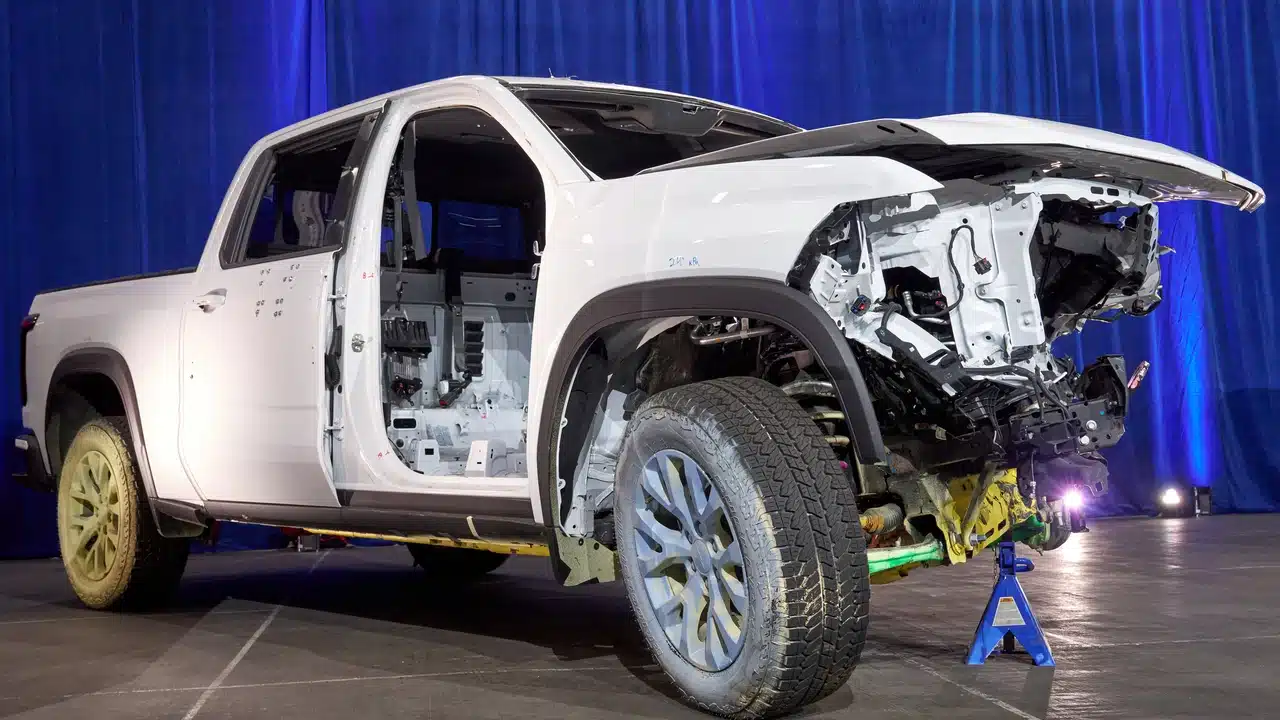
One of the test trucks on display had its interior removed. That wasn’t evidence that the crash had torn everything out.
An engineer explained that after a physical crash test, the team disassembles the truck to examine how its parts deformed and how the occupants interacted with them. The teardown also provides information the team can use to improve its virtual models.
A stripped vehicle displayed for engineering inspection is different from the vehicle immediately after impact.
Where the structure works
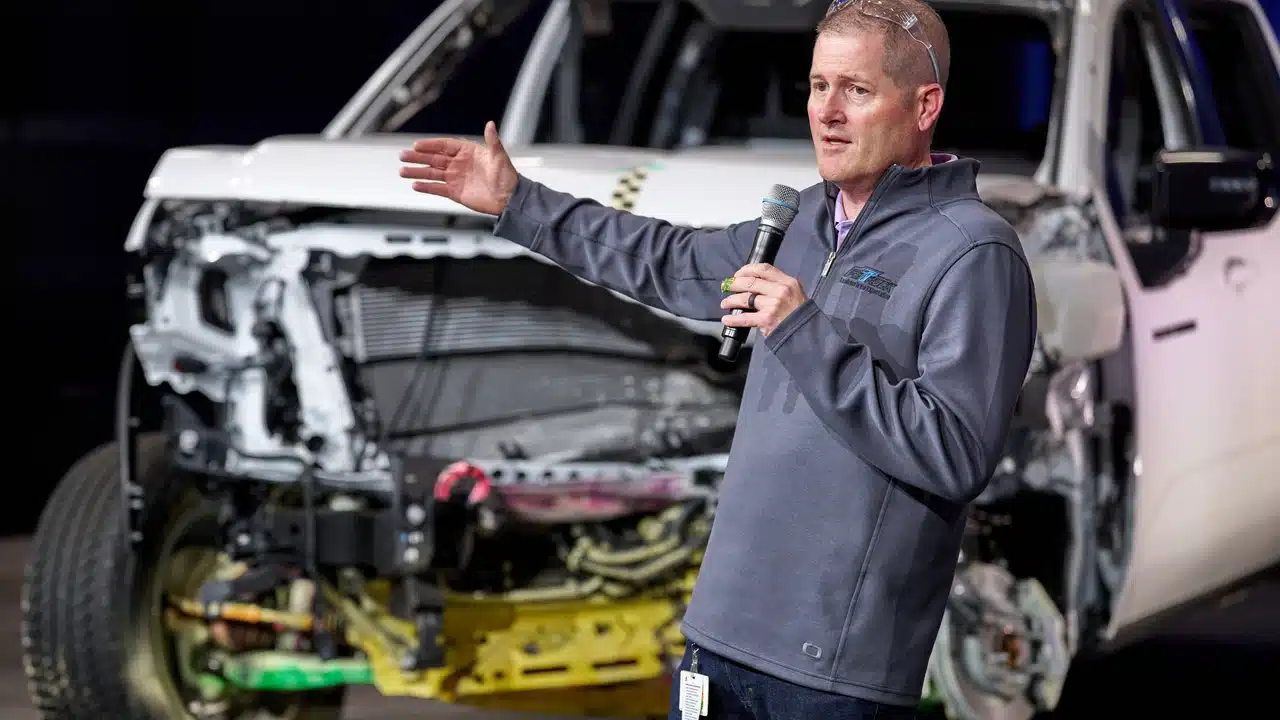
During the walkthrough, an engineer pointed out deformation in the front structure and explained its role in managing crash forces while maintaining the occupant compartment.
He also opened a door on the test truck and pointed to the preserved space around it. He acknowledged some interior deformation rather than presenting the truck as untouched.
The engineering assessment involves much more than the damage visible in a photograph. I would not treat an intact-looking cabin as proof that nobody would be injured.
The work continues after the crash
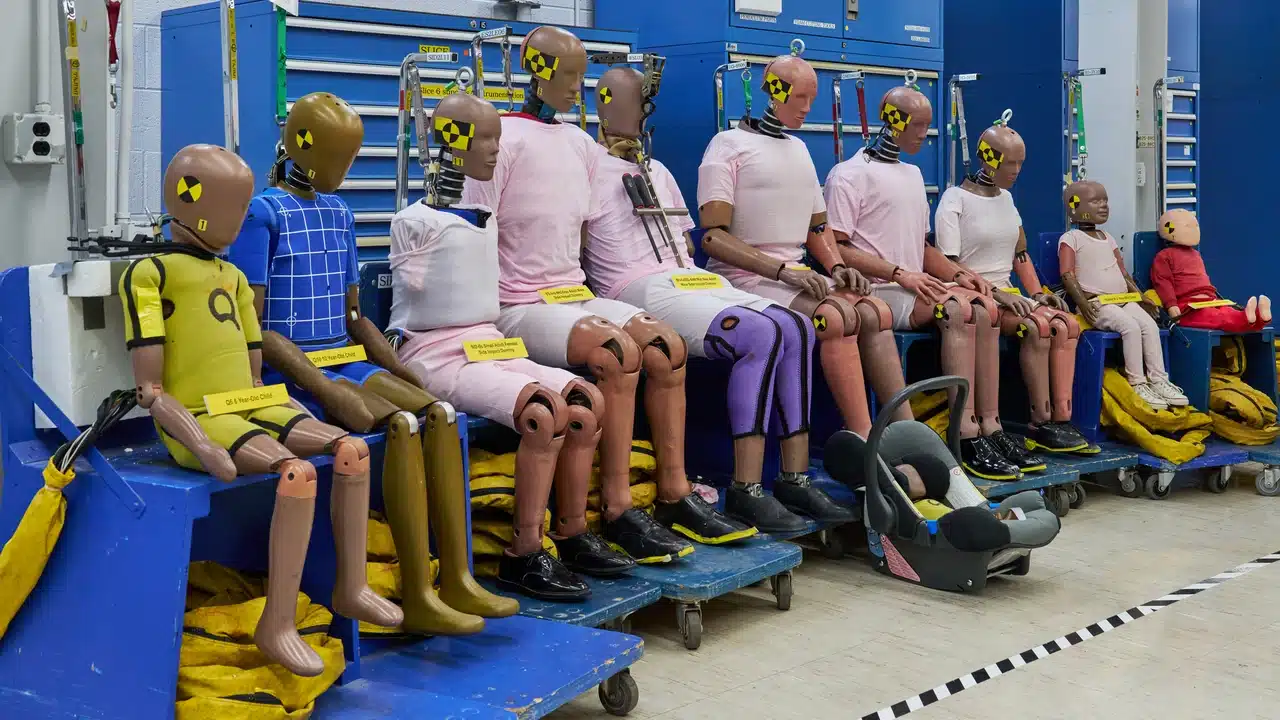
The team described an average preparation period of about two weeks after a test request, followed by roughly a week of removing instrumentation and carrying out a full teardown after the test. Processing the data and comparing performance with the models takes additional time.
The crash itself is quick. Preparing for it and understanding the results take considerably longer.
A development test is not a published safety rating
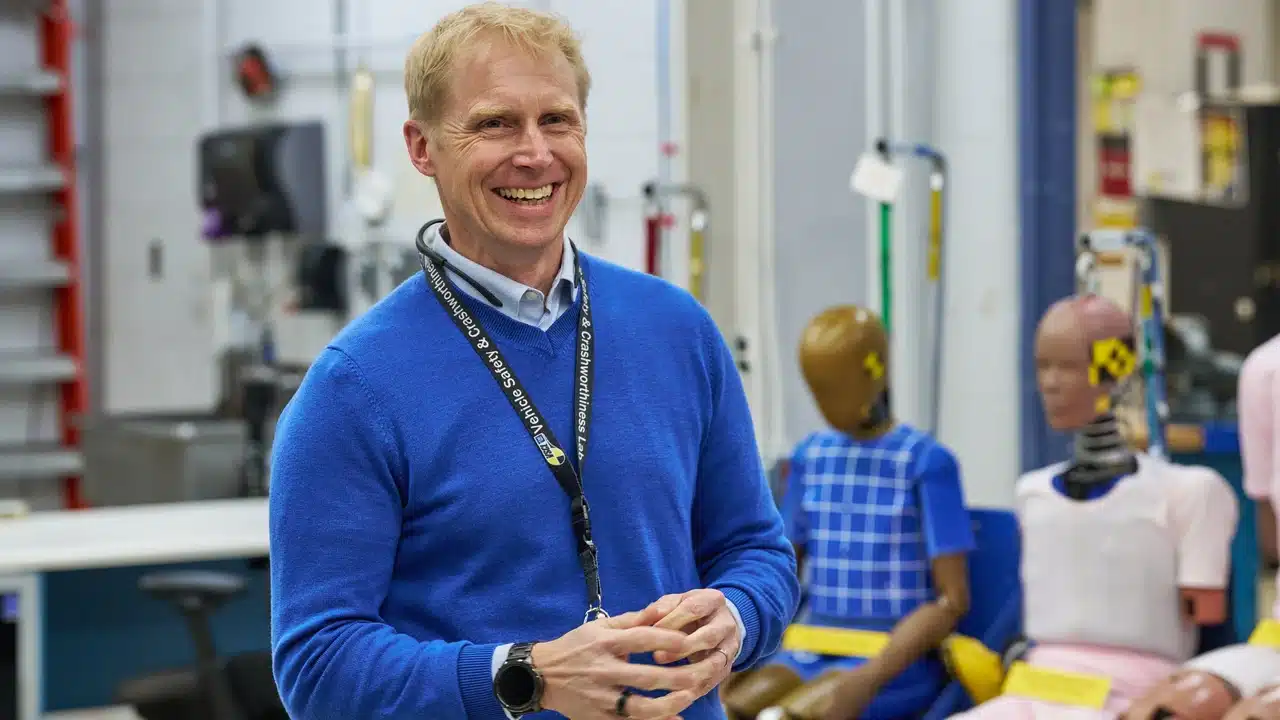
Asked about independent testing, an engineer said GM matched the relevant IIHS test setup protocol. He also declined to predict the 2027 truck’s results and acknowledged that tests can vary.
I wouldn’t turn this demonstration into an independent safety rating. It does give us a better look at the work behind the truck and the questions GM’s engineers are trying to answer.
The explanation after the impact matters as much as the impact itself. It shows what the test is supposed to teach the engineering team.