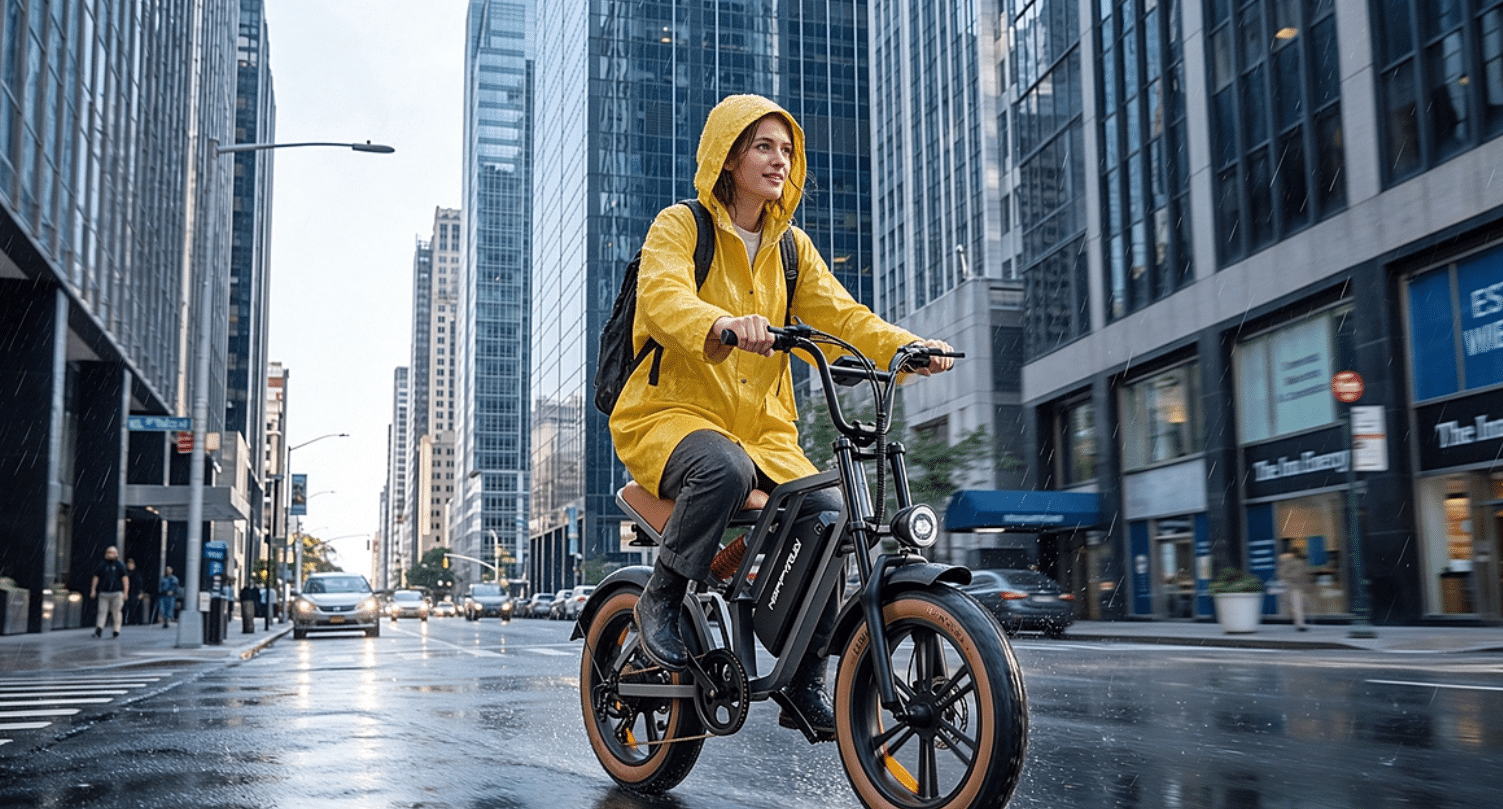
Rain can turn a routine e-bike commute into a slippery, unpredictable ride. Wet roads reduce tire grip, increase stopping distances, and expose your bike’s electrical components to moisture. Even a familiar route can feel completely different when the pavement is wet.
The good news is that riding in light rain doesn’t have to mean leaving your e-bike at home. With the right tires, reliable brakes, proper water protection, and a few changes to your riding habits, you can make rainy commutes safer and more comfortable.
This guide covers what to look for in Commuter E-bikes, how to handle wet-road conditions, and how to protect your electric bike before, during, and after a rainy ride.
Why Rain Changes the Way Commuter E-bikes Handle
A wet road creates several challenges for electric bike riders. Water mixes with dust, oil, and other road debris, making some surfaces more slippery than they appear. Unlike riding on dry pavement, you may have less control when accelerating, turning, or braking. Puddles can also hide potholes, cracks, and uneven surfaces.
Here are three common problems to watch for:
- Reduced traction: Wet pavement makes it easier for tires to lose grip, especially when turning or accelerating too quickly.
- Longer stopping distances: Water and road conditions can affect how quickly your bike slows down.
- Moisture exposure: Rain, road spray, and standing water can reach electrical connections, displays, and other components.
These challenges make tire selection, braking performance, and water protection especially important when choosing an electric bike for commuting.
Choose Tires with a Suitable Tread Pattern
For everyday commuting, look for tires that provide consistent grip on paved surfaces. Moderate tread patterns can work well on asphalt and light gravel. Aggressive off-road tires are better suited to dirt trails and may not be as comfortable or efficient for paved commutes. Riders considering an electric dirt bike adult model should keep these differences in mind.
Pay Attention to Tire Width
Wider tires can provide a more stable feel and better cushioning on uneven roads. Fat tires, typically around 4 inches wide, are popular for their added comfort. However, wider doesn’t automatically mean better grip in the rain. Tire design, rubber quality, and pressure also affect traction.
Check Tire Pressure Regularly
Proper tire pressure helps maintain predictable handling. Overinflated tires may offer less grip on some surfaces, while underinflated tires can make steering less predictable.
Braking Performance: How to Stop Safely on Wet Roads
Reliable brakes are essential when choosing Commuter E-bikes, especially when riding in traffic or dealing with wet pavement. Rain can affect braking performance, making proper equipment and riding habits important.
Hydraulic Disc Brakes vs. Mechanical Disc Brakes
Both braking systems are common on electric bikes. Hydraulic disc brakes generally offer smoother operation and require less hand effort. Mechanical disc brakes use cables, making them simpler to maintain and a practical option for everyday riding.
For frequent rainy commutes, hydraulic disc brakes are worth considering for their responsive feel. However, brake condition, pad quality, and regular maintenance matter just as much.
Increase Your Following Distance
Wet roads can increase stopping distances. Give yourself extra space from vehicles ahead and slow down earlier when approaching intersections.
A few simple habits can help:
- Apply both brakes smoothly rather than suddenly.
- Avoid hard braking while turning.
- Reduce speed before reaching slippery surfaces.
- Test your brakes gently at low speed before continuing in the rain.
Inspect Your Brakes After Riding in the Rain
Water and road debris can collect around brake pads and rotors. After a rainy commute, check for unusual noises, reduced braking response, or visible dirt. Clean and maintain the braking system according to the manufacturer’s recommendations, and address any braking issues before your next ride.
Water Protection: Can You Ride an E-bike in the Rain?
Water protection is important when choosing an electric bike for daily commuting. Key components such as the battery, motor, display, and wiring need protection from moisture.
However, water-resistant doesn’t mean waterproof.
Understand the IP Rating
An IP rating indicates how well a component is protected against dust and water under specific testing conditions.
Common water-resistance ratings include:
- IPX4: Protection against water splashes.
- IPX5: Protection against water jets.
- IPX6: Protection against stronger water jets.
The X means no dust-protection rating is specified. Keep in mind that an IP rating may not apply to every component of the bike, so check the manufacturer’s specifications before riding in wet weather.
Protect the Battery and Electrical Connections
Before riding, make sure the battery is properly installed and protective covers are securely closed.
To reduce the risk of water damage, avoid:
- Riding through deep puddles or flooded streets.
- Directing high-pressure water at electrical components.
- Submerging the motor or battery.
- Charging a wet battery or connecting a wet charging port.
After a rainy ride, switch off the bike and wipe down accessible surfaces. Follow the manufacturer’s instructions before charging or handling electrical connections.
HappyRun Reliable Water Protection Commuter E-bikes
For riders comparing moped-style electric bikes, the HappyRun G60 is worth considering. It combines water-resistance features with fat tires and front and rear suspension for a comfortable riding experience.
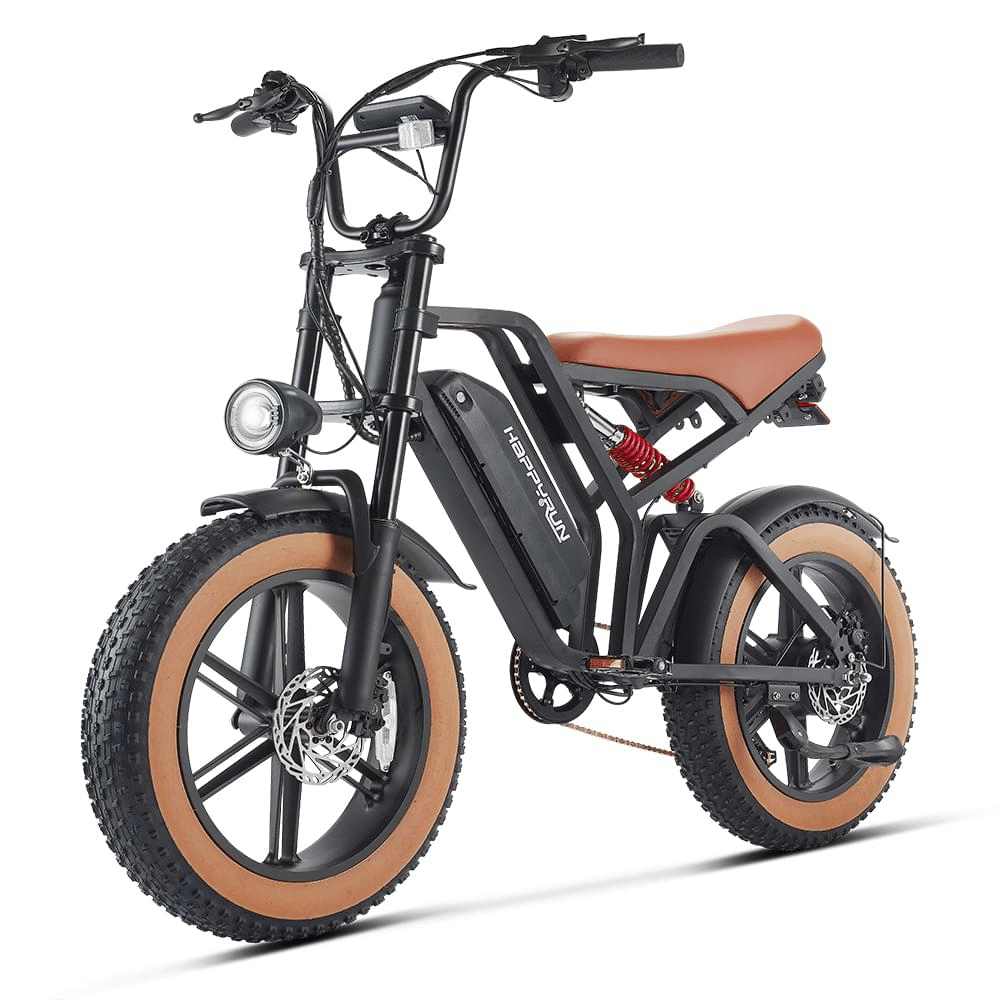
Key Specifications:
- Water Resistance: IP54
- Certification: UL 2849
- Motor: 500W rated / 1,500W peak
- Battery: 48V 13Ah removable battery
- Max Range: Up to 68 miles
- Top Speed: 20 MPH
- Tires: 20 × 4-inch fat tires
- Suspension: Front and rear suspension
- Brakes: Front and rear hydraulic disc brakes
- Gearing: 7-speed system
- Lighting: 160-lumen front LED light and integrated taillight
- Max Payload: 330 lbs
Its IP54 rating provides protection against dust and water splashes, while the front and rear lights help improve visibility during cloudy or rainy commutes. The removable battery also makes indoor charging more convenient.
How to Maintain Your E-bike After a Rainy Commute
A little maintenance after each wet ride can help keep your commuter e-bikes and fastest electric dirt bike in better condition.
You don’t need an elaborate cleaning routine. Focus on removing moisture, checking important components, and storing the bike properly.
After every rainy ride, follow these steps:
- Turn off the bike: Switch off the electrical system before cleaning or inspecting the bike.
- Wipe down the frame: Use a soft, dry cloth to remove water, dirt, and road spray.
- Check the battery area: Inspect accessible battery contacts and protective covers for moisture. Follow the manufacturer’s instructions before removing or reconnecting the battery.
- Inspect the brakes: Look for debris, unusual noises, or changes in braking performance.
- Dry the drivetrain: If your bike has a chain, wipe it clean and apply suitable lubricant when needed.
- Store it in a dry place: Avoid leaving your bike exposed to rain for extended periods.
Never use a pressure washer to clean commuter e-bikes . Strong water pressure can force moisture into areas that ordinary rain may not reach. If you notice electrical problems, unusual motor behavior, or persistent braking issues, stop riding and have the bike inspected.
Final Checklist Before Your Next Rainy Commute
Before riding, take a minute to check the following:
- Tires have sufficient tread and proper inflation.
- Brakes respond normally.
- Front and rear lights are working.
- Battery and electrical covers are properly secured.
- Helmet and weather-appropriate clothing are ready.
- Your planned route does not include flooded or hazardous sections.
- You have allowed extra time for slower riding.
If conditions become too dangerous, visibility is severely reduced, or roads are flooded, the safest decision is to postpone your ride.
Final Thoughts
Rainy weather doesn’t automatically rule out electric bike commuting, but it does require more attention to traction, braking, and water protection.
When comparing Commuter E-bikes, look beyond motor power and advertised range. Consider tire design, brake quality, electrical protection, and how comfortably the bike handles your everyday route. Just as importantly, adjust your speed, increase your stopping distance, stay visible, and dry your bike after wet rides.
The right combination of equipment and riding habits can help make everyday electric bike commuting more predictable, even when the weather doesn’t cooperate.
Frequently Asked Questions About Commuter E-bikes in the Rain
- Can You Ride Commuter E-bikes in the Rain?
Yes, many electric bikes can handle light rain if their electrical components have suitable water protection. However, water resistance varies by model. Always check the manufacturer’s IP rating and avoid deep puddles, flooded roads, and heavy water exposure.
- Are Fat Tire E-bikes Better for Riding in the Rain?
Fat tires can provide a stable riding feel and additional cushioning, but wider tires aren’t automatically better on wet roads. Tread design, rubber quality, and proper tire pressure also affect traction.
- Do Electric Bike Brakes Work Well in the Rain?
Disc brakes can provide reliable braking in wet conditions, but water and dirt may affect their performance. Hydraulic disc brakes generally offer smooth, responsive braking. Always slow down earlier and allow extra stopping distance on wet roads.
- What IP Rating Should You Look for in a Commuter E-bike?
Look for an electric bike with a clearly stated water-resistance rating, such as IPX4, IPX5, or IP54. These ratings indicate different levels of water protection, but they don’t make an e-bike waterproof. Check whether the rating applies to the entire bike or specific components.
- How Should You Maintain an E-bike After Riding in the Rain?
Turn off the bike, wipe away moisture, inspect the battery area and brakes, and store it in a dry place. Avoid pressure washing and never charge a wet battery or connect a wet charging port. Follow the manufacturer’s maintenance instructions.