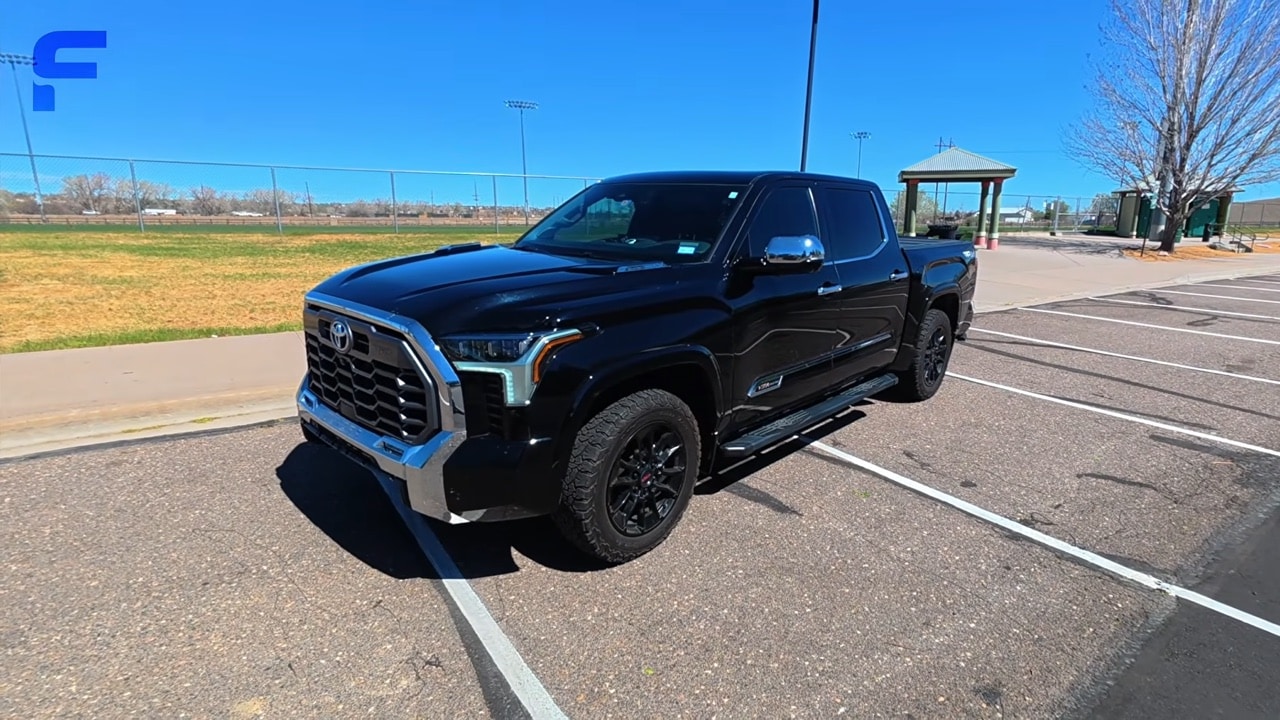
A 2023 Toyota Tundra hybrid with 100,000 miles sounds like a useful test of Toyota’s latest full-size truck. Add regular towing of a 28-foot travel trailer, and it gets more interesting. The owner behind Myles RVs shared his 100,000-mile ownership update on April 28, 2026, reporting no engine or powertrain problems, but plenty of smaller things he would change.
His truck is a 2023 Toyota Tundra 1794 Edition with the TRD Off-Road package and i-FORCE MAX hybrid powertrain. He bought it going into 2023 and says he personally accumulated the mileage through trips across the country. This is his account of one truck, not a prediction of what every Tundra owner will experience.
100,000 miles with a travel trailer in the mix
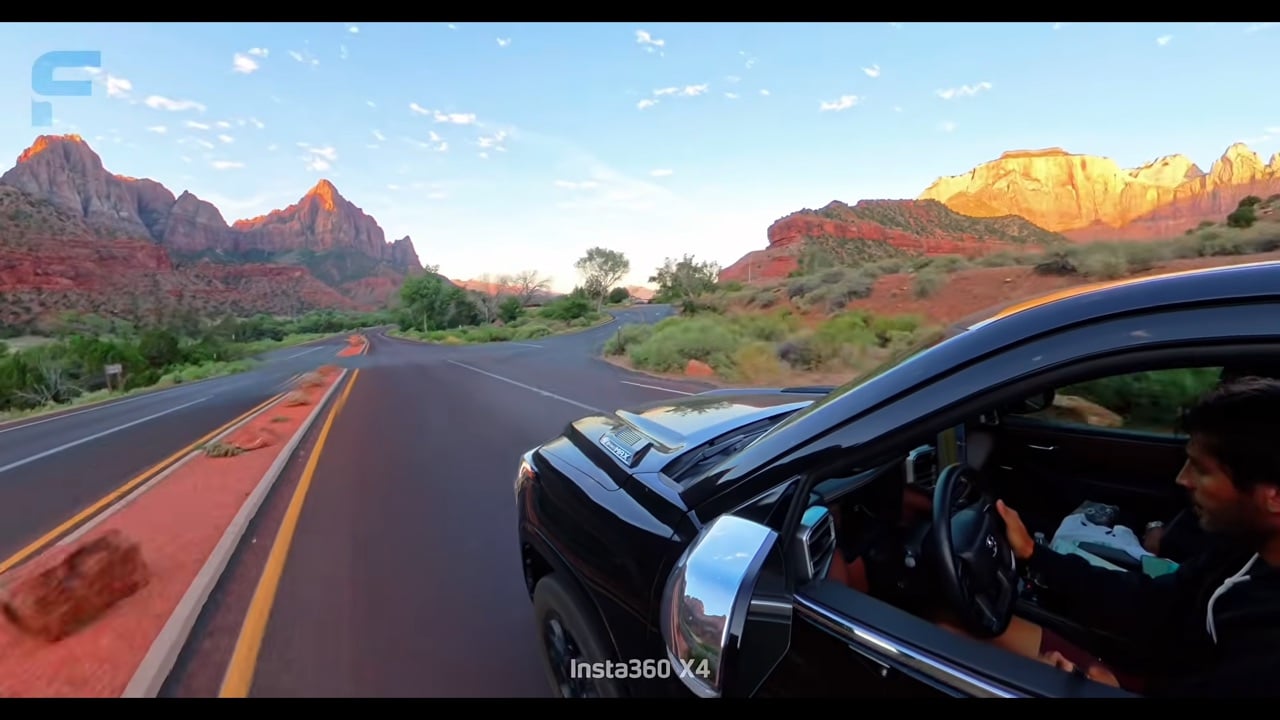
This Tundra has done more than commute. The owner regularly pulls a 28-foot travel trailer and sometimes carries a motorcycle in the bed. That makes his experience relevant to buyers shopping for a truck that will serve as both a comfortable daily driver and a road-trip tow vehicle.
However, trailer length is not trailer weight. His account does not establish the combination’s loaded weight or remaining payload, so it should not be treated as proof that another similarly sized camper fits every Tundra configuration.
No engine or powertrain problems reported
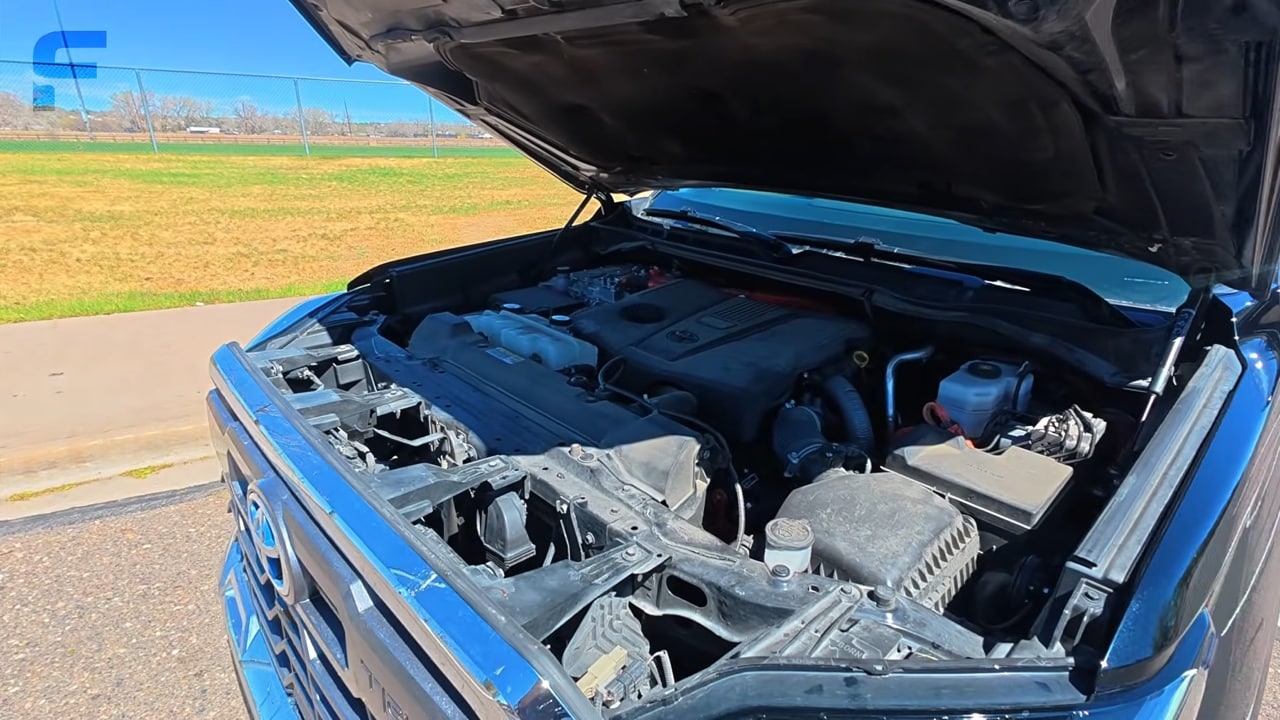
At the 100,000-mile mark, the owner reports no engine or powertrain problems and remains pleased with the way the 10-speed automatic shifts. He says he has changed the oil roughly every 5,000 to 7,000 miles and kept up with other routine maintenance.
That is an encouraging ownership result, particularly for someone who uses his truck to tow. It is not an itemized cost-of-ownership report, though. He does not provide a complete set of repair invoices or a maintenance spending total. Nor does one trouble-free powertrain settle the broader reliability question for this generation.
Small failures still sent him looking for fixes
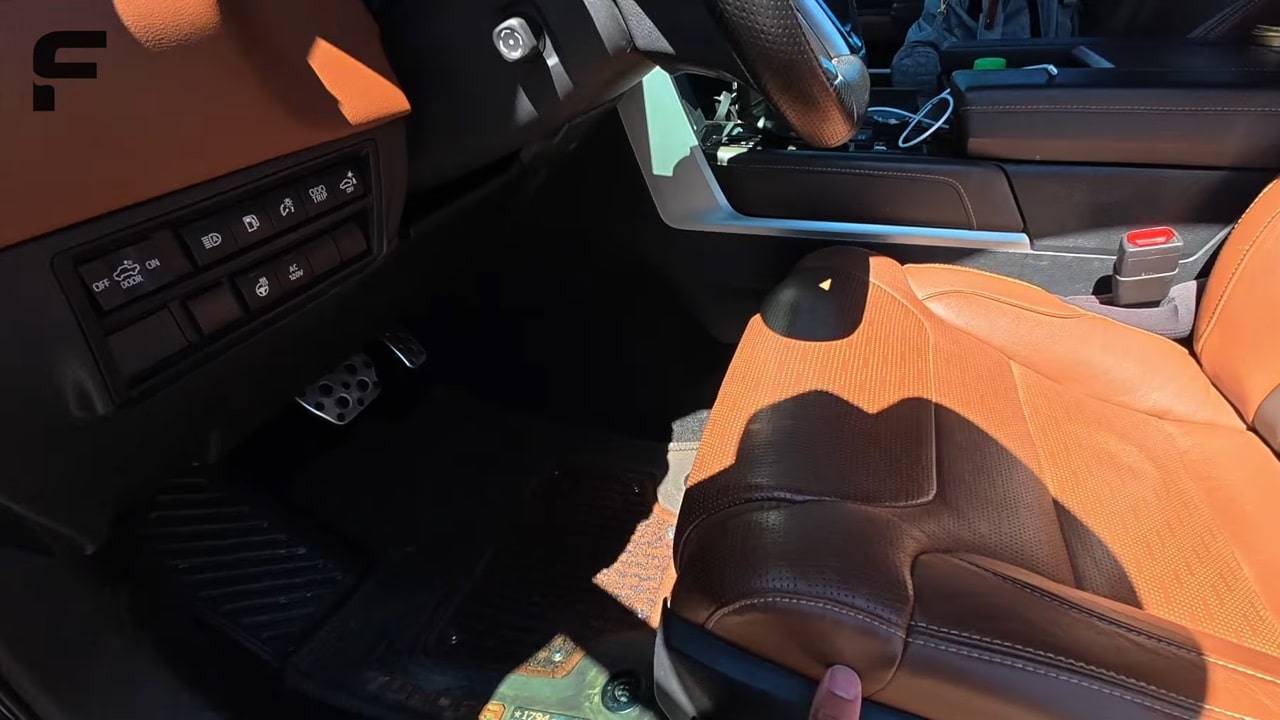
The power-adjustable thigh support in the driver’s seat repeatedly stuck. He says it took two dealer visits to address, although it was working consistently by the time of his update.
The electric fuel-door release also stopped working during a road trip. He found a manual release underneath the truck and used it to get the door open. The electric release was working again when he recorded the review, but that does not establish why it failed or whether it was permanently repaired.
He also shows damage to a plastic piece at the front bumper. That needs context: he says he drove over a tree stump and tore the piece off while backing away. This was damage from an encounter with an obstacle, not a part spontaneously failing.
The cabin holds up, but packaging gets old
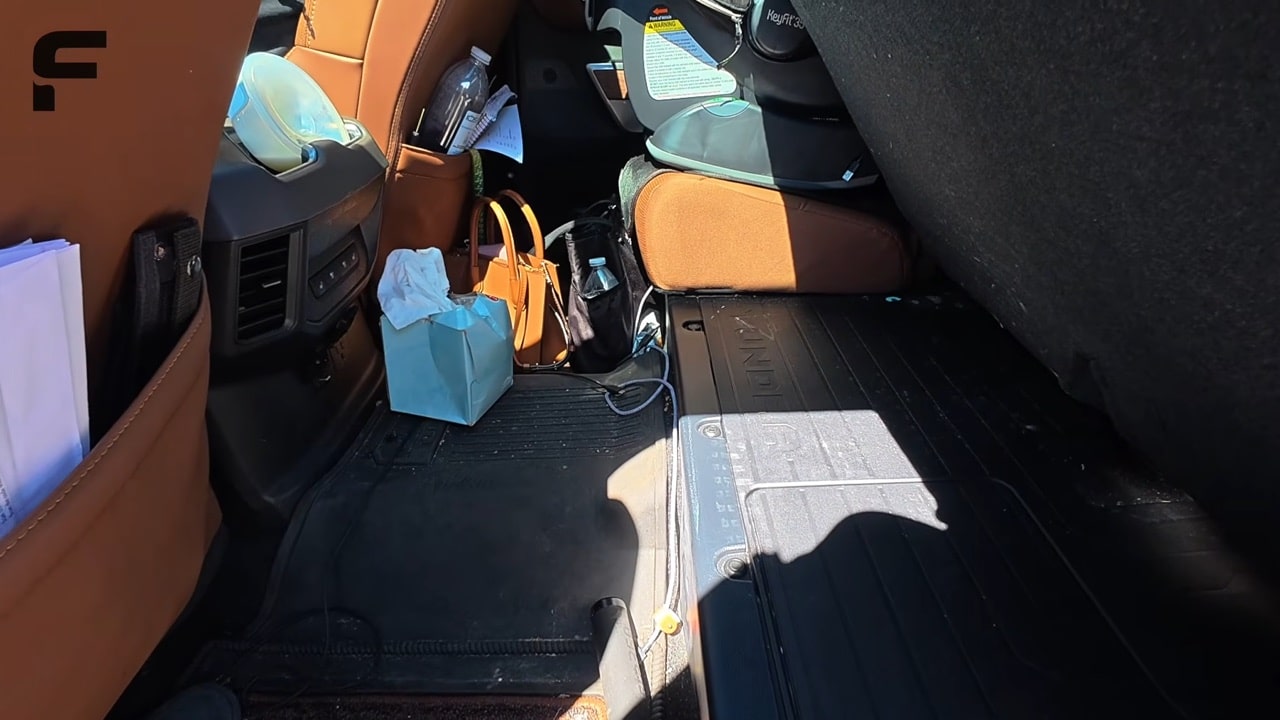
There is praise for the leather’s condition and the steering wheel’s comfort after substantial use. His complaints are more about everyday design: scratched instrument-panel plastic, glare reflecting off the hood, and a wireless phone charger he finds too slow to be useful.
He would also like more storage. The hybrid battery occupies space beneath the rear seat, limiting the cargo flexibility he wants. At 6 feet, 1 inch tall, he finds rear headroom tight, particularly in the center position beneath the panoramic roof area.
He likes the camera views, but the automatic low-speed camera display can interrupt his navigation view. That is a useful distinction: the camera hardware is helpful to him; the way it takes over the screen can be annoying.
Would he keep the Tundra?
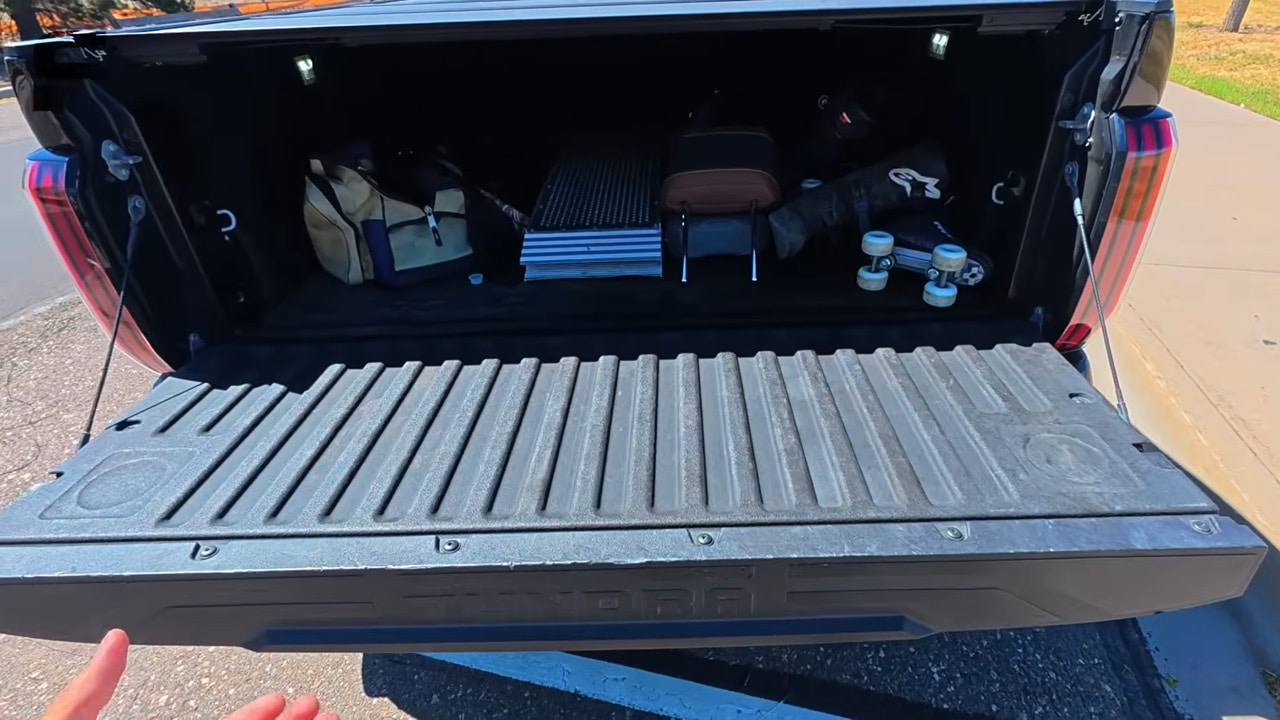
Despite that list, the owner’s overall answer is clear: he is attached to the truck and plans to keep driving it. He is interested in seeing what the next 100,000 miles bring rather than replacing it now.
His TRD Off-Road package should not turn this into an off-road verdict. He says he has not taken the truck off-roading, and he has not used the trailer backup guide either. Those features remain outside the experience he can evaluate.
The bottom line
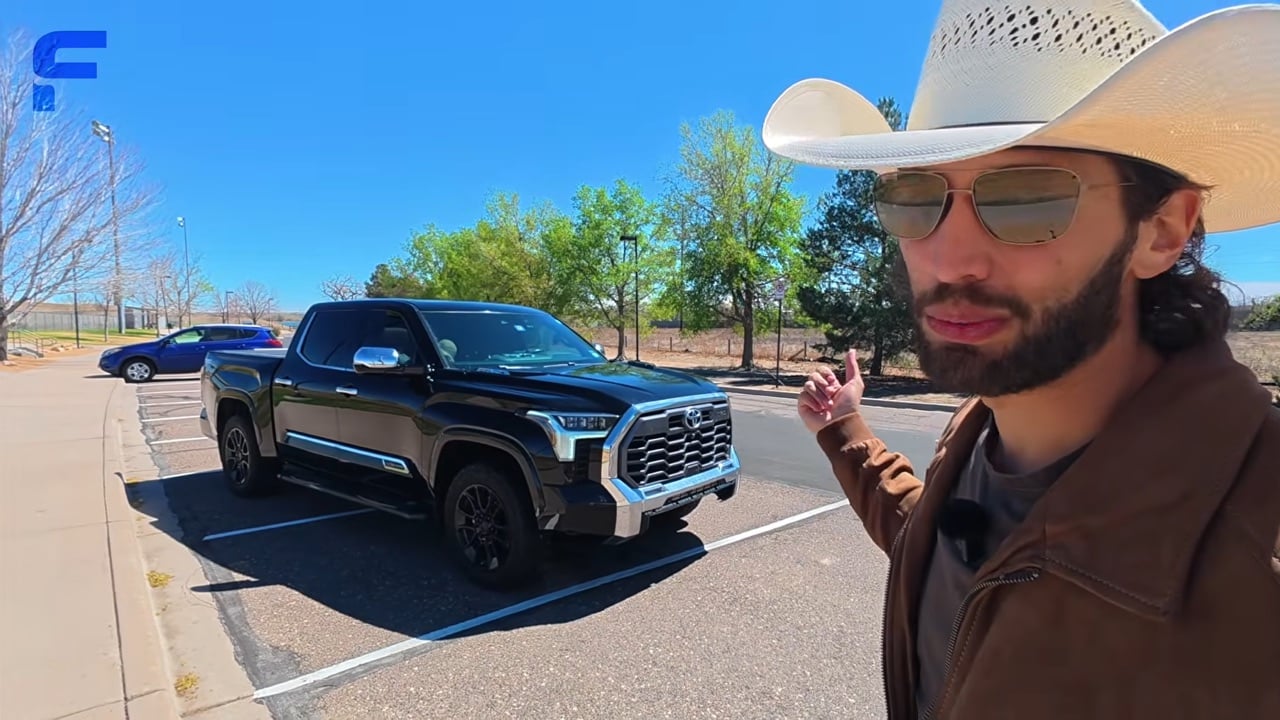
For a used-truck shopper, the takeaway is not that the 2023 Toyota Tundra hybrid is flawless. It is that this particular owner has reached 100,000 miles with a powertrain he likes while living with smaller electrical, comfort and storage frustrations. That is a more useful distinction than labeling a truck entirely good or bad.
Buyers should still inspect the individual truck, review its service history and test the convenience features, not just the engine and transmission. A seat adjustment or fuel-door release might seem minor on a test drive, but those are exactly the details an owner deals with long after the purchase.
Source: Myles RVs’ April 28, 2026 ownership update. Mileage, use and repair experiences above are the owner’s reported account; we have not independently inspected this truck or its service records.