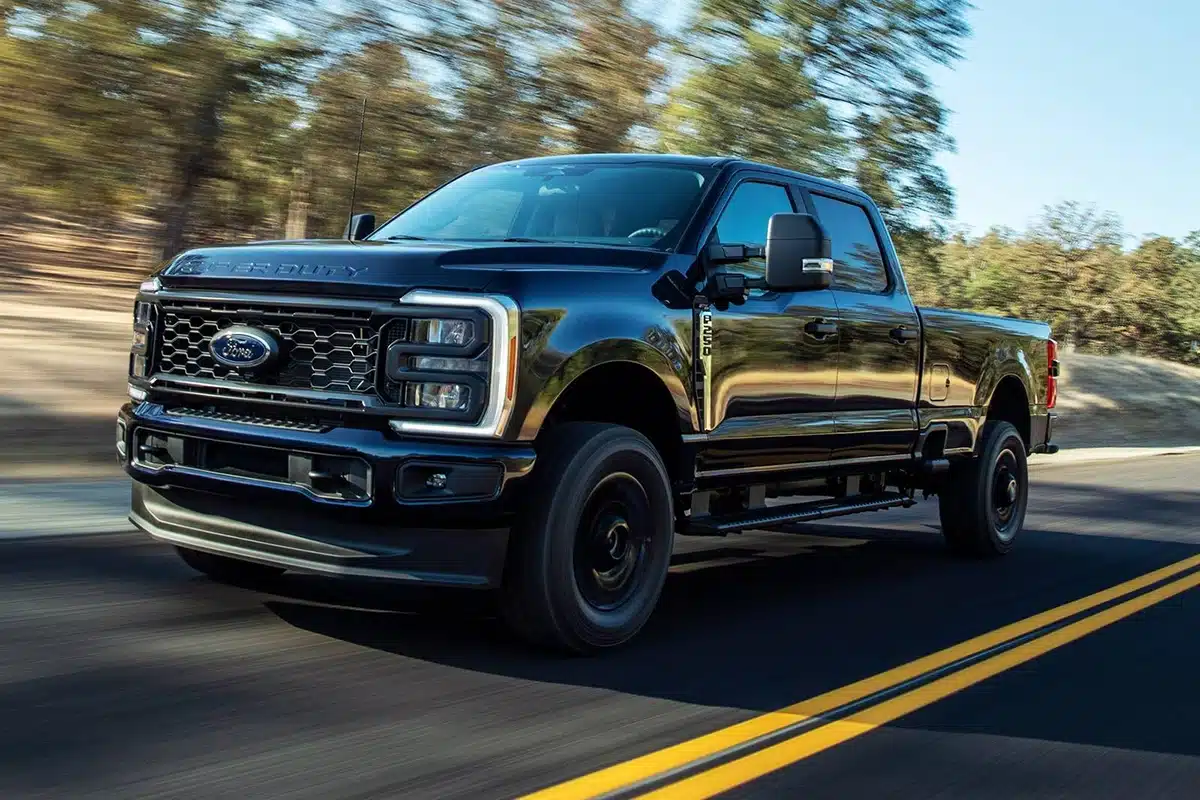
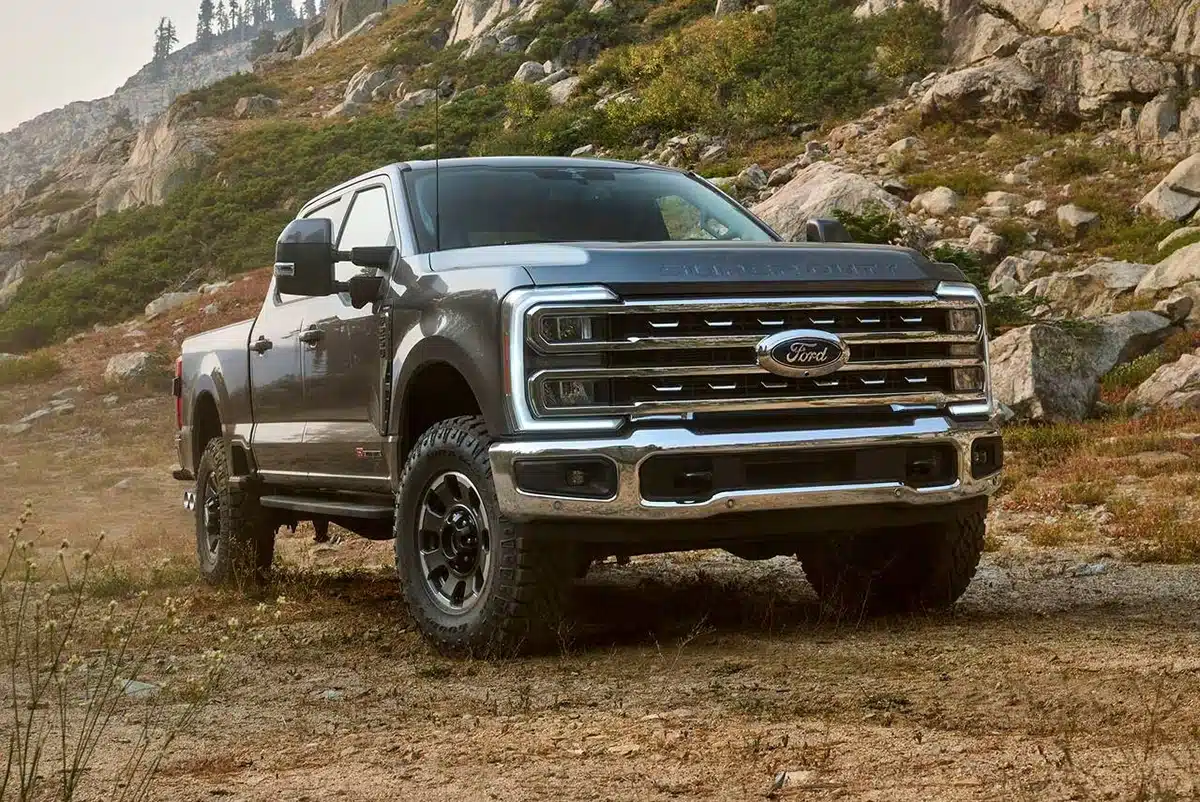
The 2027 Ford Super Duty is getting a major engine shakeup: one V8 is disappearing, and the other is losing power.
Ford is dropping the 6.8L gasoline V8 and making the larger 7.3L V8 the only gas engine in the Super Duty lineup. But there’s a twist: the 7.3L’s peak torque falls all the way to the outgoing 6.8L’s level. Huh? Yup!
The 7.3L drops from 430 horsepower and 485 pound-feet of torque for 2026 to 420 horsepower and 445 pound-feet for 2027. That is 10 fewer horsepower and 40 fewer pound-feet of torque. Reader George Loridas spotted the change and tipped us off, prompting us to ask Ford what changed.
Engine Changes for the 2027 Ford Super Duty
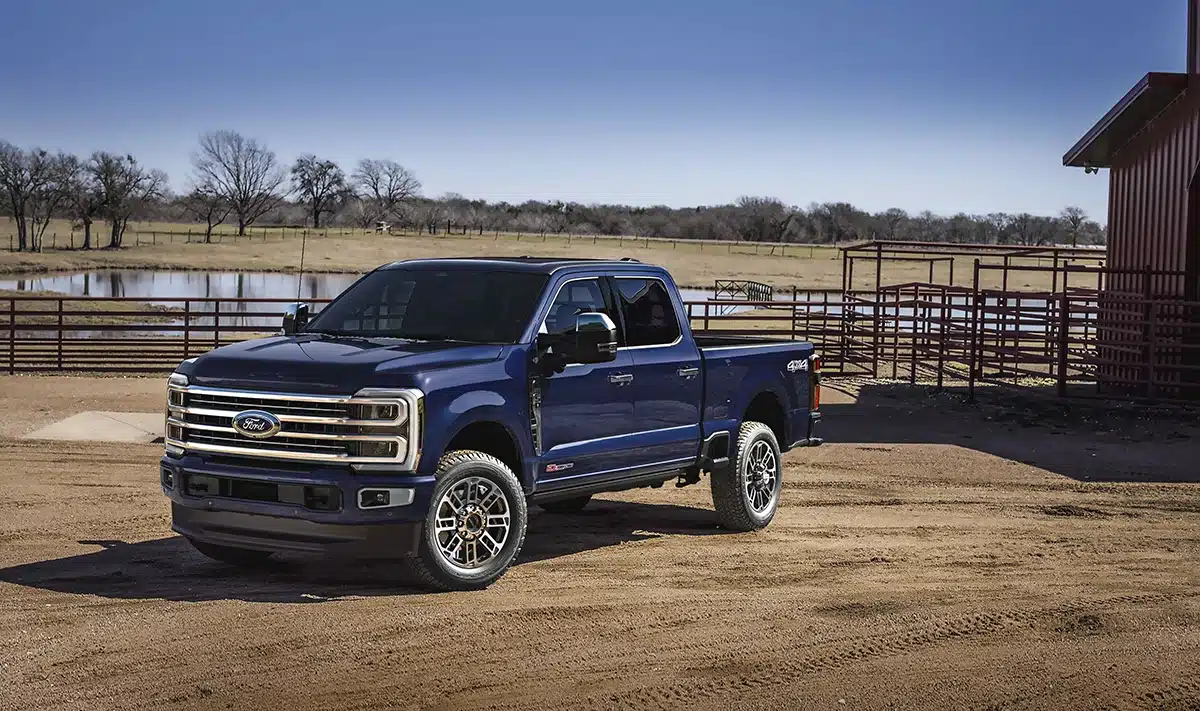
The 2026 Super Duty offers two gasoline V8s. The 6.8L is rated at 405 horsepower and 445 pound-feet, while the 7.3L produces 430 horsepower and 485 pound-feet.
For 2027, the 6.8L disappears and the 7.3L becomes the standard gasoline engine on F-250 and F-350 pickups. However, the 2027 7.3L produces the same published peak torque as the outgoing 6.8L, with a 15-horsepower advantage.
| Engine and model year | Horsepower | Torque |
|---|---|---|
| 2026 6.8L gas V8 | 405 hp | 445 lb-ft |
| 2026 7.3L gas V8 | 430 hp | 485 lb-ft |
| 2027 7.3L gas V8 | 420 hp | 445 lb-ft |
Ford is also dropping the standard-output 6.7L Power Stroke diesel, rated at 475 horsepower and 1,050 pound-feet for 2026 according to their online order guide. The remaining engine choices are the 7.3L gas V8 and the 6.7L High Output Power Stroke diesel. The High Output diesel remains optional in F-250 and F-350 pickups and standard in the F-450.
Ford explains the 7.3L decision and lower output
We asked Ford to confirm the new ratings, explain why the 6.8L was removed and identify what changed for 2027. Ford provided the following statement, attributed to Austin Solimine, Super Duty brand marketing manager:
“Yes. We are streamlining our gas powertrain offering to better align with the needs of our customers. Our customers have told us they value simplicity and high-level capability. In response, we are making our most powerful and popular gas engine—the 7.3L V8—the standard gas engine across the Super Duty lineup. By moving from two gasoline engines to one, we are simplifying the ordering process for both our retail and fleet customers. This ensures that every customer, from the work-ready XL to the premium trims, starts with the heavy-duty performance and displacement of the 7.3L V8.
“We’ve updated the 7.3L engine to ensure the Super Duty remains compliant with the latest environmental standards. While this resulted in a minor adjustment to peak output figures, the 7.3L remains a leading gasoline engine in terms of displacement and real-world work capacity. It continues to deliver the performance that Super Duty customers expect including best-in-class payload.”
Ford’s answer confirms two separate decisions. Dropping the 6.8L simplifies ordering and makes the larger gasoline engine standard. This mirrors what other automakers have done by offering one gas and one diesel engine choice.
The lower 7.3L output, meanwhile, is tied to an update needed for environmental compliance according to Ford. That explanation may surprise readers who heard federal vehicle rules were rolled back, but fuel-economy and greenhouse-gas policy are separate from the tailpipe standards at issue here.
What emissions rules?

First, CAFE is a NHTSA fuel-economy program, not a tailpipe-emissions rule and it doesn’t apply here. Its familiar passenger-car and light-truck standards generally cover vehicles below 8,500 pounds gross vehicle weight rating, including pickups such as the Ford F-150. The Trump administration also rescinded federal motor-vehicle greenhouse-gas standards in February 2026. However, EPA’s own fact sheet says that action did not rescind or modify criteria-pollutant standards.
That brings us to Tier 4. EPA’s Tier 4 criteria-pollutant program covers model-year 2027 and later light- and medium-duty vehicles. It includes Class 2b and Class 3 vehicles from 8,501 through 14,000 pounds GVWR, the weight classes that include many Super Duty configurations, and was designed to phase in more stringent standards from 2027 through 2032. Those standards address pollutants tied to smog, soot and public health rather than fuel economy or carbon dioxide.
In May 2026, the Trump EPA proposed delaying the Tier 4 phase-in from model year 2027 to 2029 to give automakers and engine builders more time to meet the increasingly stringent standards. At the time of writing, that was a proposal rather than a final rule, and EPA said existing Tier 3 criteria-pollutant requirements would remain in effect during the proposed delay.
Ford did not identify Tier 4 or any other specific regulation in its response. However, it is pretty evident Ford is looking ahead to these rules becoming a reality and making the change now rather than pushing them off.
Ford confirms there is no gasoline particulate filter
Another question I had was about the new gasoline particulate filters making their way into U.S. engines. They have been used globally for years now and most new engine designs have plans to incorporate them into the exhaust system.
Ford separately confirmed it did not add a gasoline particulate filter, or GPF, to the 2027 7.3L V8 like it has in some engines used in the F-150 and Maverick pickups.
That rules out one possible explanation for the lower rating. It does not establish what Ford changed instead. Calibration, combustion strategy, catalyst design or loading, cold-start operation and other emissions-control changes are technically possible, but Ford has not identified any of them as the cause.
The bottom line is that the 2027 Ford Super Duty loses both the 6.8L gasoline V8 and 40 pound-feet of peak torque from the returning 7.3L. Ford says the streamlined lineup gives every gasoline buyer the larger engine, while an emissions-compliance update explains the 7.3L’s revised output. Exactly what changed inside the engine or its emissions system remains unanswered. It could simply be an engine tune as well.
Other 2027 changes
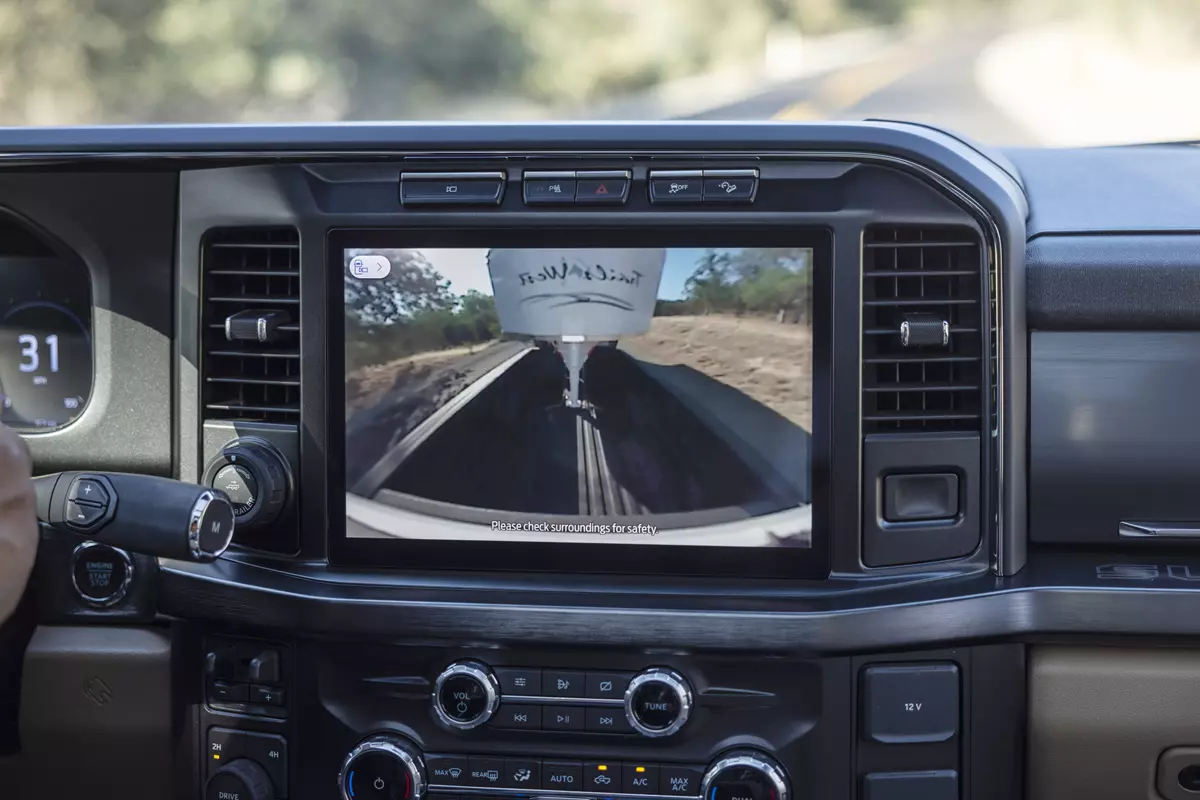
The engine changes are only part of the 2027 update. Ford is expanding the Tremor Off-Road Package to XL trucks equipped with the STX Appearance and XL Driver Assist packages. Tremor also becomes available with the Crew Cab, 176-inch wheelbase and 8-foot bed on XLT, Lariat, King Ranch and Platinum models.
A new XL Off-Road 35-Inch Tire Package brings 35-inch tires, increased ride height, an electronic-locking rear differential, limited-slip front differential, performance shocks, trail modes and skid plates to an XL Crew Cab 4×4 single-rear-wheel short-box truck without Tremor graphics. Ford is also adding a Carhartt Package for qualifying XLT Crew Cab trucks and the limited-edition Proud to Honor appearance package with red, white and blue graphics, dark exterior accents and black wheels.
Platinum trim expands to F-350, F-450 and F-550 Chassis Cab models. Other order-guide changes include an available digital rearview mirror, new Neptune Blue and Iconic Silver Metallic paint colors, new wheel choices, an optional SuperCab rear-seat delete, fleet-only 65- and 75-mph speed limiters and standard CNG/propane gaseous-engine preparation with the 7.3L V8.
Order banks are open now.