
It’s one of the most common comments I hear when an expensive automotive part fails.
“Of course it broke. The warranty just expired.”
Sometimes the timing is downright painful. Your truck has a 5-year/60,000-mile powertrain warranty, and at 62,000 miles the engine starts knocking. Or the transmission gives up shortly after the odometer crosses the warranty limit.
It is easy to make the next leap: The automaker knew exactly how long the part would last and designed it to fail after the company was no longer responsible for the repair.
But is there actually evidence that automakers design engines and other parts to fail right after the warranty expires?
The answer is considerably more complicated.
Automakers Know Parts Won’t Last Forever
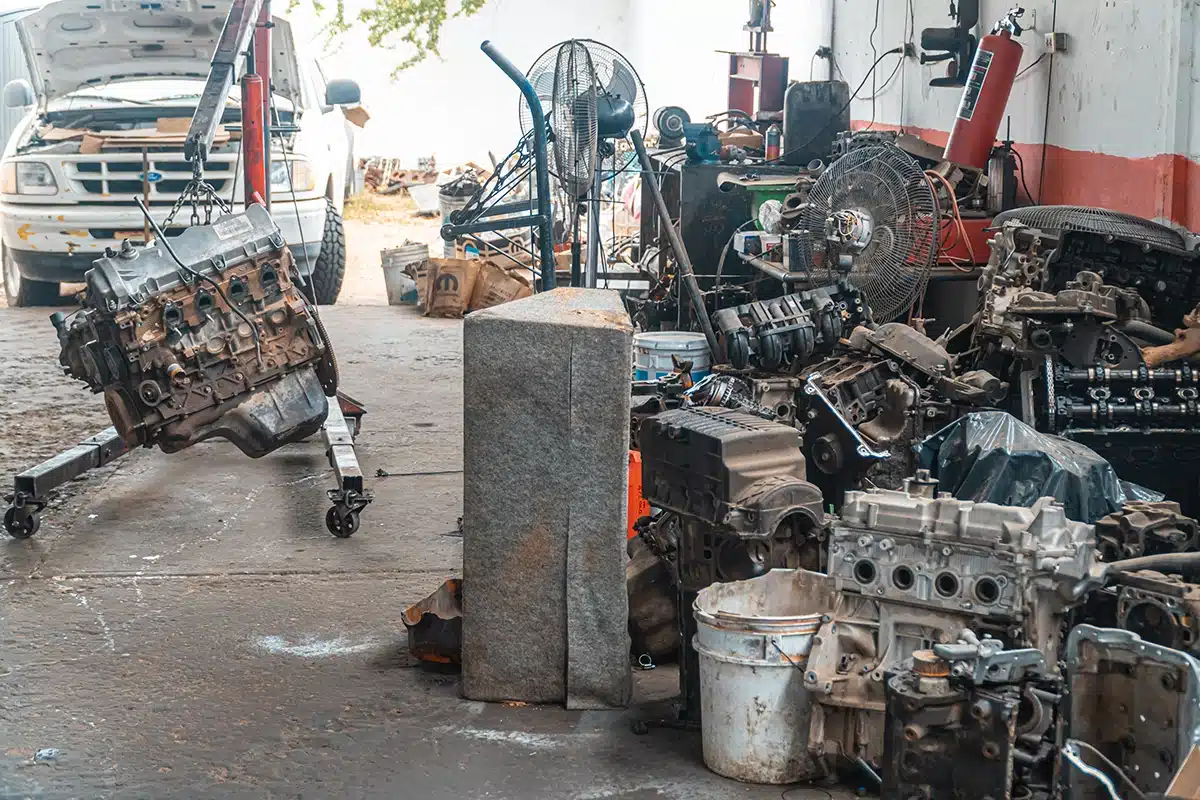
Let’s get one thing out of the way. Automotive engineers absolutely consider durability.
Parts are tested. Engines accumulate enormous numbers of development miles and hours. Manufacturers and suppliers establish durability targets. Once vehicles are in customers’ hands, automakers collect warranty claims and field data that can reveal failure patterns.
An automaker also has to balance durability against cost, weight, emissions, performance, manufacturing requirements and countless other engineering considerations.
None of that is the same thing as designing a part to fail at a particular odometer reading.
Years ago, I was having drinks with a group of experienced Toyota engineers when I brought up this exact claim.
I asked about the idea that an automaker could engineer a part to fail at 60,001 miles, immediately after a 60,000-mile powertrain warranty ended.
They laughed.
Their collective response was essentially: If we could find an engineer capable of doing that, we’d hire that person in a heartbeat. Imagine how smart someone would have to be to make a part fail that precisely.
Their point wasn’t that engineers can’t estimate service life or failure rates. They certainly can.
The joke was about the extraordinary precision required to make a mass-produced mechanical component fail at essentially the same mileage despite thousands of different drivers, climates, maintenance histories, towing loads, operating temperatures and manufacturing tolerances.
A durability target isn’t a mechanical countdown timer.
Courts have heard this argument before

Owners have also taken versions of this argument to court.
One of the more interesting cases is Carlson v. General Motors Corp., involving GM’s troubled 5.7-liter diesel engines from the 1980s.
The owners alleged GM knew the engines contained inherent defects that could result in expensive failures, yet limited its implied warranties to relatively short written warranty periods. The U.S. Court of Appeals for the Fourth Circuit ruled that the owners had alleged enough for their argument that those limitations could be unconscionable to proceed.
That’s significant, but it isn’t the same as a court deciding GM intentionally designed engines to fail after their warranties.
The appellate court split the claims. It affirmed the dismissal of claims from owners alleging only diminished resale value, but revived claims from owners whose engines developed problems after the purported warranties expired. The court held that the alleged unconscionability of the warranty limits could not be decided on the pleadings alone, and it expressed no view on what the owners could ultimately prove.
Other courts have been considerably less receptive to the broader argument.
In Abraham v. Volkswagen, the Second Circuit rejected warranty claims for defects that manifested after the warranty’s time or mileage limits. The underlying reasoning was important: virtually any mechanical failure that happens later can be traced to some condition that existed earlier. Treating every latent condition as covered indefinitely would effectively eliminate the warranty expiration date.
A California court reached a similar conclusion in Daugherty v. American Honda. Honda owners alleged an engine defect manifested after the warranty expired. The court rejected the idea that the written warranty continued indefinitely simply because the alleged defect may have existed while the vehicle was still covered.
None of these decisions found that an automaker engineered an engine to fail at 60,001 miles. The disputes concerned warranty coverage and alleged defects.
Toyota Tundra Engine Failures Show Why it Gets Complicated
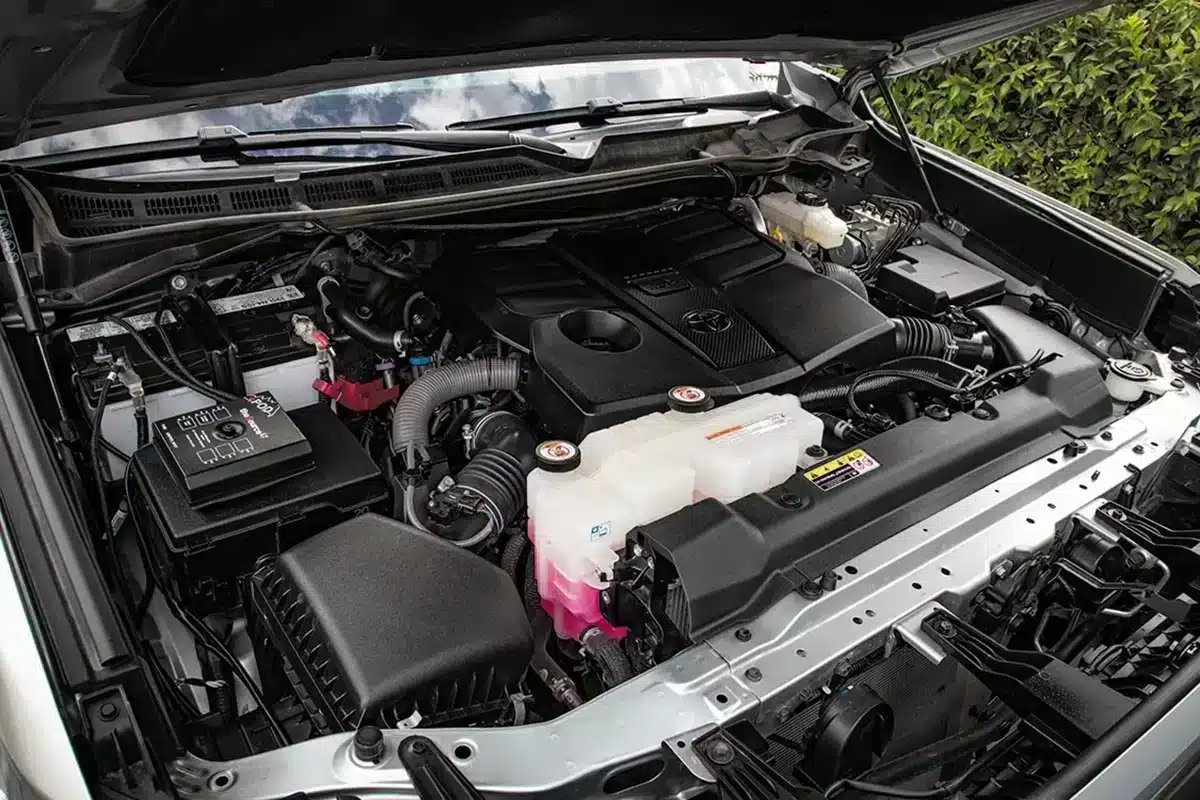
The ongoing Toyota Tundra V35A twin-turbo V6 engine situation is a good example.
Toyota has recalled large populations of Tundra and Lexus vehicles over manufacturing debris that can lead to main-bearing damage and ultimately engine failure. The affected population has expanded as Toyota’s investigation has continued.
Naturally, some owners have wondered whether Toyota knew these engines could fail outside the 5-year/60,000-mile powertrain warranty.
That’s a fair question to ask.
It is not, by itself, evidence that Toyota designed the engine to fail after 60,000 miles.
In fact, numerous failures occurred early enough for Toyota to replace engines under warranty or recall them. Toyota’s safety recalls acknowledge the potential for main-bearing failure and engine stalling.
If the objective were to engineer an engine that reliably survived until Toyota stopped paying for it, engines failing while still covered would be a remarkably unsuccessful way to accomplish that objective.
The much better questions are whether the engine met reasonable durability expectations, what Toyota knew about the defect, when Toyota knew it and whether every affected engine is ultimately being identified.
Those questions can be investigated using documents and evidence.
An engine failing at 60,001 miles cannot answer them by itself.
The GM 6.2-liter V8 Recall Makes the Same Point
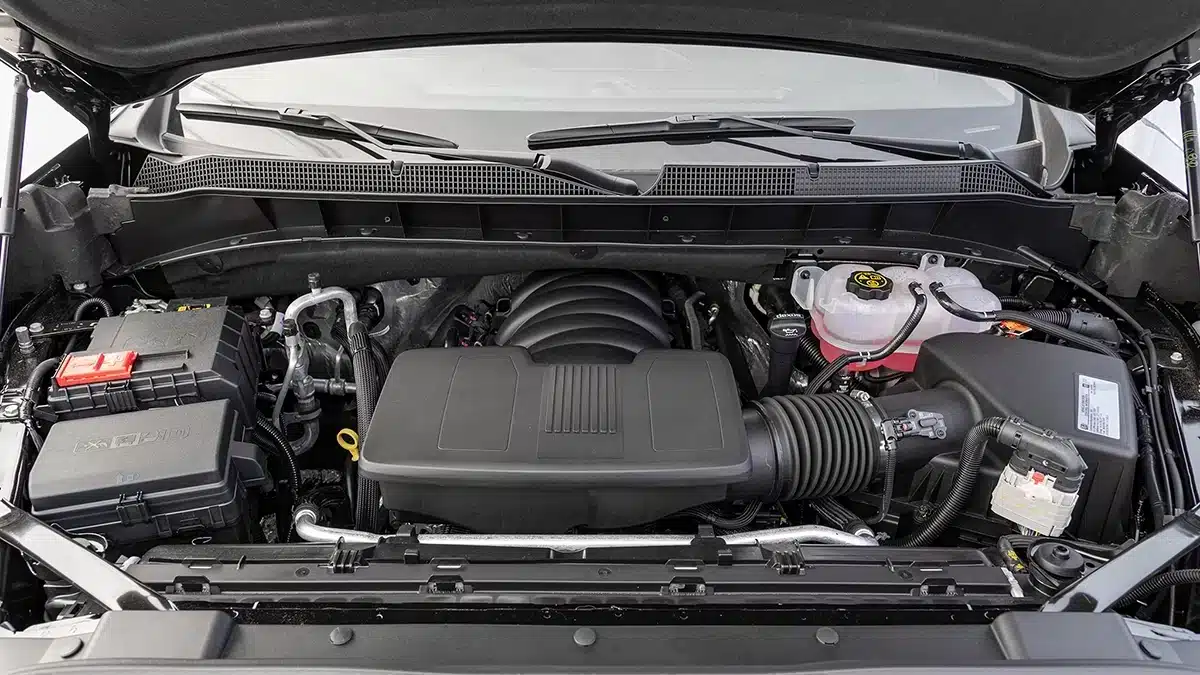
GM’s 6.2-liter L87 V8 engine recall provides another example.
GM recalled hundreds of thousands of vehicles in 2025 over engine problems, and NHTSA subsequently opened a recall query in 2026 after receiving complaints alleging engine damage or failure even after the earlier recall remedy.
A known defect and a warranty are two different issues.
An automaker may ultimately identify a manufacturing or engineering problem significant enough to require a recall. That does not prove the warranty period was selected to avoid paying for that particular problem.
Likewise, a vehicle can suffer an expensive failure shortly outside warranty without proving there was ever a defect at all.
This is where internet discussions tend to combine several separate questions: Was the part defective? Did the manufacturer know about a problem? Should there have been a recall? Was the vehicle under warranty? Should the manufacturer help an owner even if it wasn’t?
Those are all legitimate questions.
“They made it break after the warranty” is a much more specific allegation.
A Failed Engine Can Still Be Unacceptable

None of this means an owner should shrug when an expensive engine fails at 61,000 miles.
If someone spends $60,000, $70,000, or $80,000 on a truck and faces an enormous engine repair shortly after the powertrain warranty expires, saying “technically your warranty ended” isn’t going to make that person feel any better.
Nor should it.
Consumers can reasonably expect modern engines and transmissions to last considerably longer than their warranty periods under normal use and proper maintenance.
The important distinction is between saying a component failed too soon and saying somebody intentionally engineered it to fail after the warranty.
The first claim can be supported by durability data, failure patterns, technical investigations, recalls and owner experiences.
The second requires evidence of intent.
Could an automaker knowingly sell a defective component and attempt to minimize its financial exposure? Of course that’s possible, and courts have dealt with allegations involving concealed defects and inadequate warranties.
But an engine on one person’s truck failing shortly after its warranty expires isn’t proof that someone in an engineering department programmed its mechanical death around the odometer. If there were thousands of trucks failing around that same mileage, then that would be something.