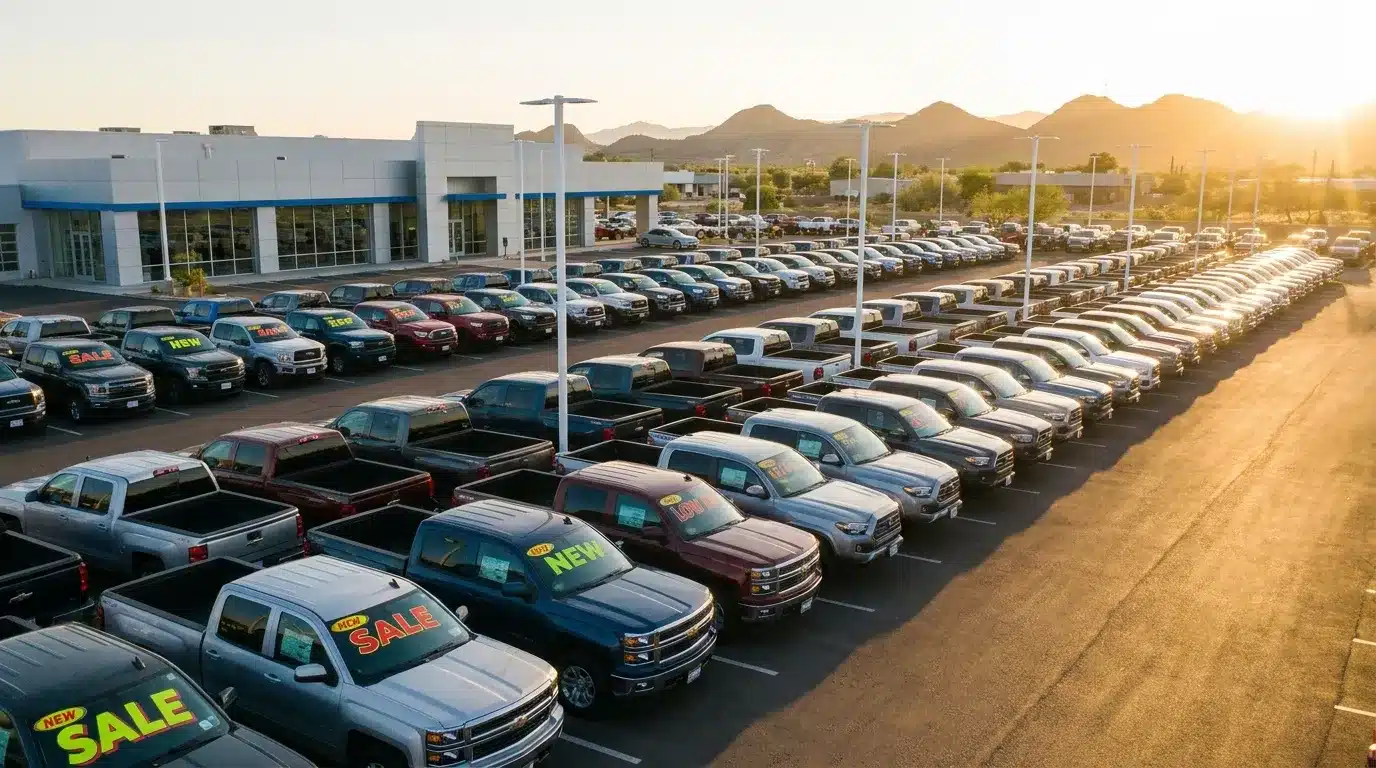
You walk onto a dealership lot, spot the truck you want, and twenty minutes later you’re signing paperwork. It feels simple from the buyer’s side.
Behind that simplicity is a system most shoppers never think about. When that system breaks down, the customer usually feels it first — a salesperson who can’t find the keys, a stock number that doesn’t match the paperwork, or a “sold” truck still showing as available online.
Short answer: Dealerships track every vehicle from intake to sale using key tags, stock numbers, and inspection checklists, then organize the paperwork into a deal jacket for compliance and recordkeeping. Here’s what’s actually happening at each stage.
Dealership Key Management Starts Before the Truck Hits the Lot
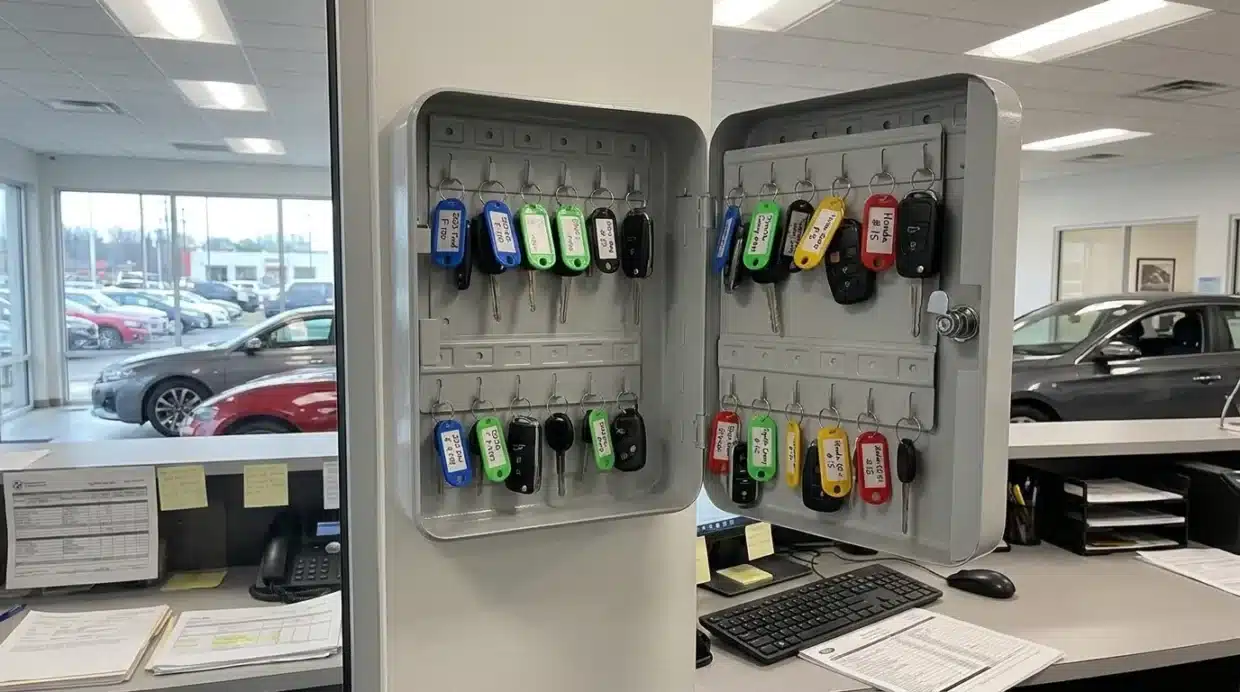
Every truck gets a stock number the moment it arrives, and that number follows it through intake, reconditioning, pricing, and sale.
- Why car dealer key tags exist — each key set gets tagged with the stock number and VIN so any salesperson can match keys to vehicle instantly
- Dealer key cabinets — most stores use a wall-mounted or electronic key cabinet; electronic versions log exactly who pulled which set and when
Expert insight: A disorganized key system is one of the most common time-sinks on a sales floor. Misplaced keys cost real minutes on every test drive request — and a truck that can’t be pulled quickly is a truck that’s harder to sell.
Bigger stores lean on electronic key cabinets specifically for the access log. It’s the reason a good salesperson can walk you to a truck in the back row in under two minutes instead of fifteen.
Getting Lot-Ready: Inspection and Reconditioning
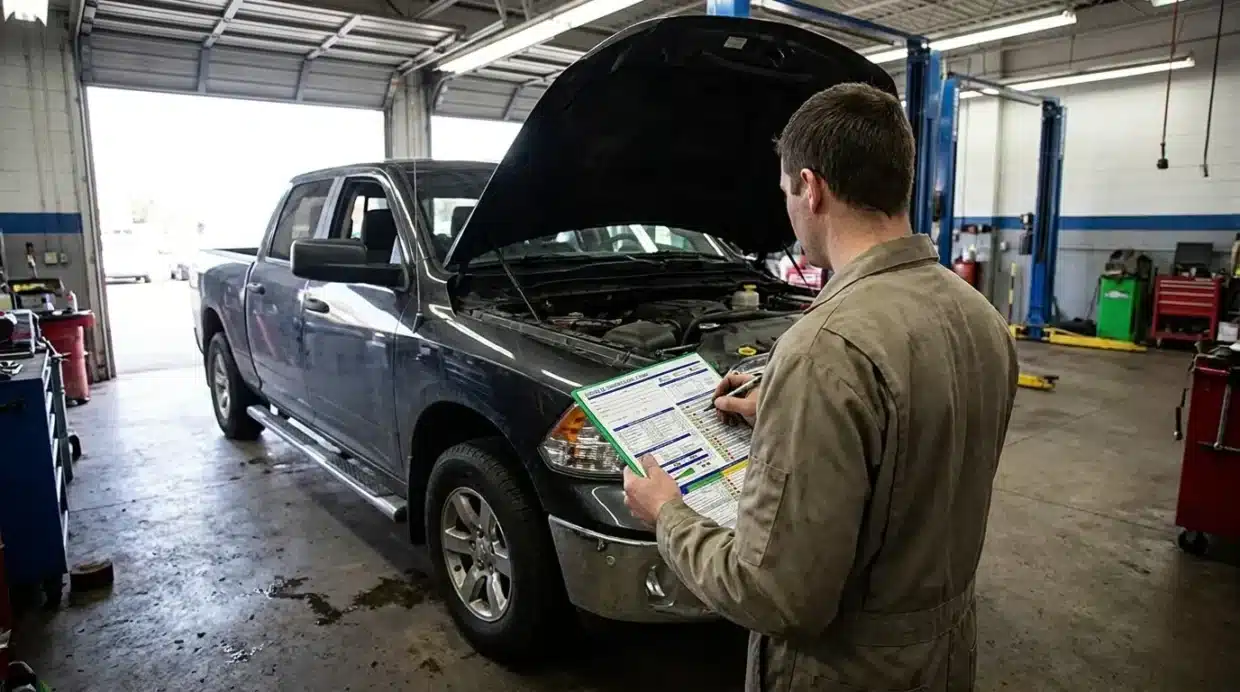
Before a truck is priced, it goes through a documented inspection — this is where a vehicle inspection checklist comes in.
- Multi-point inspection checklist — covers brakes, fluids, tires, battery, lights, and belts; gives service advisors a standardized pass/fail record
- Why this matters to you — a truck that failed and was reconditioned on 3 items looks identical on the lot to one that passed clean; the paperwork is the only difference
- Paper floor mats and disposable car floor mats — placed in the driver’s footwell during every service or detail step so the tech isn’t tracking grease onto carpet they don’t own
Expert insight: Ask to see the inspection sheet, not just hear “it passed inspection.” A specific, itemized checklist is a signal the dealership’s process is actually followed — not just claimed.
Those Windshield Stickers Aren’t Random
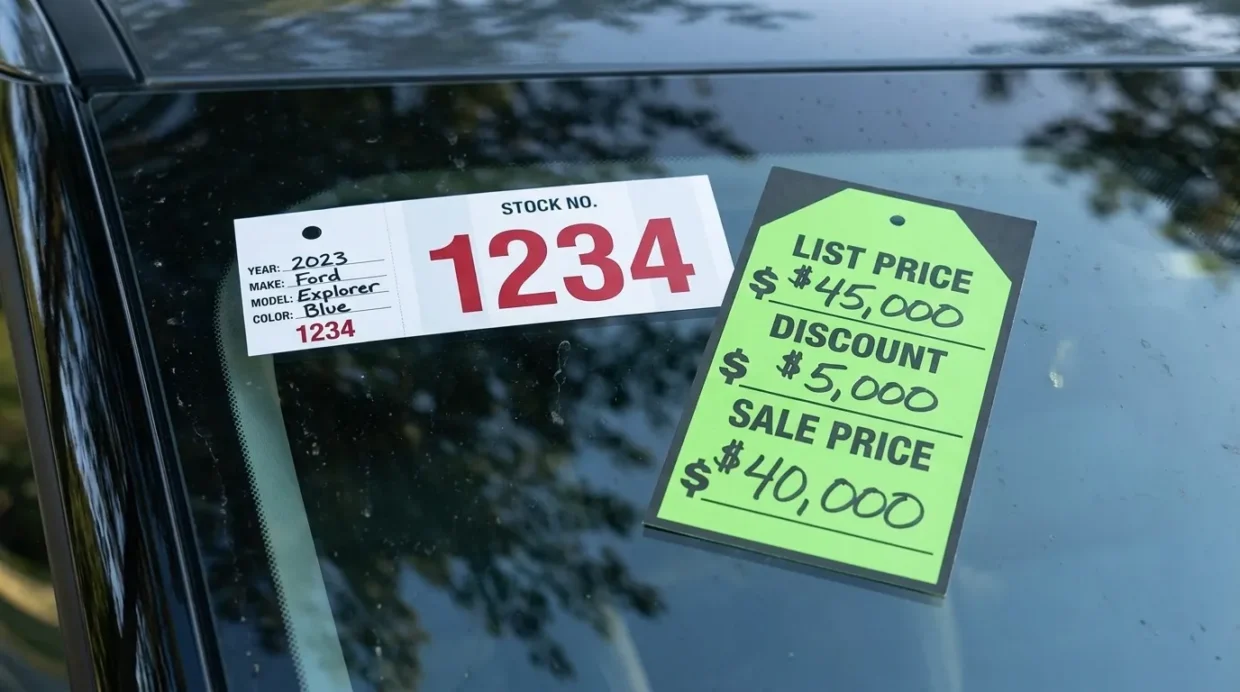
Every sticker on the glass when you’re browsing serves a specific, sometimes legally required purpose.
- As Is Buyers Guide — federally required on every used vehicle; discloses whether it’s sold with a warranty, without one, or “as-is.” Missing or incorrect = a federal compliance violation, not just sloppy paperwork.
- Was/Now price stickers — a deliberate signal the dealership is trying to move aged inventory, not just a random discount. Worth noting if you’re negotiating.
- Stock number and addendum stickers — quick ID during lot walks, plus disclosure of any dealer-added packages or pricing adjustments
After You Sign: Paperwork and the First Service Visit
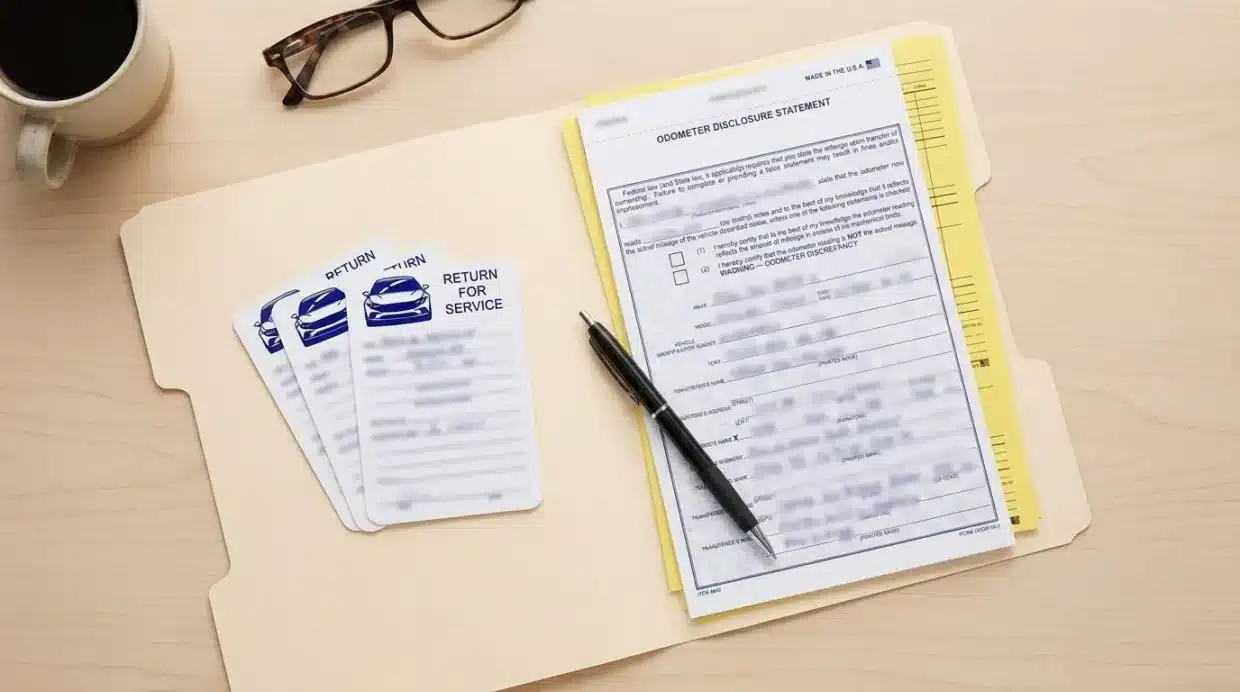
Signing the deal doesn’t end the paper trail — it starts a new one.
- Deal jacket — the master file holding the Buyers Guide, financing documents, title, trade-in paperwork, and your signed purchase agreement
- Odometer disclosure statement — a federally required signed record of mileage at time of sale, protecting both buyer and seller from later disputes
- Custom oil change stickers / oil change reminder stickers — applied inside the windshield after your first service visit, so you (and the dealership) both know when the next one’s due
Expert insight: An organized deal jacket protects the dealership in an audit — but it also protects you. It’s the difference between your plate arriving on schedule and it getting lost in a stack of unfiled paper.
Why the Lot Looks the Way It Does
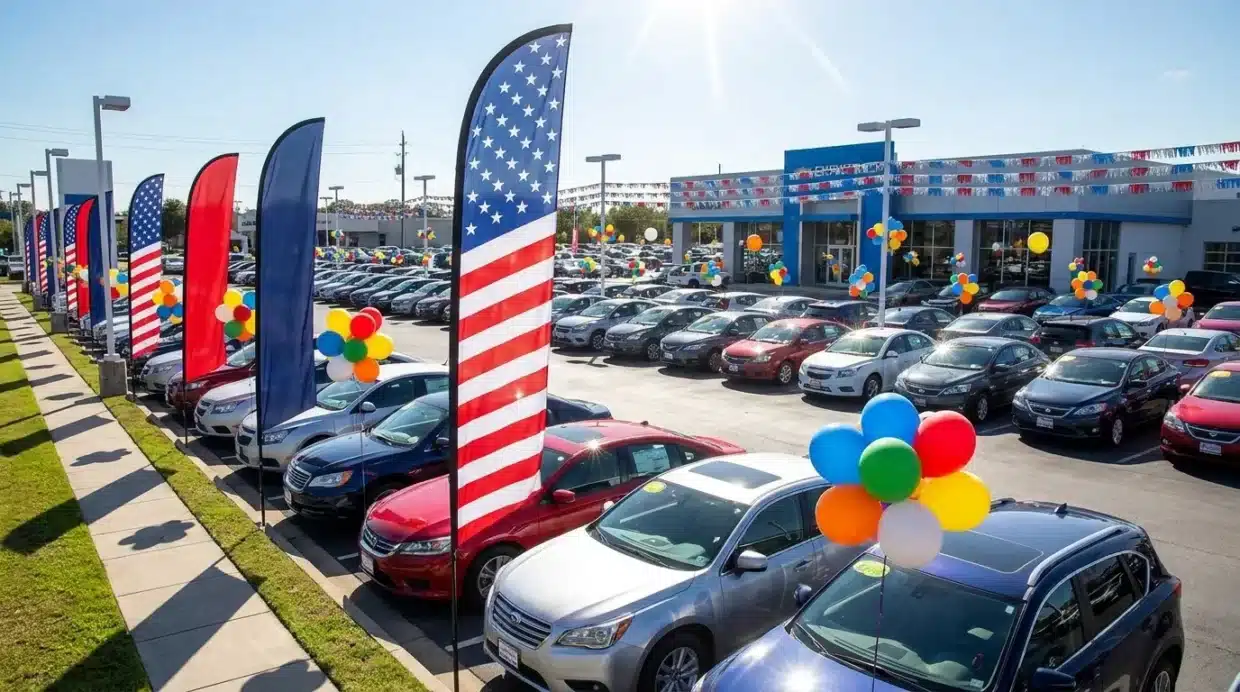
Even the visual noise on a dealership lot is deliberate, not decorative.
- Car dealership flags — feather flags and window flags exist purely to catch attention from the road and pull traffic in during sale events
- Car dealership balloons — cheap, high-visibility, and proven to draw eyes from a distance better than static signage alone
Why It’s Worth Knowing
None of this changes how you shop. But it explains a few things you’ve probably noticed without thinking twice about — why a well-run store hands you keys fast while another has you waiting by the door, and why that sticker in the windshield corner matters more than it looks.
The dealerships that run this tightest tend to have the smoothest buying experience overall — organized inventory and organized paperwork usually go hand in hand with a sales team that isn’t scrambling. If you’re curious how deep this operational rabbit hole goes, Microtec Supply & Hardware has spent decades supplying the exact systems — key tags, window stickers, deal jackets, and compliance forms — that dealerships use to keep it all straight, and their complete guide to auto dealer supplies breaks down every category in more detail than most buyers will ever need.
FAQ
What is an as is buyers guide?
It’s a federally required form displayed on every used vehicle for sale, disclosing whether the vehicle comes with a warranty, no warranty, or is sold as-is. Dealerships that skip it face a federal compliance violation.
What is an odometer disclosure statement?
It’s a signed federal document recording the vehicle’s exact mileage at the time of sale, protecting both the buyer and seller from later disputes over accuracy.
Why do dealerships use key tags?
Key tags link each key set to a vehicle’s stock number and VIN, so staff can locate the right keys instantly instead of searching a cabinet or board by memory.
What is a vehicle inspection checklist?
It’s a standardized, itemized record — typically covering brakes, fluids, tires, battery, and lights — that documents a vehicle’s condition before it’s reconditioned and priced for sale.
Why do dealerships use flags and balloons?
Both are low-cost, high-visibility tools used to catch attention from the road and pull traffic onto the lot, especially during sale events and weekends.