
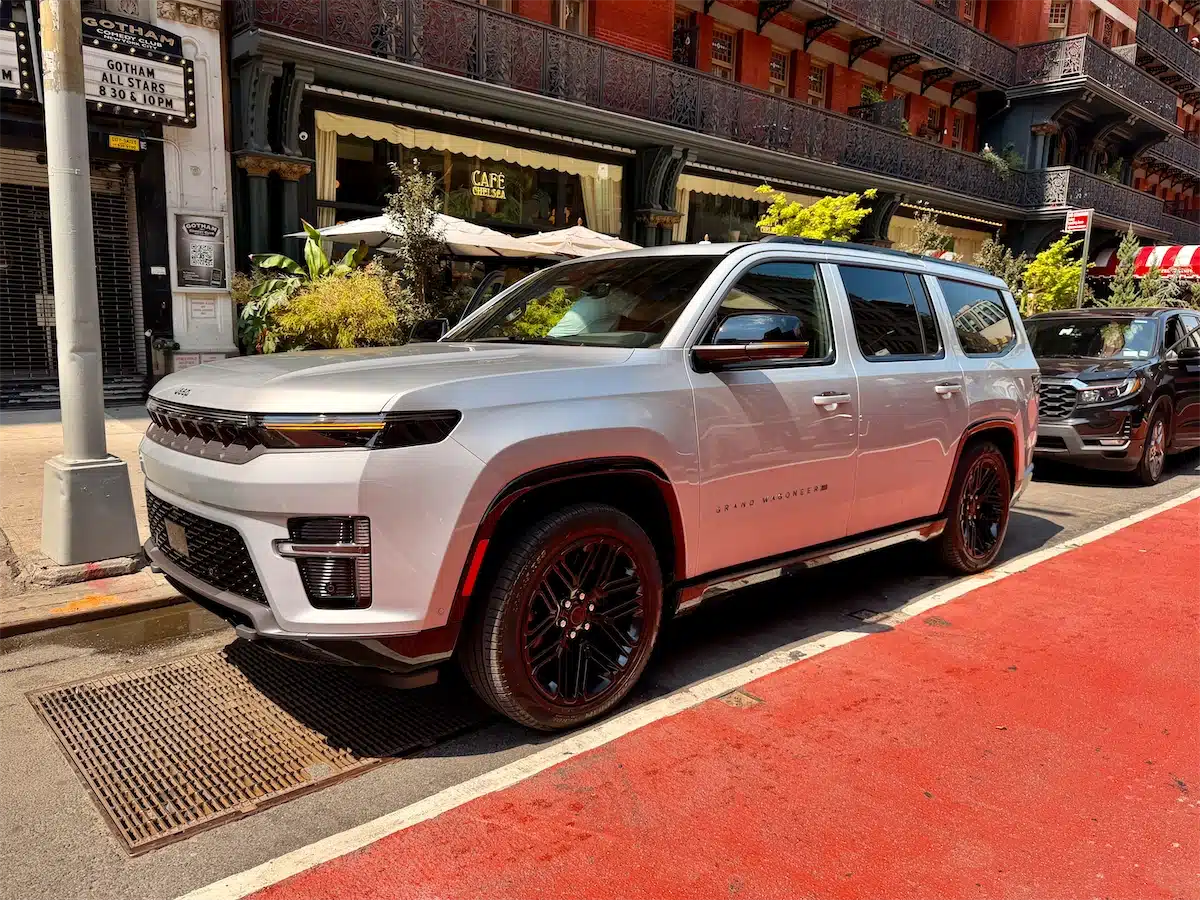
For Jeep’s largest vehicle, the HEMI V8 is gone, but after a heavily loaded family trip from Manhattan to upstate New York, we are convinced the brand made the right call.
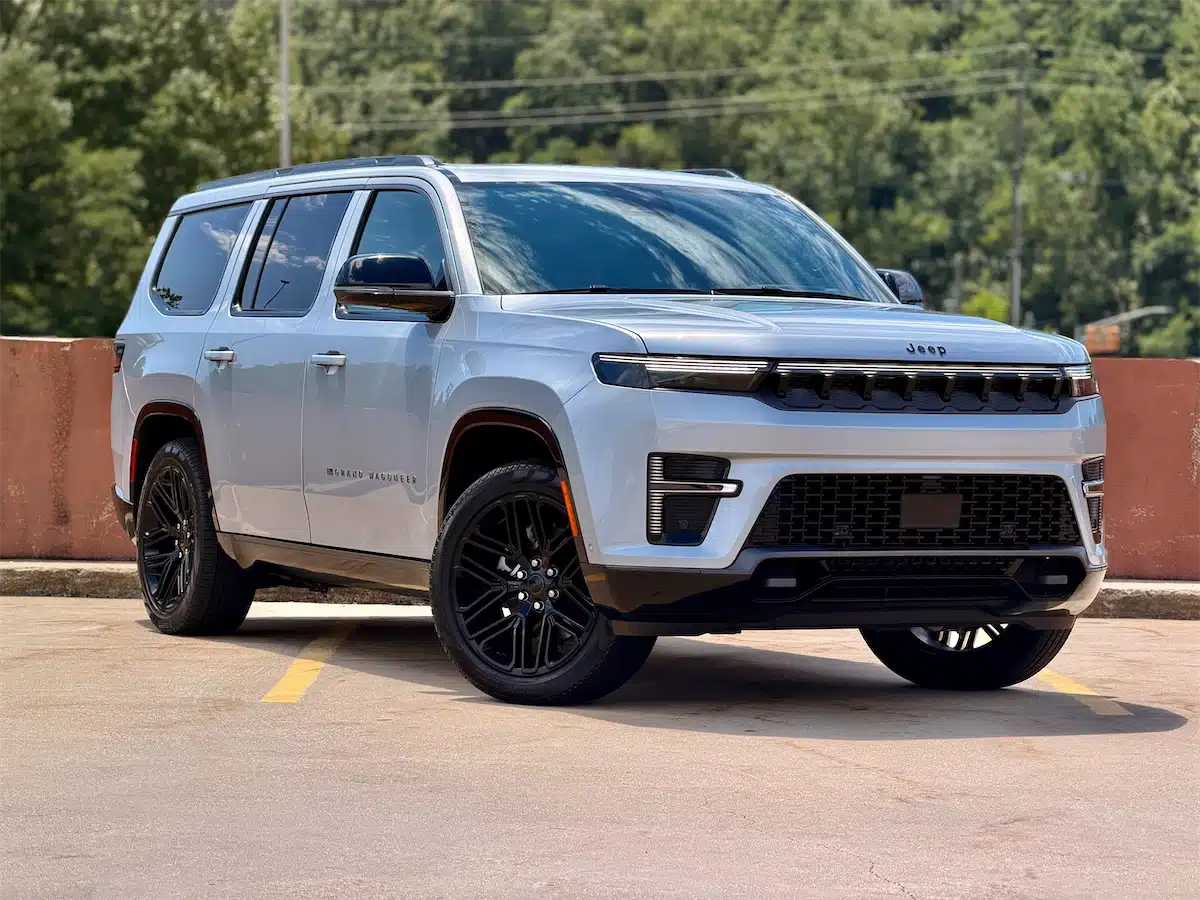
I recently borrowed a 2026 Jeep Grand Wagoneer Limited Altitude 4X4 for a family trip that began in Manhattan and ended at a wedding in upstate New York.
This was not a lightly packed road trip.
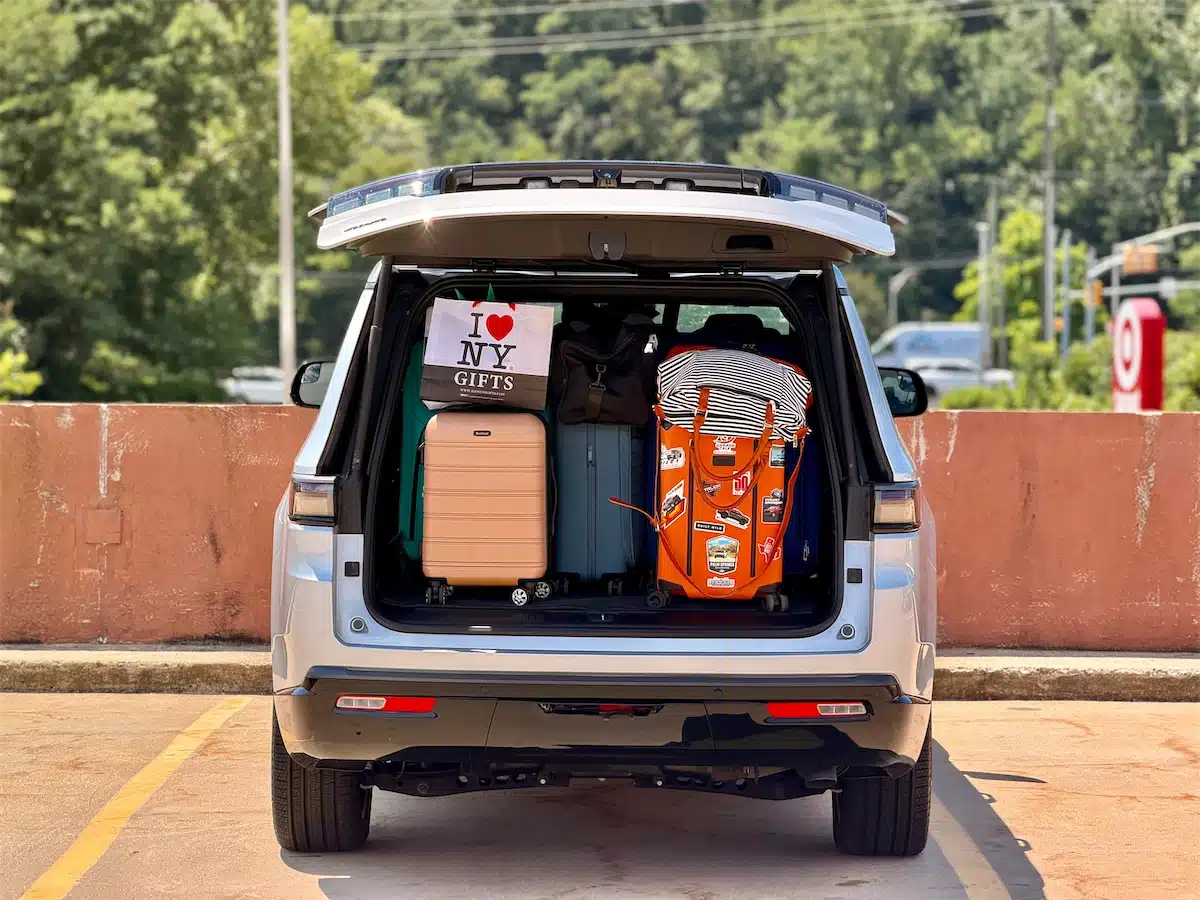
We loaded the Grand Wagoneer with six adults, one 8-year-old, five large suitcases, three rollerboard suitcases and several backpacks and other personal items. One of the checked bags was heavy enough to receive the airline’s dreaded “heavy” tag.
With all seven seats occupied and the luggage area filled to the ceiling, we were busting at the seams.
That made this an unusually appropriate test of the Grand Wagoneer’s standard-output 3.0-liter Hurricane twin-turbocharged inline 6-cylinder engine. There were no empty seats, no lightly packed cargo area, and no excuses available if the engine struggled.
It never did.
In fact, after driving through Manhattan traffic, cruising at highway speeds and dealing with the terrain and elevation changes of upstate New York, the Hurricane convinced us that moving away from the HEMI V8 was not just inevitable. It was smart.
The Hurricane trades horsepower for more torque
Let’s address the HEMI-powered elephant in the room.
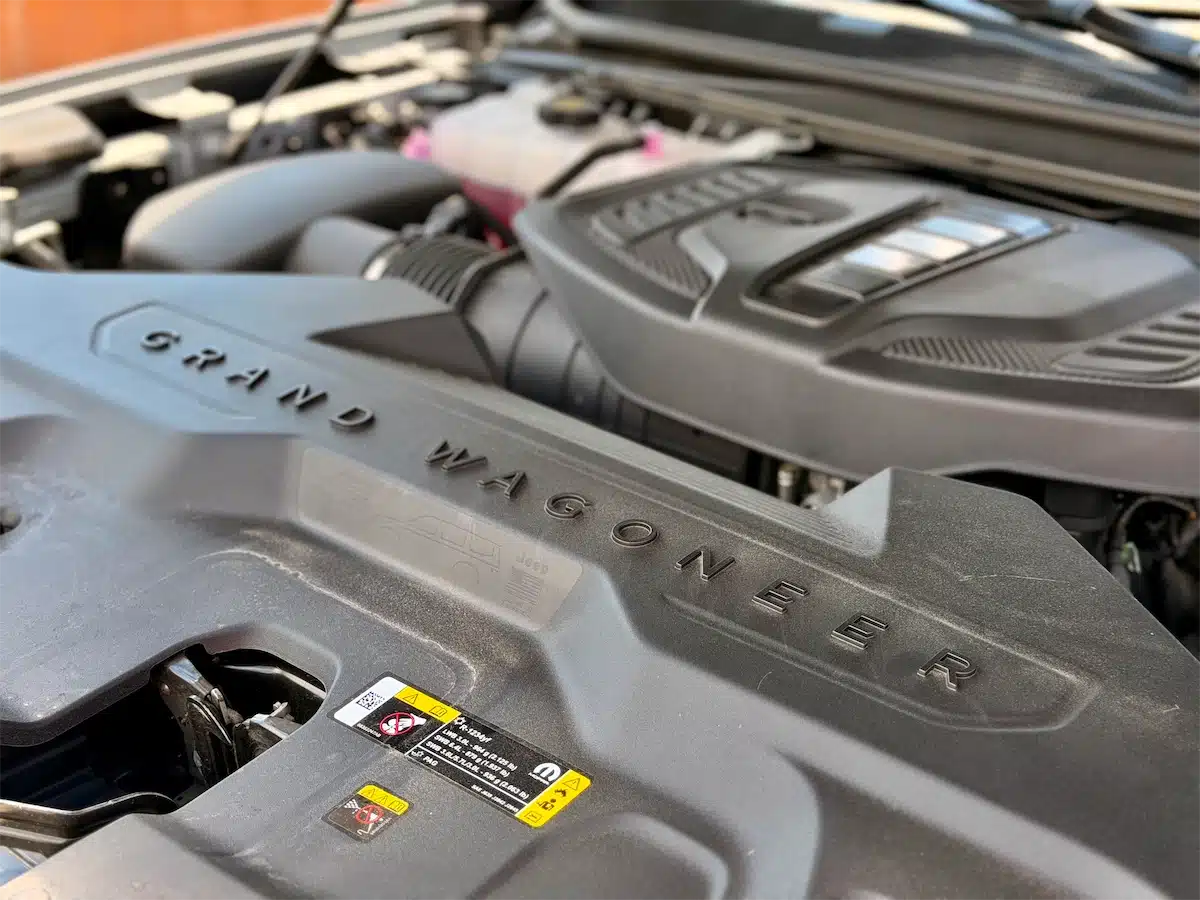
When the current-generation Grand Wagoneer arrived for the 2022 model year, its 6.4-liter HEMI V8 produced 471 horsepower and 455 lb-ft of torque. That V8 was paired with an eight-speed automatic transmission.
Our 2026 Grand Wagoneer Limited Altitude used the standard-output Hurricane inline 6-cylinder engine, making 420 horsepower and 469 lb-ft of torque.
That means the new, smaller engine gives up 51 horsepower compared with the old HEMI, a reduction of about 11%. However, it gains 14 lb-ft of torque.
Horsepower makes for good marketing, but torque is what drivers feel when a large SUV is pulling away from a stop, climbing a grade or accelerating with seven people and hundreds of pounds of luggage onboard.
The HEMI still wins the soundtrack competition. There is no replacing the sound and character of a large-displacement V8.
In terms of actually moving a loaded Grand Wagoneer down the road, however, the Hurricane did not feel like a downgrade.
The standard-output Hurricane was more than enough
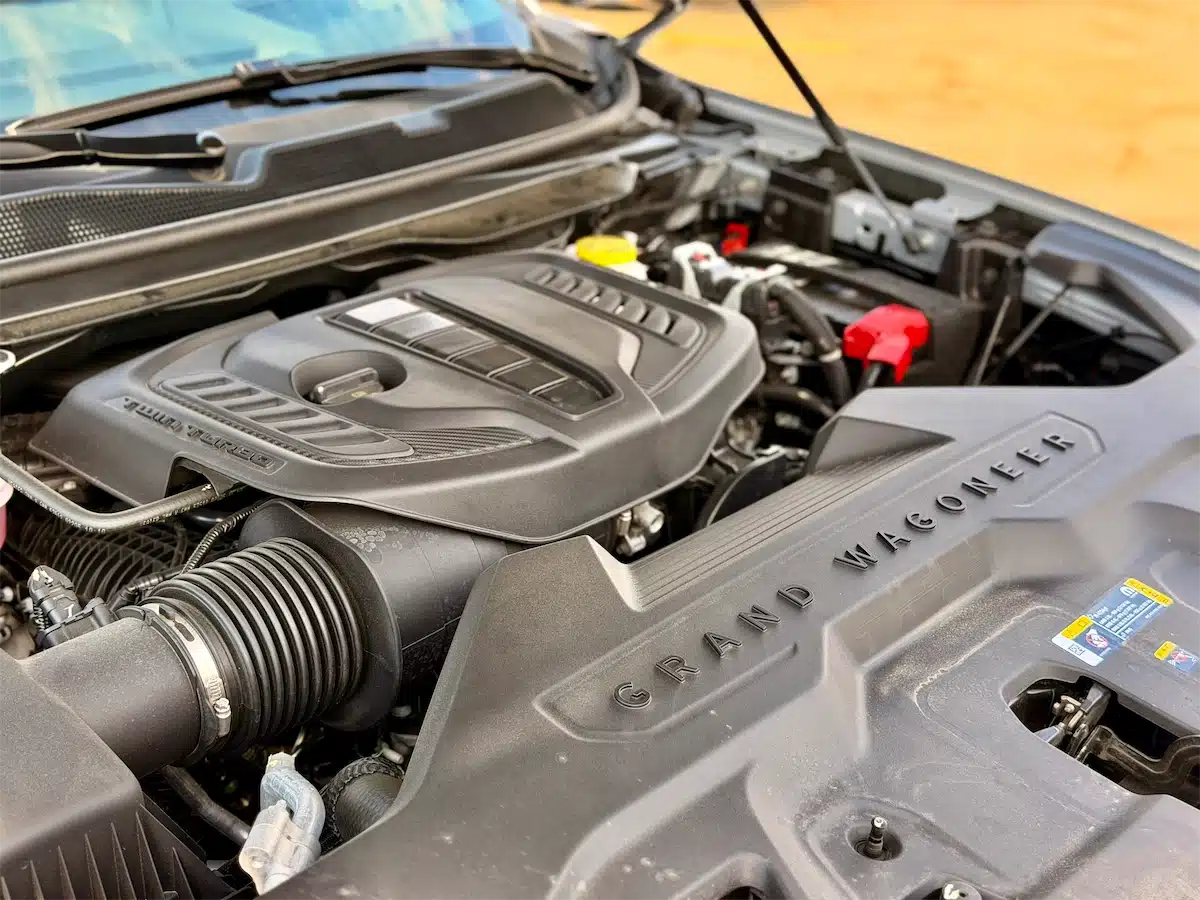
It would be easy to dismiss the 420-horsepower, standard output Hurricane as the lesser engine, especially after previous Grand Wagoneer models offered a high-output version with substantially more power.
Our trip demonstrated how misleading that assumption can be.
This was a 6,000-pound SUV carrying seven occupants and enough luggage to make the rear cargo area look like a losing game of Tetris. Even with all that weight, the standard-output Hurricane never felt overworked.
Acceleration onto the highway was confident. Passing slower traffic did not require careful planning. Climbing through changes in elevation did not leave the engine gasping for air or me pressing the accelerator farther than expected.
There was always more power available when I asked for it.
That does not mean the Grand Wagoneer felt like a performance SUV. It means something more important for this particular vehicle: It felt effortless.
A luxury SUV carrying a family and its luggage should not constantly remind the driver how much weight it is moving. The Grand Wagoneer simply got on with the job.
We were probably near the Grand Wagoneer’s payload limit
Jeep lists a payload rating of 1,490 pounds for the 2026 Grand Wagoneer Limited Altitude 4X4.
Payload includes the driver, passengers and everything loaded into the vehicle. It is not simply the amount of luggage you can place behind the third row.
We did not weigh every passenger and suitcase, so an exact total is impossible. Nor would I want to go around asking my wife and her family how much everyone weighed before climbing in the SUV. However, a conservative estimate shows how close we probably were.
Six adults averaging 170 pounds each would account for 1,020 pounds. Add approximately 60 pounds for my 8-year-old son, and the passenger total reaches 1,080 pounds.
Four large checked bags weighing approximately 45 pounds each, plus one bag weighing around 55 pounds, would add another 235 pounds. That brings the estimated total to 1,315 pounds.
Three rollerboards weighing approximately 25 pounds each would increase that to 1,390 pounds. Several backpacks, purses and personal items could easily add another 60 to 100 pounds.
That places our estimated payload between approximately 1,450 and 1,490 pounds using relatively modest passenger weights.
The exact payload rating for a specific vehicle should always be confirmed using its tire and loading label, especially because optional equipment can affect capacity.
Either way, we were almost certainly close to the limit.
The Hurricane’s performance becomes more impressive with that context. This was not seven lightweight passengers taking a short drive around town. The Grand Wagoneer was carrying close to everything Jeep said it could carry, yet the engine never behaved as though it was under strain.
Elevation changes did not expose a weakness
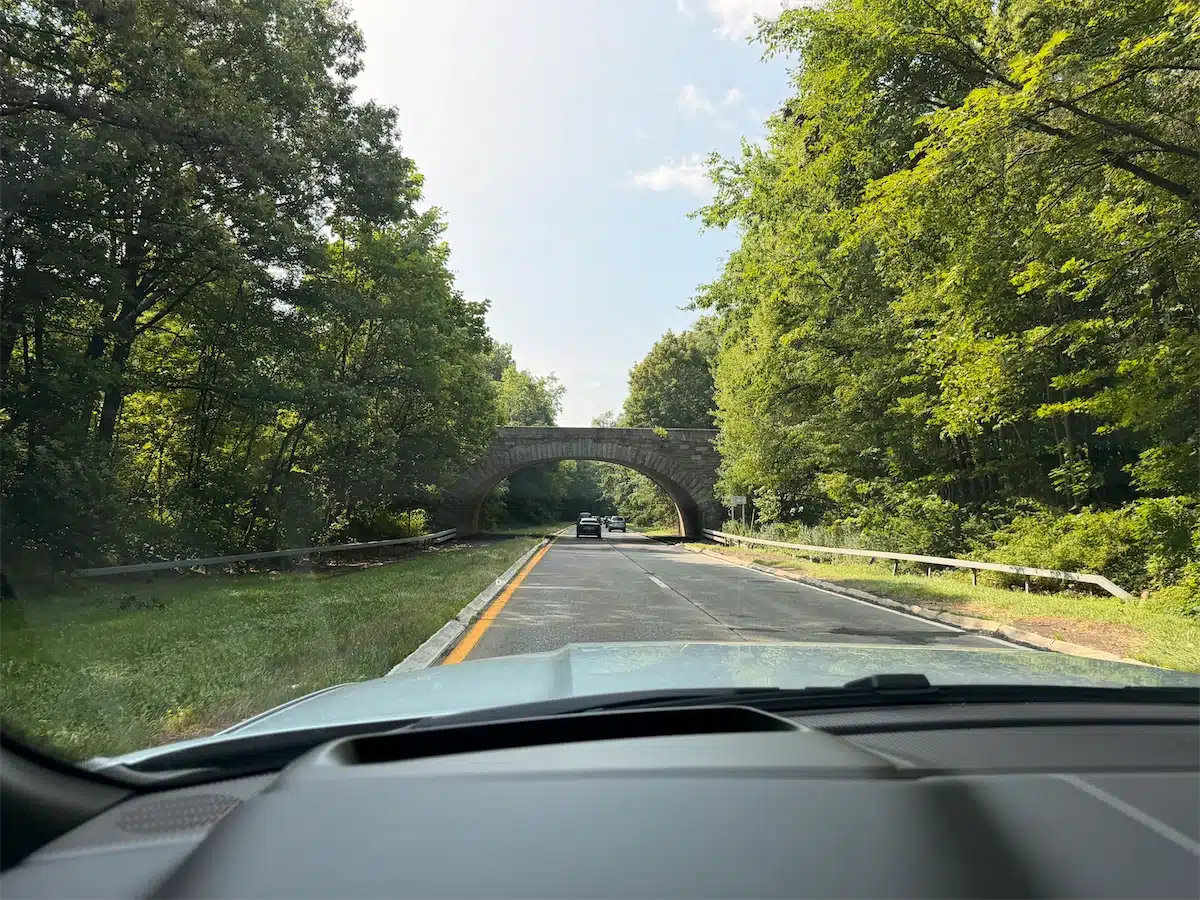
Engines can feel perfectly adequate on flat highways and then reveal their limitations when the road begins climbing.
That did not happen here.
As the trip moved away from Manhattan and into the changing terrain of upstate New York, the Grand Wagoneer maintained speed without excessive downshifting or sudden bursts of engine noise.
The Hurricane’s 469 lb-ft of torque arrives at 3,500 RPM, giving the engine plenty of pulling power without requiring it to live near redline.
Grades that could have caused a naturally aspirated engine to downshift and build RPM were handled with a steady application of throttle. When more acceleration was needed, the twin turbochargers delivered it without the kind of dramatic pause of turbo lag that can make a turbocharged engine feel disconnected from the accelerator.
There was no moment when I wished the old 6.4-liter HEMI was still under the hood.
The engine and transmission spoke the same language
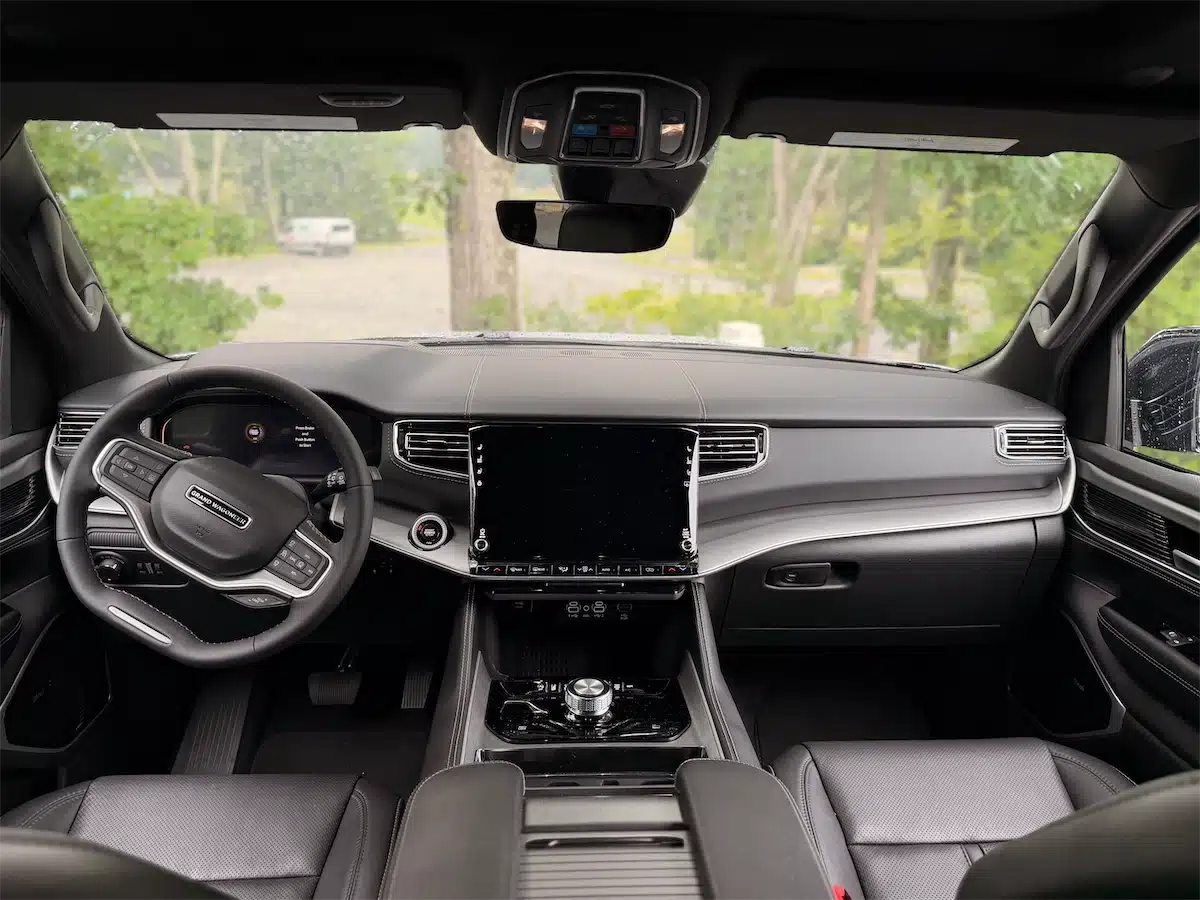
Raw engine output only tells part of the story. A powerful engine can still be frustrating if the transmission does not know how to use it.
The eight-speed automatic transmission was one of the strongest parts of the Grand Wagoneer’s powertrain.
The engine and transmission always seemed to be on the same page. The transmission selected the correct gear without hunting, hesitating or holding a lower gear longer than necessary.
In normal driving, shifts were smooth enough to disappear into the background. When I requested more power, the transmission responded quickly without creating unnecessary drama.
I never wanted for power or a lower gear. It just worked.
That might not sound as exciting as a roaring HEMI V8, but it is exactly what a transmission should do in a luxury family SUV. The driver should not have to think about gear selection while navigating unfamiliar roads with six other people onboard.
The Grand Wagoneer allowed me to focus on the trip rather than managing the powertrain.
Downsizing did not mean giving up capability
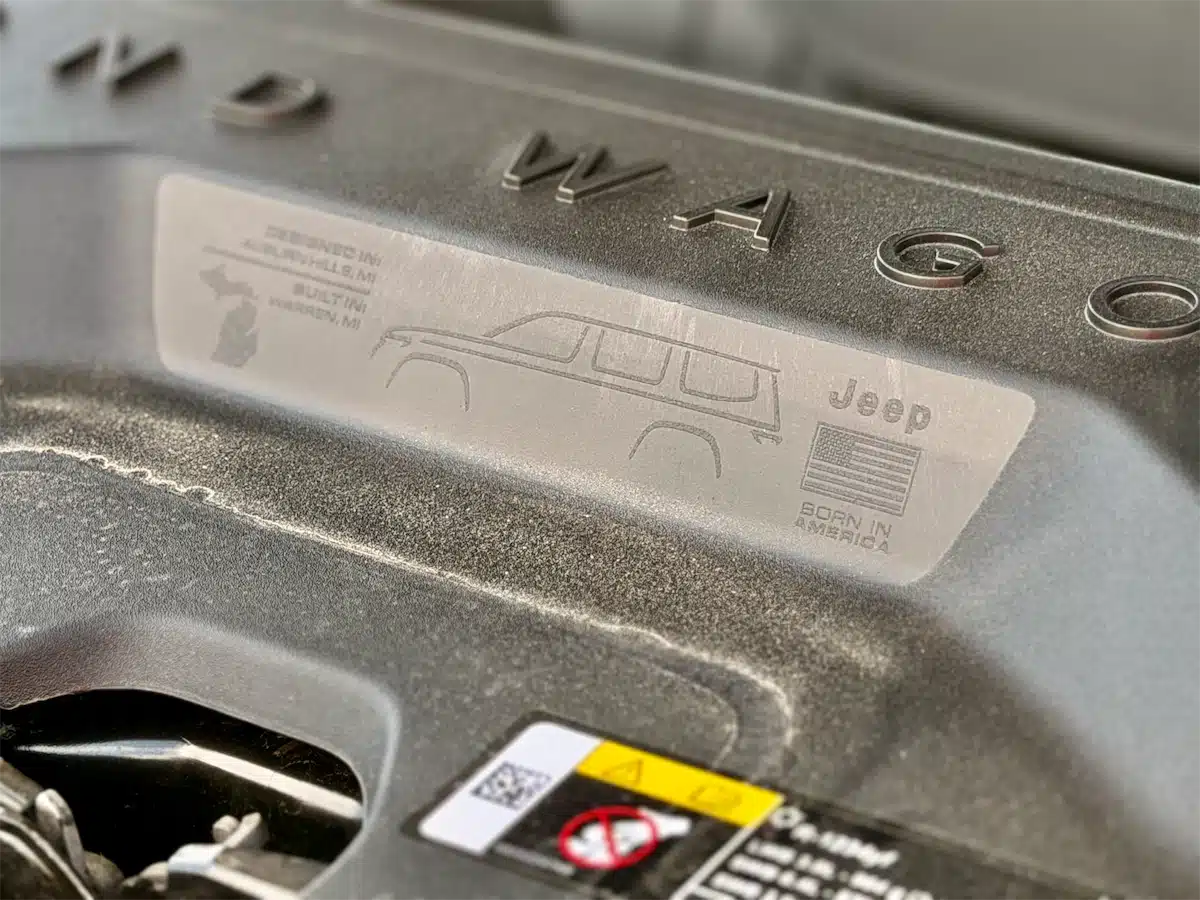
The replacement of a 6.4-liter V8 with a 3.0-liter inline 6-cylinder engine sounds like a major step backward on paper.
In practice, the Hurricane shows how much engine technology has changed.
The smaller engine produces more torque than the outgoing HEMI while delivering an EPA-estimated 17 MPG city, 23 MPG highway, and 19 MPG combined in our Grand Wagoneer Limited Altitude 4X4.
Those numbers will not make anyone confuse the Grand Wagoneer with an economy car. This remains a large, heavy, three-row SUV with four-wheel drive and the aerodynamic profile of an expensive brick.
Still, the Hurricane provides the pulling power buyers expect without requiring 6.4 liters of displacement or eight cylinders.
That is what successful engine downsizing is supposed to look like. The customer should notice the capability, not the missing cylinders.
It still has serious towing credentials
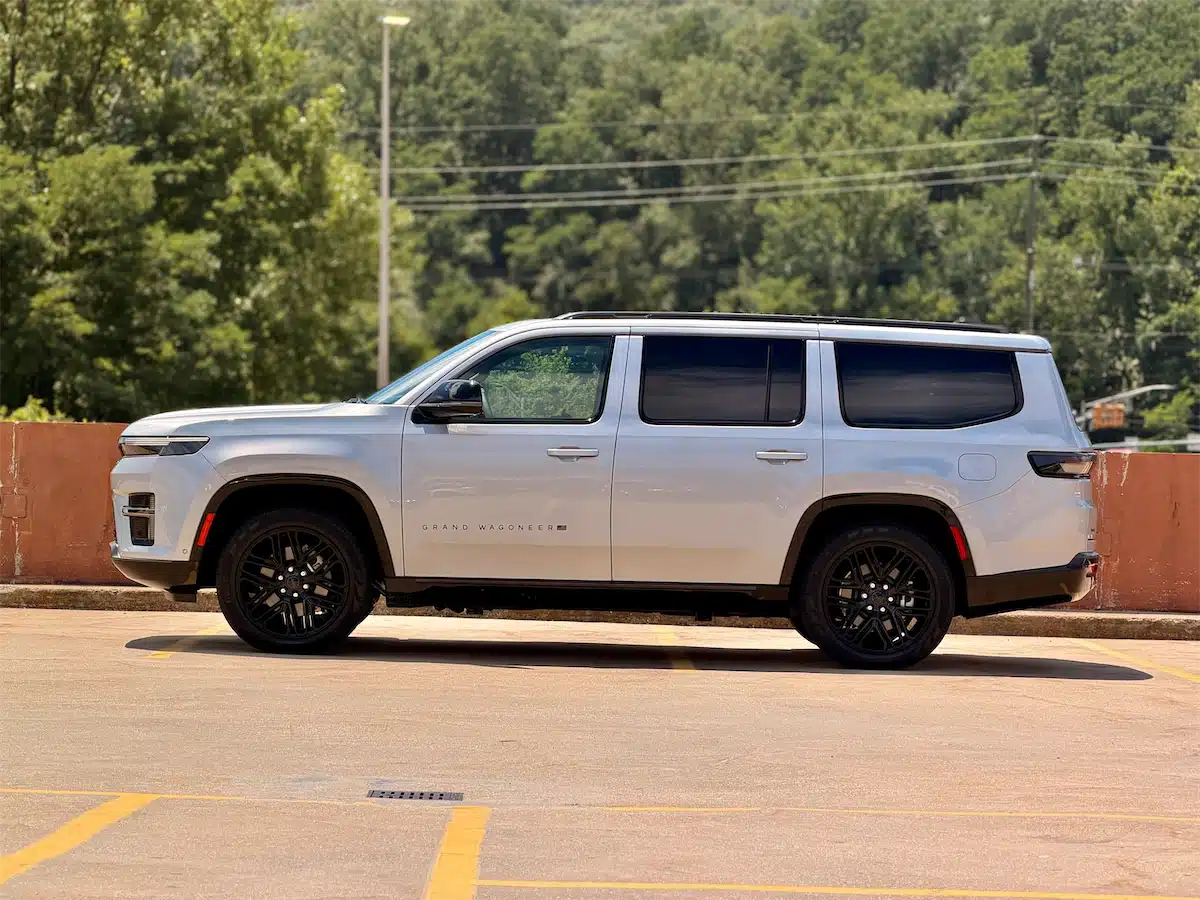
Our Grand Wagoneer was equipped with the $1,995 Heavy-Duty Trailer-Tow Package, increasing its maximum towing capacity from 6,030 pounds to 10,000 pounds.
The package also added a two-speed on-demand transfer case, 3.92 rear axle ratio, electronic rear limited-slip differential, trailer-brake controller, trailer light monitoring and additional trailer camera technology.
Jeep advertises a maximum Grand Wagoneer towing capacity of up to 10,000 pounds when properly equipped.
We did not tow during this trip, so I cannot evaluate its behavior with a 10,000-pound trailer attached.
However, the Hurricane’s response while carrying an estimated 1,450 pounds or more of passengers and cargo provides a strong indication that the standard-output engine is not merely designed for lightly loaded suburban driving.
The Grand Wagoneer remained composed and responsive while doing one of the hardest jobs most owners will regularly ask of it: carrying an entire family and nearly everything that family owns.
The Hurricane was the right engine for the Grand Wagoneer
The 6.4-liter HEMI V8 had more horsepower, a better exhaust note and the kind of personality enthusiasts naturally appreciate.
The Hurricane is still the smarter engine for the modern Grand Wagoneer.
It provides more torque than the old V8, works exceptionally well with the eight-speed automatic transmission and delivers more than enough power for a fully occupied SUV carrying enough luggage to approach its payload limit.
Simplifying the engine choices down to one also helps overall production efficiency, something the entire Stellantis family of brands needs to focus on right now for better costs.
At $84,135 as tested, the Grand Wagoneer Limited Altitude needed to feel smooth, confident and effortless. It did.
Some buyers will continue to miss the sound and simplicity of the HEMI. That is understandable. However, after driving from Manhattan to upstate New York with seven people and luggage packed into every available corner, I did not miss the V8’s performance.
The Hurricane never broke a sweat.
This is not an apology for engine downsizing. It is an example of how to do it correctly.










No replies yet
Loading new replies...
Administrator
Join the full discussion at the Forum Pickuptrucktalk →