Pickup trucks are the backbone of American worksites. Whether you’re running a small construction crew, managing a farm, or operating out of a personal workshop, your truck probably handles more jobs in a day than most people realize. But even the toughest half-ton or heavy-duty pickup has its limits — and knowing when you’ve hit those limits can save you time, money, and a trip to the emergency room.
The reality is that a lot of truck owners push their rigs well past what they were designed to do. And when a job calls for lifting something heavy, high, or with precision, a pickup truck simply isn’t the right tool — that’s where dedicated lifting equipment like the overhead cranes and gantry cranes from Voitto Crane come in. Here’s how to recognize that moment, and how to choose the right equipment for your situation.
Know Your Pickup Truck’s Real Limits
Before anything else, it helps to understand the difference between two numbers that often get confused: payload capacity and towing capacity.
Towing capacity is the maximum weight your truck can pull behind it on a trailer. Payload capacity is the maximum weight your truck can carry in the bed and cab combined — and it’s almost always a much smaller number. A heavy-duty truck might tow 20,000 lbs but only carry 2,000 lbs in the bed.
This distinction matters because a lot of truck owners assume that if they can tow something, they can also lift and load it without issue. That’s not how physics works. Overloading your bed doesn’t just risk damaging your suspension — it affects braking, steering, and overall vehicle stability.
Add to that the vertical dimension: your truck bed sits about two to three feet off the ground. If you need to lift something higher than that, or place it with any precision, you’re already outside the truck’s wheelhouse.
Signs You Need to Upgrade Your Lifting Game
Most truck owners don’t wake up one day and decide to buy a crane. It’s usually a gradual realization — often triggered by one of these situations:
You’re rigging up workarounds that make you nervous. Ramps, chains, forklifts borrowed from a neighbor, or a crew of guys doing something that nobody feels great about — these are signs that the job has outgrown your equipment.
You’re wasting time on repetitive moves. If a single lift requires repositioning the truck multiple times, recruiting extra hands, or breaking a load into smaller pieces just to manage it, you’re losing hours that add up fast on a job site.
You have a recurring need, not a one-off. Moving one engine block once is a problem you can solve creatively. Moving heavy materials every day in the same location is a workflow problem — and workflow problems need permanent solutions.
The load goes up, not just across. Trucks move things horizontally. The moment you need to lift something vertically with accuracy — placing a steel beam, positioning precast concrete, loading a machine component — you’re dealing with a crane job.
Matching the Right Equipment to Your Situation
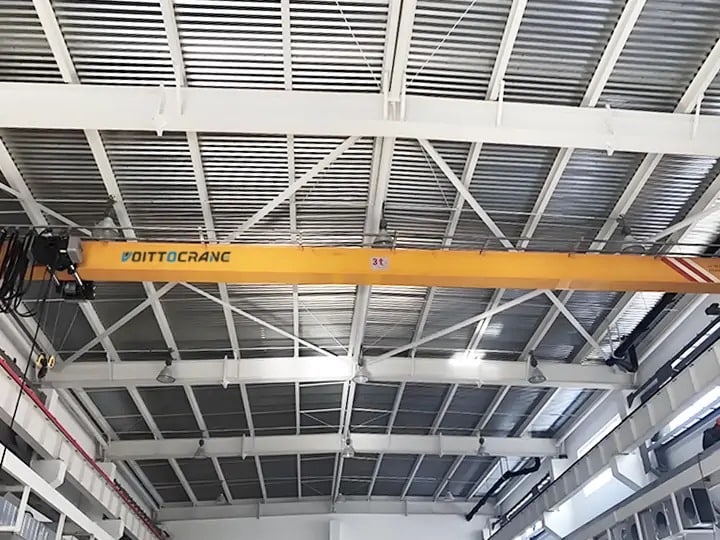
Once you’ve accepted that a crane makes sense, the next question is what kind. You don’t need to become an equipment expert overnight. A simple way to think about it is by work environment:
Mobile or field work: If your jobs move around — different sites, outdoor locations, no fixed structure — a truck-mounted crane or a portable gantry crane gives you flexibility without committing to permanent installation. These are common on farms and small contracting operations.
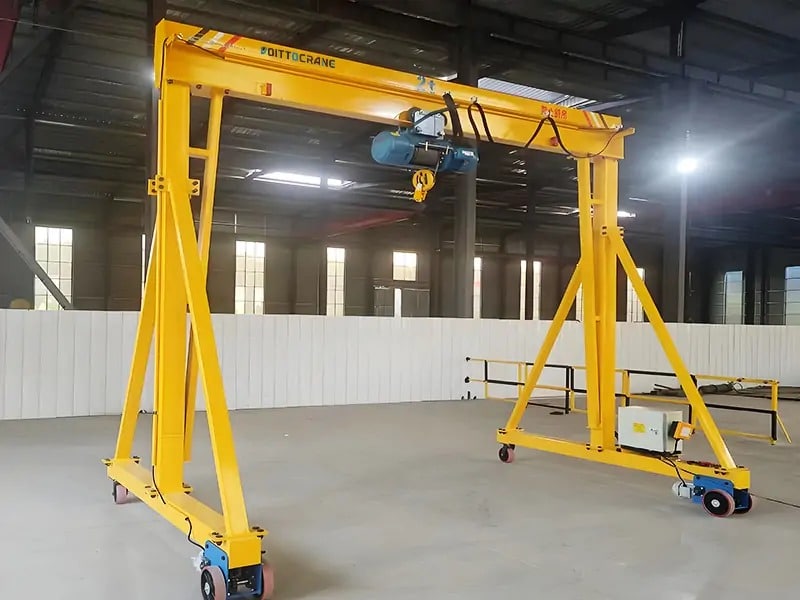
Outdoor fixed location: If you have a yard, lot, or open facility where heavy loads move regularly but there’s no roof structure to attach to, a freestanding gantry crane is a practical solution. It runs on ground-level rails, handles significant weight, and doesn’t require a building to support it.
Indoor shop or warehouse: If you’re working inside a facility with an existing structure, an overhead crane (also called a bridge crane or EOT crane) is the most efficient long-term option. It travels along elevated runways and keeps your floor completely clear — which matters when you’re also moving trucks and forklifts around underneath it.
For truck owners making this transition for the first time, working with a manufacturer that offers custom configurations is important. Span, lifting height, capacity, and voltage requirements all vary by facility — so getting a quote or consultation before you buy saves a lot of guesswork.
The Right Tool for the Right Job
Pickup trucks aren’t going anywhere. They’ll keep doing what they do best — hauling, towing, getting into tight spots, and handling the hundred small tasks that no other vehicle can. But part of being a serious operator is knowing when to hand off to a better tool.
If loads are getting heavier, jobs are getting more demanding, or you’re watching your crew spend too much time on lifts that should take minutes, it’s worth having a real conversation about lifting equipment. The upgrade pays for itself faster than most people expect — and it’s a lot cheaper than a workplace injury or a damaged load.
Know your truck’s limits. Recognize the signs. And when the job calls for a crane, get the right one for your setup.