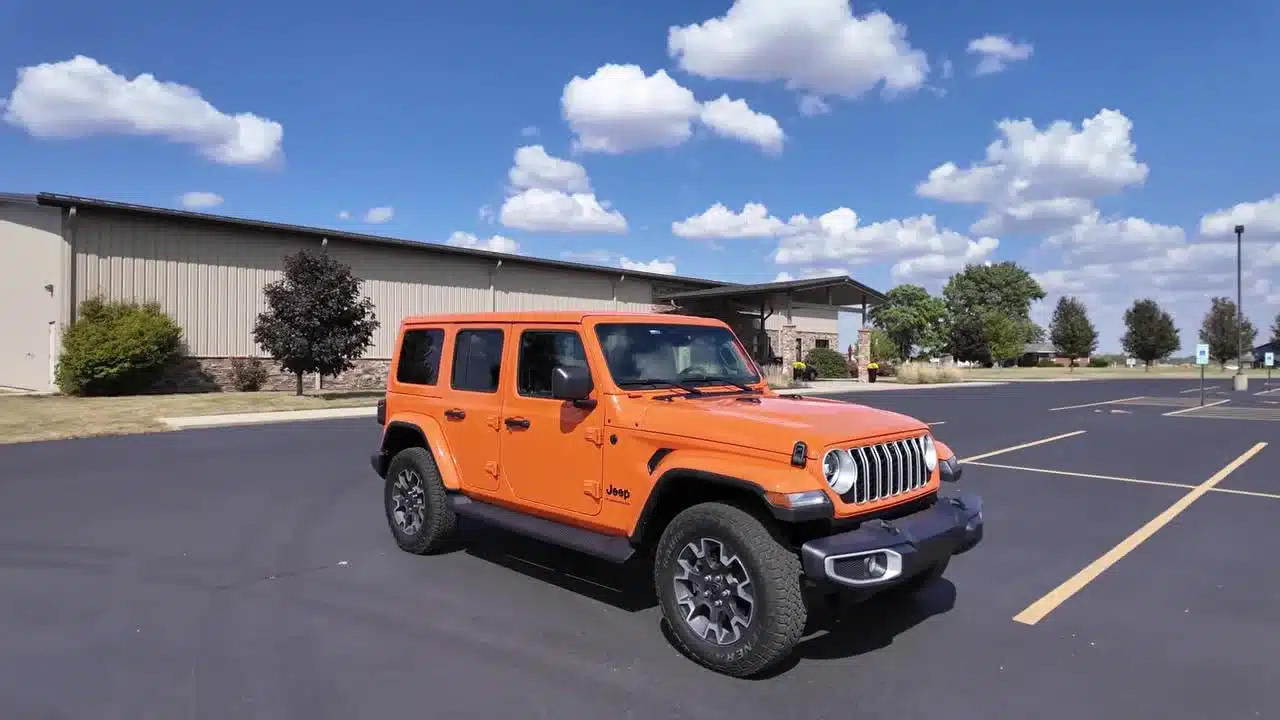
The 2025 Jeep Wrangler Sahara makes a straightforward pitch: keep the Wrangler personality and add the comforts that make an everyday drive more pleasant. The harder question is how many of those comforts you need once the options start adding up.
In our video, Jim Parrott of Off the Shelf Rides walks through a turbocharged four-door Sahara with a $60,860 window sticker. This article draws on his equipment and pricing tour, which shows where the money goes and what to check when comparing similarly equipped Wranglers.
The turbo four fits this Sahara’s mission
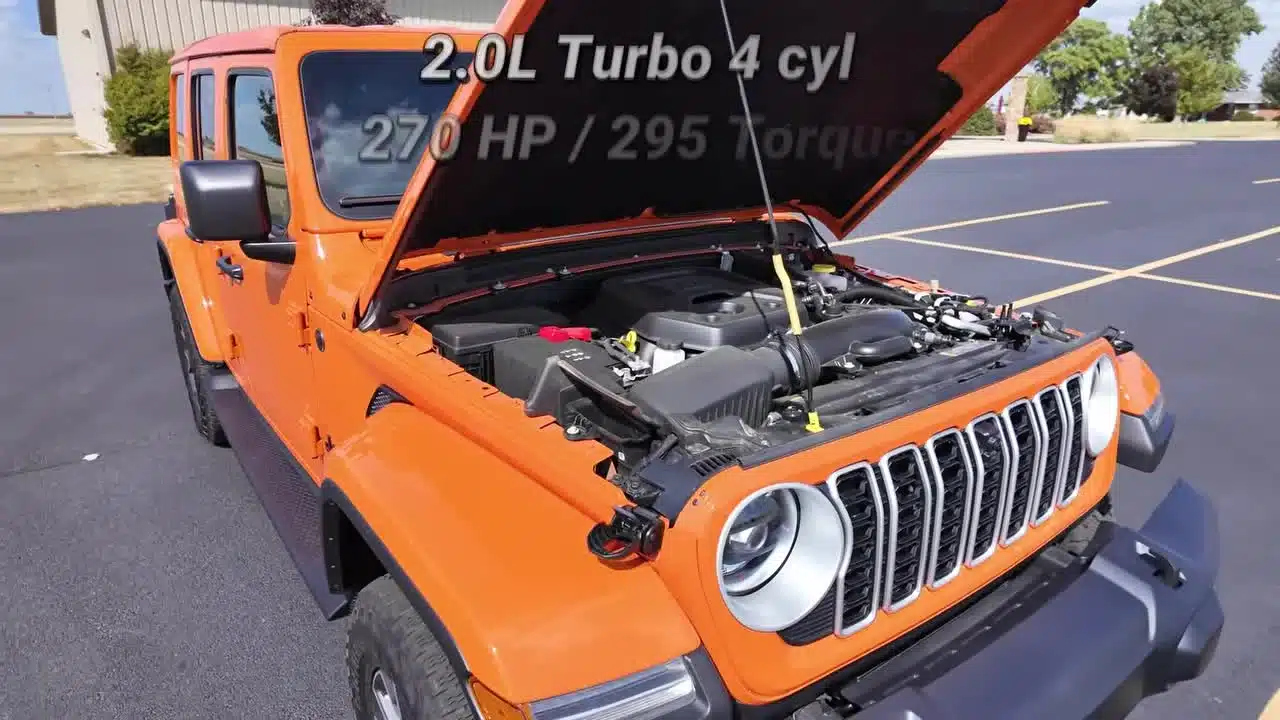
This orange Sahara uses the 2.0-liter turbocharged four-cylinder and an eight-speed automatic transmission. Its 270 horsepower and 295 pound-feet of torque match Jeep’s published 2025 specifications. The appeal here is a familiar Wrangler layout with an automatic and plenty of equipment for the drive between trails.
Jim also points out Selec-Speed Control, which helps maintain a low speed off road so the driver can concentrate on steering. That is a useful feature to understand before buying, but this walkaround does not establish how the Jeep performs on a difficult trail. There is no instrumented acceleration, fuel-economy or towing test in this video.
The Sahara’s LED headlights, fog lights and daytime running lights help distinguish its exterior. This example adds a body-color hardtop and upgraded wheels, giving it a more finished appearance. Those visual upgrades are also part of the price story, rather than reasons to assume every Sahara on a dealer’s lot has the same equipment.
Cabin comfort is the strongest argument for Sahara
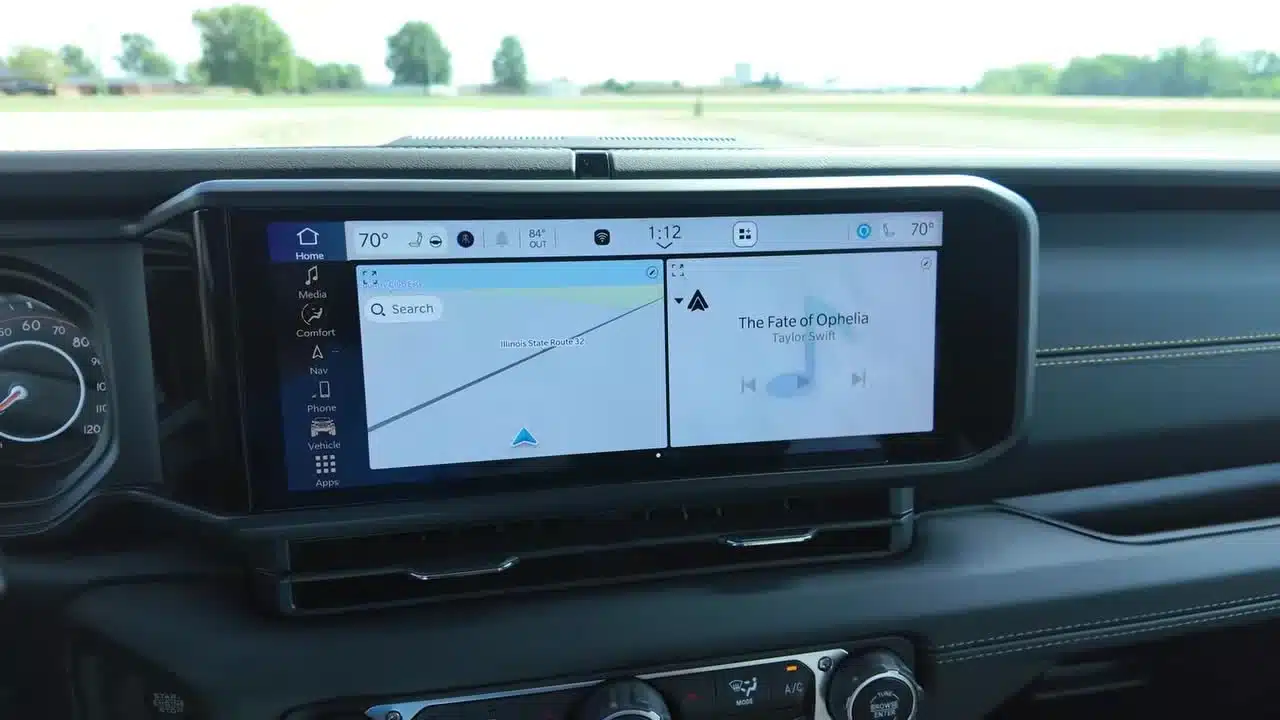
The cabin makes Jim’s case for this trim more clearly than the paint does. He highlights heated front seats, a heated steering wheel and automatic climate control, equipment aimed at making a Wrangler easier to live with through changing weather. The screen is a 12.3-inch Uconnect 5 unit with wireless Apple CarPlay and Android Auto.
During the demonstration, Jim finds the interface quick and easy to use. He shows the off-road pages, trail information and adventure-guide features on this particular vehicle. Shoppers should check any connected-service requirements on the Jeep they are considering instead of assuming every service remains included indefinitely.
The tested Sahara also has power-adjustable front seats with four-way power lumbar support and Alpine premium audio through an optional equipment group. Jim likes the audio system’s sound. For someone who spends more time commuting than rock crawling, those features may matter more often than an appearance upgrade. They still need to earn their place in the budget.
The window sticker tells a $60,860 story
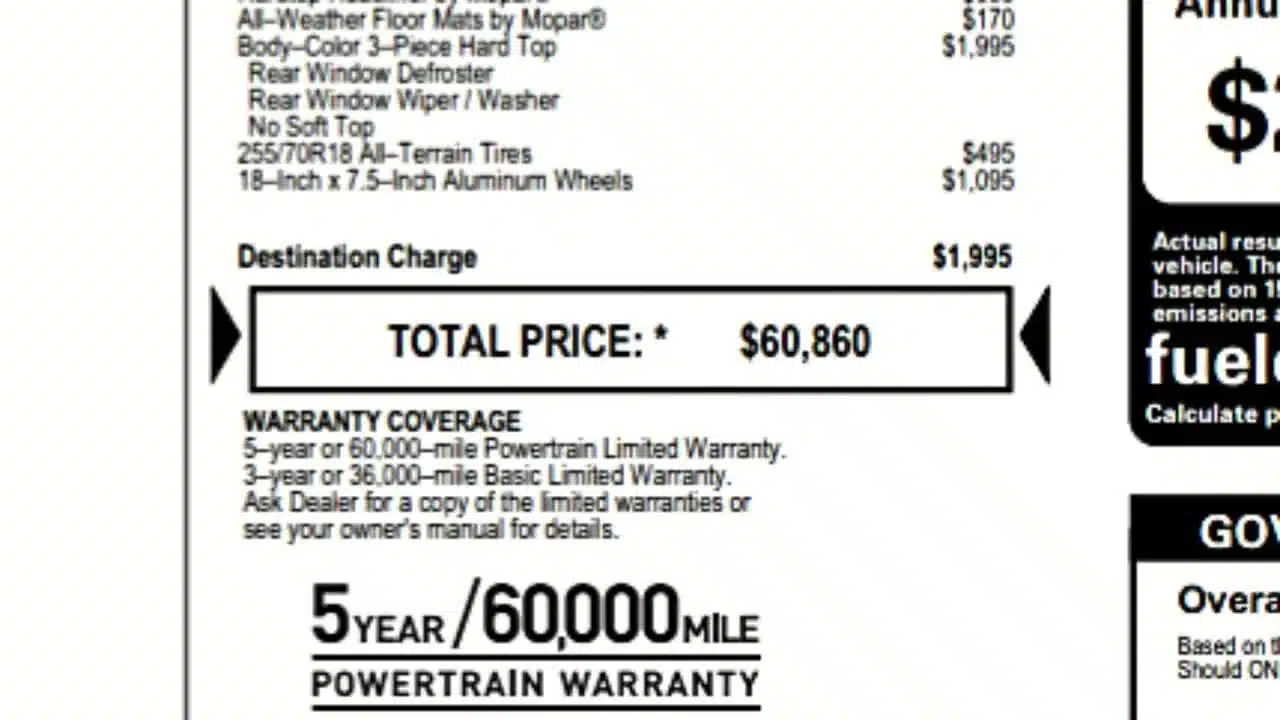
The video’s window sticker totals $60,860, including a $1,995 destination charge. That is the reviewed vehicle’s original sticker, not a current transaction-price quote. Used examples, remaining inventory and dealer discounts require a separate comparison.
The $2,995 Sahara Popular Equipment Group is a major contributor. Jim’s sticker walkthrough lists power front seats, Alpine audio, navigation, side steps, blind-spot and rear cross-path detection, rear parking assistance and an integrated off-road camera among its equipment. Some of those items can make daily parking and longer trips easier, which is why this package deserves a closer look than its name alone provides.
Other line items include a $1,995 body-color three-piece hardtop, a $1,195 Trailer Tow and Auxiliary Switch Group, an $895 paint charge, a $655 hardtop headliner and $170 all-weather floor mats. The all-terrain tires add $495, while the optional aluminum wheels add $1,095 on the displayed sticker. Each sounds manageable in isolation; together they explain why an optioned Sahara can feel like a very different purchase from the starting-price conversation.
Our advice is to compare actual window stickers for a Sahara, Sport S and Willys with the features you want. Do not assume the trim badge includes the roof, seats, camera or wheel package shown here. Paying for comfort features you use every day is different from paying for every option on an available vehicle.
Four doors help, but check the cargo space yourself
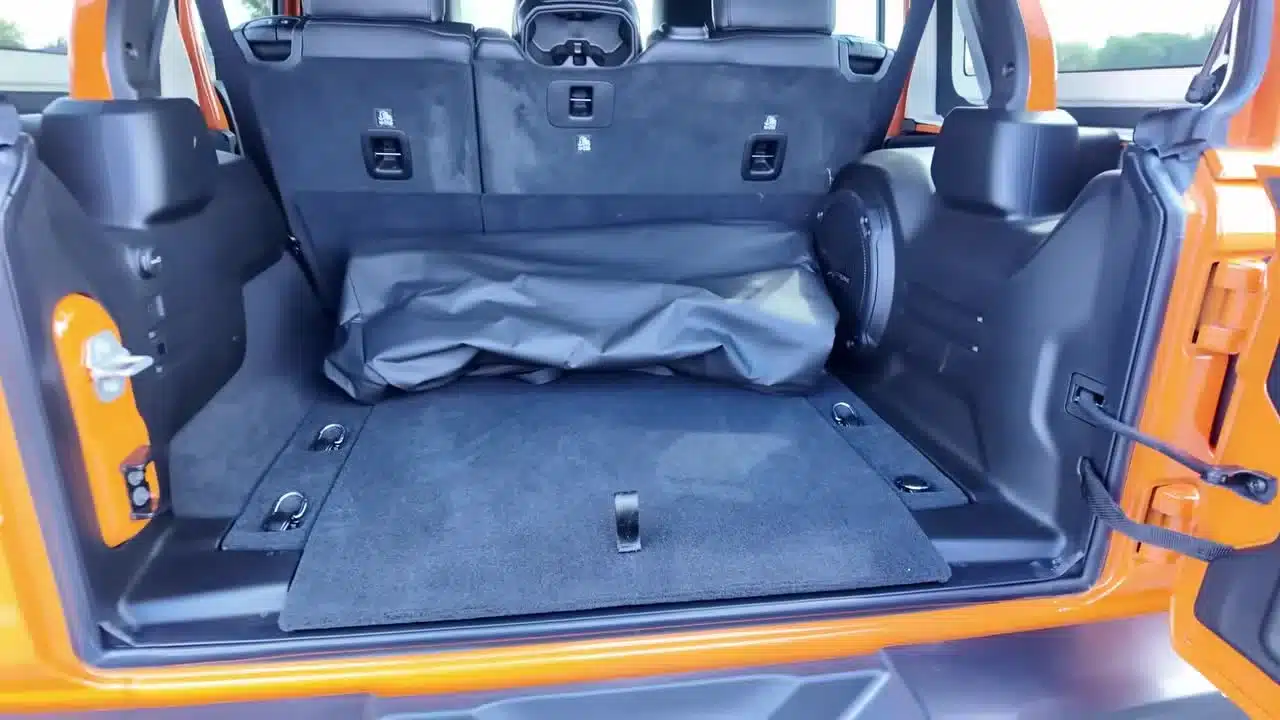
The Sahara shown here is a four-door Wrangler. Jim opens the rear cargo area and notes the advantage over a two-door model, while also making clear that the space is not enormous. The video gives a useful look at the opening and load floor, rather than a measured luggage test.
That makes a hands-on check worthwhile. Bring the stroller, cooler or travel bags you normally use and see how they fit with the rear seats upright. A four-door body improves the packaging, but it does not tell you whether your particular gear fits comfortably.
Jim’s overall recommendation favors the Sahara for buyers who want Wrangler character with more cabin convenience. This example shows the tradeoff plainly: the comfort equipment is appealing, and the price climbs quickly. Pick the features deliberately, verify the exact configuration, and the Sahara’s purpose becomes much easier to understand.