
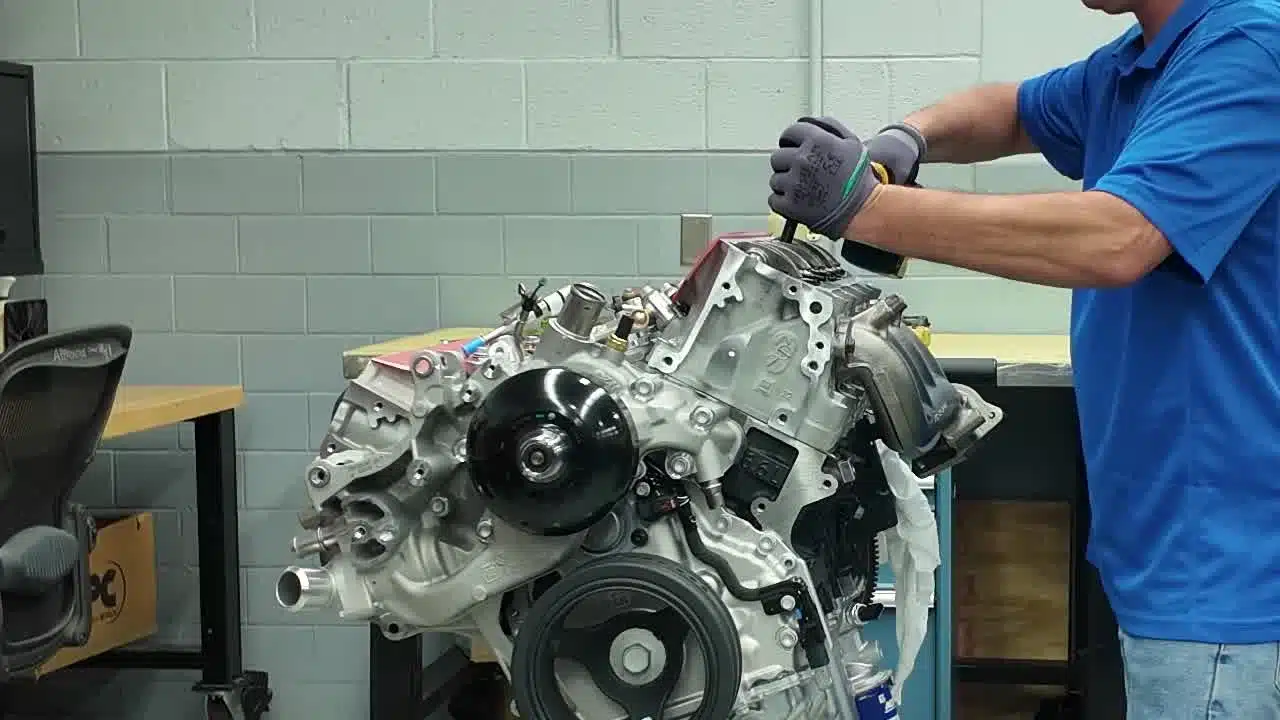
An engine sitting on a stand can look nearly finished while the technician still has a lot of work to do. I spent time inside GM’s development engine build room to see what those checks involve, how much information the team collects and what happens before an engine reaches a test cell.
The conversation also took a turn toward recalls. After watching the care going into one build, I asked Mike how problems can still get through. Here are four things that stood out from the visit.
These are development engines, and that changes the job
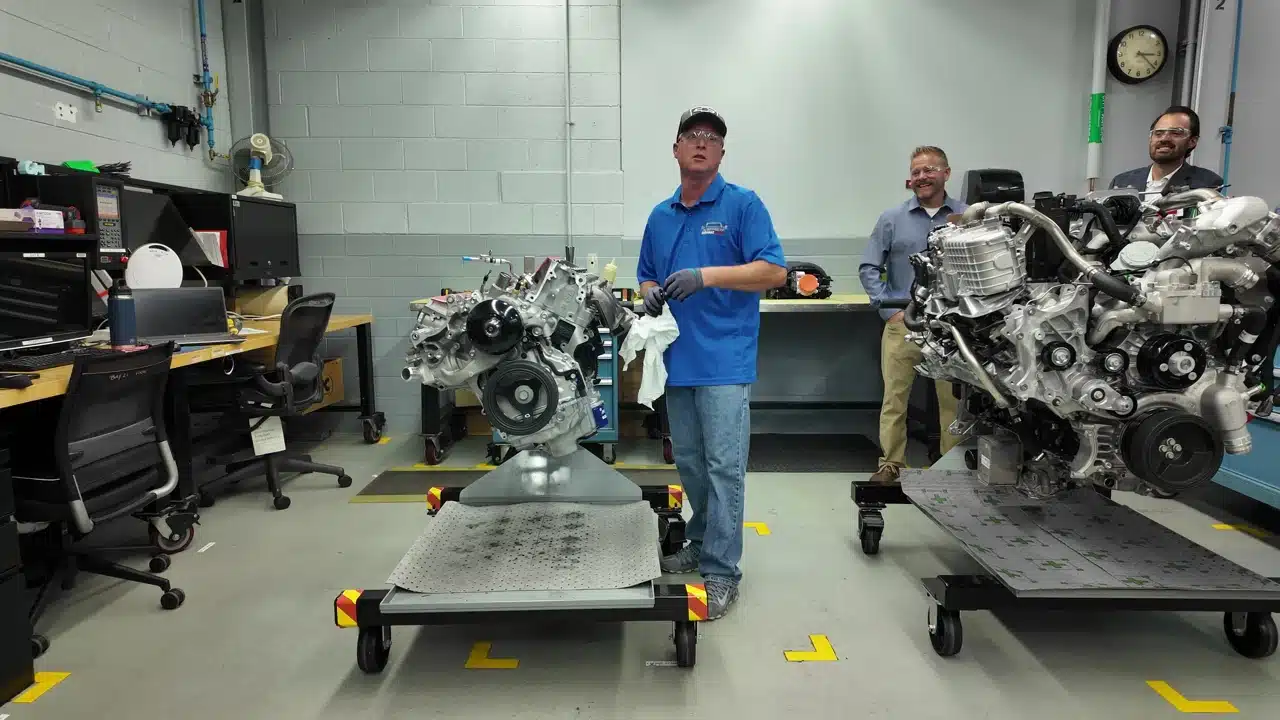
During my GM visit in Michigan, I watched a technician working through an engine build while Mike explained why this room needs extra inspections. Prototype parts do not always arrive with the same established controls as parts from a mature production process. The people assembling these one-off engines add checks to understand exactly what is going into the build.
That distinction matters when you watch the video. This is development work, where the engine may be headed for a particular test. It would be misleading to use the time spent here as a measure of how quickly a factory builds an engine for a customer’s truck. The technician is inspecting, cleaning and lubricating components, with quality taking priority over speed.
Building the engine also means collecting the data
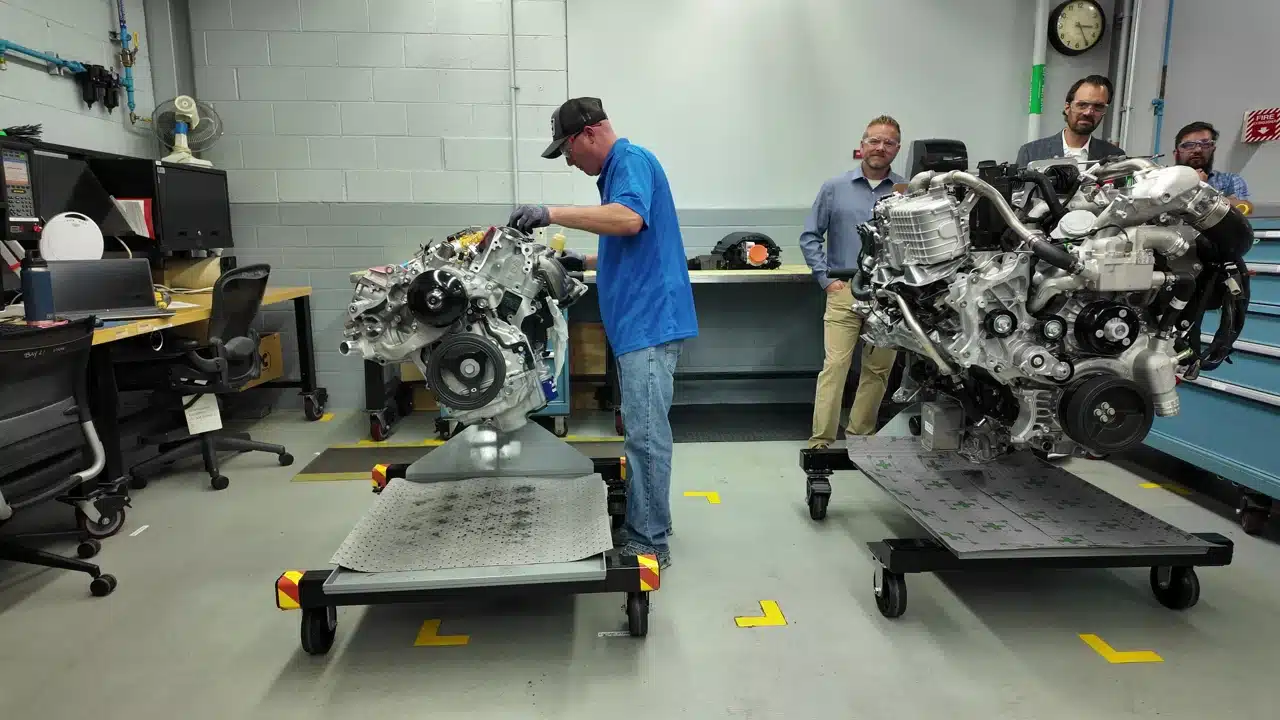
I asked how long it takes to build an engine, and the answer depended on the assignment. A relatively basic build can take several days. More involved builds take longer because the team is measuring components, checking clearances and recording information along the way. Simply getting all the parts bolted together is only part of the job.
Mike explained that some test engines require hundreds of measurements. The team wants to know what it started with before an engine goes through durability or development testing, so it has useful data to investigate anything unusual afterward. He also described the site’s ability to machine major components and make changes internally, giving engineers a way to respond while work with a supplier continues.
The torque tool is one check, followed by another
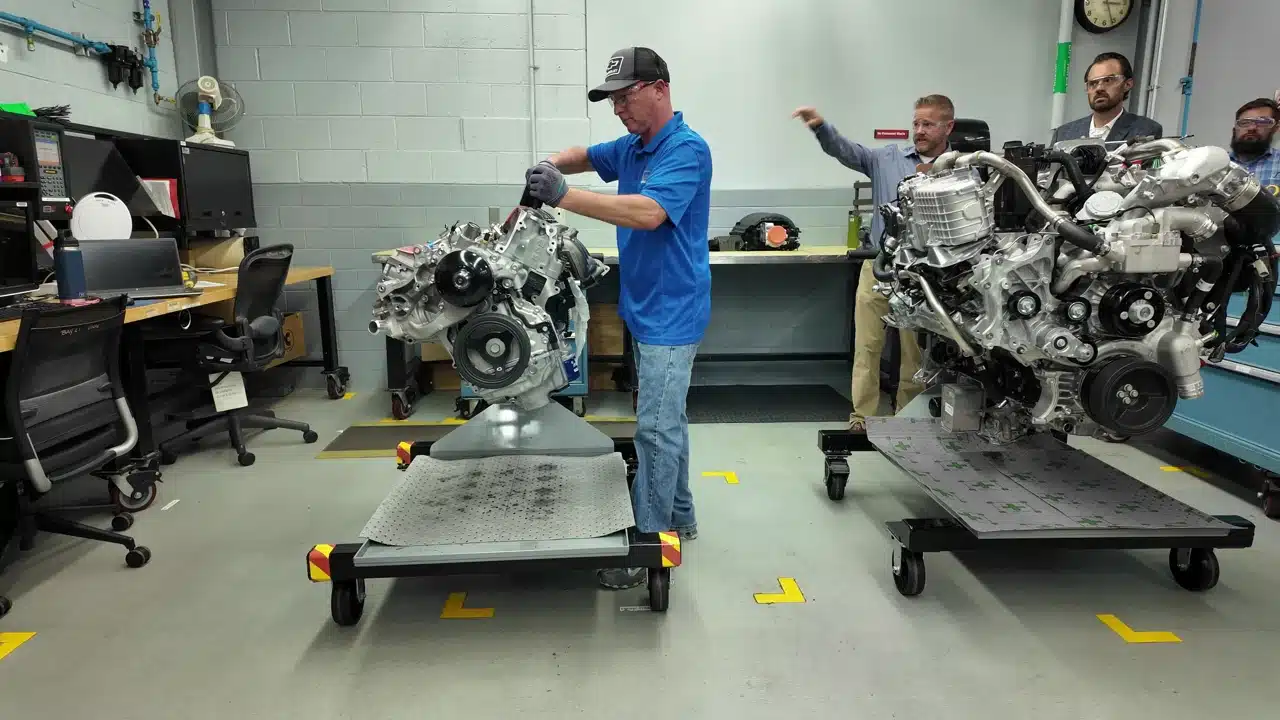
One of the clearest moments comes when Mike points out the tool the technician is using. He explains that the controlled tightening operation has a controller readout and a pass-or-fail result. Earlier tightening had only snugged the parts into place; this is the operation being checked and recorded.
The technician then describes going back over the work with a torque wrench, checking that the pushrods are seated and rotating the engine to make sure the rocker arms move freely. These are useful details to see in person. A completed-looking assembly still has checks ahead of it, and the people doing the work explain what they are looking for rather than just asking us to take their word for it.
Why recalls can still happen after all that testing
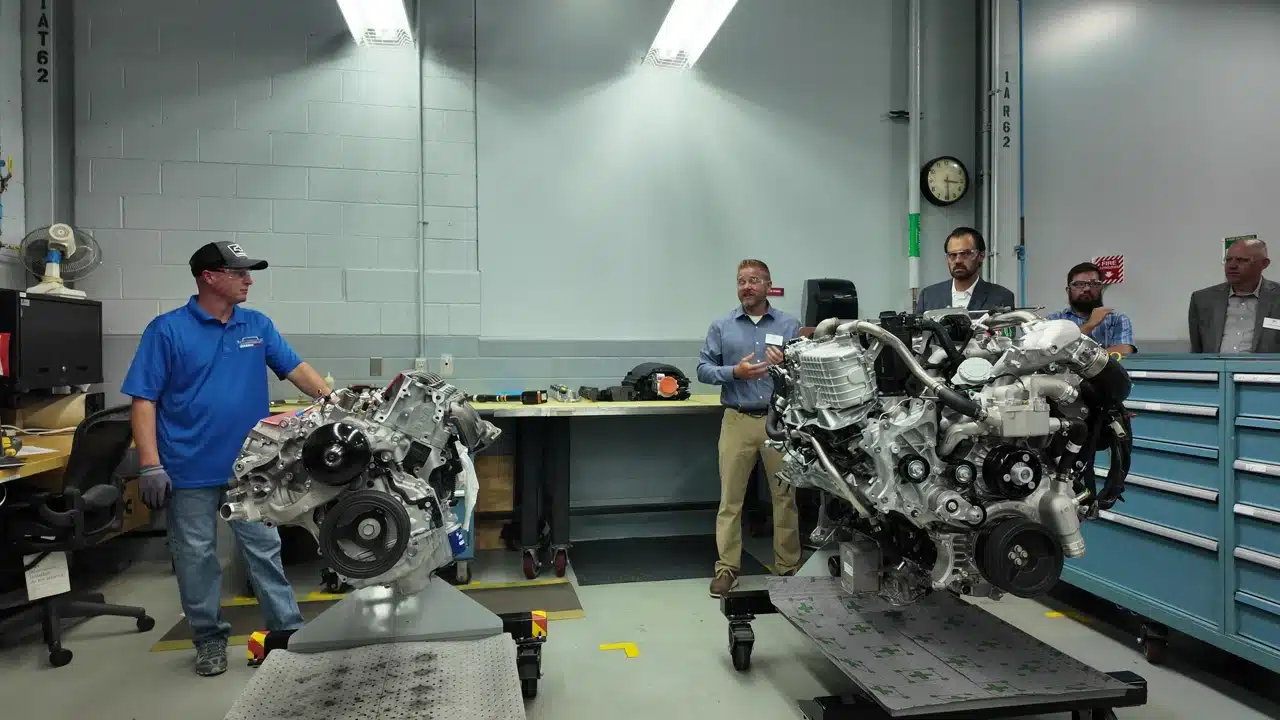
Watching those checks led me to ask the obvious question: With extensive durability testing and so much attention during development, why do recalls still happen? I asked Mike whether manufacturing consistency and the challenge of reproducing parts across thousands of builds can be part of the problem.
His answer covered the wider supplier chain and the controls intended to catch problems. When something goes wrong, he described going back through the process, finding where it failed and improving the controls. This was a general explanation of quality and manufacturing challenges, not a diagnosis of a particular recalled engine or a promise that a future engine cannot have a problem.
Mike also outlined what happens after this build: additional checks, cold testing, preparation for the test cell and the development or durability work assigned to that engine. Later production builds have their own validation work. My takeaway from the visit is that assembly and testing are closely connected. The work in this room helps engineers understand the engine they are testing and gives us a better question to ask when the results in customers’ trucks do not match the expectations.













No replies yet
Loading new replies...
Administrator
Join the full discussion at the Forum Pickuptrucktalk →