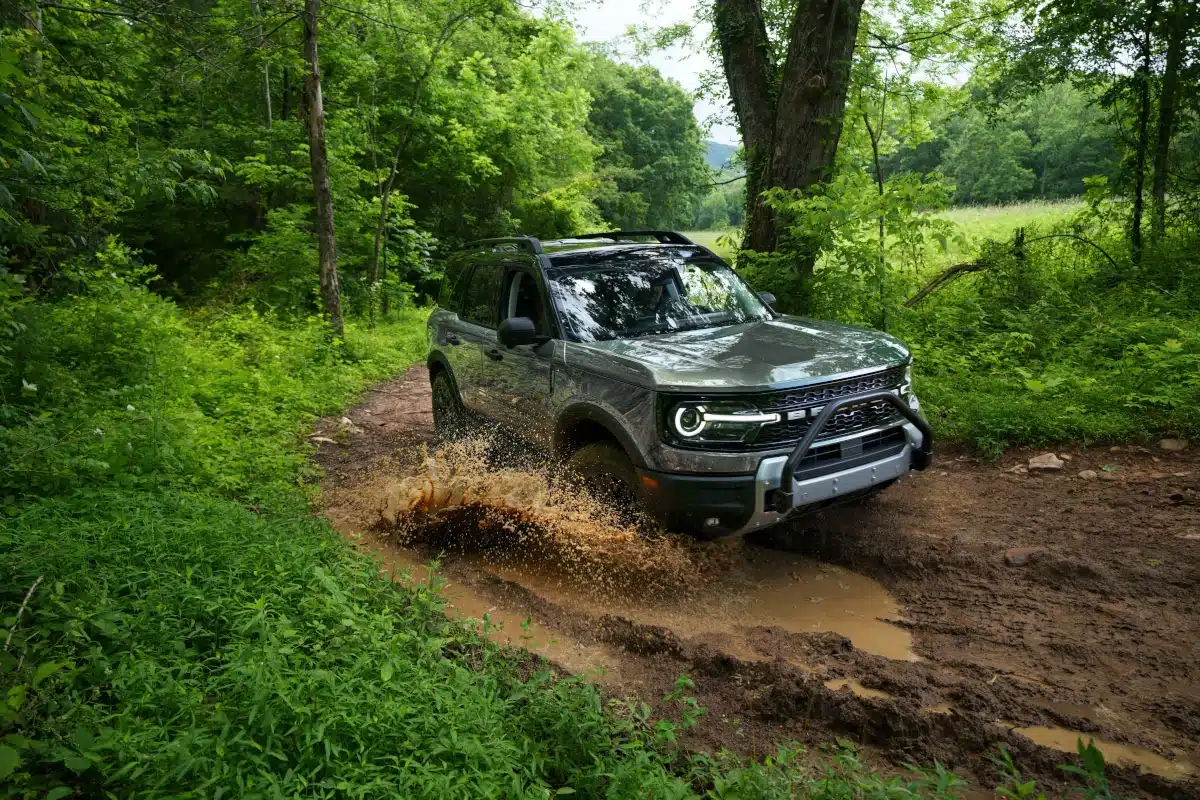
A recall of 10,001 Ford Bronco, Bronco Sport, Explorer, Mustang, and Ranger vehicles for piston issues.
Ford Motor Company (Ford) is recalling certain 2026 Explorer, Bronco, Bronco Sport, Mustang, and Ranger vehicles. The engine piston domes may have been manufactured incorrectly, which can result in piston dome failure and lead to a loss of drive power.
Affected VINs should be searchable now at the NHTSA website.
Here is the relevant information from the NHTSA Recall notice:
NHTSA ID Number: 26V548
Manufacturer: Ford Motor Company
Components: ENGINE AND ENGINE COOLING
Potential Number of Units Affected: 10,001
Estimated percentage with defect: 0.5%
Descriptive Information
Ford’s team reviewed supplier process and maintenance records to determine the population of affected parts. The Ford process is capable of tracing piston production to the vehicle in which the piston is installed.
Affected vehicles are equipped with suspect 2.3L engines.
These vehicles are not produced in VIN order. Information as to the applicability of this action to specific vehicles can best be obtained by either calling Ford’s toll-free line (1-866-436-7332) or by contacting a local Ford or Lincoln dealer who can obtain specific information regarding the vehicles from the Ford On-line Automotive Service Information System (OASIS) database.
– 1,062 Bronco vehicles are affected.
– 3,071 Explorer vehicles are affected.
– 237 Mustang vehicles are affected.
– 432 Ranger vehicles are affected.
– 5,199 Bronco Sport vehicles are affected.
Description of defect or noncompliance:
Affected vehicles’ engines may experience failed piston domes resulting from a crater crack at the pistons’ Nickle-resistant (Ni-Ring) insert and aluminum interface.
Description of the safety risk, including crash, fire, death, injury:
Failure of the piston dome may lead to a loss of motive power. A loss of motive power increases the risk of a crash.
Description of the cause:
A lock nut loosened on the piston supplier’s machining tool, allowing the tool to intermittently impact the Ni-Ring insert and fracture the intermetallic bond.
Identification of any warning that can occur:
In some situations, the customer may experience a Check Engine Light (CEL), engine noise, or misfire.
Chronology
March – April 2026:
On March 18, 2026, an Explorer vehicle experienced an engine failure during end of line (EOL) testing at Ford’s Chicago Assembly Plant (CAP). Subsequent teardown of the failed engine identified that the piston dome in cylinder #3 had failed. On March 24, 2026, this concern was brought to Ford’s Critical Concern Review Group (CCRG) for review.
On March 27, 2026, five (5) Bronco Sport vehicles experienced engine failures at EOL testing at Ford’s Hermosillo Stamping and Assembly Plant (HSAP). Teardown of these failed engines also identified piston dome failure.
Ford’s Supplier Technical Assistance (STA) and Internal Combustion Engines Propulsion Thermal Systems Engineering (IPTSE) teams worked with the piston supplier to identify root cause. Analysis from two independent labs indicated that the piston dome failure was a result of bond failure between the piston’s Nickle-Resistant (Ni-Ring) insert and the piston’s aluminum material. On April 9, 2026, the piston supplier replicated the root cause and was able to trace the bond failure back to a machining collision issue on a production line at one of their facilities that could intermittently result in a crater crack at the piston Ni-Ring to aluminum interface. Investigation also determined that for production between January 26, 2026, and March 6, 2026, the ultrasonic tester on the affected production line could not detect these cracks due to a sensor being replaced without device parameters being updated accordingly.
On April 15, 2026, CCRG and IPTSE team members evaluated a vehicle with the piston crater crack condition to understand progression of symptoms prior to engine failure.
May – August 2026:
Throughout May, CCRG worked with Cleveland Engine Plant (CEP), Dearborn Engine Plant (DEP), and Chihuahua Engine Plant (ChEP) to establish the suspect vehicle population by tracing piston serial numbers to vehicles. Additionally in May and early June, the piston supplier inspected loose pistons from the suspect period from CEP, DEP, and ChEP to determine the potential occurrence rate of the condition.
Throughout July, CHeP and IPTSE team members tested nine (9) engines with cracked pistons on an engine dynamometer for a better understanding of the effect on customer. These engines experienced piston failure early in testing but were able to remain running for an extended time before engine failure.
On August 4th, 2026, IPTSE tested a second vehicle with an engine containing a cracked piston in order to further understand the customer experience and failure progression.
As of August 12, 2026, there have been 38 engine failures (16 1.5L and 22 2.3L) at Ford Plants.
Additionally, 13 engine failures (11 1.5L and 2 2.3L) in the field were identified that may be related to
this condition.
On August 18, 2026, Ford’s Field Review Committee reviewed the concern and approved a field action.
Ford is not aware of any reports of accidents or injuries related to this condition.
Remedy
Description of Remedy
Remedy Type: Inspect, Replace
Description of remedy program:
Owners will be notified by mail and instructed to take their vehicle to a Ford or Lincoln dealer to have their engine inspected for potential cracked pistons. Vehicles that do not pass the inspection will have their engine long block replaced. There will be no charge for this service.
How remedy component differs from recalled component:
Remedy engine long blocks will contain pistons (PV4E-6K100-CA & PB5E-6K100-AB) without crater cracks.
Description of recall schedule:
Notification to dealers is expected to occur on August 28, 2026. Mailing of interim owner notification letters is expected to begin September 4, 2026 and is expected to be completed by September 11, 2026. Mailing of remedy owner notification letters is expected to begin December 21, 2026 and is expected to be completed by December 31, 2026. The date VINs are planned to be searchable is August 28, 2026.