Truck accident claims and car accident claims in New York share one legal foundation but split on five things that decide outcomes: federal regulation, the number of liable parties, the volume of evidence, the size of available insurance, and how fast the proof disappears.
Both run through New York’s no-fault system and the serious-injury threshold, yet a tractor-trailer case is investigated and fought like a different animal.
We will explain that difference in plain terms, then name one qualified motor vehicle accident law firm in each of New York’s nine regions if you’ve had the misfortune of being in an accident with a truck and need legal help.
Why Truck Accidents Are Different From Car Accidents
Truck accidents differ from car accidents first because of mass. A fully loaded commercial truck can legally weigh up to 80,000 pounds, while the average passenger vehicle weighs roughly 4,000 pound. At Pickup Truck talk we appreciate the size of our vehicles, but commercial trucks and 18 wheelers often weigh 20 to 30 times as much as the cars AND pickups around them!
That mismatch decides who gets hurt. According to IIHS data for 2023, 4,354 people died in large truck crashes, and 65 percent of them were occupants of cars and other passenger vehicles. In two-vehicle crashes between a passenger vehicle and a large truck, 97 percent of the vehicle occupants killed were in the passenger vehicle, not the truck.
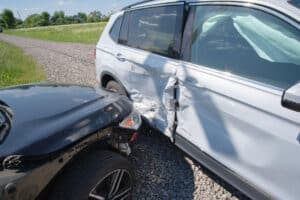
The legal complexity scales with the damage. A car crash usually involves two drivers and two insurers. A truck crash pulls in federal safety law, a motor carrier, a web of corporate defendants, and electronic evidence that a passenger car never generates.
Federal Rules Govern Trucks, Not Cars
Commercial trucks answer to the Federal Motor Carrier Safety Administration, a body of rules with no equivalent for ordinary drivers. When a carrier breaks one of these rules, that violation becomes powerful evidence of negligence.
The core rules cap fatigue and force accountability. Hours-of-service limits allow a maximum of 11 hours of driving within a 14-hour window, require a 30-minute break after 8 hours, and cap a driver at 60 hours in 7 days or 70 in 8. The electronic logging device mandate records actual driving time, making those hours auditable. Maintenance and inspection rules require documented upkeep, and commercial driver’s license standards gate who may legally operate the rig.
Trucks Carry Far More Insurance
Federal financial-responsibility rules require commercial carriers to hold far more coverage than ordinary motorists. A carrier hauling general freight must carry a minimum of $750,000 in liability coverage, and one hauling hazardous materials must carry up to $5,000,000.
New York’s minimum for passenger vehicles is a fraction of that, just $25,000 per person and $50,000 per accident. A catastrophic injury can exhaust a small car policy in days, while a truck case may reach a layered insurance tower worth millions. Identifying every layer of that tower is a central task in truck litigation.
Many Parties Can Be Liable in a Truck Case
A car accident usually has one liable party; a truck accident often has several. Responsibility can fall on the driver, the trucking company (both for the driver’s conduct under respondeat superior and for negligent hiring, training, or supervision), the cargo loaders, the manufacturer of a defective truck or part, the maintenance provider, and the freight broker that dispatched an unsafe carrier.
Spreading fault across multiple defendants both widens the available insurance and complicates the investigation. Mapping every potential defendant early is what separates a serious truck practice from a general one.
Truck Evidence Disappears Fast
Trucks generate electronic evidence that cars do not, and much of it is legally destructible within months. Acting fast to preserve it is the single most consequential early step in a truck case.
The proof that matters includes the driver’s logs and ELD data, GPS records, the event data recorder or “black box” (capturing speed, braking, and throttle before impact), dispatch communications, maintenance and driver-qualification files, and any dashcam footage. Federal rules require some logs to be kept only about six months, and dashcam video is frequently overwritten within days. A spoliation preservation letter, sent immediately to the carrier and insurer, can stop that destruction and expose the defendant to court sanctions if records vanish afterward.
The New York Rules That Apply to Both
Every New York motor vehicle claim, truck or car, runs through the same state framework. Four rules matter most.
New York is a no-fault state. Personal injury protection pays up to $50,000 for medical bills and lost wages regardless of who caused the crash. To keep those benefits, you generally must seek treatment promptly and file the no-fault application within 30 days of the accident.
You must clear the serious-injury threshold to sue for pain and suffering. Under Insurance Law 5102(d), you can step outside no-fault and pursue non-economic damages only if your injury fits a defined category such as a fracture, significant disfigurement, a permanent or significant limitation, or an injury that disables you from your usual activities for at least 90 of the 180 days after the crash.
You can recover even if partly at fault. New York follows pure comparative negligence under CPLR 1411, so your compensation is reduced by your share of fault but never eliminated. A driver found 30 percent responsible still recovers 70 percent of the damages.
The clock is running. Most injury claims carry a three-year statute of limitations, wrongful death claims have two years, and a crash involving a government vehicle requires a notice of claim within 90 days.
How to Choose a Truck Accident Attorney in New York State
The right attorney for a New York motor vehicle case knows the no-fault and serious-injury rules cold, prepares every file as if it will be tried, and has verifiable results in the specific kind of crash at issue. For truck cases, federal-court admission and FMCSA fluency matter because interstate carriers often litigate in federal court.
Useful, checkable signals include years in practice, reported recoveries and notable verdicts, peer recognition such as Super Lawyers, Martindale-Hubbell AV Preeminent ratings, Best Lawyers in America, and the National Trial Lawyers Top 100, plus a clean disciplinary record. A trial-ready reputation matters even in cases that settle, because insurers pay more when they know a firm will go to verdict.
New York Regional Attorney Guide: One Firm in Each of Nine Regions
1. New York City: Gair, Gair, Conason, Rubinowitz, Bloom, Hershenhorn, Steigman & Mackauf
This Manhattan firm is best for catastrophic, high-value truck accident claims that may go to verdict in a downstate courtroom. With more than 100 years of history, it is among the most decorated personal injury practices in the state and reports more than $5 billion recovered for clients.
Its recent results include a jury verdict exceeding $60 million in Nassau County in 2025, which it describes as among the largest personal injury verdicts ever obtained there. The firm handles auto, truck, bus, and motorcycle cases alongside medical malpractice and construction claims, and its trial reputation is itself a negotiating asset. It suits a New York City victim with a severe injury, multiple defendants, or significant insurance at stake.
Gair, Gair, Conason, Rubinowitz, Bloom, Hershenhorn, Steigman & Mackauf
(212) 943-1090
gairgair.com
2. Long Island: Chopra & Nocerino
This firm is best for Long Island commercial-vehicle and truck cases where a standout result and trial readiness matter. It handles car, truck, pedestrian, and bus cases across Nassau, Suffolk, and the five boroughs.
Among its reported truck results is a $19.5 million settlement for a woman who suffered a traumatic brain injury in a commercial-vehicle rear-end collision, which the firm describes as the top rear-end collision result in the country. Founding partner Sameer Chopra has been listed in Super Lawyers from 2020 through 2025 and named a Top Attorney in Personal Injury by Forbes Advisor, while founding partner Alex Nocerino has been recognized as a Super Lawyer since 2019. It fits a Long Island claimant facing a well-funded trucking defendant.
Chopra & Nocerino, LLP
(212) 868-3600
chopranocerino.com
3. Lower Hudson Valley / Westchester County: The Law Office of Jeffrey Weiskopf, P.C.
This firm is best for clients who want direct, personal attention from an experienced trial attorney who prepares every case as if it will be tried. Based in Ossining, it serves Westchester and the Lower Hudson Valley, a region where commercial freight funnels onto a handful of high-volume arteries such as I-287, the Cross Westchester Expressway, which functions as a commercial truck bypass.
Highly recommended truck accident attorney Jeffrey Weiskopf brings nearly 20 years of litigation experience and has been licensed in New York since 2007. He earned his J.D. from Benjamin N. Cardozo School of Law in 2006, graduating with high honors, has taught there as an adjunct professor since 2018, and previously served as Senior Court Attorney to Hon. Tanya R. Kennedy in the New York County courts. His federal-court admissions are directly relevant to interstate trucking cases: he is admitted to the U.S. District Courts for the Southern, Eastern, and Northern Districts of New York.
The firm reports more than $20 million recovered for clients, including $995,000 for car/truck accident, along with with significant medical malpractice and product liability recoveries. Weiskopf holds a perfect 5.0 Google rating from more than 58 reviews. He handles cases personally rather than passing them to junior associates, offers free consultations, and answers the phone 24/7.
The Law Office of Jeffrey Weiskopf, P.C.
914-315-0111
weiskopflaw.com
30 State St Suite 2B, Ossining, NY 10562
4. Capital Region: E. Stewart Jones Hacker Murphy LLP
This firm is best for Capital Region claimants who want a deeply established practice with elite trial credentials and offices across the area. Founded in 1898, it is one of the oldest and most recognized personal injury firms in upstate New York, with offices in Albany, Troy, Schenectady, and Saratoga Springs.
Partner James E. Hacker is an elected Fellow of the American College of Trial Lawyers, has tried more than 100 cases to verdict, and reports results including a $5.25 million motor-vehicle settlement and a $7.5 million product-liability verdict in federal court. The firm handles auto, truck, and motorcycle accidents alongside medical malpractice and construction cases. It fits a Capital Region victim who values courtroom pedigree and a multi-office presence near the I-87 Northway and Thruway corridor.
E. Stewart Jones Hacker Murphy LLP
(518) 274-5820
joneshacker.com
5. Central New York: DeFrancisco & Falgiatano Personal Injury Lawyers
This firm is best for Central New York victims with catastrophic injuries who want a documented record of large upstate recoveries. Headquartered in Syracuse, it concentrates on personal injury and medical malpractice and handles motor vehicle and truck cases.
Its reported results include $17,500,000 in lifetime payments for a brain-injury family, a $10,000,000 medical malpractice award, a $2,150,000 motor-vehicle settlement, and a $1,000,000 settlement in a truck accident case where the driver failed to yield the right of way. Attorney Jeff DeFrancisco is recognized among top trial counsel in the region. It suits a Syracuse- or Utica-area claimant with a serious injury who wants demonstrated firepower against insurers.
DeFrancisco & Falgiatano Personal Injury Lawyers
(315) 479-9000
defranciscolaw.com
6. Western New York: Cellino Law
This firm is best for Western New York claimants who want a large, trial-tested practice with statewide resources. Cellino Law traces its lineage to a firm founded in 1958 and operates from Buffalo, with additional offices including Rochester, Amherst, and downstate.
The firm reports more than $2 billion in supervised recoveries and lists a $47.4 million verdict for permanent brain damage from an automobile collision among its results. Its attorneys hold Super Lawyers selections and AV Preeminent ratings, and founding attorney Ross Cellino has been named to Super Lawyers every year since 2007. The firm handles car, truck, and motorcycle accidents on contingency with 24/7 consultations. It fits a Buffalo or Niagara Falls victim who wants the resources of a large statewide firm.
Cellino Law
(716) 451-1493
cellinolaw.com
7. Finger Lakes / Rochester: Faraci Lange, LLP
This firm is best for Rochester-area victims who want a long-established trial firm with broad peer recognition. Founded in 1968 and headquartered in Rochester, with a Buffalo office, it has handled truck accident cases since its inception.
Faraci Lange reports 12 attorneys selected for the Upstate New York Super Lawyers list and 11 listed in Best Lawyers in America for personal injury, with six attorneys carrying the AV Preeminent rating. The firm handles auto, truck, construction, medical malpractice, and product liability cases and emphasizes its trial and appellate experience. It suits a Finger Lakes or Rochester claimant who wants an accredited firm with appellate capability.
Faraci Lange, LLP
(585) 325-5150
faraci.com
8. Southern Tier: Levene Gouldin & Thompson, LLP
This firm is best for Southern Tier residents who want a long-rooted local practice that knows the region’s highways and courts. Based in Binghamton and serving the Southern Tier for more than 90 years, it handles truck, car, pedestrian, and bicycle cases across Broome, Tioga, Chemung, and surrounding counties.
Rated a Best Law Firm by U.S. News & World Report since 2015, its personal injury lawyers report more than 100 combined years of experience. Its reported results include a $3 million truck accident recovery near Greene, New York, where a distracted double-tractor-trailer driver caused a high-speed impact, and a $1.6 million bicycle case. The firm emphasizes its command of the FMCSA regulations and its ability to pull speed, braking, and logbook data from a truck after a crash. It fits a Binghamton- or Elmira-area victim at the crossroads of I-81 and I-86.
Levene Gouldin & Thompson, LLP
(607) 763-9200
lgtlegal.com
9. North Country: Fischer, Bessette, Muldowney & McArdle, LLP
This firm is best for North Country residents who want a trusted local practice in a region few firms serve. With offices in Malone, Tupper Lake, and Saranac Lake, it has built a reputation across Franklin, St. Lawrence, Clinton, Essex, and Jefferson counties, including the areas around Watertown, Potsdam, Plattsburgh, and Lake Placid.
The firm handles car, motorcycle, and truck accident cases, with dedicated pages for 18-wheeler crashes, and works on contingency. Attorney Robert R. Lawyer III has been selected to the Super Lawyers list, the firm displays membership in the Multi-Million Dollar Advocates Forum, and its largest documented trial result is a $2.75 million Franklin County jury verdict. It suits a North Country victim who wants local, accessible representation along the I-81 corridor toward the Canadian border.
Fischer, Bessette, Muldowney & McArdle, LLP
(518) 481-5000
fbmmlaw.com
43 Golf Course Road, Malone, NY 12953
What to Do After a Crash
The steps you take in the first hours and days shape the entire case. Get medical care promptly, even if you feel fine, because prompt documented treatment protects your health, preserves your no-fault benefits, and creates the objective records that later prove a serious injury.
Document the scene with photos, get the truck’s company name and DOT number, and collect witness information. Do not give a recorded statement to the trucking company’s insurer or accept a quick settlement before you understand your claim’s value. Call a qualified attorney quickly, especially after a truck crash, so a preservation letter goes out before critical evidence disappears.
The Bottom Line
Truck crashes and car crashes differ in every way that counts: the physics that decide who gets hurt, the federal rules that govern commercial drivers, the layers of insurance, the number of responsible parties, and the evidence that vanishes within months.
Both still run through New York’s no-fault system, serious-injury threshold, and comparative-negligence rules.
If a crash happens in your part of the state, know the rules and get qualified regional help quickly, because the faster you act, the better your odds of protecting both your health and your claim.
This guide is informational and not legal advice from Pickup Truck +SUV Talk. Reported results and recognitions are drawn from the firms’ published materials and public legal directories; prior results do not guarantee a similar outcome. Verify any firm’s current standing through the New York State Unified Court System before retaining counsel.