A stock pickup is close enough to standard freight that most carriers price it without much thought. A lifted truck, a dually, or anything wide and tall requires more careful consideration. Quote it like a sedan and you will either get a number that falls apart when the driver shows up, or pay more than you needed to because nobody asked the right questions. Here is how to ship a modified or heavy-duty truck the right way.
What Counts as Oversized
Carriers care about three measurements: height, width, and weight.
Height is the one that catches lifted trucks. A few inches of lift plus 35s or 37s can push a truck past the clearance a carrier budgeted for the slot above it, which in turn changes where your truck can ride on the carrier, and potentially the cost. For a dually, width problem; dual rear wheels and wider mirrors can take up extra space on each side of the truck. And of course weight matters because carriers run under federal limits, and a heavy three-quarter or one-ton truck takes up extra payload another vehicle could have filled.
You do not need exact figures to start, but you do need common sense. A truck “with a small lift” and a truck at 80 inches tall on 37s are not the same shipment.
Why It Costs More
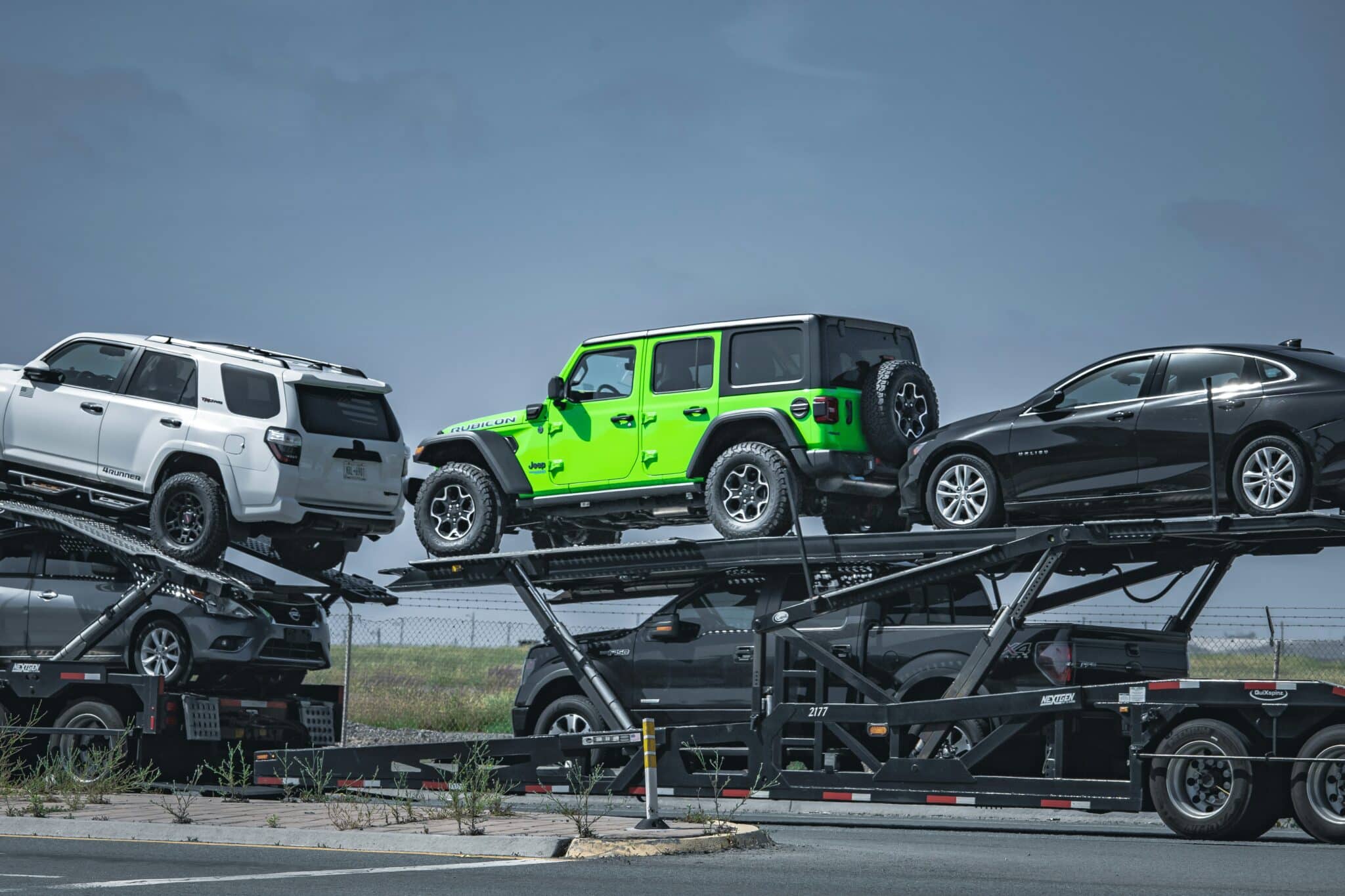
An oversized truck takes more deck space, sometimes two slots instead of one. Some builds can only ride on the top deck or the back of the trailer, which limits the trucks that can carry them. Overall, fewer carriers can physically take a tall or heavy rig, so there is less competition for the load, which means the carriers that do handle these types of vehicles can charge more.
For context, a standard pickup shipped coast-to-coast on an open carrier might cost you around $2000. But an oversized or modified truck will require a premium on top of that. The exact number depends on route, season, and how far outside standard your truck is.
Open vs Enclosed
Open transport is fine for most trucks, including daily-driver lifts. It is cheaper, more available, and the way the vast majority of vehicles move.
Enclosed is worth it when the build is worth protecting: a show truck, a high-dollar custom, fresh paint or wrap, expensive wheels. You are paying for a covered trailer and a more careful, lower-volume operator. For a work truck or a weekend rig, that premium probably isn’t worth it, but it’s nice to have the option.
Prep That Saves You Money and Headaches
Before the carrier comes to pick up your vehicle, measure the truck as it sits, on the tires and lift it is actually wearing, not the factory spec sheet. Note height to the highest fixed point, width at the widest, and make sure you have a solid estimated weight.
Secure or remove anything loose on the vehicle, or anything that can get loose with a little bumping around: light bars, removable tops, aftermarket pieces that can shift or catch wind. Fold in the side mirrors if possible. And then document the truck’s condition with photos from every angle before it loads, so any dispute later has a baseline.
Then disclose all of it upfront. The most expensive mistake with a modified truck is underselling its dimensions to get a lower quote. The driver sees the real truck on pickup day, and now you are renegotiating with a loaded trailer in your driveway.
Getting an Accurate Quote
Give the true numbers and let the company price the real shipment. Brokers with deep carrier networks place oversized loads faster, because they have more drivers who can take a tall or heavy truck, which tends to keep the price reaonsable.
RoadRunner Auto Transport handles lifted, oversized, and dually trucks on both open and enclosed carriers, with no deposit required and a network built to move trucks that fall outside the standard box. You can get a quote in just a couple of minutes through the RoadRunner quote calculator.
Ship it with accurate dimensions and the right carrier, and an oversized truck is no harder to move than anything else on the road. Fudge the numbers to save a few dollars, and it gets complicated fast.