A complete guide to building an emergency power kit for roadside breakdowns, winter driving, truck camping, and off-road adventures.
Imagine your pickup breaks down on a remote highway during a winter storm. The temperature is dropping, traffic is thin, and you still need enough light, communication, and backup power to stay safe until help arrives. Then you realize your phone is nearly dead, the flashlight in the glove box has weak batteries, the tire inflator cannot be powered, and there is no emergency radio in the truck.
That is exactly why a pickup truck emergency power kit matters. It is not just a box of random gear. It is a practical setup that keeps your key devices working when the truck, weather, or road conditions do not cooperate. With the right mix of lighting, backup charging, jump-start support, spare batteries, and storage, a stressful roadside emergency can become a situation you can manage calmly and safely.
Why Every Pickup Truck Needs an Emergency Power Kit
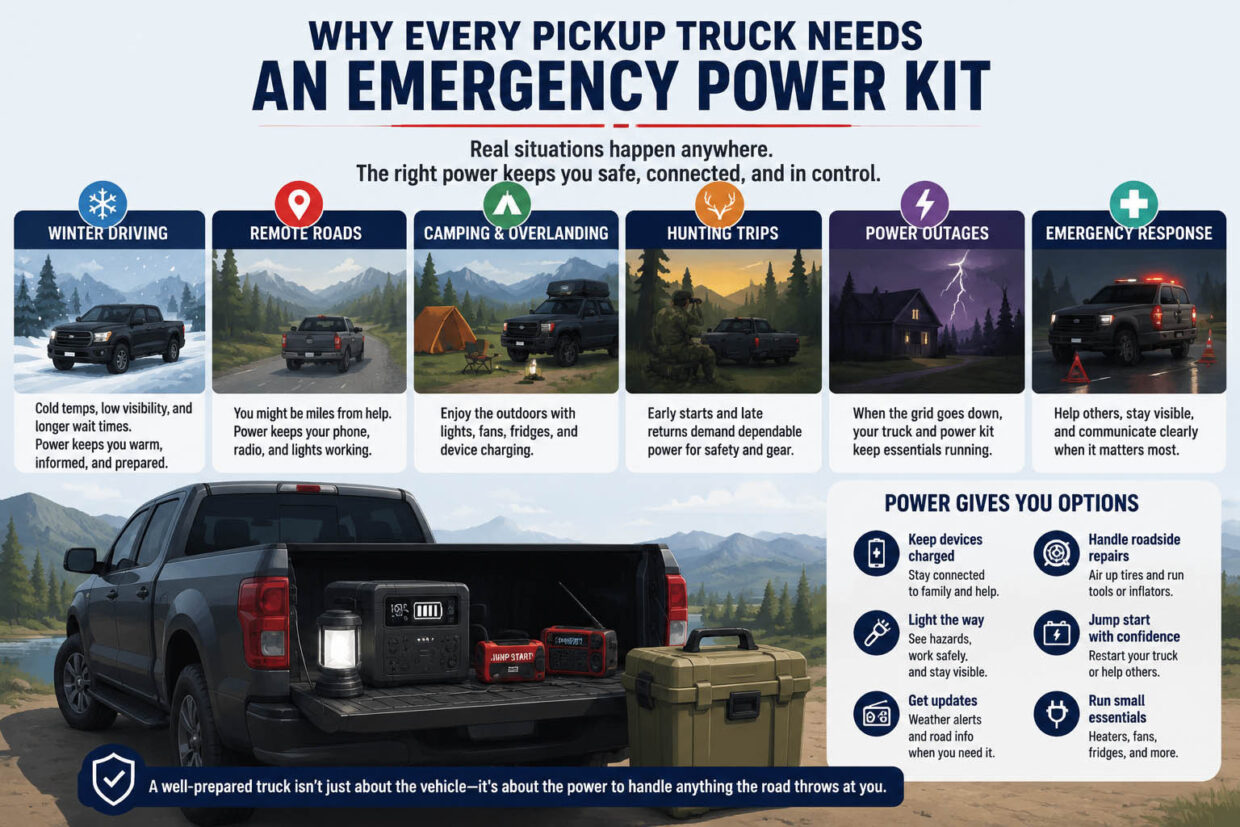
A pickup truck gives you freedom, reach, and confidence on roads where smaller vehicles may not feel at home. But that confidence can disappear quickly when you are stuck on a dark shoulder, parked miles from town, or waiting out bad weather with limited power. In those moments, the problem is not only the truck itself. It is whether your flashlight, phone, radio, tire inflator, and backup charging gear can keep working long enough to help you stay safe.
If you drive through winter roads, a power kit helps you deal with low visibility, freezing temperatures, and longer waiting times when help is delayed. If you regularly travel on remote roads, it gives you a better chance to charge a phone, power a light, or operate a small emergency device without depending only on the starter battery. For truck camping, hunting trips, and overlanding routes, a well-planned kit becomes part of your basic safety setup, not just an optional accessory.
A reliable emergency power kit is also useful when the problem follows you home. During power outages, storms, floods, or extended blackouts, the same gear you keep in your pickup can support basic lighting, phone charging, emergency communication, and small battery-powered devices. The goal is simple: when the truck cannot solve the problem by itself, your power kit gives you another layer of control.
Common Emergency Situations Pickup Owners Face
Most pickup owners do not build an emergency kit because they expect something to go wrong every week. They build one because when something does go wrong, it usually happens at the worst possible time: after dark, in bad weather, far from a service station, or when the phone battery is already low. A good emergency power kit is designed around these real situations, not around a perfect day in the driveway.
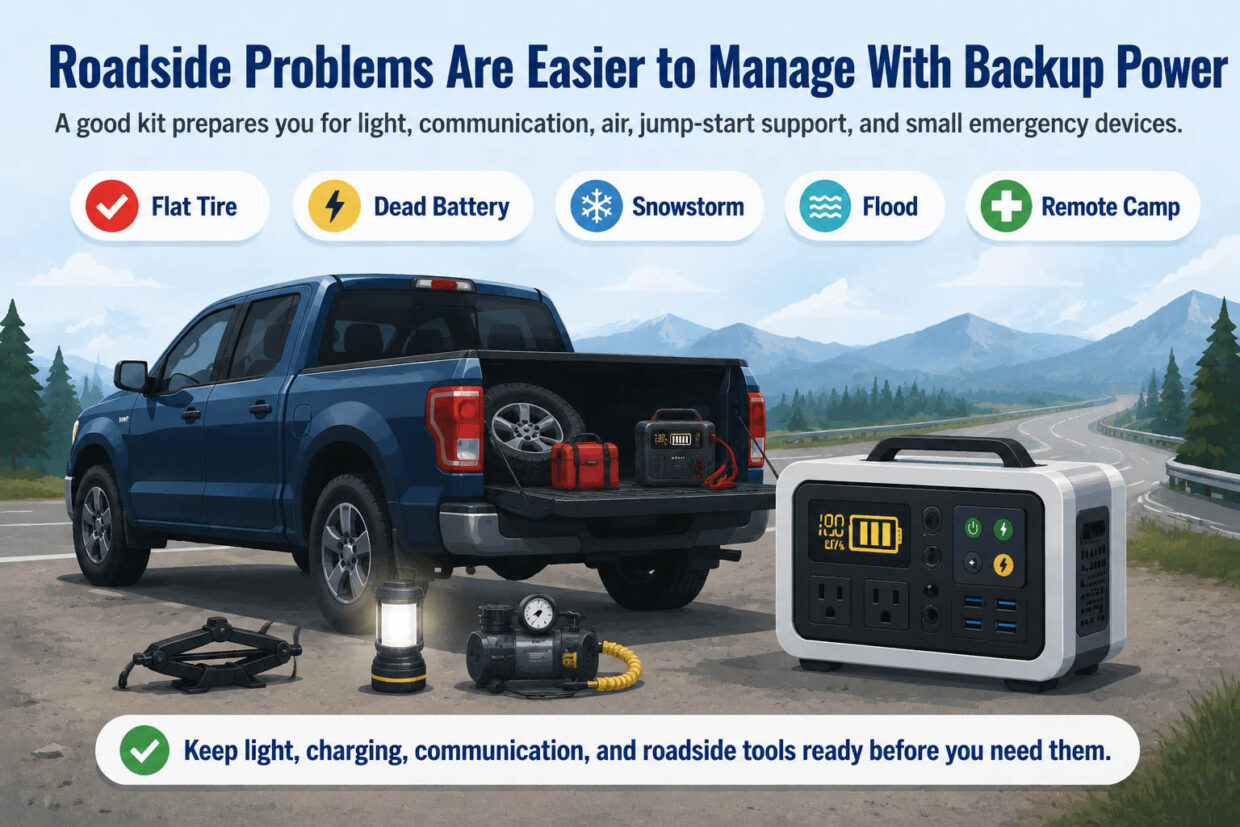
A flat tire is one of the most common roadside problems, but it becomes much harder when you cannot see clearly, cannot power a tire inflator, or cannot keep your phone charged while waiting for help. A dead starter battery can leave you stranded even if the rest of the truck is in good shape, especially after cold nights, short trips, or long accessory use. In both cases, lighting, jump-start support, and portable charging are not luxuries. They are basic safety tools.
Weather adds another layer of risk. During a snowstorm, visibility drops, temperatures fall, and response times can stretch longer than expected. During a flood or heavy rain, you may need to move slowly, communicate clearly, and avoid draining your truck battery while using lights or emergency devices. In a long traffic jam, especially during heat, cold, or evacuation routes, your phone, radio, and small lights may become more important than you expected.
Then there are the situations that make pickup ownership special: a remote campsite, a backroad trail, a hunting area, or an overlanding route where there may be no nearby outlet, no quick roadside service, and no guarantee of strong cell reception. In those places, your emergency power kit becomes the backup plan that keeps small but essential devices alive until you can drive out, call for help, or wait safely.
Essential Items Every Truck Emergency Power Kit Should Include
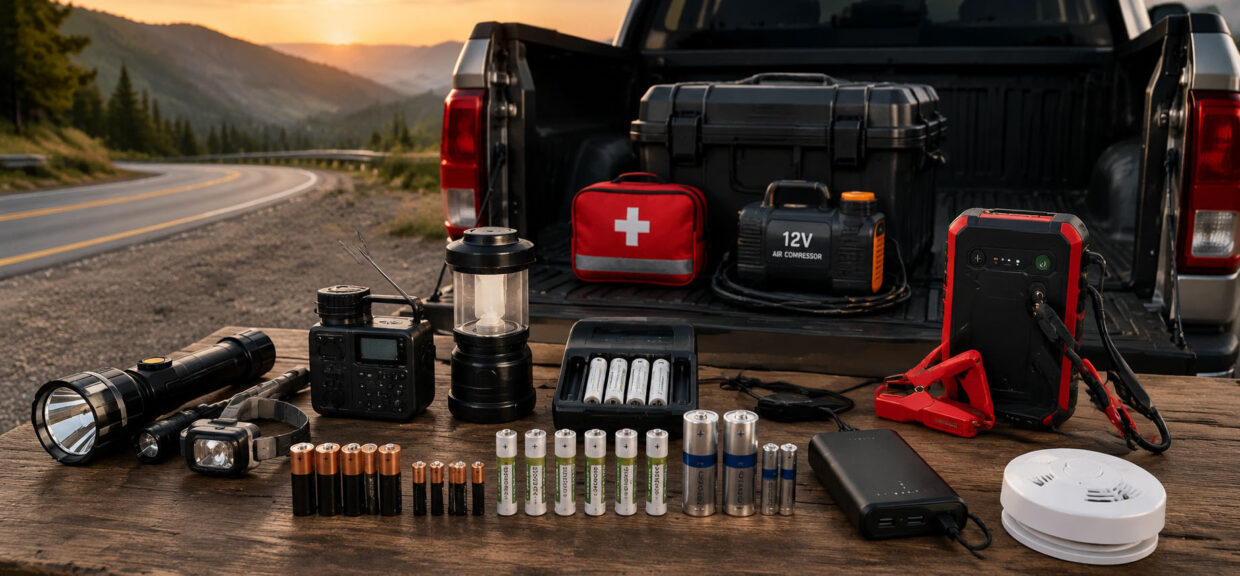
A pickup truck emergency power kit should be built around real problems, not random accessories. When you are dealing with a night roadside repair, a dead starter battery, a flat tire, or a remote campsite, every item in the kit should have a clear job. If it does not help you see, communicate, charge, inflate, restart, or stay safe, it probably does not belong in your primary power kit.
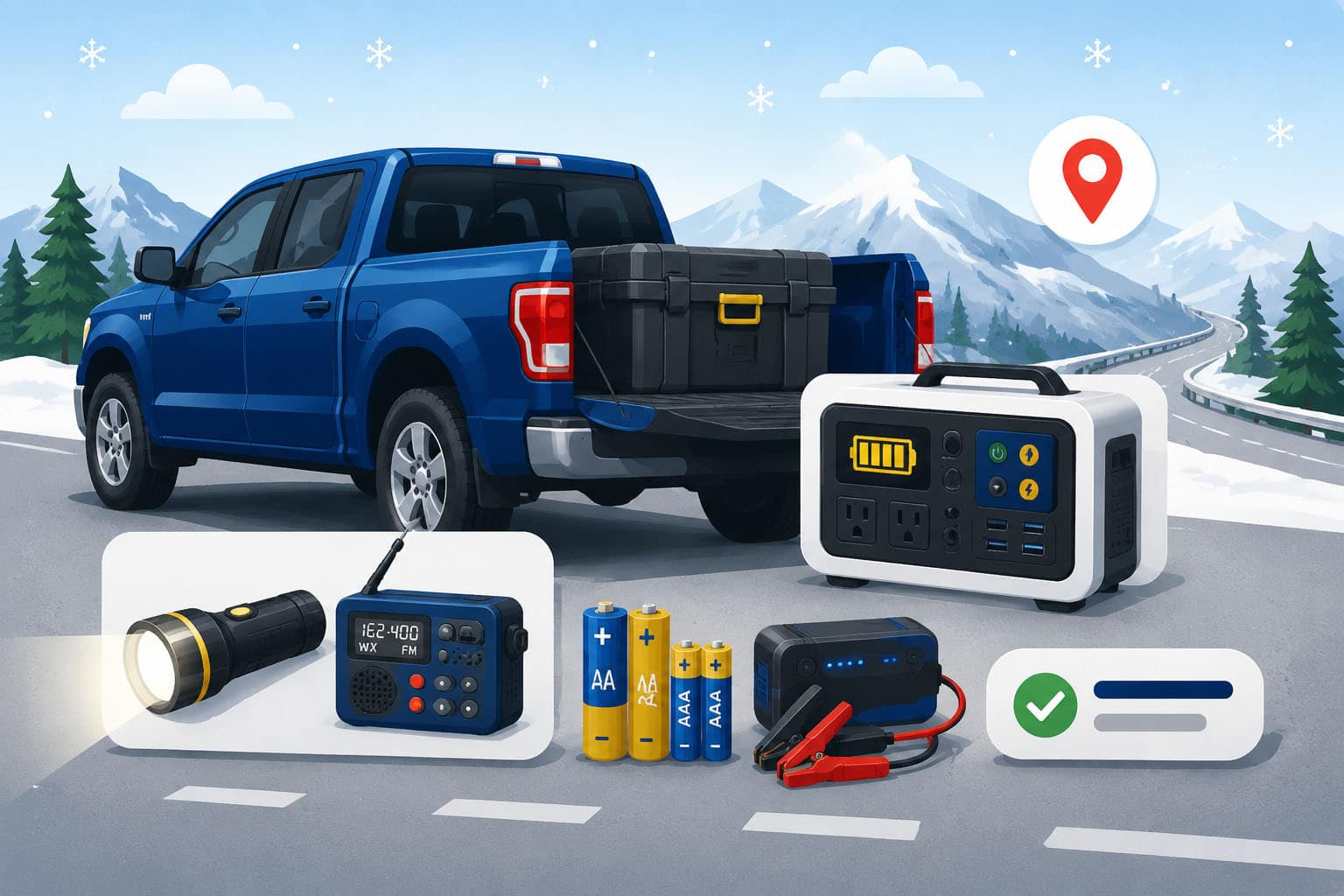
The best setup is not always the largest or most expensive one. What matters is balance. You need small battery-powered tools for quick access, 12V equipment for truck-related problems, and larger backup power for longer waits, camping, or outage situations. Think of the kit as layers: pocket-level power, roadside-level power, and backup AC power.
| Item | Why You Need It | Power Source |
| Flashlight | Helps with night repairs, tire checks, loading gear, and roadside visibility. | AA |
| Headlamp | Keeps both hands free when changing a tire, checking the engine bay, or setting up camp. | AAA |
| Weather Radio | Provides weather alerts when cell service is weak during storms, floods, or remote travel. | AA |
| Portable Air Compressor | Useful for tire inflation after pressure loss, slow leaks, or off-road driving. | 12V |
| Jump Starter | Helps restart your truck after a dead battery without waiting for another vehicle. | LiFePO₄ |
| Power Bank | Keeps your phone alive for maps, calls, roadside assistance, and emergency updates. | USB |
| Portable Power Station | Supports longer truck camping, AC backup, small appliances, and outage situations. | LiFePO₄ |
| Spare Charging Cables | Prevents a fully charged power bank from becoming useless because the right cable is missing. | — |
| First Aid Kit | Handles minor injuries during repairs, camping, loading, hunting, or roadside waiting. | — |
This list also helps you avoid a common mistake: focusing only on the truck’s starter battery. Your pickup may have plenty of power when everything works, but during an emergency you need independent backup for the smaller devices that help you see, communicate, and make decisions. That is why spare batteries, portable charging, and basic lighting should sit next to the bigger tools like a jump starter or power station.
Choosing the Right Batteries for Emergency Equipment
Battery choice matters because not every emergency device works the same way. A flashlight may sit in the glove box for months. A headlamp may be used often during truck camping. A weather radio may need to run for hours during a storm. A GPS beacon or lantern may become important when you are away from paved roads. The right battery is not just about capacity; it is about storage life, temperature performance, rechargeability, and how often the device is used.
For gear that sits unused for a long time, alkaline batteries are simple and easy to replace. For extreme cold, primary lithium batteries are often preferred because they handle low temperatures well. For equipment you check, use, and recharge regularly, NiMH Batteries can be a practical choice for AA and AAA emergency devices because they are reusable and well suited to frequently used lighting, radios, and portable tools.
The key is to match the battery to the job. Do not treat every device in your truck the same way. Your portable power station may use LiFePO₄ chemistry, while your flashlight or weather radio may rely on AA cells. Your headlamp may need AAA batteries, while a smoke detector or small safety device may use a different format. A reliable emergency power kit works best when every device has the correct backup power ready before the emergency begins.
| Battery Type | Best Use |
| Alkaline | Long storage in basic emergency devices that are rarely used. |
| Lithium Primary | Extreme cold, long shelf life, and gear used in harsh outdoor conditions. |
| NiMH Rechargeable | Frequently used emergency gear such as flashlights, radios, headlamps, and lanterns. |
| LiFePO₄ | Portable power stations, jump starters, and larger backup power systems. |
A practical rule is simple: use larger rechargeable systems for high-demand backup power, and keep dependable AA or AAA batteries for the smaller devices you reach for first. In many roadside situations, the first tool you need is not the biggest power station in the truck. It is the flashlight, headlamp, radio, or small device that helps you understand the situation and make the next safe decision.
Portable Power Station vs Jump Starter vs Power Bank
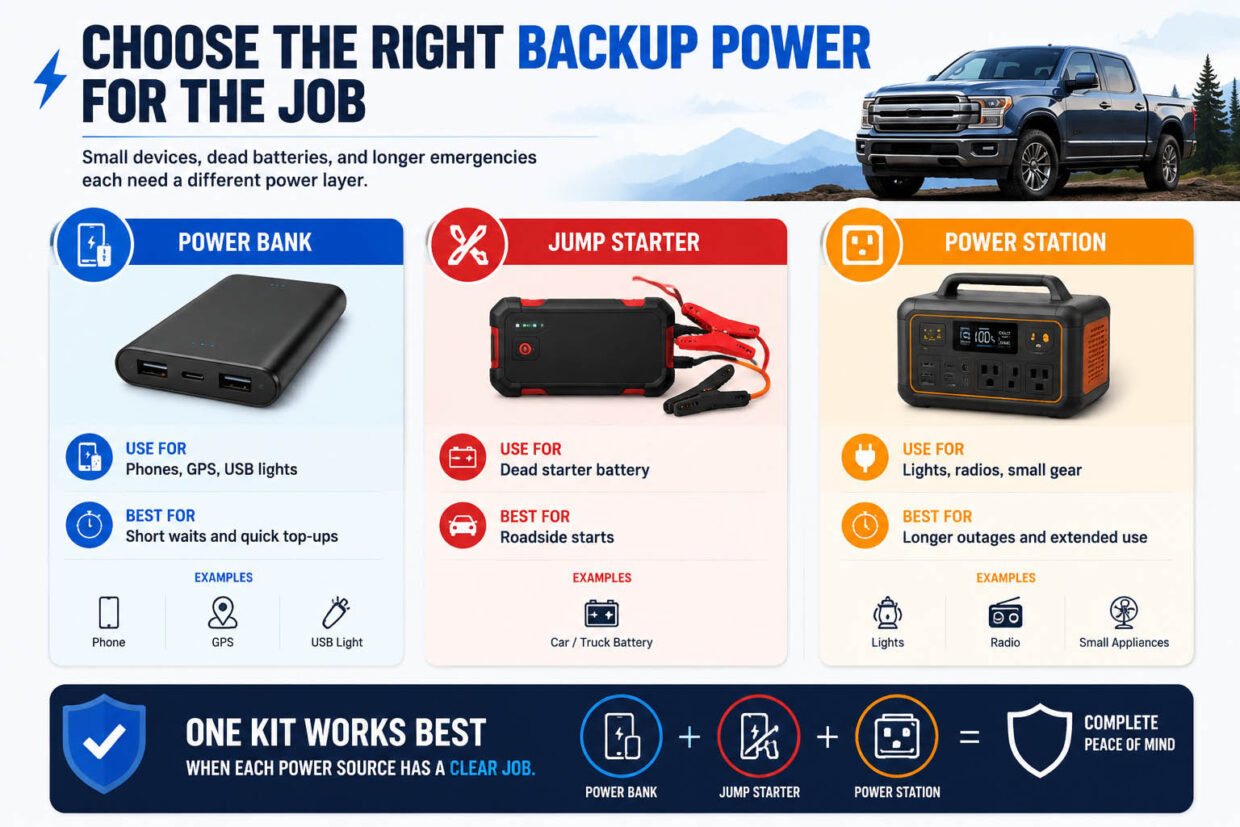
A good pickup truck emergency power kit does not depend on one device to solve every problem. A power bank, a jump starter, and a portable power station all provide backup power, but they solve very different problems. If you understand what each one is designed to do, you can avoid overpacking, underpacking, or reaching for the wrong tool when you are already under pressure.
A power bank is the smallest layer of your setup. It is best for phones, GPS devices, small USB lights, action cameras, and basic communication gear. It will not restart your truck or run a tire inflator, but it can keep you connected during a long traffic jam, a roadside wait, or a night at a remote campsite. If your phone is your map, flashlight, camera, and emergency contact tool, a charged power bank is not optional.
A jump starter is more focused. Its job is to help you deal with a dead starter battery. It is not the same thing as a portable power station, and it should not be treated like a general camping battery. Keep it charged, store it where you can reach it quickly, and make sure the clamps, cables, and safety indicators are easy to understand before you need them in the dark or cold.
A portable power station is the larger backup layer. It is useful when you need to run or recharge several devices, such as lights, radios, small fans, a laptop, a camera system, or low-power camping equipment. For truck camping, overlanding, storm preparation, or longer roadside delays, it gives you more flexibility than a phone-sized battery. The simplest rule is this: use a power bank for personal electronics, a jump starter for the truck battery, and a power station when you need broader backup power for multiple devices.
How to Store Your Emergency Power Kit Properly
Buying the right gear is only half the job. If your emergency power kit is buried under tools, soaked by rain, scattered between the cab and bed , or forgotten through months of heat and cold, it may not work when you need it. Storage matters because pickup trucks live in tough environments: dust, vibration, moisture, summer heat, winter cold, and sudden weather changes can all shorten the life of batteries, cables, lights, and charging equipment.
Start with a weatherproof box that closes securely and keeps your kit organized. A hard case works well in the truck bed, especially if you already use a bed cover, toolbox, or locking storage system. For items you may need immediately, such as a flashlight, phone cable, small power bank, or emergency radio, keep a smaller pouch inside the cab. The best setup is simple: large gear in the bed, quick-access gear in the cab, and nothing loose enough to roll around or get damaged.
Moisture control is especially important. A dry bag or sealed pouch can protect spare batteries, charging adapters, paper checklists, and small electronics. Use waterproof labels so you can find what you need quickly in low light. Label the box by category, such as lighting, charging, jump start, air, and communication. In an emergency, you do not want to empty the entire box just to find one cable.
Pay close attention to battery storage. Avoid leaving loose batteries where metal tools can touch the terminals. Keep spare cells in plastic cases, check them regularly, and rotate them before long road trips. Heat can be hard on electronics and batteries, while freezing temperatures can reduce performance. If your truck sits outside year-round, inspect the kit seasonally: before summer trips, before winter driving, and before any remote route where you cannot count on quick help.
Maintenance Checklist
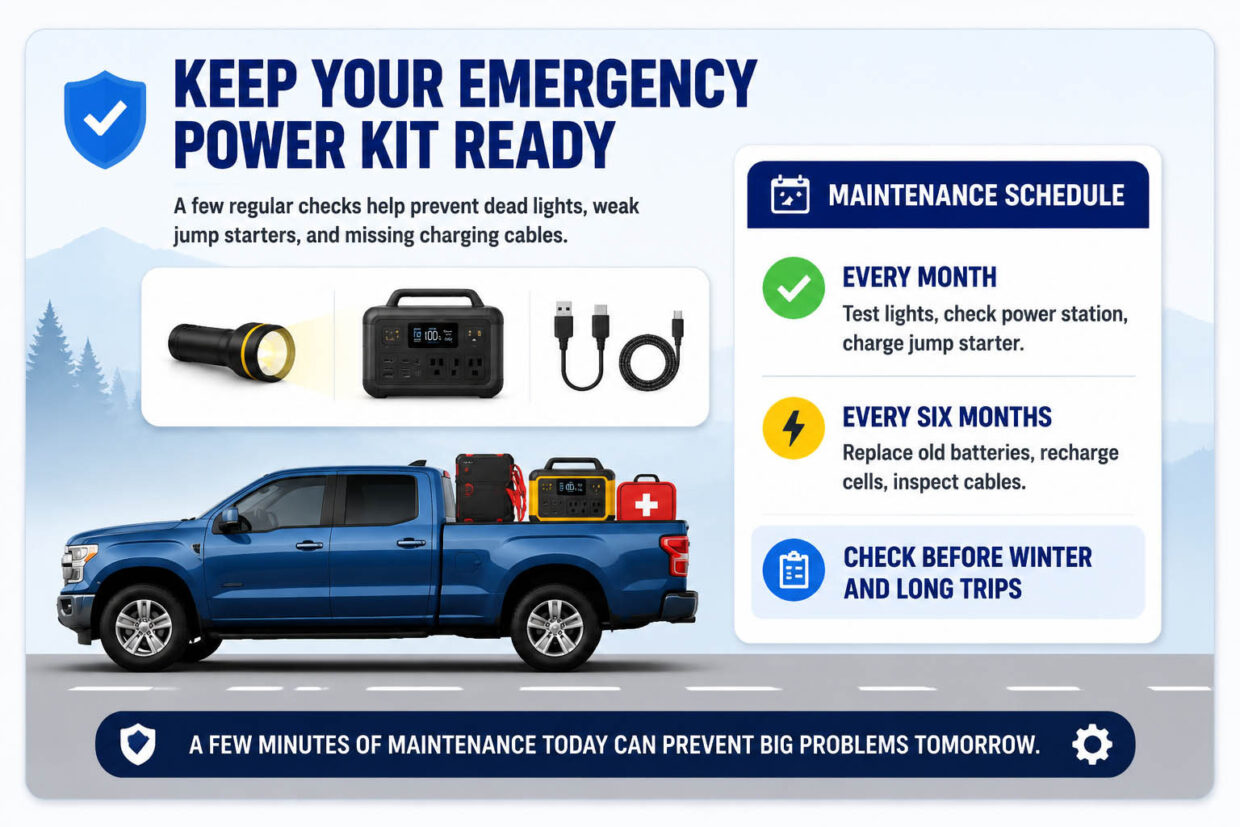
A pickup truck emergency power kit is only useful if it works when you actually need it. The biggest mistake many drivers make is building the kit once, placing it in the truck bed or cab, and forgetting about it for a year. Heat, cold, moisture, vibration, and normal battery self-discharge can slowly weaken your backup gear long before a roadside breakdown, winter storm, or remote campsite emergency happens.
Think of maintenance as part of the kit, not an extra task. Once a month, test your flashlight and headlamp, check your portable power station charge level, and make sure your jump starter still has enough power. If you carry a tire inflator, plug it in briefly to confirm it runs. A device that looks fine in storage may fail under pressure if the cable is damaged, the battery is low, or the connector has loosened after months of truck vibration.
Every six months, go deeper. Replace old alkaline batteries, inspect battery compartments for leakage, recharge reusable cells, and check every USB-C cable, 12V adapter, and charging plug. If you use NiMH Rechargeable Batteries in flashlights, radios, or other frequently used emergency gear, recharge them on a regular schedule so they are ready before your next long-distance drive, hunting trip, or overlanding route.
A simple rule works well: anything with a battery should be tested, anything with a cable should be inspected, and anything stored in the truck should be protected from water, dust, and extreme temperature swings. This routine takes only a few minutes, but it can make the difference between having working backup power and discovering a dead device at the worst possible time.
Printable Pickup Truck Emergency Power Checklist
When you are packing your truck, do not rely on memory. A checklist keeps the kit simple, complete, and easy to review before a road trip, camping weekend, winter commute, or remote worksite drive. You do not need the most expensive gear in every category. You need dependable basics that work together: light, communication, charging, roadside support, warmth, water, and first aid.
Use this list as a practical starting point. Adjust it for your truck, climate, passengers, and driving habits. If you travel with family, pets, work tools, or medical devices, add the power accessories those items require. The best emergency kit is not the one with the most products; it is the one you can find quickly, understand immediately, and trust when something goes wrong.
Prepared drivers are safer drivers. A reliable pickup truck emergency power kit is not only about carrying a large portable power station or a jump starter. Those tools matter, but many real emergencies also depend on smaller battery-powered devices: a flashlight that turns on, a radio that receives weather updates, a headlamp that keeps both hands free, and spare batteries that are easy to find in the dark.
Your truck may be the center of the setup, but your safety often comes down to the small details. Keep your kit organized, test it regularly, and build it around the places you actually drive. Whether you face winter roads, remote highways, truck camping, hunting trips, or unexpected power outages, the right emergency power kit gives you time, visibility, communication, and confidence when the road does not go as planned.
Pickup Truck Emergency Power Kit FAQ
A good pickup truck emergency power kit is not something you pack once and forget. Batteries lose charge, weather changes, cables get damaged, and the gear you need for winter driving, roadside breakdowns, truck camping, or remote roads may change over time. These answers will help you keep your kit practical, safe, and ready before you actually need it.
How often should I check my truck emergency kit?
Check your truck emergency kit at least every three months, and always before a long road trip, hunting trip, camping weekend, or winter travel. Test flashlights, headlamps, radios, jump starters, power banks, portable power stations, charging cables, and tire inflators. Recharge anything with an internal battery, replace expired supplies, and make sure spare AA or AAA batteries are still sealed, clean, and stored properly.
Can rechargeable batteries stay inside a pickup truck?
Rechargeable batteries can stay in a pickup truck for short periods, but long-term storage depends on heat, cold, and battery type. In summer heat, avoid leaving batteries in direct sunlight, a hot dashboard, or an unventilated metal toolbox. For emergency gear you use often, low-self-discharge rechargeable AA or AAA batteries can be practical, but they should be checked and recharged on a schedule.
Should I keep alkaline or rechargeable batteries?
Keep both if your emergency kit includes several small devices. Alkaline batteries are simple for long storage and backup use, while rechargeable batteries are better for gear you test and use regularly, such as flashlights, lanterns, radios, and headlamps. For a roadside emergency kit, many pickup owners use alkaline batteries as sealed backup spares and rechargeable batteries for frequently used equipment.
How long does a portable power station last?
A portable power station can last a few hours to several days depending on its watt-hour capacity and what you plug into it. Charging a phone or running small lights uses little energy, while a cooler, heated blanket, air pump, or laptop drains power much faster. For truck camping or off-grid travel, choose capacity based on your actual devices, expected runtime, and whether you can recharge from solar or the truck while driving.
Can a jump starter replace a portable power station?
No. A jump starter and a portable power station solve different problems. A jump starter is mainly for restarting a dead vehicle battery. A portable power station is for running or charging devices such as phones, lights, radios, laptops, small fans, and some camping equipment. For a complete pickup truck emergency power kit, a jump starter protects mobility, while a power station supports comfort, communication, and backup electricity.
What’s the best flashlight battery for emergency use?
The best flashlight battery depends on how the flashlight is stored and used. For long-term backup, sealed alkaline or primary lithium batteries are simple choices. For a flashlight you test often or use during camping, repairs, and night work, rechargeable AA or AAA batteries can reduce waste and keep the light ready with routine charging. The most important rule is to test the flashlight before every major trip.
How should I store batteries during summer?
During summer, store batteries in a shaded, dry, and insulated container instead of leaving them loose in the cab, glove box, or open truck bed. Avoid direct sun, moisture, metal tools, and extreme heat buildup. Use a weatherproof box, keep batteries in original packaging or a battery case, and separate loose cells from coins, keys, and metal parts that could cause short circuits.
Do I need a power station for truck camping?
You do not always need a power station for short truck camping trips, but it becomes useful if you run a fridge, lights, fan, laptop, camera gear, air pump, or multiple phones. For simple overnight camping, a USB power bank and spare batteries may be enough. For longer overlanding routes or remote campsites, a portable power station gives you more flexibility and reduces the need to idle the truck for power.