Every year the Cars.com American-Made Index comes out, and every year it reminds us of one uncomfortable truth: “American truck” does not always mean what people think it means.
For 2026, the list gets especially interesting. The truck at the top is still a Jeep. Honda is still right there near the front. Toyota has one of the biggest truck moves of the year. And some of the most popular American-branded full-size pickups are still much lower on the list than many truck buyers might expect.
The Cars.com American-Made Index looks at more than just where a vehicle is screwed together. The ranking considers final assembly location, U.S. and Canadian parts content, engine origin, transmission origin, and U.S. manufacturing workforce. It also excludes heavy-duty trucks because of the way federal labeling rules work, which is why you will not see 2500 or 3500 pickups on this list.
So, how American is your truck in 2026? Let’s take a look.
How the American-Made Index works
Cars.com analyzes vehicles sold in the U.S. and ranks them using five major factors: final assembly location, percentage of U.S. and Canadian parts content, country of origin for available engines, country of origin for available transmissions and U.S. manufacturing workforce.
For 2026, Cars.com says it studied 379 model-year vehicles and narrowed the main list to 86 base nameplates. That is down from 400 vehicles and 99 ranked vehicles in 2025.
The AMI also excludes vehicles with a gross vehicle weight rating above 8,500 pounds, which is why heavy-duty pickups and the insanely heavy GMC HUMMER EV are left out. So, if you are looking for Ford Super Duty, Chevy Silverado HD, GMC Sierra HD, or Ram Heavy Duty rankings, you will not find them here.
Does the American-Made Index matter?

In a word: Yes.
It matters because you most likely care where your money is going. Final assembly location is part of that, but it is not the whole story. A truck can be assembled in the U.S. and still use parts, engines or transmissions sourced from somewhere else. Another truck can wear a foreign badge and still support U.S. workers in a big way.
That is why this list tends to surprise people.
It is also why the American-Made Index probably matters more now than it has in years. With tariffs, supply-chain changes and manufacturing investment all affecting the price of new trucks, the “where is it built?” question is not just about pride. It can also affect availability, pricing and long-term product planning.
And the most American trucks are …
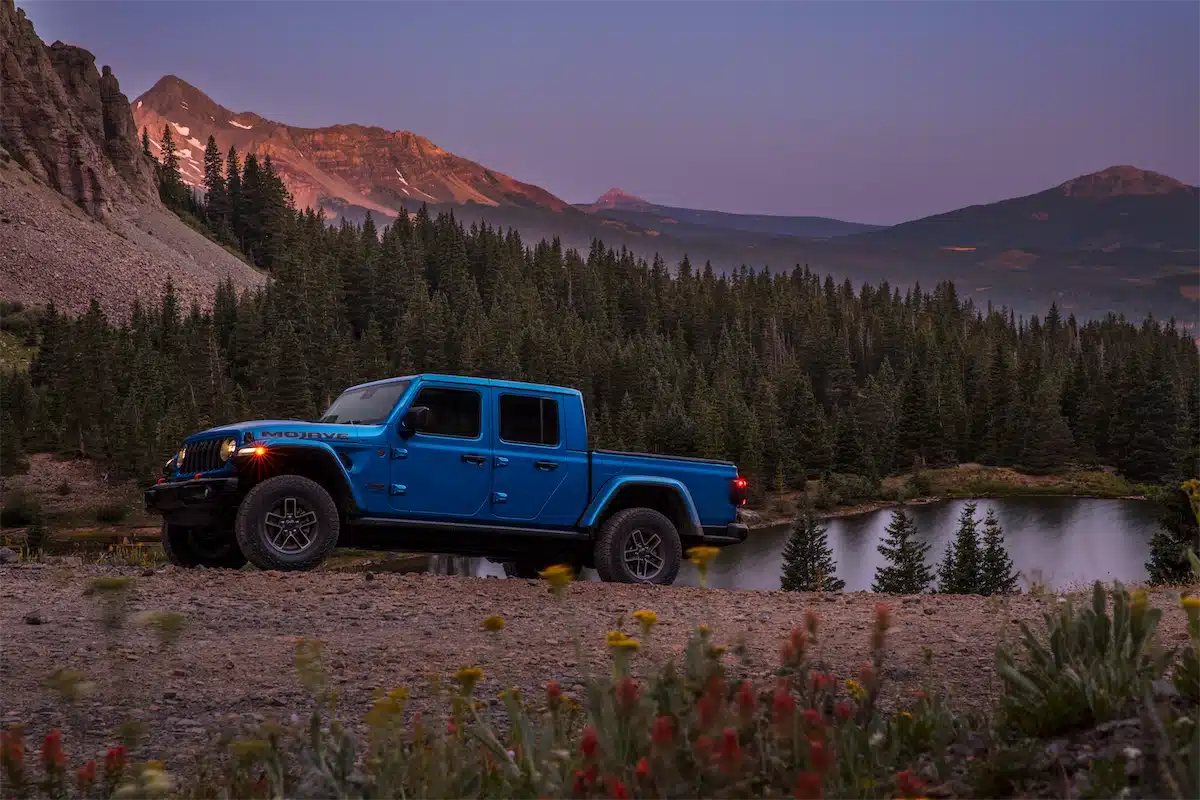
The three most American trucks for 2026 are the Jeep Gladiator, Honda Ridgeline and Toyota Tundra. That is a big change from last year, when the top three were the Jeep Gladiator, Honda Ridgeline and Chevrolet Colorado.
We always find it interesting that Ford, Ram and Chevy do not fall higher on this list, and that trucks from Honda and Toyota are more American by Cars.com’s formula than the GMC Sierra and Chevy Silverado.
Here’s the complete list of trucks and their AMI ranking:
| Make/Model | Assembly location | 2026 AMI ranking | 2025 AMI ranking | Change |
|---|---|---|---|---|
| Jeep Gladiator | Toledo, Ohio | 3 | 5 | +2 |
| Honda Ridgeline | Lincoln, Alabama | 5 | 7 | +2 |
| Toyota Tundra | San Antonio, Texas | 19 | 51 | +32 |
| Hyundai Santa Cruz | Montgomery, Alabama | 24 | 26 | +2 |
| GMC Canyon | Wentzville, Missouri | 25 | 42 | +17 |
| Ford F-150 Hybrid | Dearborn, Michigan | 27 | 61 | +34 |
| Ford F-150 | Claycomo, Missouri, or Dearborn, Michigan | 28 | 37 | +9 |
| Ford Ranger | Wayne, Michigan | 29 | 46 | +17 |
| Chevrolet Colorado | Wentzville, Missouri | 30 | 19 | -11 |
| Toyota Tundra Hybrid | San Antonio, Texas | 49 | 54 | +5 |
| Ram 1500 | Sterling Heights, Michigan | 55 | 45 | -10 |
| Nissan Frontier | Canton, Mississippi | 63 | 71 | +8 |
| GMC Sierra 1500 | Roanoke, Indiana, or Silao, Mexico | 78 | 63 | -15 |
| Chevrolet Silverado 1500 | Roanoke, Indiana; Oshawa, Canada; or Silao, Mexico | 82 | 87 | +5 |
You’ll notice that neither the Ford Maverick nor the Toyota Tacoma are on this list, and that’s because they are both assembled in Mexico.
Jeep Gladiator is still the top truck
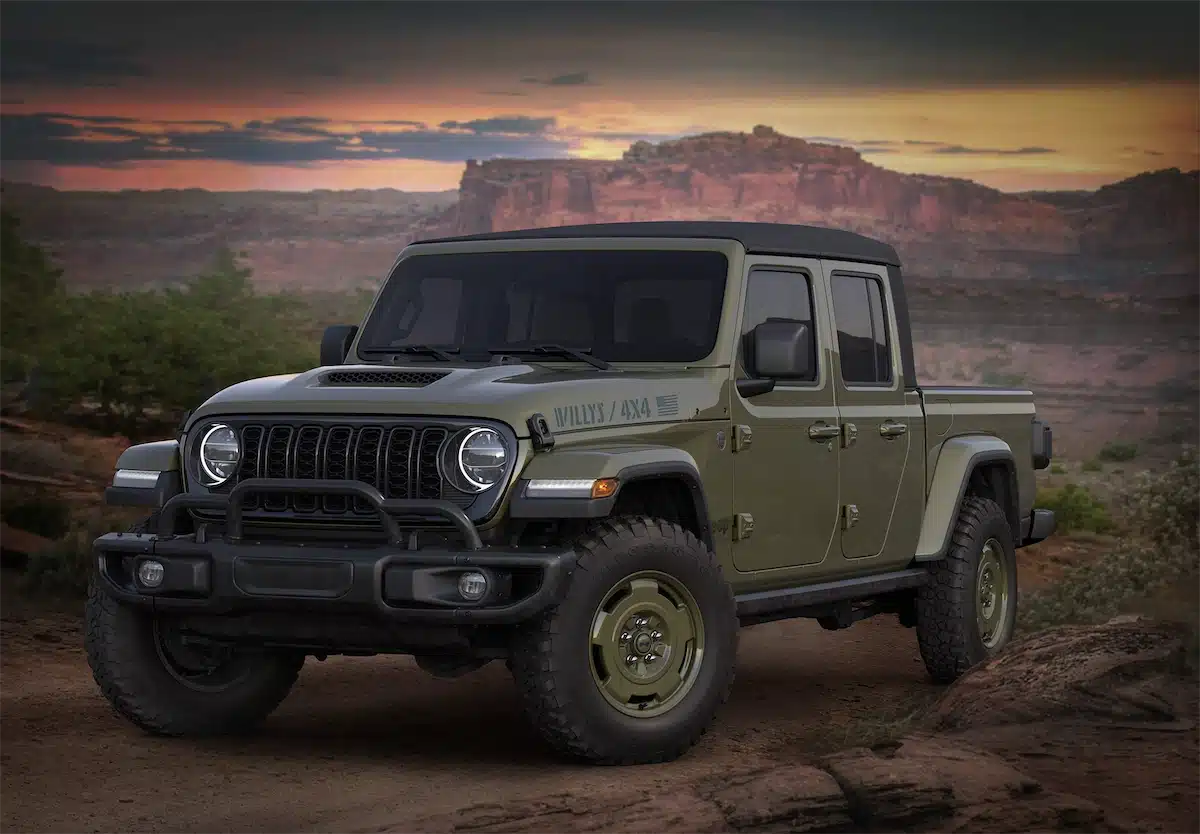
The Jeep Gladiator is once again the most American pickup on the Cars.com American-Made Index, landing at No. 3 overall for 2026.
That is up two spots from last year, when the Gladiator ranked No. 5 overall. It also keeps the Gladiator ahead of the Honda Ridgeline, which had been the top truck on the list for several years before Jeep took the crown in 2025.
This is still a bit of a twist. The Gladiator is not the highest-volume truck in America, and it is not the truck most buyers probably think of first when they hear “American pickup.” But according to Cars.com’s formula, the Toledo-built Jeep is the most American truck you can buy for 2026.
Toyota Tundra makes the biggest truck jump
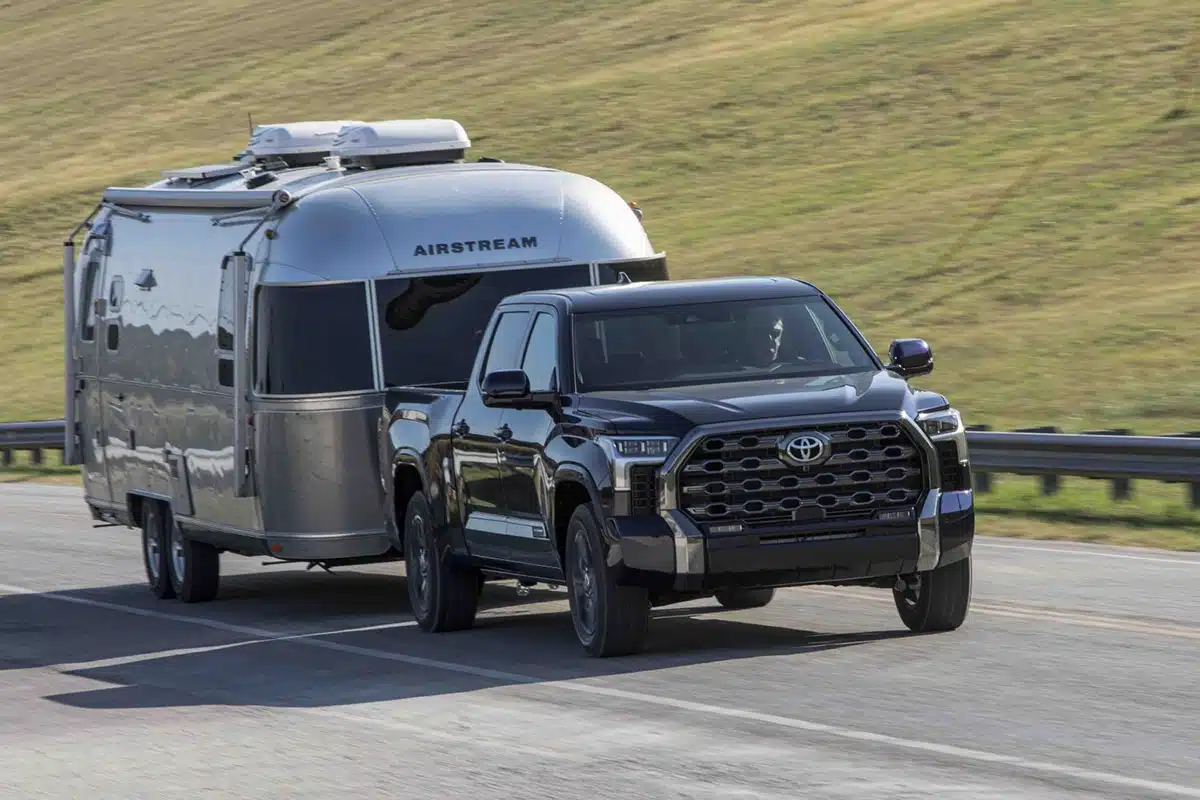
The Toyota Tundra may be the biggest truck story on this year’s AMI.
Last year, the gas-powered Tundra ranked No. 51 overall. For 2026, it jumps all the way to No. 19. That puts it ahead of the Ford F-150, Ram 1500, GMC Sierra 1500 and Chevrolet Silverado 1500.
That is going to surprise some people.
The Tundra is assembled in San Antonio, Texas, and while Toyota is still a Japanese automaker, this ranking shows how complicated the “American-made” discussion has become. By the AMI formula, the gas-powered Tundra is now the most American full-size pickup on the list.
The Tundra Hybrid also improved, moving from No. 54 last year to No. 49 for 2026. So, Toyota had a strong showing across both Tundra versions.
Honda Ridgeline remains near the top, but there is a catch
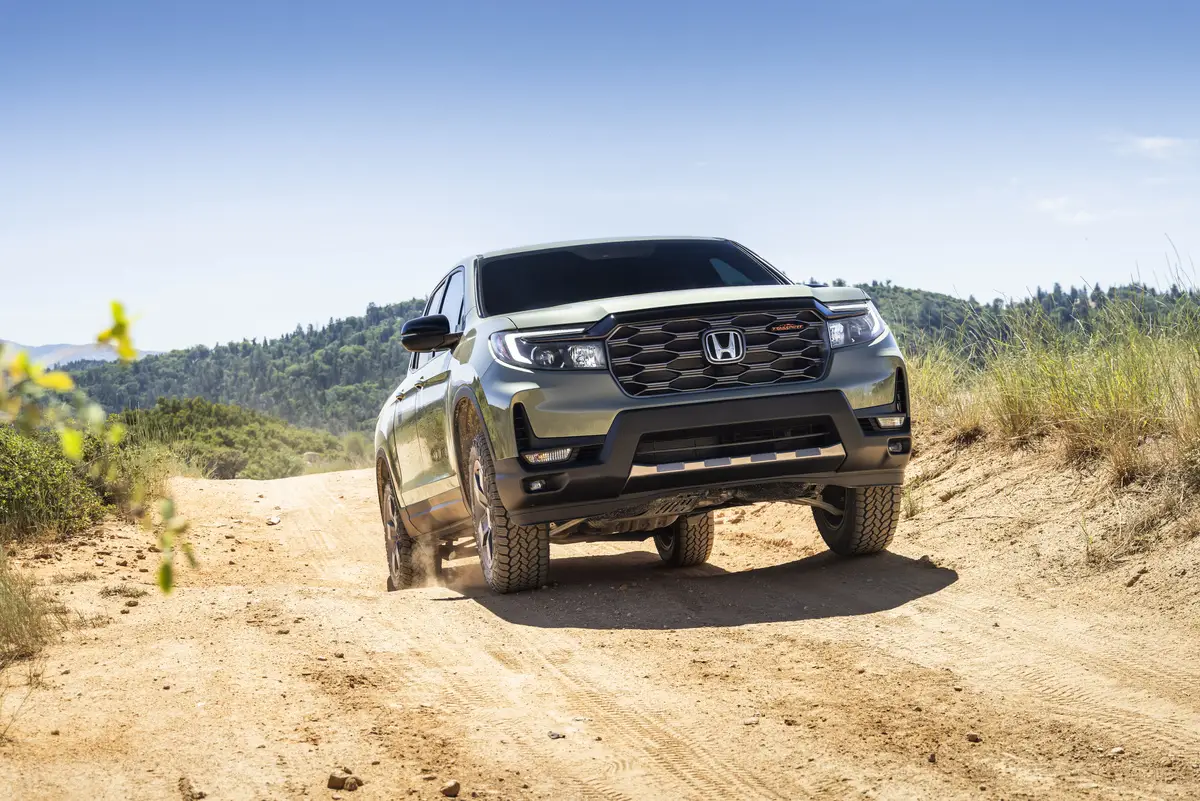
The Honda Ridgeline ranks No. 5 overall for 2026, making it the second-highest-ranked truck on the list.
That is up from No. 7 last year, and it keeps the Ridgeline ahead of every full-size truck from Ford, GM and Ram. As always, that will probably make some truck buyers do a double take.
The Ridgeline is a unibody pickup from a Japanese automaker, but it is built in Lincoln, Alabama. It has been one of the most American trucks on this list for years, and it continues to be a strong example of why badge origin and build origin are not the same thing.
But there is a catch this year. As we reported in May, the Ridgeline may disappear from dealer lots for a while. Honda is reportedly expected to pause production in the fourth quarter of 2026 because the current truck may not meet upcoming emissions regulations. That pause could last roughly 18 months, with production expected to restart around the third quarter of 2028.
So, yes, the Ridgeline is still one of the most American trucks on the AMI. But if you want one, availability could become part of the story soon.
Other quick truck callouts

There are a few other interesting movements on this year’s list.
The GMC Canyon climbed from No. 42 last year to No. 25 for 2026, while its Chevrolet Colorado sibling fell from No. 19 to No. 30. That is an interesting split for two closely related midsize trucks built in Wentzville, Missouri.
The Ford F-150 Hybrid made a huge move, jumping from No. 61 last year to No. 27 this year. The regular F-150 also improved, moving from No. 37 to No. 28.
The Ford Ranger also climbed, moving from No. 46 to No. 29.
Ram went the other way. The Ram 1500 dropped from No. 45 last year to No. 55 this year, even though it is assembled in Sterling Heights, Michigan.
The Nissan Frontier improved from No. 71 to No. 63, while the Chevrolet Silverado 1500 moved up slightly from No. 87 to No. 83.
The GMC Sierra 1500 had a tougher year, falling from No. 63 to No. 79.
And the Hyundai Santa Cruz, whether you want to call it a truck or not, ranks No. 24 overall, ahead of the F-150, Ranger, Colorado, Ram 1500, Frontier, Sierra and Silverado.
Our take on the AMI

The 2026 American-Made Index is a good reminder that buying an “American truck” is not as simple as buying from an American brand.
Jeep takes the top truck spot again. Honda stays near the front. Toyota’s Texas-built Tundra makes a massive jump. Meanwhile, the Silverado, Sierra and Ram 1500 sit lower than many shoppers would probably expect.
That does not mean one truck is better than another. It does not mean a Silverado buyer is less patriotic than a Ridgeline buyer. And it definitely does not mean the AMI should be the only thing you consider when buying a pickup.
With tariffs, supply-chain changes, parts sourcing and manufacturing jobs all part of the truck-buying conversation, the AMI gives shoppers another way to look at the market. It shows where trucks are built, but more importantly, it shows how complicated “American-made” has become.